
A new Lancet assessment has identified 17 interconnected threats to global health through 2100, placing malicious use of artificial intelligence and nuclear conflict alongside climate change, pandemics and long-running public-health problems. The commission was launched at the World Health Summit in Berlin on October 11, bringing health, economic and security risks into one framework.
The assessment covers 204 countries and territories and draws on the expertise of 35 commissioners. Its central question is how much future health loss could still be prevented through changes in policy, investment and technology. It does not announce an impending AI catastrophe or a new emergency order for households.
For readers in the United States and other Western countries, the findings connect two discussions often treated separately: preventing extreme disasters and maintaining the services that protect health every day. The identified threats include high blood pressure, poor mental health and smoking as well as potential disruptions on a much larger scale.
The World Health Summit launch material presents the work as a basis for coordinated prevention. The framework is intended to change as evidence develops, rather than provide a permanent league table of dangers.
The 17 global health threats extend beyond sudden disasters
The Institute for Health Metrics and Evaluation, based at the University of Washington, identifies two categories with extinction potential: malicious AI use and nuclear conflict. The other 15 encompass diseases, environmental pressures and social conditions. The IHME overview lists them as follows.
| Threat category | Threats included in the assessment |
|---|---|
| Technology and conflict | Malicious use of AI; nuclear conflict; conventional conflict |
| Environment | Air pollution; climate change |
| Infection and nutrition | Antimicrobial resistance; pandemics; childhood malnutrition |
| Chronic health and behavior | High alcohol use; high blood pressure; obesity; poor mental health; smoking; unhealthy aging |
| Social and economic conditions | Income inequality; low educational attainment; collapse of development assistance for health |
These groups organize the list for readers; they are not a severity ranking supplied by the commission. Some describe harmful exposures, others health conditions or institutional failures. Their inclusion in one framework reflects the common health outcomes being assessed, not an assertion that they operate through the same mechanism.
The assessment measures lost healthy years rather than a countdown
Disability-adjusted life years, or DALYs, combine health lost through premature death with health lost while living with disease or disability. The commission examines the gap between plausible futures to identify the burden that intervention could avert. A billion DALYs therefore does not mean a billion deaths.
Its 2025–2100 horizon is a modeling period. It allows consequences unfolding over decades to be examined alongside risks that could emerge abruptly. The year 2100 is not a deadline at which the identified threats are expected to occur together.
The assessment also contains different kinds of evidence. In its key findings, IHME highlights substantial uncertainty around malicious AI use and nuclear conflict. Those risks lack the same historical record available for common chronic conditions. The figures describe opportunities for prevention under scenarios, not directly observed future events.
AI extinction risk is one part of a broader technology debate
The AI concern in this assessment centers on malicious use. It is different from every possible argument about advanced AI, including loss of control, workplace disruption or inaccurate chatbot answers. Those issues may intersect, but a statement about one does not establish identical evidence for all of them.
CNN's October 10 coverage describes wide disagreement among forecasters about AI-related catastrophe. It also distinguishes theoretical estimates for a globally significant malicious-AI event from the larger empirical record available for threats already affecting populations.
The debate predates this commission. The Center for AI Safety's extinction-risk statement calls for AI risk reduction to be treated alongside pandemics and nuclear war. Its listed signatories include AI researchers and prominent industry figures. The statement expresses concern and a proposed priority; it supplies no measured probability that extinction will occur.
That distinction separates a public warning from a forecast with a universally accepted numerical answer. Neither the statement nor this new assessment provides a basis for assigning a precise chance of catastrophe to an ordinary household's use of a chatbot.
Existing U.S. AI guidance addresses operational risks
The United States already has an institutional framework for managing AI-related harms. The National Institute of Standards and Technology's AI Risk Management Framework is voluntary and addresses risks to individuals, organizations and society. Its first version was released in January 2023; NIST currently notes that revision work is underway.
NIST also published a generative-AI profile in July 2024. It identifies issues including false outputs, privacy, information integrity and information security. The profile addresses risks supported by the evidence available when it was written, rather than settling all questions about more advanced future systems.
These documents concern the design, evaluation and use of technology. They provide context for the commission's call for technology governance, but are not evidence that a particular consumer app, security product or household purchase resolves catastrophic AI risk.
Antibiotic resistance is already affecting treatment
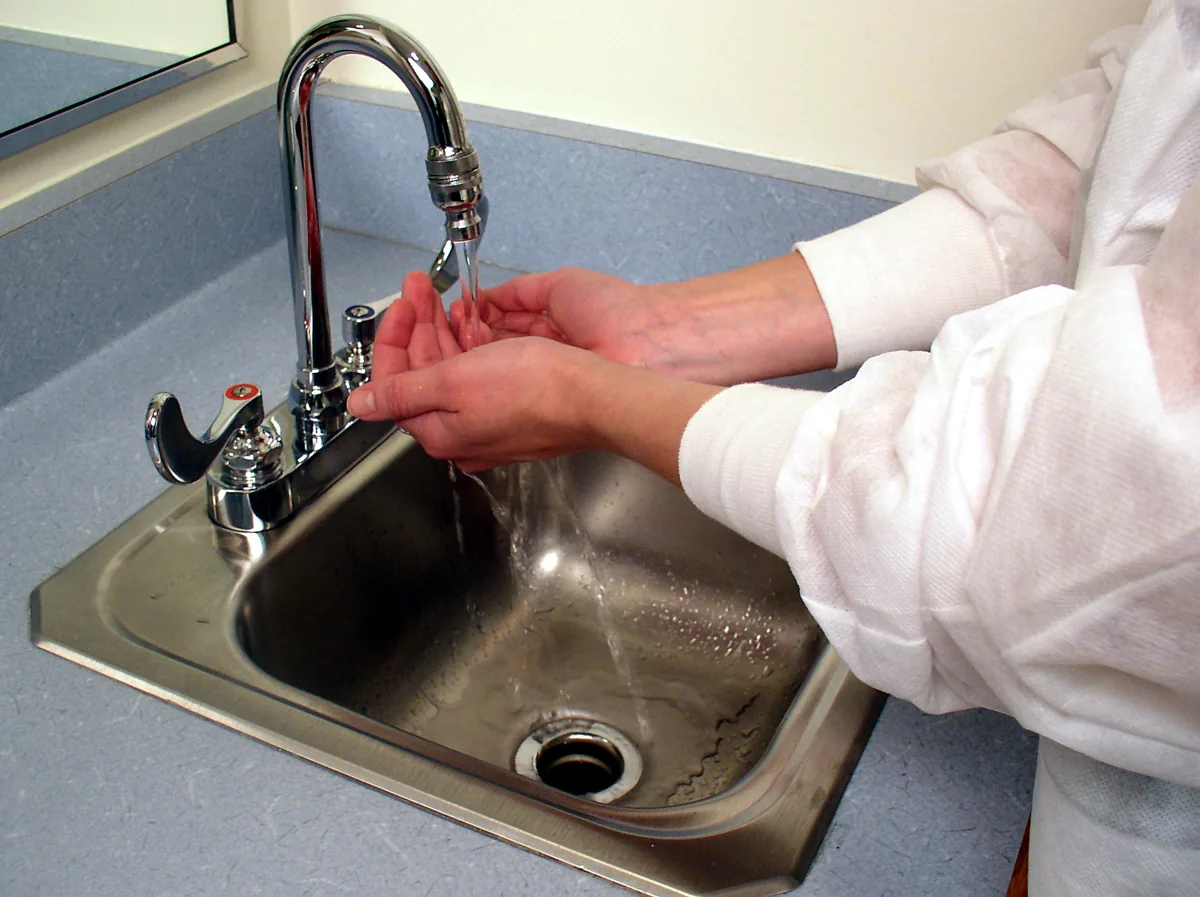
Antimicrobial resistance is among the commission's health threats with an existing, measurable burden. It occurs when microorganisms no longer respond adequately to antimicrobial medicines, making infections harder or sometimes impossible to treat.
The World Health Organization's July 2026 fact sheet reports that one in six laboratory-confirmed bacterial infections causing common infections worldwide in 2023 were resistant to antibiotic treatment. That is a defined surveillance finding, not a claim that one in six people has an untreatable infection.
WHO links the problem to inappropriate antibiotic use, inadequate infection prevention, limited access to medicines and shortcomings in water, sanitation and hygiene. Its response combines surveillance, infection prevention, appropriate access and research. The issue consequently extends beyond developing a new medicine to the conditions under which infections spread and care is delivered.
Climate change and air pollution create overlapping health pressures
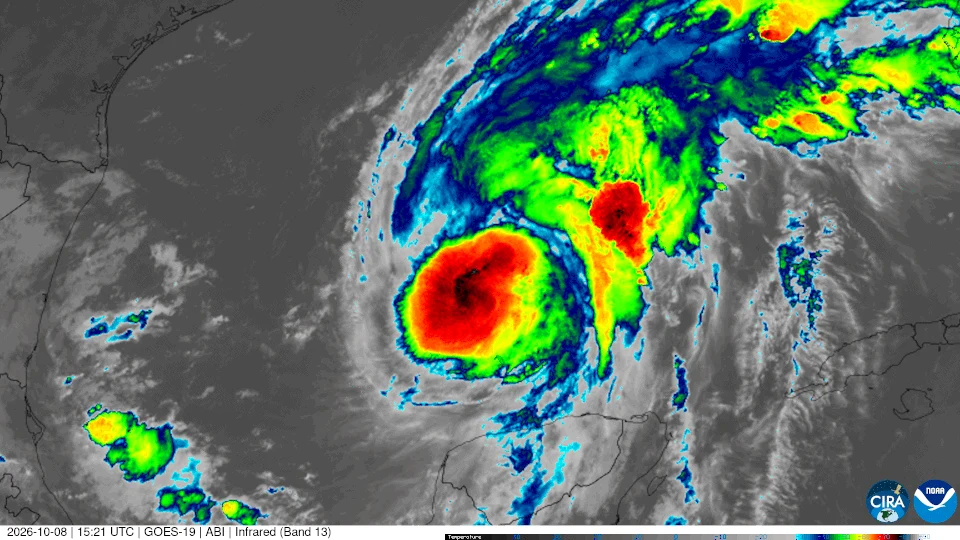
Climate change is included as a distinct threat, while air pollution appears separately. WHO's climate-health explanation describes direct and indirect pathways through extreme weather, food systems, water, infectious diseases and health infrastructure. Exposure and the capacity to respond vary between populations.
For U.S. readers, that places familiar preparedness subjects—heat, floods, wildfire conditions and service interruptions—within a wider health context. The commission's long-term categories are broader than the forecast for a single storm or season. An individual weather event cannot establish the entire projected burden.
WHO's outdoor air-pollution fact sheet estimates 4.2 million premature deaths worldwide associated with outdoor air pollution in 2019. It identifies cardiovascular and respiratory disease and cancers among the outcomes. The reporting year matters: this is historical health-burden evidence, not a newly measured 2026 death total.
Many pollution sources require action in transport, energy, industry and urban planning. The issue therefore includes structural prevention as well as the information households use when conditions deteriorate.
High blood pressure illustrates the scale of familiar risks
High blood pressure is a common condition rather than a sudden disaster, yet its cumulative burden places it within the assessment. WHO estimates that 1.4 billion adults aged 30–79 worldwide had hypertension in 2024, representing about one-third of that age group.
The same fact sheet estimates that 44% of affected adults were unaware of their condition and about 23% had it under control. These figures concern a specific age range and year. They should not be interpreted as the proportion of every population currently facing a medical emergency.
Hypertension can contribute to heart disease, stroke and kidney damage. Its inclusion shows why a health-threat framework considers prevention, diagnosis and continuity of care alongside rare catastrophic events. The damage can accumulate without a single moment that resembles an emergency headline.
Obesity and childhood malnutrition describe different problems
WHO's obesity fact sheet, updated October 7, places the number of adults living with obesity worldwide at 940 million in 2024. It describes a chronic condition shaped by interacting biological, social, environmental and behavioral factors.
Childhood malnutrition is a separate threat in the commission. WHO's malnutrition fact sheet gives 2022 estimates of 149 million children under five affected by stunting and 45 million affected by wasting. Stunting and wasting are different indicators; the figures cannot be added as though each counts a separate group of children.
These concerns can coexist within countries and communities. Access to nutritious food, health services and supportive environments matters across both. A broad description of “food problems” would miss the different mechanisms and populations involved.
The commission's combined framework includes both because it assesses health consequences, rather than limiting the definition of a threat to dramatic events.
Mental health, smoking and alcohol remain in the picture
Poor mental health is another category with a substantial existing burden. WHO's September 2026 mental-disorders fact sheet estimates that 1.2 billion people were living with a mental disorder in 2023. It also describes major gaps in access to effective care and the effects of stigma and discrimination.
The presence of this category does not mean distress caused by alarming news is equivalent to a clinical diagnosis. It places prevention and treatment needs within the wider assessment of health loss.
WHO's tobacco guidance identifies serious harms from tobacco use and secondhand smoke, with policy and cessation measures forming part of the response. Its alcohol fact sheet attributes around 2.6 million deaths worldwide to alcohol consumption in 2019, spanning diseases and injuries.
These subjects introduce another timescale. Health losses may be repeated year after year, rather than concentrated in one unusual catastrophe. The commission includes cumulative harm as well as possible abrupt disruption.
Education, inequality and aging affect vulnerability
The assessment also includes conditions outside a narrow medical definition of risk. WHO's social-determinants explanation describes how the circumstances in which people live, learn and work influence health. Access to resources and services affects the ability to prevent illness and obtain care.
That context is relevant across Western countries as well as lower-resource settings. A national health statistic does not describe every household's ability to reach a clinic, obtain accessible information or manage an interruption to usual support. Differences within countries remain important.
Unhealthy aging is also distinct from chronological age itself. WHO's aging and health guidance emphasizes the variation in older people's capacities and the importance of physical and social environments. Longer lives do not automatically mean the same number of additional years in good health.
Taken together, these categories show why the assessment extends into education, social policy and public services rather than remaining entirely within hospital care.
Pandemic prevention already has an international policy track
Pandemics also enter the assessment against a background of international policy work. On May 20, 2025, the World Health Assembly adopted the WHO Pandemic Agreement, following more than three years of negotiations prompted by gaps and inequities in the COVID-19 response. Its stated purpose was stronger collaboration on preventing and responding to future pandemics.
That adoption was a separate development from the Lancet commission. The agreement concerns cooperation among countries; the new assessment brings pandemics into a broader comparison of future health threats. Neither announcement is evidence that a new pandemic has begun. The distinction matters when a discussion of preparedness is circulated as though it were an outbreak notification.
The historical agreement announcement documents an institutional response to an already recognized risk. It does not establish how every country has implemented its provisions or how effective future responses will be.
The findings are a prevention framework rather than an alert
IHME's key findings describe significant differences between better and worse futures and emphasize that the estimates are not a policy ranking. The proposed response includes readiness, innovation and continuing reassessment. Different threats need different institutions and interventions; their placement on one list does not make a single solution appropriate for all.
The commission does not issue a local evacuation instruction, identify a newly confirmed outbreak or establish a household treatment protocol. Current instructions for a specific incident still come from the responsible emergency or public-health authorities.
For readers looking for household resources, R&R's illness preparedness checklist covers organizing essential needs. Its primary toilet outage guide addresses a separate service-continuity question involving water supply and usable drainage. These resources concern ordinary preparedness, not prevention of the global scenarios assessed by the commission.
Further developments to watch include revised evidence, the proposed monitoring process and decisions by the institutions responsible for health, technology and security. The new assessment places those decisions within a shared health framework while leaving the future outcomes dependent on what happens next.