A worrying health headline is a good reason to check your household plan. It is not evidence that your family has been exposed. The October 2026 reporting from Russia involves an unexplained laboratory-worker death and disputed claims of another illness. Our Russia news update covers the event. This checklist addresses a different question: what can you organise at home so an ordinary illness does not leave everyone searching for contacts, instructions and basic supplies?
Start with what you already have. A useful plan should still work if you buy nothing today. The supplies below support record keeping, hygiene and household continuity; none diagnoses, prevents or treats plague. If someone has trouble breathing, chest pain or another medical emergency, seek urgent care rather than work through a shopping list. Follow specific health-service instructions if you have a relevant exposure or receive a public health notice.

First, complete the quick household checklist
Use these boxes to review the plan with the people who would actually carry it out. Checkmarks are temporary and reset when the page reloads; download the text copy if you want a record. They are planning prompts, not a test of whether an illness is safe to manage at home.
Our planning suggestion is to give each unfinished task an owner. “Someone will call” is less useful than a name and contact number. You can share responsibility without sharing private health information more widely than necessary. Recheck the plan when a household member, regular medication or emergency contact changes.
Know when the checklist must stop
CDC advises immediate emergency care for warning signs such as trouble breathing or chest pain. If that happens, stop organising equipment and use the appropriate emergency service. A normal-looking thermometer reading or a full cupboard does not cancel a serious symptom.
For a possible plague exposure, contact healthcare services promptly and explain the relevant contact or travel history. CDC's diagnosis guidance says plague is serious but treatable, and early appropriate care improves the chance of recovery. Decisions about assessment, observation or preventive antibiotics belong to professionals, not a product guide.
Our planning suggestion: write the route to care as plainly as the supply list. Who makes the call? Who can describe the symptoms? Who can help with transport when appropriate? Keep that information accessible. The objective is to remove practical delays, not to construct a home treatment system for a suspected dangerous infection.
Put contacts and health information in one place
Create a short household contact sheet. Include your usual healthcare service, pharmacy and a trusted person who can help with practical tasks. Add the local emergency number. If a service has different daytime and out-of-hours arrangements, record both. Verify the numbers using the service's official information rather than an old message thread.
A medication list can record the medicine name, prescribed instructions, allergies and the clinician or pharmacy to contact with questions. Keep original packaging and follow the prescription. Do not use this checklist to change a dose, combine medicines or buy antibiotics for a suspected disease.
Our planning suggestion: put a paper copy somewhere the relevant people can find it and an accessible digital copy where appropriate. Consider privacy before photographing or sharing a list. A helpful neighbour may need the grocery list and collection instructions, not every diagnosis in the household. The aim is usable information for the person performing the task, with private details protected.
Check the thermometer you already own
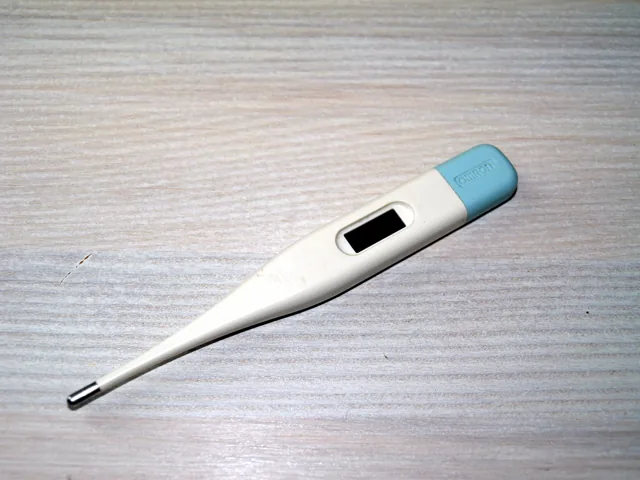
Find the thermometer before you need it. Read how the manufacturer says to use and clean that particular device. Check the battery, display and storage instructions. If it is unfamiliar, practise reading the instructions while everyone is well; do not assume all thermometer types work in the same way.
Our planning suggestion: keep a simple log if a clinician asks you to record symptoms or readings. Note the time and how the reading was taken. Record what happened rather than interpret the number as a diagnosis. A thermometer cannot identify the organism causing an illness, and its reading should not decide whether serious symptoms deserve attention.
If you do not have a usable device, a basic digital thermometer is a reasonable category to compare. Look for readable instructions, the intended measurement method, suitable cleaning directions and a trustworthy seller. We have not tested a model for this article and do not rank devices by clinical accuracy. The recommendation is to have a usable household tool, not to buy a supposed plague detector.
Make routine hand hygiene easy
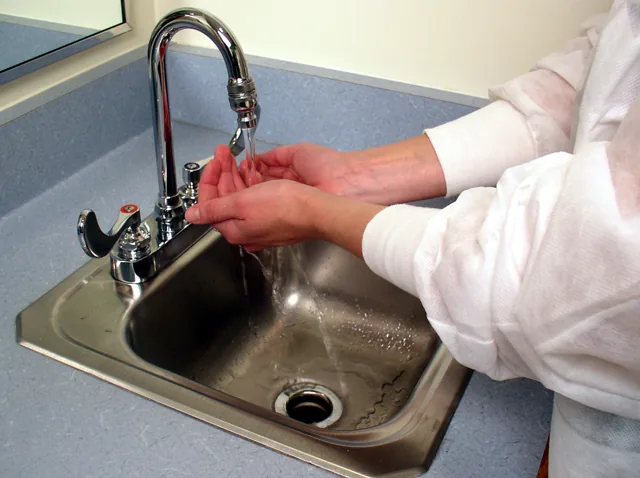
CDC recommends soap and water for handwashing and, when they are unavailable, hand sanitiser with at least 60% alcohol. Check the label rather than assuming every bottle has the same formulation. Follow its directions and keep it safely away from children who might ingest it.
Our planning suggestion: place the supplies where the household uses them. A sink with soap is more helpful than a hygiene kit packed so deeply that nobody remembers it. If you already have sufficient soap, there is no reason to buy a new brand because of an overseas news report.
Tissues and washable cloths can support ordinary household routines. Choose items that the people using them can handle comfortably, and arrange waste disposal or laundry without making the system complicated. Supplies are only useful when the routine is practical. Avoid presenting routine hygiene as a guarantee against a particular infection; this checklist does not make that claim.
Clean according to labels, not fear
The U.S. Environmental Protection Agency warns against mixing cleaning products and against applying surface disinfectants to skin or food. Children should not apply disinfectants. Follow the product label, including any protective equipment and contact-time instructions. Do not create stronger mixtures because a headline sounds frightening.
Our planning suggestion: inventory the products you already use safely. Keep them in their original labelled containers. If a label calls for gloves, choose a compatible type and check the fit. Disposable nitrile cleaning gloves are one category you can compare, but they are not a reason to attempt professional infection-control tasks or handle a potentially infected animal.
A small cleaning station can hold the instructions and ordinary supplies together. Make sure it is stored away from children and pets. The purpose is to support a familiar routine, not turn the home into a laboratory. A suspected dangerous exposure requires health-authority advice, including instructions that may differ from general household cleaning.

Plan shared space without making medical promises
CDC's general respiratory-virus guidance recommends steps such as cleaner air, hygiene and appropriate additional precautions when someone is sick. This is general respiratory-illness advice, not evidence that the Russian event is caused by a virus or instructions sufficient for managing a suspected plague exposure.
Our planning suggestion: think about your layout before anyone needs help. Where can someone rest comfortably? Which essential items can be reached without repeated trips? Who will handle shared household tasks? If medical services give you specific directions about limiting contact, follow those rather than improvising from this article.
Opening a window may not be safe or appropriate during poor outdoor air, extreme weather or security concerns. Consider the actual conditions and local advice. Do not purchase expensive air equipment solely because this story is in the news. This checklist intentionally avoids claiming that a particular household device makes a serious infection safe to manage at home.
Arrange help before exhaustion makes it harder
Household continuity is often an administrative problem. Someone may need to collect a prescription, buy the usual groceries, supervise a child or feed a pet. Write those tasks down and identify a person or service to contact. The arrangement should remain flexible because the helper may also be unavailable.
Our planning suggestion: make requests specific. A short grocery list, preferred collection arrangement and contact number are more usable than “help us if things get bad.” For medical matters, ask the relevant service what information it needs and follow its instructions. Do not promise that a neighbour can replace professional care.
For people living alone, an agreed check-in can help organise practical support. Decide what to do if a message receives no response, without asking the helper to diagnose an illness remotely. Keep personal circumstances in view: mobility, language, hearing, work schedules and childcare can affect whether a plan is workable. A good plan fits the household, rather than forcing everyone into the same routine.
Keep ordinary food and water planning separate
This illness checklist adds to, rather than repeats, our 72-hour emergency kit checklist. That guide covers water, food, lighting, power and other basic emergency categories. You do not need two collections of the same items simply because the articles address different situations.
Our planning suggestion: note the meals and drinks your household already uses and can prepare with minimal effort. Consider dietary needs and safe storage. If someone has specific medical advice about food, fluids or restrictions, that advice takes priority over a general shopping suggestion.
We have deliberately avoided repeating the water containers, can opener, first-aid kit, lantern, power bank, radio, rubbish bags and document pouch from the earlier article. The Amazon comparison categories below fill different gaps. That separation helps you assess what is actually missing instead of treating every new guide as another complete shopping list. Preparation should make the household more organised, not simply more crowded with duplicate equipment.
Amazon comparison categories for actual gaps
As an Amazon Associate I earn from qualifying purchases. These are affiliate search links, not verified individual listings or hands-on product reviews. We may earn commission if a qualifying purchase follows a link. Compare the actual listing, seller, instructions, suitability and current price; the links do not establish stock, medical effectiveness or regulatory approval.
Our six researched category recommendations are a basic digital thermometer, a labelled alcohol hand sanitiser, facial tissues, disposable nitrile cleaning gloves, washable cotton cloths and a clipboard for keeping a paper log. Buy only where your inventory shows a gap. None is a plague treatment or a substitute for medical care.
The comparison cards explain a practical reason to consider each category and a reason to skip it. This is a buying framework, not a ranking of brands. A familiar, functional item you already own may be the better choice. For cleaning gloves, follow the chemical product's requirements rather than assuming one material fits every job. For sanitiser, check the actual alcohol percentage on the label.
Compare six household supply categories
Basic digital thermometer
For a missing or unusable household thermometer. Compare the intended measurement method and readable instructions.
Skip if your existing device works.
Compare on AmazonWe may earn commission.Alcohol hand sanitiser
For times soap and water are unavailable. Check the actual label for at least 60% alcohol.
Existing suitable sanitiser is enough.
Compare on AmazonWe may earn commission.Facial tissues
For an ordinary household tissue supply. Compare pack size and storage space.
Use the supply you already keep.
Compare on AmazonWe may earn commission.Disposable nitrile cleaning gloves
For cleaning tasks whose product labels call for suitable gloves. Check material compatibility and size.
Not a plague-care or animal-handling recommendation.
Compare on AmazonWe may earn commission.Washable cotton cloths
For routine household cleaning or personal use according to the task. Keep uses separate.
Existing clean cloths may be adequate.
Compare on AmazonWe may earn commission.Clipboard for a paper log
To keep contact details and a simple symptom record easy to locate.
A notebook you already own also works.
Compare on AmazonWe may earn commission.Set a small budget and avoid duplication
Our planning suggestion: write “have,” “need” or “ask” beside each item. “Have” means it is usable and accessible. “Need” means a practical gap remains. “Ask” means you need professional or manufacturer guidance before selecting it. That third category is important: uncertainty about medical suitability should not automatically become a purchase.
Choose a spending limit before browsing. Compare total cost, not just an advertised unit price. A large pack can be poor value if storage is difficult or it exceeds your realistic use. Avoid a product whose main justification is a frightening claim that the listing cannot support.
Keep the plan's free tasks visible. Correct numbers, legible records and a confirmed helper can be more useful than a second box of equipment. The household should be able to explain what each purchase is for. If the answer is only “the news scared us,” pause and return to the practical task the item would need to perform.
Save a usable offline copy
Download the text checklist and adapt it to your household. Keep the copy short enough that someone can scan it under pressure. Put emergency access first, followed by contacts, medicines, practical help and existing supplies. Do not include sensitive personal information in a publicly shared version.
Our planning suggestion: walk through one ordinary sick day. Can someone find the medical contact, locate the thermometer, prepare a familiar meal and arrange help? That exercise checks usability without pretending to simulate a specific infection. Note any confusing instruction or inaccessible item and fix it while there is time.
Review the list after a move, a change in medication, a new caregiver or a different contact arrangement. Avoid treating the completed boxes as proof that every possible emergency is covered. They record tasks completed at a moment in time. If actual symptoms, exposures or official instructions change the situation, the plan must change with them.
Questions readers commonly ask
Should I buy antibiotics for plague? No shopping recommendation here involves antibiotics. CDC's clinical guidance stresses prompt appropriate treatment when plague is suspected. Diagnosis, treatment and preventive medication decisions require professional assessment. Do not self-prescribe or use leftover medicines.
Does the Russia report mean my household is exposed? The report alone does not establish that. Follow instructions relevant to your actual location, contacts and circumstances. Our WHO explainer distinguishes an information request from a confirmed diagnosis.
Do I need everything in the Amazon cards? No. The cards identify ordinary categories to compare if something is missing. Start with existing items and free planning tasks. A care plan is not measured by the number of purchases.
Can this checklist replace health advice? No. It organises household continuity. Urgent symptoms and suspected serious exposures belong with healthcare services. That boundary keeps the checklist useful: it helps you reach the right support and find ordinary supplies without claiming to solve a medical investigation at home.