If conflict disrupts electricity, transport or access to supplies, a household plan needs to be usable immediately. Review yours today: who needs help, where are your essentials, and how would you leave if instructed? Europe’s 72-hour preparedness guidance offers a baseline. It dates to 2025; the current headlines are not proof that war is about to reach your neighbourhood.
Where the 72-hour figure comes from
The European Commission and High Representative launched the Preparedness Union Strategy on March 26, 2025. It encourages people to maintain essential supplies for at least 72 hours during emergencies. Its scope includes natural disasters, cybersecurity and hybrid threats, alongside other crises.
The strategy contains 30 key actions. These cover resilience of essential services, stockpiling, crisis coordination and cooperation between civilian and military organisations. Household supplies are one part of that larger programme. The announcement encourages preparedness; it does not say every household will experience the same emergency or that help always arrives after three days.
What a household plan needs to cover
The U.S. government’s Ready.gov preparedness guide for older adults lists water, non-perishable food, a radio, flashlight, batteries, first-aid supplies and personal needs. Its water baseline is one gallon per person per day for several days, for drinking and sanitation. That is U.S. guidance, not a water quantity prescribed by the EU announcement.
For two people over three days, that baseline totals six U.S. gallons, approximately 23 litres. The arithmetic gives you a starting storage target; it does not account for every climate, health need or pet. Follow the guidance applicable to your household and location.
Prepare these five essentials today
Our practical checklist: use the supplies you already have before adding equipment. These are planning suggestions, not instructions for a particular active conflict.
- Water: count your household supply and choose manageable containers. A reusable bottle carries water; it does not make unsafe water drinkable.
- Food: set aside food your household can eat without its usual cooking arrangements. Include a manual opener where needed.
- Medicines and personal needs: review prescriptions, assistive equipment and essential records. Discuss storage or replacement questions with the appropriate professional.
- Lighting and communication: locate a working light, radio and compatible charging cables. Test them now, including the charging arrangements for rechargeable devices.
- Departure plan: identify contacts, accessible transport and a place to go. Prepare documents and a manageable bag; follow local evacuation routes and official directions if issued.
Optional equipment: buy for a specific gap
Lighting, a portable water container and a folding rest pad can support a household or departure plan. They do not replace food, sufficient stored water, shelter or access to medicines. A pad is an optional rest item when you expect to need one, not essential protection in every emergency. Compare the examples below only after identifying a genuine gap.
Prepare now: count water, locate medicines, test your light and write down your departure contacts. Use what works already; there is no need to buy every product shown.
Product examples to compare
As an Amazon Associate I earn from qualifying purchases. Amazon links below are paid links. Research-based examples; not personally tested.

Black Diamond Spot 400-R Headlamp, Graphite
Rechargeable camp headlamp; up to 400 lumens with Micro-USB charging.
Details & cautions
Black Diamond specifies a 400-lumen maximum output and an integrated 1500 mAh lithium-ion battery with Micro-USB charging. Consider it for hands-free camp tasks when you can keep the rechargeable battery topped up.
Check before buying: This is the rechargeable Spot 400-R, not the AAA-powered Spot 400. Plan a charging source and compatible cable; peak brightness is not sustained for the full runtime.
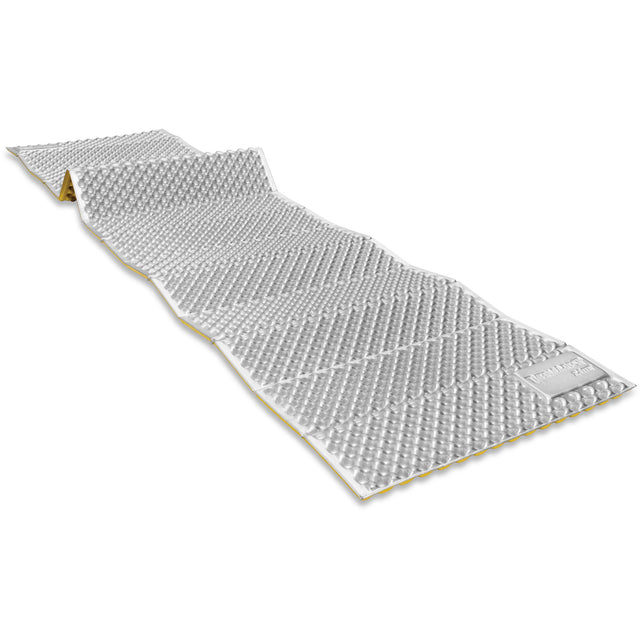
Therm-a-Rest Z Lite SOL, Regular
Folding foam sleeping pad; Regular 20 × 72 inches, R-value 2.0.
Details & cautions
The manufacturer lists closed-cell foam, an R-value of 2.0, dimensions of 20 × 72 inches and a weight of 14 ounces for the Regular size. Compare this if you want a folding pad that needs no inflation. Confirm its packed size fits your transport and its dimensions fit you.
Check before buying: Its R-value is not a temperature guarantee. Choose insulation for the actual conditions; the manufacturer describes using it alone in warmer weather or layering it under another pad in cold conditions.
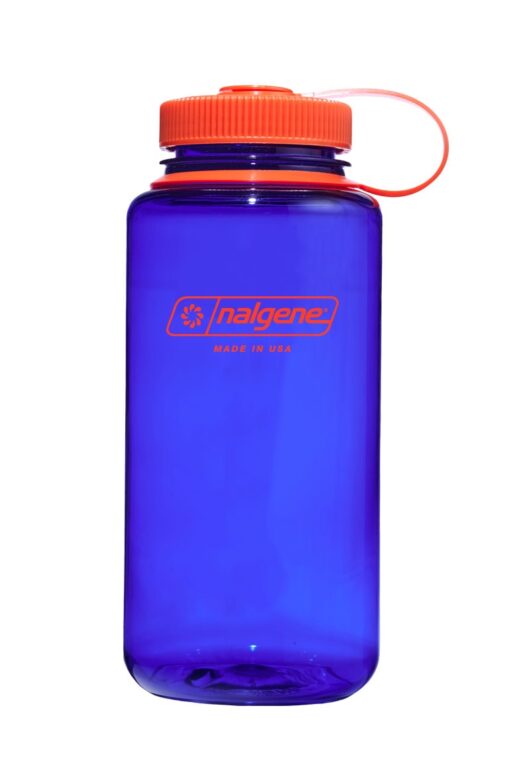
Nalgene Wide Mouth Sustain Water Bottle, 32 oz
32 oz wide-mouth water bottle made from BPA/BPS-free Tritan Renew.
Details & cautions
Nalgene specifies a 32-ounce capacity, a wide opening, and BPA/BPS-free Tritan Renew material. Consider it for carrying drinking water and for an opening that is easy to fill and clean.
Check before buying: This is a water container, not a filter or purifier. Bring enough safe drinking water for your trip; one bottle is not the entire supply. Confirm 32 oz and Wide Mouth on the listing.
Turn the checklist into something usable
Our planning suggestion: walk through one evening without your usual services. Where would you find lighting? Which contacts could you reach without searching online? Can everyone locate the supplies, and do you know which items need replacing?
Write down those gaps before buying equipment. A small, clearly labelled supply area and a plan everyone understands are easier to review than an unrecorded collection of emergency gear. Start with our small-apartment water storage guide and emergency supply storage ideas.
What the guidance does not tell you
If war or another emergency breaks out, check current local alerts first. A 72-hour target is a planning baseline, not an instruction to remain at home regardless of conditions. If local authorities issue evacuation, shelter or water-safety instructions, those specific directions take priority over a general checklist. For readers following Europe’s security news, preparedness and a forecast of imminent conflict should remain separate questions.