FOOD / POWER CUTS / PRACTICAL PLANNING
You Have Emergency Food—but No Way to Cook It. What Can You Actually Eat?
By Ready & Resourceful · · Research-based practical guide
Turn unopened cupboard supplies into usable meals—with visual checks, nine meal ideas and a planner that exposes the gaps.
START WITH THE FOOD YOU CAN USE
What can you eat when you cannot cook?
Choose food that is safe to store without a fridge while unopened, ready to eat without cooking, and suitable for your household: for example, labelled ready-to-eat canned beans, fish or meat, crackers, cereal, nut or seed spreads, and canned fruit. Check the exact package. A tin, pouch or long shelf life alone does not prove a food is ready to eat cold.
Make complete meals from those ingredients, keep safe drinking water separate, and open only what you can use safely. Raw rice, dried beans, ordinary pasta and most freeze-dried meals are not a dependable no-cook reserve.
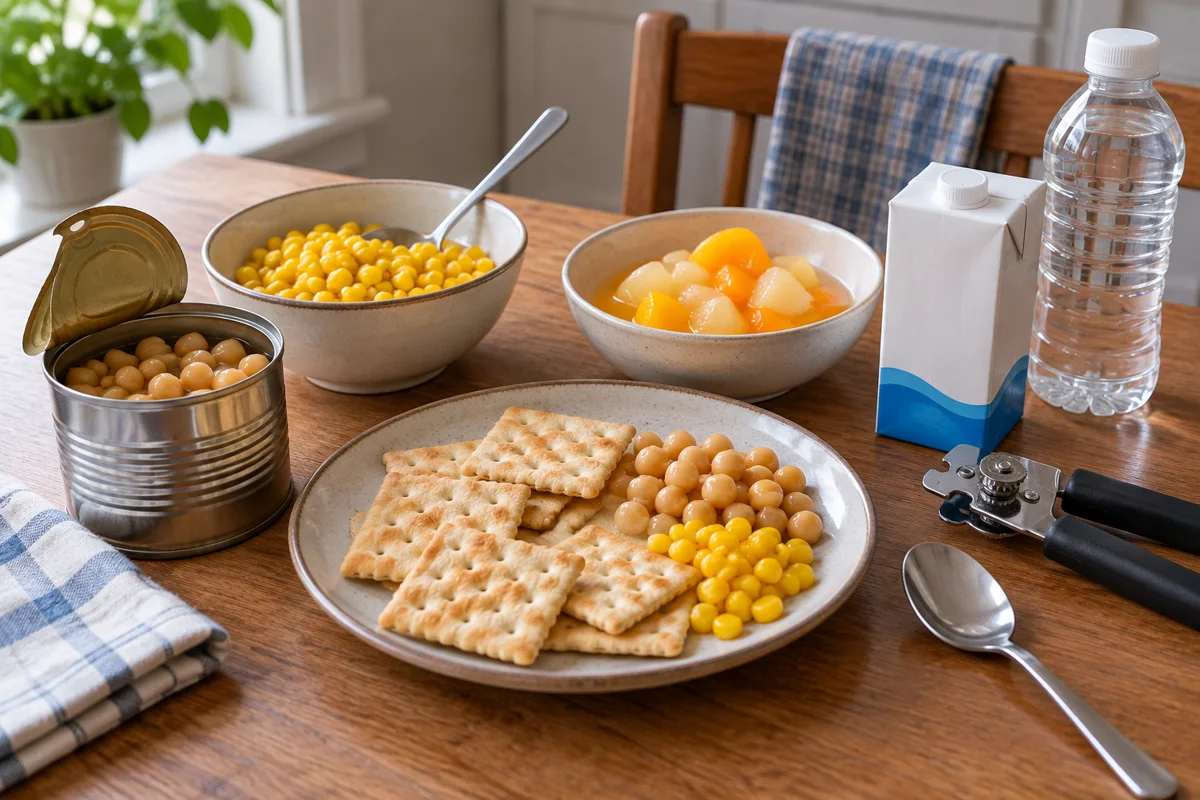
You have food in the cupboard. What you do not have is a working hob, a microwave or a safe way to boil water. Suddenly, a sack of rice is an unfinished meal and a large carton of milk becomes a leftover-storage problem.
A useful no-cook reserve removes those dependencies. This guide focuses on ordinary household supplies for a short disruption, with a three-day example you can adapt. The meal combinations and packing exercises are original planning examples, not tested ration packs, personalised nutrition advice or a guarantee that three days is enough for every emergency.
Watch the 43-second practical guide
Moving footage, spoken guidance and English captions take you through five planning checks. Turn on sound for narration, or follow the captions and transcript.
Licensed illustrative footage by Ron Lach: kitchen organisation and food supplies, used under the Pexels licence. Editing, script and captions by Ready & Resourceful; synthetic narration. This is a planning explainer, not footage of an R&R product test. Some jars contain raw ingredients that require cooking; follow the narration and your own product labels.
Read the complete video transcript
- Check the label. Read storage and preparation instructions. A sealed can or pouch does not automatically mean its contents are ready to eat.
- Raw staples need cooking. Dry rice, pasta and many dried beans need cooking. Keep suitable ready to eat alternatives for a power cut.
- Plan complete meals. Count complete meals for each person. Include a suitable base, protein, and fruit or vegetables, with portions they can manage.
- Plan for opened packs. Choose manageable pack sizes. After opening, follow the label for refrigeration. Resealing does not make food shelf stable again.
- Check opening and cleanup. Keep a suitable opener, utensils and hygiene supplies accessible. Check your actual labels and use the meal planner below.
First, put your food through four checks
Read the back of the package before deciding which pile it belongs in. “Instant”, “microwaveable”, “natural” and “long-life” are not interchangeable with ready to eat. If the storage or preparation instructions are unclear, set that item aside for manufacturer clarification; do not experiment during an outage.
Safe package
Check seal, damage, contamination history and the relevant date. A suspicious package is not a tasting experiment.
Unopened storage
Does the exact label permit room-temperature storage? Keep Refrigerated means it needs a cold chain.
Ready to eat
Is it already suitable without cooking, safe hot water or another preparation step? Confirm ambiguous instructions.
After opening
Can you use the suitable portion now, or provide the cold storage the label requires?
Check a package against your no-cook plan
Select what you have established from the actual product and its history. Unknown information is not a yes.
This checker uses your answers. It cannot detect pathogens, recalls, allergens or incorrect storage history.
USDA distinguishes shelf-stable canned products from canned foods labelled Keep Refrigerated. A canned ham bought from a refrigerated display may still need chilling. Packaging shape is not a storage instruction. USDA shelf-stable food guidance.
Sort the cupboard: usable now, conditional, or needs cooking
Usable candidates
Ready-to-eat cupboard foods with confirmed instructions: crackers, suitable spreads, cooked canned pulses, fruit portions. Still check portions and household suitability.
Conditional
Cooked grain pouches, UHT cartons, chilled ready-to-eat food and larger opened packs. Confirm the exact preparation and storage requirements.
Not ready for this plan
Raw dried pulses, uncooked rice, ordinary pasta and products requiring cooking. Keep them for a separate plan with safe water and energy.
| Food | Can it form part of a no-cook reserve? | What to check |
|---|---|---|
| Commercial canned beans, lentils, chickpeas | Often, when fully cooked and ready to eat | Preparation instructions, portions and safe handling once opened |
| Canned or pouched fish and meat | Only ready-to-eat, shelf-stable versions | Chilled-storage warnings, allergens, pack size and whether draining is needed |
| Crackers, oatcakes, ready-to-eat cereal | Useful meal bases | Allergens, freshness and what you will eat with them |
| Nut butter or seed spread | Useful where suitable for the eater | Allergens and the product's storage instructions |
| UHT milk or shelf-stable alternative | Unopened packs can be useful | Refrigeration after opening; choose a pack you can finish |
| Cooked rice or grain pouch | Conditional | Manufacturer confirmation that this exact product can be eaten without heating |
| Dry rice, ordinary pasta, dried pulses | Not the foundation of this plan | They need appropriate cooking, water and energy |
| Frozen vegetables or frozen ready meals | Do not assume they are ready to eat | Cooking instructions still apply after thawing |
| Fresh whole fruit | A useful short-term addition | Condition, safe washing where needed, and realistic shelf life |
The UK Food Standards Agency notes that many canned foods can be eaten cold, while advising readers to follow the manufacturer's instructions. Its cooking guidance also says frozen vegetables carrying cooking instructions must be cooked before being eaten cold. A thawed bag is not the same product as cooked canned vegetables. Home food fact checker; FSA cooking guidance.
Keep home-canned food outside this simple shortcut. Its safety depends on correct processing and storage, which this guide cannot establish from a jar's appearance. Do not taste suspicious food to decide whether it is safe. Refer to the relevant food-safety authority when storage history, processing or package integrity is uncertain.
Build a meal, not a collection of snacks
Start with a familiar combination: a filling base, a suitable protein-containing food, a fruit or vegetable component, and a drink. This is an assembly prompt, not a nutrition standard. One cracker and a spoonful of beans do not become a complete meal just because they occupy different boxes.
Choose a base
Crackers, oatcakes, ready-to-eat cereal, or a confirmed no-heat grain product.
Add suitable protein
Ready-to-eat pulses, fish, meat or an appropriate spread; select for the individual.
Add fruit or vegetables
Suitable canned fruit or cooked vegetables; whole fresh options only when usable safely.
Complete the meal
Adjust quantities to appetite and needs, include drinks and appropriate snacks, and plan cleanup.
Use your normal portions and the food labels to decide quantities. Some meals need more energy, variety or volume than the example suggests. Keep appropriate snacks available too. If you follow a prescribed diet, retain its requirements rather than replacing them with a generic emergency menu.
Try one cold meal during an ordinary day before buying a large quantity. This checks practical acceptance and opening effort—not microbiological safety. A meal nobody wants to eat, or a pouch somebody cannot open, is a planning gap worth discovering early.
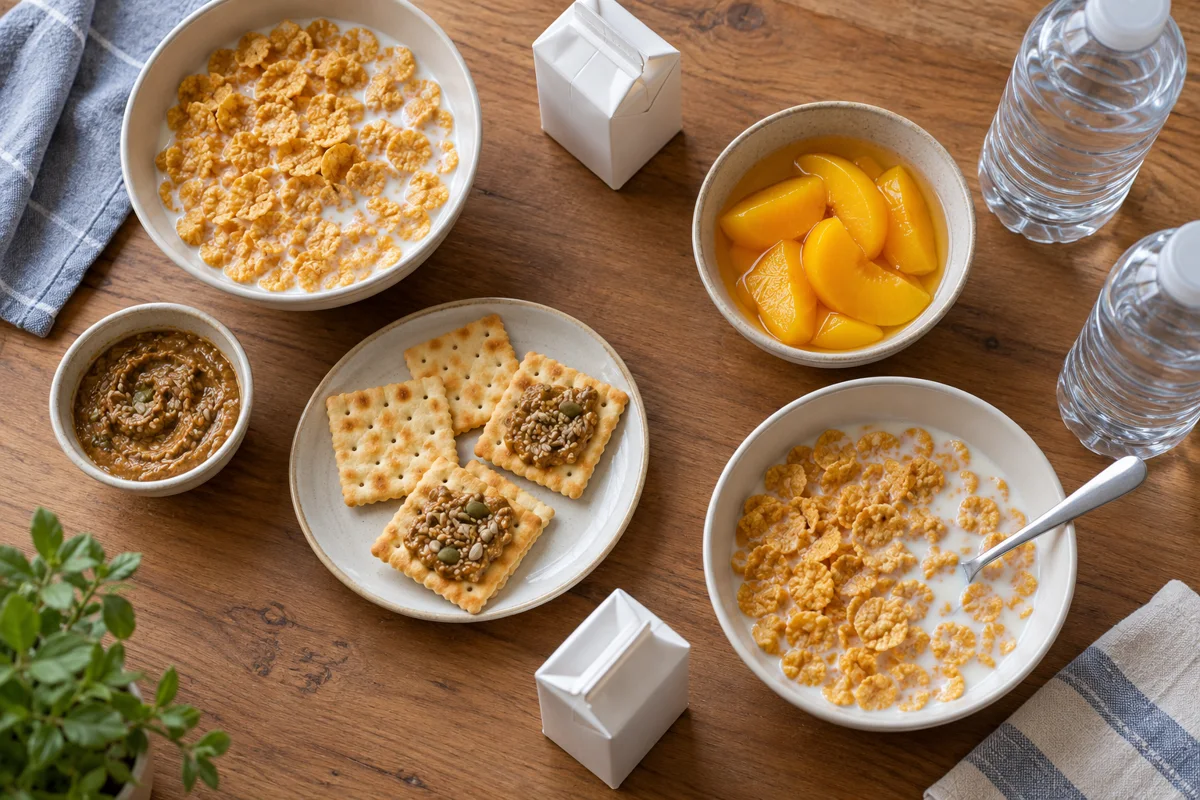
A three-day no-cook menu you can adapt
Each card describes a possible meal for one person, not a fixed serving size. Scale the ingredients using the portions you actually eat. Only use products whose labels support the described preparation and storage. Replace allergens and foods that are unsuitable for the person's age, swallowing ability or care plan.
For two people over three days, this pattern contains six breakfasts, six lunches and six evening meals: 18 individual meal slots. That does not mean 18 cans. A meal may use several packages, and a package may supply part of several portions only if they can all be used safely at the same sitting.
A breakfast of cereal and milk needs both components counted. A fish pouch is a protein component, not automatically an entire lunch. A bean-and-cracker meal also needs quantities that satisfy the eater. Add snacks, drinking water and any usual feeding support rather than using “three meals” as proof of adequate nutrition.
Calculate the meal gap before buying more
Count a meal as covered only when all its components, opening method and safe use are arranged. Do not count a bag of uncooked rice or an ingredient with no suitable accompaniment as a complete no-cook meal.
Household meal-gap planner
Assumes three meals per person daily. Count only complete, suitable meals that can be used safely without cooking. This is meal-slot arithmetic, not a calorie calculation.
Enter whole numbers: 1–30 people, 1–30 days, 0–10,000 covered meals and 1–100 complete meals per combination pack.
A combination pack means all ingredients needed for the stated number of complete meals. It does not mean one can, a manufacturer serving, or a snack pack. Include water, snacks and specialist feeding separately.
Worked example: two people need 18 individual meals over three days if planning three meals daily. If eight complete meals are already covered, ten are missing. A combination pack that truly supplies two complete individual meals would require five packs to close that gap. A box advertised as ten “servings” of crackers is not ten complete meals.
This planner does not assess calories, protein, hydration, individual dietary suitability or food safety. Those decisions remain yours, using your normal requirements and professional advice where relevant. Babies and specialist feeding plans need a separate calculation.
Single portions versus family packs: check what happens after opening
Single-use portions
Useful when one person eats alone and there is no fridge. Check cost and packaging waste; small does not automatically mean a full meal.
Family pack at one sitting
Useful when the household can finish the suitable contents together. Divide into real portions before counting meals.
Family pack across several days
Needs safe after-opening storage. Without it, do not count tomorrow’s leftovers as tomorrow’s meal.
Consider two hypothetical packages containing the same type of food. One holds a single portion; the other holds four. The larger pack is useful when four suitable portions will be eaten together. It becomes less useful when one person opens it with no refrigeration and expects the remaining portions to last until tomorrow.
Do not count those future leftovers as available meals unless appropriate cold storage is assured. A bag clip, sealed lunchbox or screw-top lid prevents some mess; it does not restore shelf stability. Where practical, choose a mixture of sizes: smaller ready-to-use portions for solo meals and larger packs for people eating together.
Compare cost per portion you can safely use, not just cost per kilogram. Buying smaller packs can cost more and create more packaging, so use them where they solve an actual leftover problem. We have not assigned universal supermarket prices because pack sizes, markets and household requirements differ.
Once opened, treat the food differently
A shelf-stable product is designed for a particular sealed condition. Opening it changes that condition. Follow the label's storage and use instructions, use clean utensils, and plan to finish suitable small portions at the meal when refrigeration is unavailable.
For US readers, USDA advises refrigerating perishable leftovers within two hours, or within one hour when the temperature is above 90°F (about 32°C). These are outer limits, not a reason to leave food out deliberately. If you cannot provide safe cold storage, do not save perishable leftovers for the next day. USDA leftover guidance.
For UK readers, follow the product's instructions and the FSA's chilling guidance rather than assuming every unopened-product shelf-life claim still applies. If you are elsewhere in Europe, check your national food-safety authority. Regional guidance is not permission to ignore a stricter product instruction. UK chilling, freezing and defrosting guidance.
What about the food already in the fridge?
Keep fridge and freezer doors shut as much as possible. Note when power failed. Evaluate the refrigerated food using the relevant authority's guidance and any reliable temperature record; do not open the door repeatedly to see whether things still feel cold.
UNITED STATES
Use the CDC cold-chain advice
CDC advises discarding refrigerated perishables after four hours without power or another cold source. Use its temperature-based instructions when a reliable thermometer or cold source is available.
Read CDC guidanceUNITED KINGDOM
Use UK temperature guidance
UK guidance says that when fridge temperatures reach 8°C or above, foods needing refrigeration should be discarded after four hours unless power is restored within that period. Its advice includes extra precautions for vulnerable people.
Read UK guidance in fullDo not eat unsafe refrigerated food simply to avoid waste before opening cupboard supplies. The no-cook reserve exists so that discarding unsafe food does not leave you without a meal. Our detailed eight-hour fridge outage examples and next-step tool help you separate outage length from temperature evidence.
No cooking still needs safe water and clean handling
Choose meals that minimise water use, but keep drinking water available. Powdered milk, drink mixes and foods needing rehydration add water dependencies. A ready-to-eat fruit portion and a small ready-to-drink carton may be easier to use than a powder requiring mixing and extra washing up.
Use a clean preparation surface and clean utensils, and follow hand-hygiene advice. If washing facilities are unavailable, simplify the meal and reduce unnecessary handling. Do not assume a wipe sanitises a dirty can opener or makes contaminated food safe. Keep packaging waste contained and separate from food preparation.
If there is a water-quality warning, follow the supplier's exact instructions. Boiling is not a universal fix for chemical contamination, and a camping filter does not remove every possible contaminant. See our water storage guide for preparing a reserve. UK households can use the drinking-water planner in our three-day small-flat guide.
Keep food away from floodwater. Do not use wet cartons, damaged packages or food with an uncertain contamination history. CDC gives disposal and specific salvage instructions for certain commercially sealed containers; salvaging those requires the full procedure, not a quick wipe. CDC emergency food guidance.
Adapt the plan before a household member goes hungry
Food allergies: read the current ingredient and allergen information, including relevant precautionary warnings, every time you buy a replacement. A familiar-looking pack from another country may have a different recipe. Vegan is not an allergen-free guarantee. Keep individual utensils or portions separate where cross-contact matters. FDA label advice; UK allergen-label guidance.
Children and swallowing needs: adapt food texture, portion size and choking precautions to the individual. Nuts, hard crackers and sticky spreads are not universal choices. If someone has a prescribed texture-modified diet or feeding support, agree suitable shelf-stable options with their care team in advance.
Medical diets: plan appropriate carbohydrates, sodium, fluids and other requirements according to the person's existing care plan. Do not ration a necessary food or change medication because a generic checklist assumes everyone can eat the same thing. Arrange help early if essential feeding cannot be maintained.
Infant feeding: this adult menu is not a baby-feeding plan. CDC identifies ready-to-feed formula as the safest formula option during an emergency, while clean feeding equipment and correct use remain essential. Do not dilute formula. Follow appropriate feeding support and the label's instructions after opening. CDC infant-feeding guidance; Food Standards Scotland power-cut guidance.
Two optional purchases that solve specific gaps
You can build this plan with ordinary supermarket food and tools you already own. These are named examples with manufacturer information, not a tested ranking. Buy a replacement only when the function is missing. Fish is optional; suitable ready-to-eat pulses or other proteins can serve different preferences.
As an Amazon Associate, Ready & Resourceful earns from qualifying purchases. US buttons open Amazon.com model searches with our affiliate tag. The UK opener link has no UK affiliate tag. Search links are not verified offers; check seller, model, pack size and current label. No live prices or ratings are claimed.
OXO Good Grips Soft-Handled Can Opener
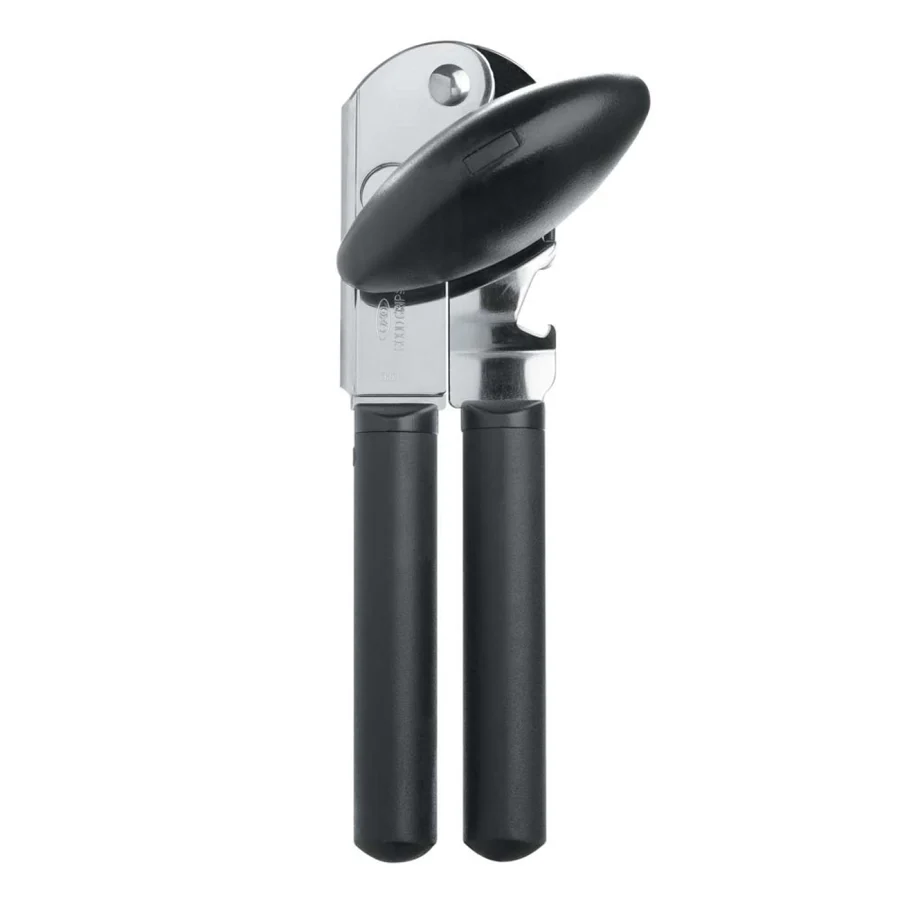
OXO identifies SKU 28081 as a manual opener with cushioned handles, a large turning knob and a stainless-steel cutting wheel. Its job in this plan is simple: open suitable cans without electricity.
Check before choosing: Try it with your actual cans and the person who will use it. Grip descriptions are manufacturer claims, not our accessibility test. A working manual opener you already own can do the job; use care around sharp lids.
Amazon US product search
COMPARE NOWSearch the same opener on Amazon UK · UK manufacturer reference
StarKist Light Tuna in Water, 2.6 oz pouch
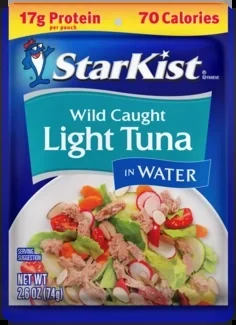
The manufacturer lists a 2.6 oz (74 g) pouch that needs no draining. Its published nutrition panel gives 70 calories and 17 g protein per pouch. This illustrates why a protein portion is not a full meal: pair it with appropriate additional food.
Check before choosing: Contains fish. Verify the current ingredients, instructions and package size. Vary proteins and follow any relevant dietary guidance; this is not a recommendation to eat tuna at every meal. Do not microwave the pouch. Regional availability varies.
Amazon US product search
COMPARE NOWPack by meal and keep the instructions
Meal bundle
Group a meal’s unopened ingredients. Retain product labels and identify intended eaters or substitutions.
Tools and hygiene
Keep the tested manual opener, suitable utensils and cleanup supplies nearby.
Water and review
Store safe drinking water separately and record food dates, missing items and your next review.
Use removable labels on the outer container rather than stripping ingredient, date and storage information from individual packs. Group the components for a meal, identify who it is for, and keep any relevant opening tool available. In a shared home, a short location record is more useful than one person's memory.
Your no-cook food checklist and printable meal sheet
The interactive list saves ticks on this browser when storage is available. It does not send your selections to us. Print the checklist or download the two-page worksheet for an offline meal plan and shopping-gap record.
Ready & Resourceful no-cook food checklist
readyresourceful.com/preparedness/no-cook-emergency-food/ · Planning aid; follow actual labels and local instructions.
0 of 12 tasks ready
Saved on this browser only when local storage is available.
Document your own pantry exercise
A real exercise can reveal gaps that a shopping list misses. The blank record below is for your observations; we have not filled it with invented results.
- Choose one actual meal. Record exact products, quantities, current labels and who will eat it.
- Check access and preparation. Can that person open, serve and eat it using the planned tools and hygiene arrangements?
- Record the leftovers. Note any opened food requiring refrigeration and how you will handle it safely.
- Measure rather than guess. Record the actual cupboard opening, occupied space, accessible placement and receipt total.
- Make one useful change. Replace an unsuitable pack size, add a missing component or improve access, then record what remains unresolved.
Follow food-safety instructions throughout. Do not simulate an outage by leaving perishable food unrefrigerated, tasting suspect food or ignoring cooking directions. Photos of your own setup should exclude personal documents and other private details.
Keep the five-card visual summary
Five portrait PNG cards summarise the planning steps. Save them for reference or share the complete set with credit to Ready & Resourceful and a link to this guide. The full article and actual product instructions provide essential context.
Original R&R text-and-layout cards may be shared with attribution. This permission does not cover manufacturer product photographs elsewhere in the article.
Five mistakes that make a full cupboard unusable
- Counting ingredients as meals. A tin, a snack bar and a bag of cereal are not interchangeable portions. Pair foods and record quantities.
- Buying food that needs water or heat. A freeze-dried dinner can be useful in a different plan, but read its preparation instructions before counting it here.
- Relying on an electric opener. Test a manual option or select suitable packaging the intended person can open.
- Saving opened food without refrigeration. Reclosing a package does not reset its storage requirements.
- Improvising a flame indoors. Do not bring a camping stove, barbecue or generator inside to rescue a no-cook plan. An open window does not make that safe. London Fire Brigade cooking guidance.
Common no-cook food questions
Can I eat canned soup cold?
Some commercially canned soups are fully cooked, but check the exact product's directions. A condensed soup can also require dilution. We would not count an unknown product as a complete ready-to-eat meal simply because it comes in a can.
Can I eat microwave rice without a microwave?
Only if the manufacturer confirms that the exact product is suitable without heating. “Microwaveable” alone does not establish this. Choose an alternative you have verified if instructions are unclear. Do not confuse a sealed cooked-rice pouch with raw rice or previously cooked rice stored unsafely.
Is cold soaking a substitute for cooking?
Do not assume it is. Adding cold water does not necessarily perform the safety function of the cooking process on the label. Raw dried beans and ordinary rice are not suitable foundations for this guide's ready-to-eat plan.
Do I need emergency ration bars?
Not necessarily. Ordinary foods can cover this use if they are suitable, sufficient and usable under your planned conditions. Specialist products should be evaluated for serving size, preparation, allergens and nutritional role, rather than a “survival” label.
Should I buy three days or more?
The calculator lets you choose the planning period; it is not a recommendation for every location. Follow local emergency guidance and consider access, household needs and the likely disruption. For UK-specific three-day planning, use the small-flat guide. Our 72-hour checklist provides a broader starting point.
Evidence and scope
Prepared by Ready & Resourceful using the linked USDA, CDC, FDA, FSA, UK government, fire-service and manufacturer references, checked on 23 October 2026. Original meal frameworks, visual sorting aids and arithmetic tools support household planning; they do not certify an individual food's safety or a menu's nutritional adequacy. Illustrative food scenes are not photographs of product testing.
See our editorial standards, affiliate disclosure and correction contact. Recheck food dates and actual labels when rotating supplies with the kit maintenance checklist.
Put the essentials into one household plan
Use our complete 72-hour emergency kit checklist for water quantities, a three-day food plan, care supplies and portable essentials. Includes a water calculator, printable planning sheets and an original narrated video.