PREPAREDNESS / FIELD GUIDE
Emergency Water Storage in a Small Apartment: Containers and Rotation
Choose manageable containers, suitable locations and a clear review routine.
Part of our beginner preparedness guide. Choose a starting task or continue with this topic.
By Ready & Resourceful · Published 7 October 2026 · Research-based guide; no product testing claimed.
Quick answer
Choose manageable containers and suitable storage locations before purchasing a water reserve. Use the CDC baseline stated below, allow for additional household needs, and keep a dated record of the water actually available. [CDC guidance]
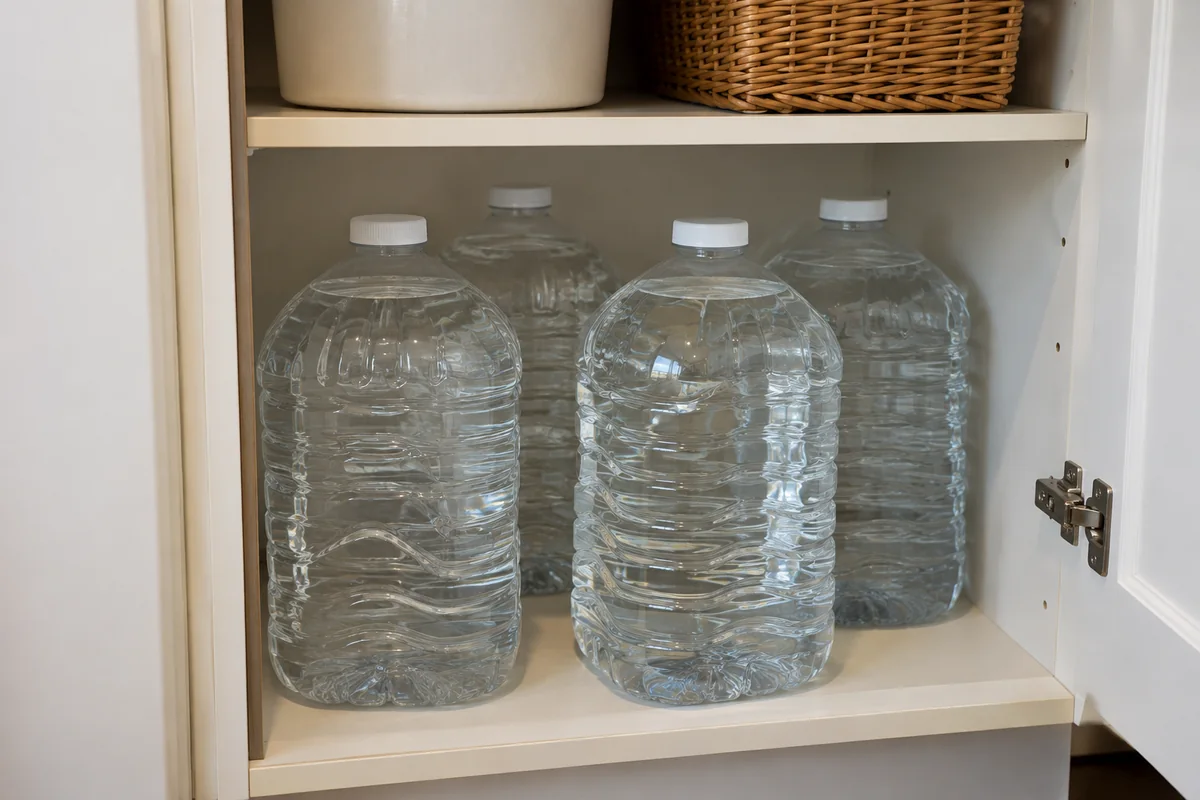
Water storage can feel like a space problem before you have bought a single bottle. Start by knowing the amount you are planning for, then find suitable places and containers you can handle. A small apartment may require several recorded locations; that is easier to manage than a large container you cannot comfortably move.
Set your starting supply
CDC recommends at least one U.S. gallon per person per day for three days, working toward two weeks where possible. One U.S. gallon is approximately 3.8 liters. Allow more for heat, illness, pregnancy and pets. This is a household emergency reserve guideline, not an outdoor drinking prescription. [CDC guidance]
Choose containers you can handle
Unopened commercially bottled water is CDC’s most reliable emergency option. For self-filled supplies, use appropriate food-grade containers. Never reuse containers that held toxic chemicals. Follow the CDC’s linked cleaning and sanitizing instructions before filling. [CDC guidance]
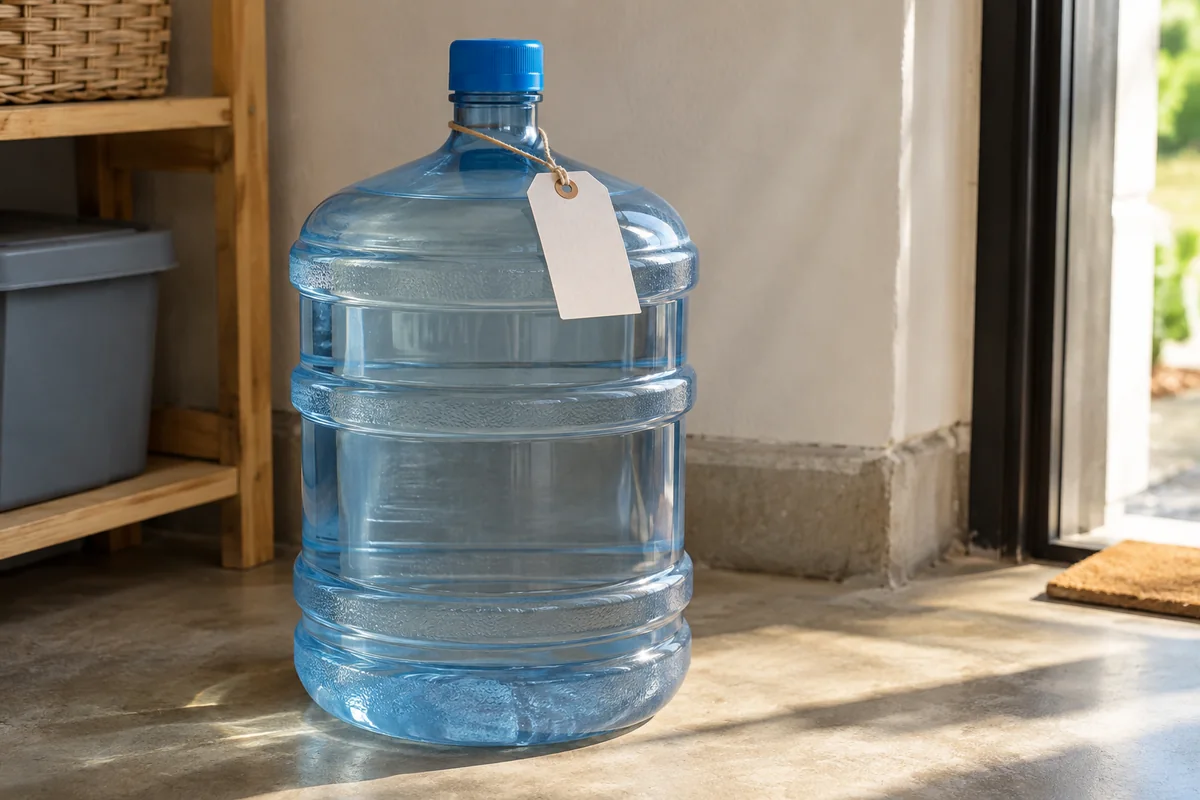
When choosing a size, consider how you will lift, carry and pour it. A large container may save packaging space but be impractical for the person who needs to use it. Measure the available opening as well as the storage footprint, and leave room to remove the container without moving an entire shelf of belongings.
Make a location map
List the proposed locations on paper: for example, a suitable low cupboard and a separate indoor storage area. Check each location against CDC advice to store water cool, away from sunlight and toxic substances. Keep emergency exits clear and respect furniture load limits. Do not assume a balcony or hot vehicle is suitable. [CDC guidance]
A simple record needs four fields: container, amount, location, and review date. Count filled containers currently available, not empty containers you intend to fill. If you spread the reserve across multiple places, let household members know the map exists and where it is kept.
Label and review
Mark self-filled containers with the filling date and replace that water every six months under CDC guidance. Follow package dates for purchased water. Review the supply when your household changes or you use part of the reserve. [CDC guidance]
Set a reminder in your own calendar. The website tracker displays review dates when you open it; it does not send notifications. After using a container, update the record and replenish the gap. A small, accurate record is more useful than a list that overstates what remains.
Your next action
Measure one candidate space, select a container you can handle comfortably, and write down the starting quantity. Use the original CDC instructions for any sanitation procedure, and follow local notices if your tap supply becomes unsafe. [CDC guidance]
A simple water-storage record
| Container / amount | Location | Filled or package date | Next review |
|---|---|---|---|
| Example: labeled container A | Suitable indoor cupboard | Enter the actual date | Enter the applicable review date |
| Example: purchased bottles | Separate suitable storage spot | Record package information | Follow package dates |
Suggested planning format. Examples describe a proposed arrangement, not a completed or tested project.
Planning example: divide your reserve into containers that the intended user can lift and pour, then record each location. This is a suggested record format; suitability depends on container instructions, temperature, household needs and the supporting surface.
A quantity example for a two-person household
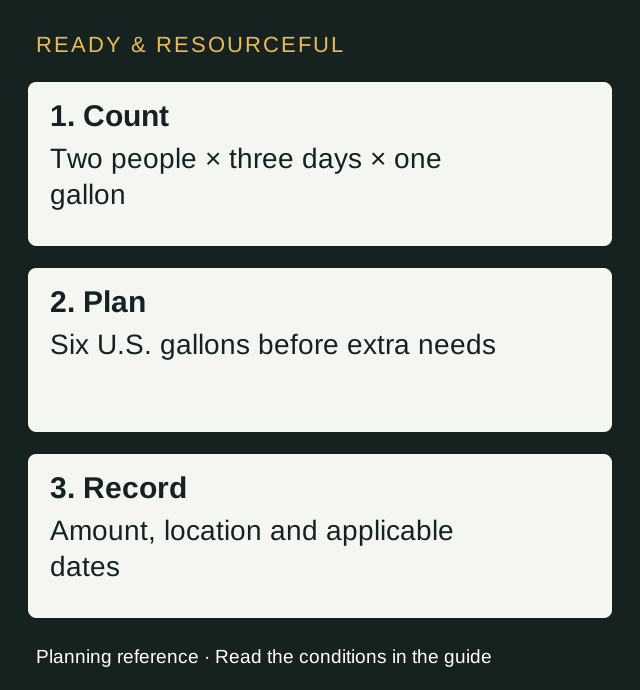
Using the CDC starting baseline below, two people for three days require at least six U.S. gallons: 2 people × 3 days × 1 gallon. That is approximately 22.7 liters. This arithmetic example does not include extra needs and is not a drinking-only prescription. [CDC baseline]
| Planning entry | Illustrative amount | What to record |
|---|---|---|
| Three-day baseline for two people | 6 U.S. gallons total | Count water currently available, not planned purchases. |
| Additional household needs | Add the appropriate extra amount | Note the reason, such as pets or particular household requirements. |
| Longer reserve | A separate planning goal | Check space, handling and actual quantity before expanding. |
For a different household, use your actual number of people. If only part of the reserve is ready, record that honestly. “Three gallons available; remaining supply to arrange” is more actionable than marking the whole task complete.
Compare containers before committing the space
Make a short comparison using the products you are actually considering: capacity, outside dimensions, closure, suitability for drinking water and handling instructions. Capacity tells you how much a container holds; dimensions tell you whether you can get it into and out of the intended space.
A proposed arrangement could use several smaller containers across two suitable indoor locations. That is an example of distributing storage, not a recommendation for any particular product. Before buying, check whether each person expected to use the container can lift and pour it. Keep the manufacturer information with your record instead of relying on an unverified “food-safe” claim.
What to do when part of the reserve is used
Update the quantity first. If a container is empty, remove its amount from the available total even if the container is still on the shelf. Mark refilling or replacing it as a separate action. This avoids confusing storage capacity with water you can actually use.
Keep two date fields where applicable: filled or package date, and next check. A review date is your reminder to inspect the record; it is not a claim that the water remains suitable regardless of its container or conditions. Follow the replacement and package-date guidance below. If local officials issue a water notice, consult their instructions and the CDC source rather than assuming your usual tap supply is safe.
Common planning mistakes
- Counting empty containers as available water.
- Buying a large container before measuring its storage opening.
- Assuming a convenient storage space has suitable conditions.
Your action checklist
- Identify household members and additional needs.
- Read the CDC baseline and container guidance.
- Measure candidate storage locations.
- Choose containers the intended user can handle.
- Record quantity, location and dates.
- Set a separate calendar reminder.
- Update the record after using or replacing water.
Download the plain-text checklist
The download includes the guide link and references. Keep a local or paper copy if you may be without internet access.
Questions about this guide
Does every container need to be kept in one place?
You can plan multiple suitable locations. Maintain a location record and make sure household members can find it. Each location still needs appropriate storage conditions.
Will the tracker remind me automatically?
No. It displays review dates when opened. Set a separate calendar reminder and keep a paper record if you need access without your device.