Quick answer
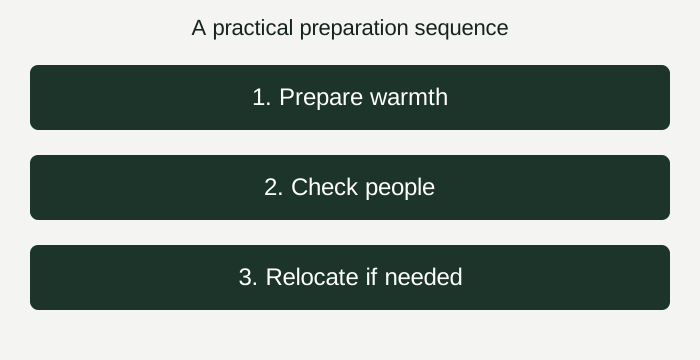
To stay warm during a power outage, put on dry layers, gather suitable blankets or sleeping bags, and use a manageable room while keeping exits clear. Keep battery-powered lighting available and monitor the people in your household. If you cannot maintain safe conditions, arrange a warmer place to stay. Never bring a grill, generator, or outdoor cooking equipment inside to create heat.
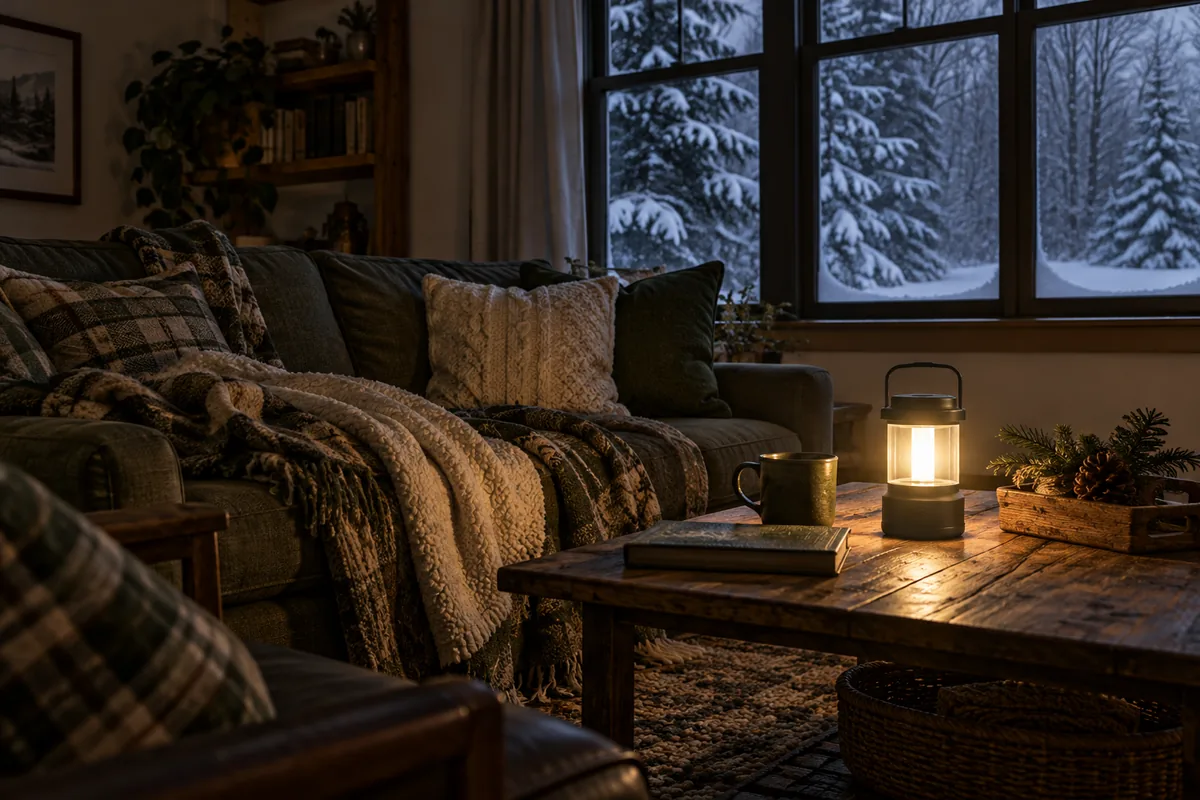
A winter blackout can feel manageable at first: the lights go out, the heating stops, and everyone searches for a flashlight. The harder decisions arrive later. Is the house still a suitable place to stay? Does someone need power for medical equipment? Can you travel before the roads worsen? This guide helps you prepare those decisions rather than offering a risky collection of improvised heaters.
Decide what makes your home unsuitable
Before cold weather, list the conditions that would prompt you to seek another location. Include medical equipment losing power, a person who cannot stay warm, a building hazard, and instructions from local authorities. Do not make the plan depend on a universal indoor temperature that supposedly suits every person.
The CDC advises seeking shelter with friends or at a community shelter when conditions are too cold. Local services can provide current information on warming locations and access. Save those contact details while you have power and internet.
Choose a primary destination and a backup. Ask about access, mobility needs, pets, and transportation. A plan that assumes someone will collect you is incomplete until that person knows and agrees.
Prepare for the possibility that leaving becomes harder. A suitable destination is not useful if the route closes before you decide to use it. Follow travel restrictions and emergency guidance; delaying a departure to protect household belongings can create a more difficult problem.
Set up a warmth kit before the outage
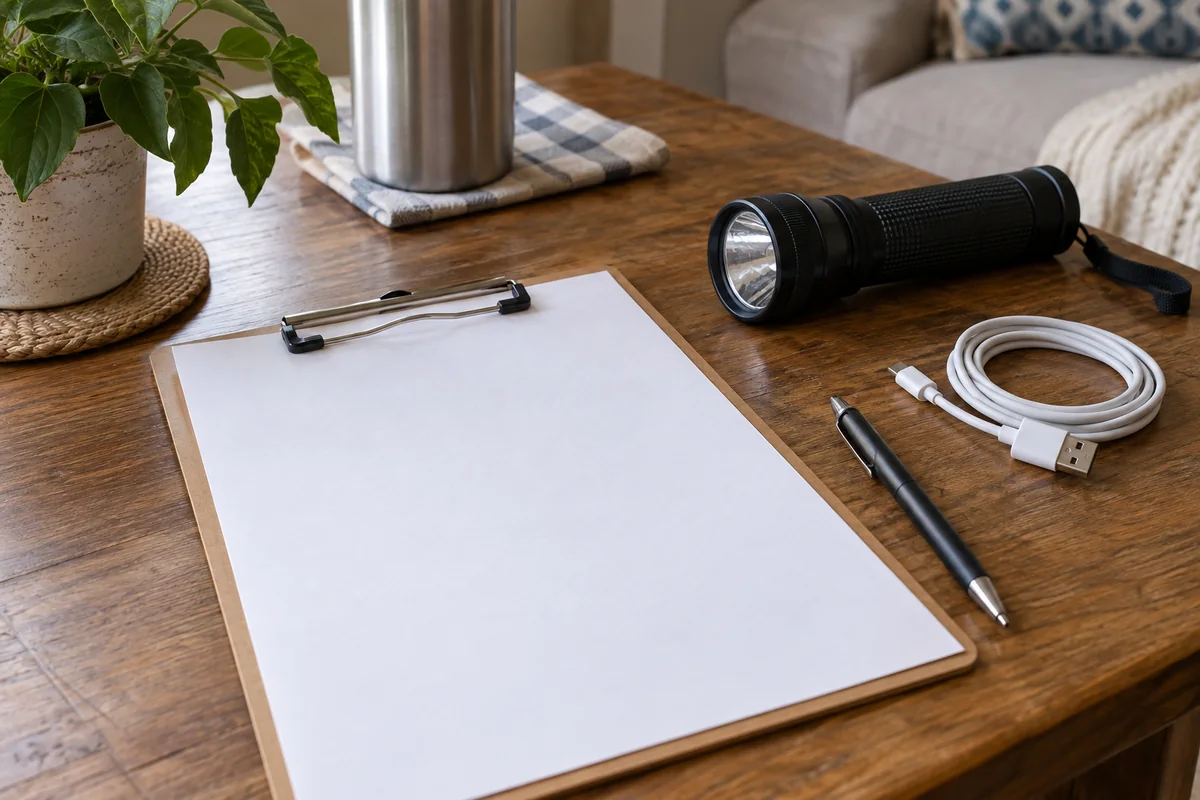
Keep supplies together or list their locations so another household member can find them. Your kit can be ordinary household equipment, not a special branded package.
- Dry clothing layers, warm socks, hats, and appropriate outerwear.
- Blankets or sleeping bags suitable for the people using them.
- Battery-powered flashlights or lanterns and the required batteries.
- A charged power bank and the correct phone cable.
- Written emergency contacts and a relocation plan.
- Needed daily medicines and a product-specific medical power plan.
- Drinking water and familiar food that does not require cooking.
- Working smoke and carbon-monoxide alarms with the backup power appropriate to the devices.
- Essential supplies for children, pets, and anyone needing assistance.
- A household checklist for departure items that cannot remain packed.
Inspect what you already own first. A blanket in a damp storage box or a flashlight with exhausted batteries is not ready just because it appears on an inventory. Check condition, location, and usability together.
The first minutes: light, information, and people
Use a battery light rather than moving around with an open flame. Check on everyone, especially people who cannot easily explain their needs. Make sure common paths and exits remain usable.
Confirm what information is available from the utility and local authorities. A restoration estimate can help planning, but it is not a promise. Avoid building the entire household decision around one optimistic update.
Keep communications brief and useful. Tell a contact who is together, what help may be needed, and whether you are staying or preparing to leave. Do not wait until the phone is almost empty to establish a backup contact arrangement.
If you live in an apartment, consider building access and shared systems. Ask management about the building’s arrangements before an emergency, especially if lifts, powered doors, or other equipment affect accessibility. Our apartment power outage checklist covers the wider preparation.
Dress people before trying to heat a building
Start with clothing that is dry and comfortable. Make extra layers easy to reach. Pack a separate clothing pouch for each person if that prevents confusion. Keep children’s sizes current.
The CDC’s winter guidance supports extra blankets, sleeping bags, and winter clothing as preparation. Choose supplies that fit the person and actual conditions. A small reflective sheet is not equivalent to an appropriate sleeping bag or a safe heated destination.
Avoid treating everyone as if they have the same ability to manage clothing. A person with limited hand movement may need help fastening a jacket. Someone who uses a mobility aid may need a different arrangement for blankets. Discuss the practical assistance in advance.
Keep a dry change available if someone has been outside. Do not pile wet boots or clothing onto the warmth supplies. Separate storage makes it easier to locate clean layers without disturbing the rest of the room.
Choose a practical room without blocking exits
A shared room can make supplies, communication, and checking on people easier. Choose one with usable exits and enough space for the occupants. Keep the path to the bathroom and door lit and clear.
Close unnecessary internal doors where appropriate, but do not interfere with ventilation requirements, alarms, or the safe operation of an approved heating system. A generic suggestion to “seal everything” can conflict with the building’s equipment and safety instructions.
Arrange blankets and seating so that nobody has to step over bags in the dark. Put a light, contacts, and essential medicines in a known location. Keep the room usable rather than turning it into a tightly packed storage area.
Remember that grouping people is an organizational measure, not proof that the room will remain warm enough. Continue assessing people and conditions, and use the relocation plan when necessary. Household setup cannot overcome every outage or weather situation.
Avoid dangerous heating shortcuts
Do not use a gas oven or range as a room heater. Do not bring a charcoal grill, camping stove, or outdoor fuel-burning appliance into a home, garage, or other enclosed space. Carbon monoxide cannot be reliably detected by smell.
The CDC carbon-monoxide prevention guidance warns against indoor use of generators and grills. If you use a generator, follow official placement guidance, the manufacturer’s instructions, and qualified electrical advice. A window left open does not turn indoor operation into a safe arrangement.
Avoid candle-and-flowerpot heater schemes and other improvised combustion ideas. Keep this household plan centred on clothing, suitable equipment used exactly as intended, and a warmer destination when needed.
For a fireplace, wood stove, or other existing system, arrange appropriate inspection and follow its instructions. Do not assume that a chimney, fuel connection, or appliance is safe because it worked years ago. Properly installed equipment has requirements that a general article cannot inspect on your behalf.
Plan around medical power needs
If someone depends on electrically powered medical equipment, contact the clinician, equipment supplier, and utility before an outage. Ask about backup power, expected operating time, compatible equipment, and the point at which another location is needed.
Write the plan in accessible language. Include equipment names, contact details, the agreed backup arrangement, and who helps with departure. Keep a paper copy available. The person normally responsible may be away when power fails.
Do not calculate a medical-device plan from a generic power-bank advertisement. Compatibility, operating conditions, and individual needs require product-specific and professional guidance. Battery capacity alone does not establish suitability.
Ask your pharmacist about medicines requiring temperature control. A food thermometer or a refrigerator time rule is not a substitute for medication instructions. Include any daily-use items on the departure card attached to your go bag.
Children, older adults, and household check-ins
Create a simple responsibility arrangement. Who checks on a child, who contacts an older relative, and who can help a person dress or leave? Make those roles clear without assuming that a capable neighbour will always be home.
A child who is quiet may still need attention, and an adult may minimize discomfort to avoid being a burden. Ask direct practical questions: do you need another dry layer, can you use your hands comfortably, and do you need help getting to the bathroom? Seek professional help for medical concerns.
Do not improvise infant sleeping arrangements to solve warmth problems. Follow current infant-care guidance and seek a suitable warm location when necessary. Medical and caregiving needs take priority over conserving household supplies.
Include pets in the destination plan. Pack the restraint, carrier, or daily supplies you will actually need. Checking pet arrangements early can avoid a last-minute conflict between keeping the household together and accessing suitable shelter.
Food, water, and hygiene without extra heat
Keep some familiar food that does not depend on an operating cooker. Check opening requirements and dietary needs. A pantry full of dry ingredients may still require equipment, fuel, and clean water that are unavailable.
Limit unnecessary refrigerator and freezer opening. Use our food safety during a power outage guide for time, temperature, and official food-specific guidance. Protecting food should not distract from checking people or leaving an unsuitable home.
Keep drinking water accessible and containers manageable. Separate the immediate household portion from heavy reserves that one person cannot move easily. For storage in a compact home, see our apartment water reserve guide.
Think through hygiene if water service is also interrupted. Have ordinary personal supplies ready and follow the local water authority’s instructions. Do not assume that taps, drains, or building pumps will function normally merely because water containers are available.
A calm relocation checklist
Write a departure list before you need it. Include destination confirmation, route information, suitable clothing, keys, medicines, essential documents, phone, charger, water, and supplies for dependents.
Assign shared equipment deliberately. One person can carry the contact sheet while another handles the child’s bag; the important point is that somebody is responsible. Do not let both adults assume the other collected the medication pouch.
Tell a trusted contact where you are going. Leave according to local instructions and travel conditions. If you cannot leave safely or need urgent assistance, contact the appropriate emergency service rather than attempting an unsuitable journey alone.
Follow utility and building instructions for appliances, water systems, and property protection. Do not attempt electrical changes or plumbing work beyond your competence. The relocation plan protects people first; specialists can advise on the building.
Preparation for renters and small homes
Renters may have little control over insulation, building heating, or common-area equipment. Concentrate on the things you can verify: household layers, lighting, communications, personal power needs, contacts, and access arrangements.
Ask management where emergency information will be posted and how accessibility problems are handled. Keep the answer in your household record. A verbal conversation from several years ago may no longer describe the building’s current arrangements.
Choose storage that remains available during a blackout. Avoid putting the only flashlight behind a powered door or placing the warmth kit in a shared room you may not be able to enter. Keep bags clear of exits and communal routes.
Use our small-space supply storage guide to assign locations. Clear labels and a short inventory can be more useful than buying another storage container. Make sure every household member knows where the immediate-use supplies are.
Practice the parts you can safely rehearse
On an ordinary evening, locate the light, warmth supplies, contact sheet, and departure bag. Try finding them with reduced room lighting, without creating hazards or disturbing other people. Correct any awkward access.
Review the contact arrangement. Does the backup destination still make sense? Has someone changed a phone number? Is the person who agreed to help still available? Plans need maintenance just as batteries do.
Test charging equipment with the actual phone. Inspect blankets and clothing, and read instructions for any equipment you intend to use. Do not test dangerous heating ideas or deliberately expose anyone to cold.
A short rehearsal should produce a concrete change: a light moved nearer the door, a cable replaced, a child’s coat updated, or a written destination added. Keep the process small enough that you will repeat it when needs change.
When power returns
Check official updates and follow utility instructions before restarting equipment. Inspect only what you can safely inspect. If there is damage, an unusual smell, an alarm, or another hazard, seek appropriate help.
Review refrigerated food using the actual outage history, not the fact that the lights are back. Handle medicines according to professional guidance. Confirm that medical equipment and necessary communication devices are functioning as intended.
Restore the household kit. Charge devices, replace consumed supplies, dry any damp items, and note which part of the plan was difficult. Record uncertainties while they are fresh rather than inventing a precise timeline later.
If you relocated, contact your destination host or support person before returning. Restoration at one address does not necessarily mean the entire route or building is ready. Follow current local information.
Questions about staying warm without electricity
Is there one indoor temperature at which everyone must leave?
Individual vulnerability, duration, clothing, medical needs, and available assistance all matter. This guide does not prescribe a universal threshold. Arrange person-specific advice where needed and relocate when you cannot maintain suitable conditions.
Should I buy a portable heater before winter?
Only consider equipment suitable for the intended space and used according to its instructions, building rules, and applicable safety requirements. First close gaps in clothing, alarms, lighting, and relocation. A purchase does not make an unsuitable heating arrangement safe.
What is the most useful first step?
Write down a warmer destination and how everyone would reach it. Then put dry layers, battery lighting, contacts, and daily essentials where they can be found. That gives you an immediate household plan while you address larger equipment or building questions.
Keep a local checklist
Download the plain-text checklist and print or save the relevant official instructions before you need them. Review this guide for the conditions behind each item.
Download all 11 free planning checklists (ZIP). No sign-up required. Complete and print the sheets locally; read each guide for safety context.