UK HOUSEHOLDS / SMALL-SPACE PREPAREDNESS
The UK Says Prepare for Three Days. What Do You Actually Need in a Small Flat?
By Ready & Resourceful · · Research-based practical guide
Water you can store. Meals you can eat cold. Equipment you can find in the dark. A realistic plan for the flat you live in.
THE PRACTICAL ANSWER
Prepare for three days, starting with the space you have
A UK three-day emergency kit for a small flat needs drinking water, familiar food you can eat cold, lighting, communications, essential health supplies and a household plan. Start with what you already own. Keep water separate from your lighter equipment, and keep everything inside your flat without obstructing an escape route.
Water comes first: the current Be Ready checklist specifies 3 litres per person per day for drinking. Two people therefore need 18 litres for three days, before adding water for other needs. Check the official checklist.
PLAN YOUR WATER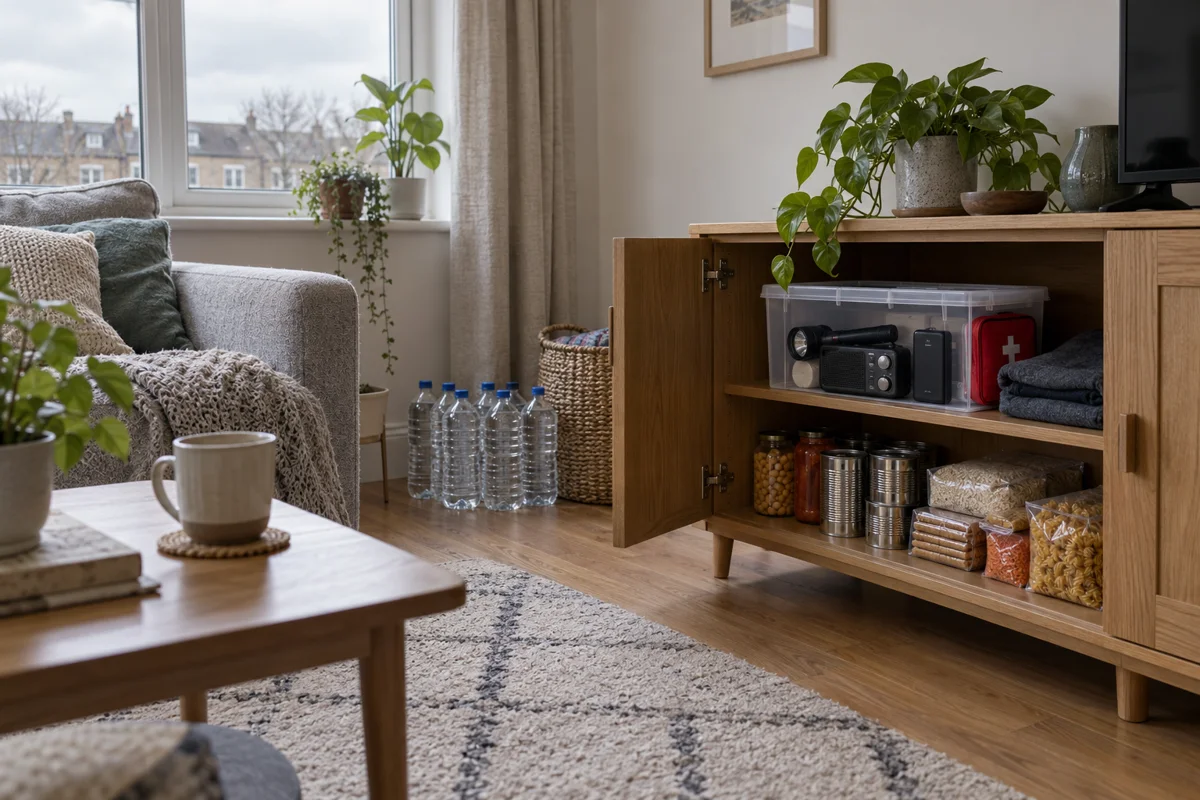
The lights go off halfway through making dinner. Your phone still works, but the battery is low. The lift is stopped, the kettle is useless, and your emergency food turns out to be pasta that needs boiling. A cupboard full of supplies can still leave you with the wrong things.
This guide turns the UK's three-day advice into a workable arrangement for a small flat. Our example household is two adults, no dependants, no specialist medical equipment, and limited cupboard space. The menus and storage layout are proposed planning examples, not a tested kit or a promise that a particular box will hold everything. Adapt the quantities to the people who actually live with you.
Watch the 43-second practical guide
Moving footage, spoken guidance and English captions take you through five planning checks. Turn on sound for narration, or follow the captions and transcript.
Licensed illustrative footage by Ron Lach: kitchen organisation and food supplies, used under the Pexels licence. Editing, script and captions by Ready & Resourceful; synthetic narration. This is a planning explainer, not footage of an R&R product test. Some jars contain raw ingredients that require cooking; follow the narration and your own product labels.
Read the complete video transcript
- Start with your cupboard. Start with supplies you already own. Check dates and preparation instructions, then write down the gaps before buying more.
- Choose no-cook options. Keep familiar food that can be eaten without cooking, and check that everyone can open and eat the planned meals.
- Plan water separately. Plan drinking water separately from food. Use the water calculator below, and allow extra for cooking, hygiene and individual needs.
- Keep essentials accessible. Add working lights, charged power banks and essential personal supplies. Choose accessible storage that keeps exits and walkways clear.
- Rotate and recheck. Use older suitable food first and replace it. Recheck dates, batteries and household needs. Use the checklist below to record gaps.
What has the UK government actually asked households to do?
On 22 October 2026, the Cabinet Office announced updated Be Ready advice asking households to be self-sufficient for three days during an emergency. It highlighted bottled water, non-perishable food and signing up for extra utility support where eligible. The statement also recognises that not everyone can take every step. Read the ministerial statement.
Treat three days as a useful planning period, not a prediction of how long an outage will last or a guarantee that help arrives at hour 72. Your task is to reduce avoidable problems while following instructions about the actual incident. A home kit also differs from a bag you could carry if told to leave: your drinking-water reserve alone may be too heavy to evacuate with.
If you already use our 72-hour emergency checklist, use this UK guide to adjust the water calculation, emergency numbers and flat-specific arrangements. Check current local advice rather than treating every European country's guidance as identical.
The Cabinet Office’s 22 October campaign announcement explains that Be Ready updates the earlier Prepare branding and builds on household advice published since May 2024.
How much water do you need for three days?
Use people × 3 days × 3 litres for the drinking-water component. Nine litres per person is the three-day result. It does not include toilet flushing, washing, cooking, pet water or other additional requirements. The calculator below keeps those additions visible instead of silently counting them as covered.
Your three-day drinking-water planner
Three days at 3 litres per person daily. Add a separate allowance for other needs; this tool does not determine a medically appropriate requirement.
Enter 1–30 whole people, 0–1,000 extra litres and 0–10,000 stored litres.
The extra allowance starts at zero to expose an unfinished decision, not to suggest other needs are zero. Consider hygiene, food preparation, pets and care requirements separately. Count only safe usable water; do not count non-drinking water here.
| People | Drinking water | Using 2-litre bottles |
|---|---|---|
| 1 | 9 litres | 5 bottles = 10 litres |
| 2 | 18 litres | 9 bottles = 18 litres |
| 3 | 27 litres | 14 bottles = 28 litres |
| 4 | 36 litres | 18 bottles = 36 litres |
Rounding up to whole bottles creates a small surplus; it does not create a complete hygiene reserve. Eighteen litres of water weighs roughly 18 kilograms before packaging. Split it into loads you can handle and check the supporting furniture's load limit. A large container may appear efficient until you have to lift it, pour from it or carry it upstairs.
Keep sealed drinking water in a suitable cool storage location following the label, away from chemicals and heat. Choose bottles you can open and pour comfortably. A folding empty water carrier can help collect an announced supply, but an empty carrier contributes zero litres to your stored reserve. Our small-apartment water storage guide covers container access and rotation in more detail.
If the supplier issues a water-quality notice, follow its exact instructions. A loss of pressure, a boil-water notice and a do-not-drink notice are different situations. Do not assume a camping filter will solve every contamination problem. Check the supplier's updates and the government's water-outage guidance.
What can you eat for three days without cooking?
Build meals before buying tins. Count three breakfasts, three lunches, three evening meals and enough snacks for each person. Then inspect the actual labels: a long shelf life does not mean a food is ready to eat, and a shelf-stable carton may need refrigeration after opening.
The example below is a menu framework for an adult who can eat the listed ingredients. It is not a calorie prescription. Use package serving sizes and your ordinary appetite to set quantities; substitute for allergies, dietary requirements and medical advice. A household with very different appetites should not divide every pack equally by default.
DAY ONE
Familiar food first
- Breakfast: cereal with a single-use shelf-stable milk portion.
- Lunch: ready-to-eat tinned fish or an appropriate labelled alternative, with crackers.
- Evening: ready-to-eat tinned beans and vegetables suitable for eating cold.
- Extras: fruit portions and a familiar snack.
DAY TWO
Keep preparation simple
- Breakfast: oatcakes with nut butter or an allergy-safe alternative.
- Lunch: a labelled ready-to-eat lentil or bean portion with crackers.
- Evening: tinned ready-to-eat meat, fish or pulses with vegetables.
- Extras: dried fruit and suitable snack bars.
DAY THREE
Avoid leftover problems
- Breakfast: repeat a breakfast you already like.
- Lunch: use individual portions of your preferred cold meal.
- Evening: another complete ready-to-eat cupboard meal.
- Extras: fruit and snacks matched to your needs.
For two adults: write six breakfast portions, six lunch portions and six evening-meal portions on your shopping list, plus snacks. That is 18 individual meal portions across the household, not 18 tins: a meal may require several ingredients. If a tin says two servings but you normally need the whole tin, plan with your real use. Include a manual tin opener and try it before putting it away.
Choose pack sizes that your household can finish safely at one sitting when refrigeration is unavailable. Do not keep opened leftovers at room temperature just because the unopened product was shelf-stable. Prefer foods that need little water, few utensils and minimal washing up. Dry rice, dried beans and ordinary dried pasta add cooking and water requirements; they are poor foundations for this particular no-cook example.
Keep fridge and freezer doors closed as much as possible during an outage. UK food guidance estimates that a closed fridge stays cold for up to four hours; a full freezer may keep food frozen for up to 48 hours, or 24 hours if half full. These are estimates, not a guarantee. Follow temperature-based advice and take extra care for people vulnerable to foodborne illness. Read the detailed food-safety guidance; Food Standards Scotland provides Scottish guidance. Our fridge-outage guide includes an outage record.
Where do you put everything in a small flat?
Use three locations with clear jobs: water low down, everyday food in a rotating cupboard, and a small equipment box you can find in darkness. You do not need to buy matching containers or put every item in one oversized tote. Record the actual locations so another household member can find them.
Water low down
Two adults: 18 litres for drinking over three days, plus separately planned extras.
Check weight and accessFood in rotation
Label complete meal portions. Choose ready-to-eat food and packs you can finish.
Test the tin openerTools within reach
Keep light, radio, correct batteries and charging cable together.
Put the first torch outside the boxOur two-person water example alone contains 18 litres of liquid. Bottle shapes take additional space. The equipment box in the illustration therefore does not claim to hold the full household reserve. Keep lighter tools together and distribute water in suitable locations inside the flat, without creating a trip hazard or overloading furniture.
Do not move supplies into shared corridors, stairwells, service cupboards or other communal escape routes because your flat is crowded. London Fire Brigade warns that stored belongings in communal areas can endanger residents. Read its guidance for residential blocks. For a location record and labelling approach, use our emergency supply storage guide.
What should you do about lighting, phones and information?
Place a working torch somewhere you can reach before you open the storage box. Test the switch, check the battery type and put the matching spares with it. A hands-free light is useful for finding documents or opening food; maximum advertised brightness is less important than being able to use the controls comfortably.
Charge your existing phone power bank and test it with the actual phone and cable you will use. Label the cable if several people share equipment. Battery capacity on the packaging does not translate directly into a guaranteed number of phone charges. Age, conversion losses, temperature, phone battery size and use all matter. A USB phone charger will not run a kettle, electric heater or a typical boiler.
For news, test a battery-powered FM radio in the room where you expect to use it. Write down a working station frequency rather than relying on an app or a streaming account. This UK purpose differs from buying a US NOAA weather-alert radio: check the broadcasts and alert systems a device actually supports before ordering from overseas. Our emergency radio guide explains regional compatibility.
If the heating stops, have warm clothing and bedding accessible. Do not improvise a heater from candles or run a barbecue, camping stove or generator indoors. Opening a window does not turn a room into a safe outdoor cooking area. London Fire Brigade explicitly warns against outdoor cooking equipment indoors. This is why the menu above works without a flame.
What changes when you live above ground level?
Ask the building manager what an outage means for lifts, entry systems, water pumps and any equipment you depend on. Do this before an incident: different buildings behave differently. A top-floor flat is not a guarantee of uninterrupted tap water, and an electronic entrance may have its own backup arrangements.
Write down the managing agent's emergency contact, your flat number, building address and a trusted nearby contact. If stairs would be difficult or impossible without a lift, arrange an individual support plan now. A box of supplies does not solve an access problem. Do not assume a neighbour can safely carry someone downstairs.
Follow your building's fire-safety instructions and emergency-service directions; an ordinary power cut and a fire require different decisions. Do not replace a building-specific plan with a blanket instruction to stay put or evacuate. London Fire Brigade explains purpose-built flat escape planning.
For reporting electricity outages, record 105 in England, Scotland and Wales, or 03457 643643 in Northern Ireland. These are outage contacts, not substitutes for 999 when someone is in immediate danger. Keep your water supplier's number and a trusted contact on paper too. Official power-cut advice.
Adjust the plan for medication, babies, pets and support needs
Medication: keep a current medicine list and arrange repeat prescriptions in good time. Ask your pharmacist or care team how to manage medicines needing refrigeration and any device that depends on power or water. Do not assume a household power bank provides a medically suitable backup. Record an agreed support or relocation plan, not just the model name of a battery.
Babies: plan feeding, clean feeding equipment, nappies and waste disposal together. If formula is used, ready-to-feed options can avoid needing to boil water, but opening, storage and equipment hygiene still matter. Do not dilute formula to stretch supplies. Use the UK infant-feeding advice for power cuts and discuss specialist feeding requirements with your care team.
Pets: add their actual three-day food, water and medication requirements. Keep the lead or carrier accessible if leaving becomes necessary. Pet supplies are additional to the human drinking-water calculation; the planner lets you enter a separate combined allowance rather than pretending all animals need the same amount.
Extra utility support: check eligibility for the Priority Services Register in Great Britain. In Northern Ireland, look for your provider's Customer Care Register. Registration helps providers identify support needs; it does not guarantee that electricity or water will stay on. If your safety depends on a service, agree a specific contingency with the relevant provider and care team.
Two useful purchases—only if you have a gap
Check your existing equipment first. The following are examples chosen for straightforward household functions and published manufacturer specifications, not products we have field-tested or ranked against every competitor. There is no need to replace a working torch or radio simply to match this list.
Retailer buttons open Amazon UK model searches. Exact listings, stock and prices have not been verified; compare the model and seller before purchasing. No UK affiliate tag has been added.
Petzl TIKKINA headlamp

The current manufacturer specification lists a maximum 300 lumens, three AAA/LR03 batteries included and compatibility with a separately sold CORE rechargeable battery. A headlamp leaves both hands free for household tasks.
Before buying: Maximum brightness is not the setting to leave on continuously. Check the exact model, controls and batteries; do not assume quoted maximum output lasts for the whole outage. A working torch you already own may be sufficient.
COMPARE NOWRoberts Play 11 portable radio
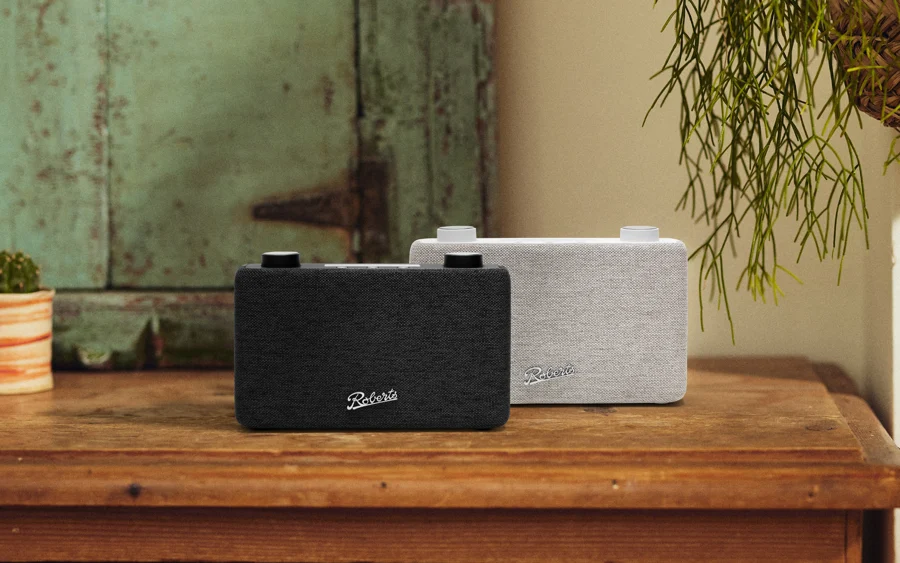
Roberts lists DAB/DAB+/FM reception and battery or USB-C power. The official Play 11 user guide specifies four AA batteries for portable operation. Its FM function matches the type of broadcast receiver identified in the UK checklist.
Before buying: Test reception inside your flat and keep suitable spare batteries. It is not a two-way radio or a guarantee of emergency alerts. USB-C power does not mean a wall socket will work in an outage.
COMPARE NOWSpecification references: Petzl TIKKINA, Roberts Play 11, and the official Play 11 user guide. Photographs show the actual named products; the household storage scene is illustrative.
A power bank is also useful, but compatibility and condition matter more than a generic “survival” label. Check the exact model against the manufacturer's current recall information before using or buying one. Inspect your existing unit and follow its charging instructions. Never make an unknown battery pack the foundation of a medical backup plan.
Your small-flat readiness checklist
Tick only what is ready and usable. Owning a radio without batteries or storing water you cannot lift is an unfinished task. Your ticks are saved on this device when browser storage is available. No account is needed. Use Print checklist to make a paper copy; you can also choose Save as PDF in your print dialog.
Ready & Resourceful: three-day flat checklist
readyresourceful.com/preparedness/uk-3-day-emergency-kit-small-flat/ · Planning aid; follow local instructions.
0 of 14 tasks ready
Saved on this browser only when local storage is available.
The first evening: use the plan before opening everything
- Find the light and establish what happened. Check official incident updates if available. Avoid using your phone battery on repeated refreshes when a radio update will do.
- Check who needs help. Contact anyone covered by your household plan. If a medical dependency cannot be supported, seek the agreed help early rather than waiting until the reserve is exhausted.
- Protect what is still working. Keep fridge doors shut and reserve phone power for useful communications. Leave sealed supplies sealed until needed.
- Use the day's meal portions. Open only what you can finish safely. Keep drinking-water bottles separate from any clearly labelled non-drinking supplies.
- Review whether staying remains safe. Follow evacuation instructions and arrange help if you cannot maintain essential care, safe warmth or necessary access. Three days of food is not a reason to stay in a dangerous building.
Document your own pantry exercise
A real exercise can reveal gaps that a shopping list misses. The blank record below is for your observations; we have not filled it with invented results.
- Choose one actual meal. Record exact products, quantities, current labels and who will eat it.
- Check access and preparation. Can that person open, serve and eat it using the planned tools and hygiene arrangements?
- Record the leftovers. Note any opened food requiring refrigeration and how you will handle it safely.
- Measure rather than guess. Record the actual cupboard opening, occupied space, accessible placement and receipt total.
- Make one useful change. Replace an unsuitable pack size, add a missing component or improve access, then record what remains unresolved.
Follow food-safety instructions throughout. Do not simulate an outage by leaving perishable food unrefrigerated, tasting suspect food or ignoring cooking directions. Photos of your own setup should exclude personal documents and other private details.
Keep the five-card visual summary
Five portrait PNG cards summarise the planning steps. Save them for reference or share the complete set with credit to Ready & Resourceful and a link to this guide. The full article and actual product instructions provide essential context.
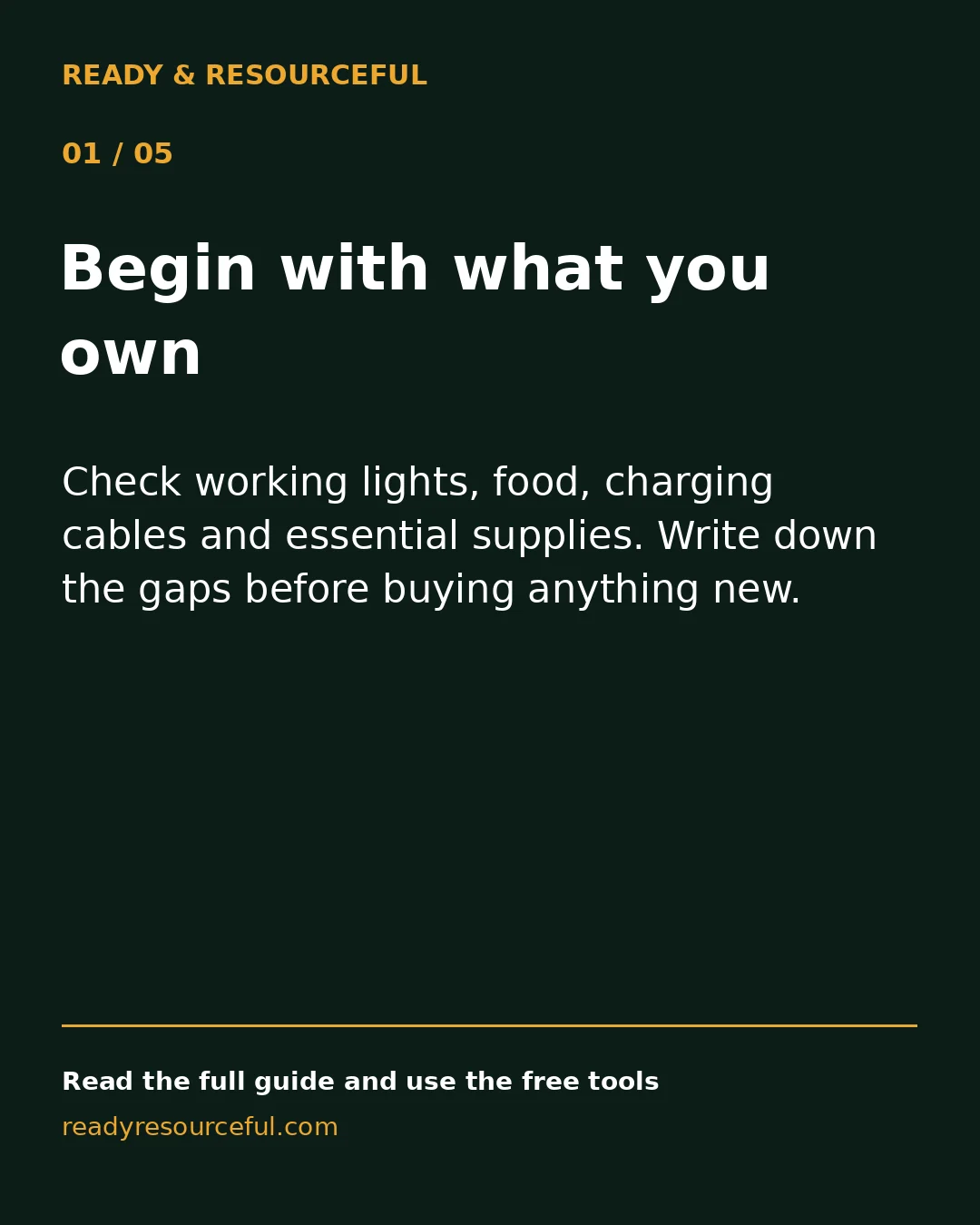
Original R&R text-and-layout cards may be shared with attribution. This permission does not cover manufacturer product photographs elsewhere in the article.
Build the kit over several ordinary shopping trips
Begin with a cupboard audit: mark meals already covered, check working lights and locate the manual opener. Then buy the most important missing supplies within your means. Water and food you routinely consume are easier to rotate than unfamiliar emergency rations. Compare cost per usable portion, not just a large pack's headline price.
We have not attached a fixed “complete kit for £30” claim. Prices, dietary needs and the equipment you already own vary too much for that to be reliable. Write your own quantity and cost beside each gap. Avoid spending the budget on a premium container while leaving drinking water or an essential prescription unresolved.
Review dates on food and water labels and use older suitable stock in normal household rotation. Check devices according to their instructions and check the whole arrangement when household needs change. Our kit maintenance checklist provides a more detailed record.
Questions people in small flats ask
Does everything have to fit in a backpack?
No. A stay-at-home reserve and a portable evacuation bag have different jobs. Keep a note of essential documents, medicines and items you could carry, but do not assume you can carry the full water supply downstairs in an emergency.
Can I count food already in my cupboard?
Yes, if there is enough, it meets your household's needs, and it can be eaten safely under the conditions you are planning for. Add missing meal components and a means of opening the packs. Your shopping list should fill gaps rather than duplicate supplies blindly.
Can I put the kit on my balcony?
Do not treat a balcony as a default store. Heat, freezing conditions, weather, security, product instructions and building rules all need consideration. Identify suitable storage inside your flat first, keeping doors and escape routes unobstructed.
What if I can only store a little water?
Keep what you safely can and document the shortfall. Identify who can help and how you would follow an announced water distribution arrangement. A smaller reserve is useful, but it does not meet a larger calculated requirement. Empty bottles and a plan to shop later are not stored drinking water.
How this guide was prepared
Prepared by Ready & Resourceful using the UK Be Ready guidance and linked primary references, checked on 23 October 2026. The menu, water arithmetic, storage example and checklist are original planning tools. Manufacturer specifications are attributed in the product cards. No personal product testing, measured cupboard fit or emergency outcome is claimed. Local incident instructions take precedence over this general guide.
See our editorial standards and contact page to report a correction. Product links and photographs are identified where used; see our disclosure policy.