The best emergency radio is the one that receives a useful local broadcast, keeps working when your normal power fails, and is simple enough for someone else in your household to operate. A hand crank helps with one part of that problem. It does not automatically provide county-specific warnings, reliable indoor reception or a way to call for help.
For a portable blackout radio, I would start by comparing the Midland ER310PRO with the Sangean MMR-99 FCC. For a radio that stays ready to announce local weather alerts at home, the Midland WR120B answers a different need. The FosPower A1 and A6 are alternatives for buyers who want AM/FM and weather-band listening with replaceable-cell options. Their weather reception should not be confused with a verified automatic alert function.
This is a research-based buying guide. We checked manufacturer pages and instructions, separated incompatible regional versions, and built the comparisons around actual household decisions. We have not conducted hands-on reception, battery-life or durability tests, and we do not invent scores to suggest otherwise.
Best emergency radios at a glance
As an Amazon Associate I earn from qualifying purchases. Buttons open exact-model searches; confirm the model, seller and included parts.
Portable all-in-one candidate
Midland ER310PRO
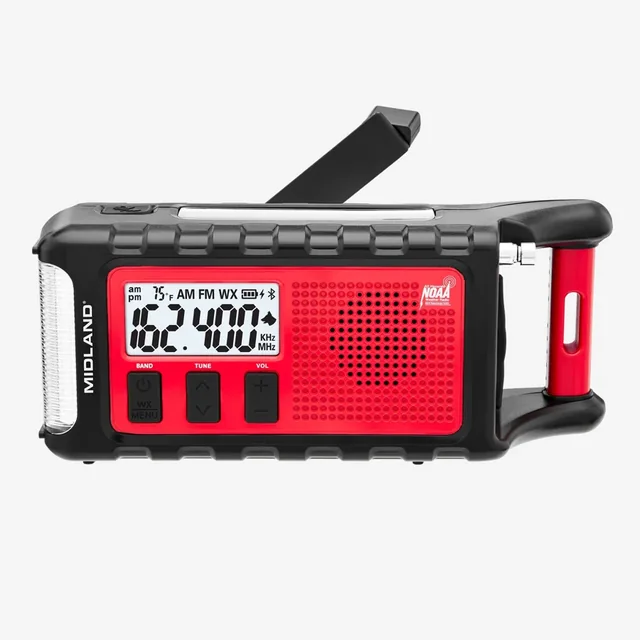
AM/FM, NOAA alerting and multiple charging options
Check PRO differs from ER310; published runtimes conflict.
Dedicated home-alert candidate
Midland WR120B
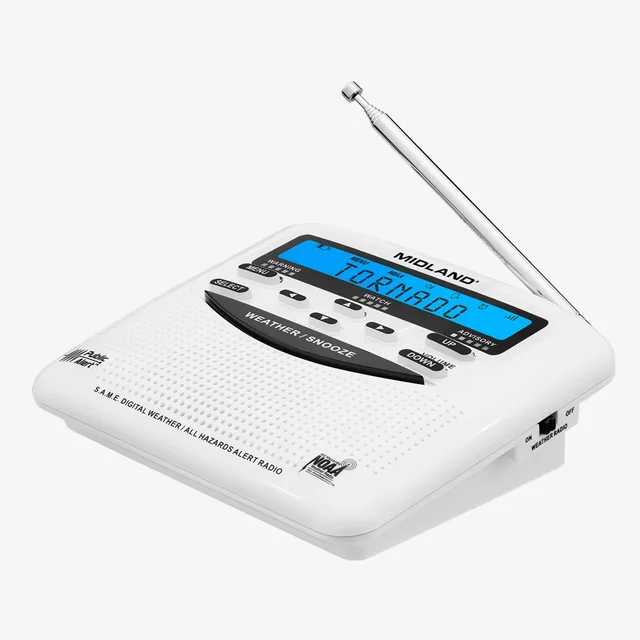
Fixed household NOAA warning station
Check Configure location and channel; not an AM/FM all-rounder.
Feature-rich portable candidate
Sangean MMR-99 FCC
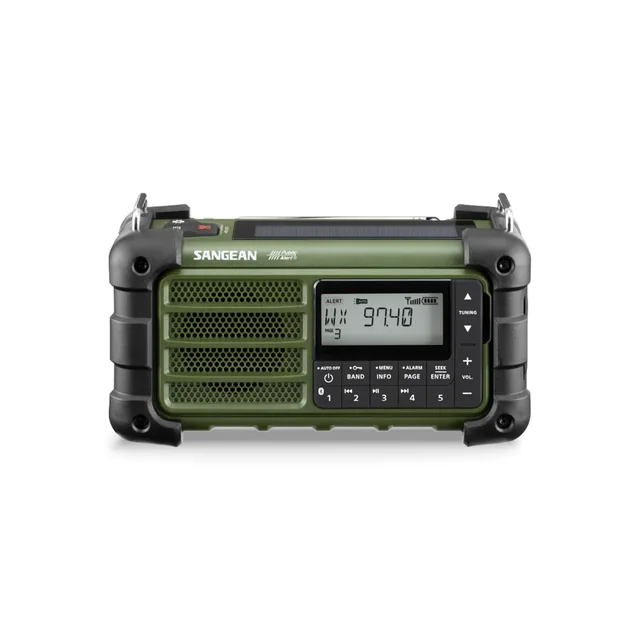
Station presets, weather alerts and IP55-rated case
Check FCC, DAB and other regional versions differ.
Lighter manual-listening option
FosPower A1
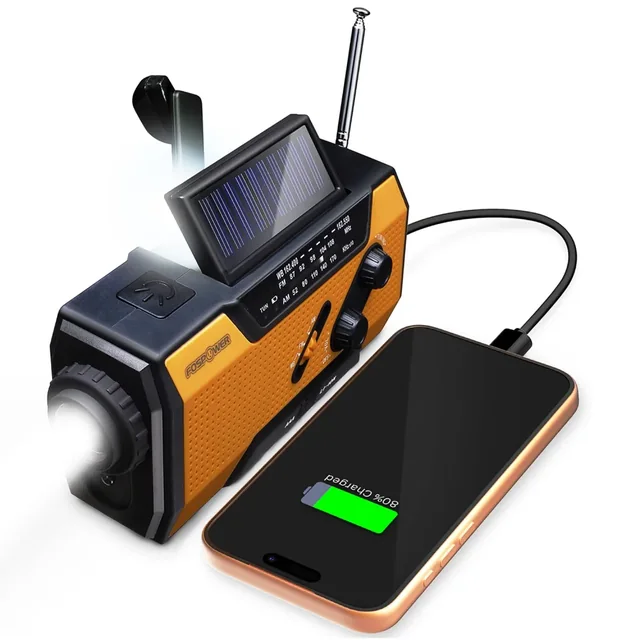
AM/FM and weather reception with AAA option
Check FOSPWB-2376; automatic NOAA alert not verified.
Larger reserve and AA option
FosPower A6
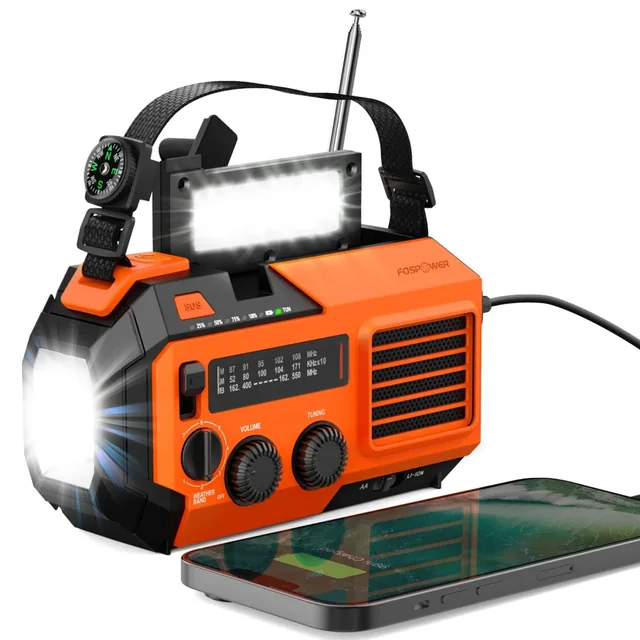
More listed stored energy than A1; headphone socket
Check FOSPWB-2418; confirm availability and exact bundle.
Which emergency radio would I buy for each household situation?
For a household starting from zero, I would settle the warning requirement before spending on convenience features. A radio kept ready to alert at home and a portable receiver carried away from that location are different purchases. Choose a clear first job; add another device only when it covers a separate gap.
| Your priority | Start by comparing | Main benefit | Skip or reconsider if |
|---|---|---|---|
| Fixed home warning | Midland WR120B | Location-programmed weather alerts | You need AM/FM listening or a grab-and-go charging radio. |
| Portable multifunction use | ER310PRO | Listening, alerting and several charging inputs | You need a verified common-condition runtime comparison before choosing. |
| Presets and substantial case | MMR-99 FCC | Station memories and documented IP55 rating | Its listed 900g weight is too much for your portable kit. |
| Lighter manual receiver | FosPower A1 | 310g listed weight; AAA option | Automatic warning is a required function. |
| AA spare-cell arrangement | FosPower A6 | AA option and larger listed internal reserve | You already have a suitable listening radio and need a different capability. |
My short answer for an ordinary U.S. household: investigate the WR120B first if the missing capability is a fixed local weather-alert station. Compare the ER310PRO and MMR-99 FCC if you need portable AM/FM listening with documented weather-alert functions. Choose between the FosPower models only when manual listening meets the requirement and their battery arrangements suit your supplies.
I would not start by paying for the largest advertised battery or the most accessories. First budget for the receiver's required power equipment, suitable spare cells where applicable, and a separate phone-charging reserve if needed. A cheaper-looking bundle can be less suitable when it omits the parts you need or provides the wrong warning function.
Choose the job before choosing the radio
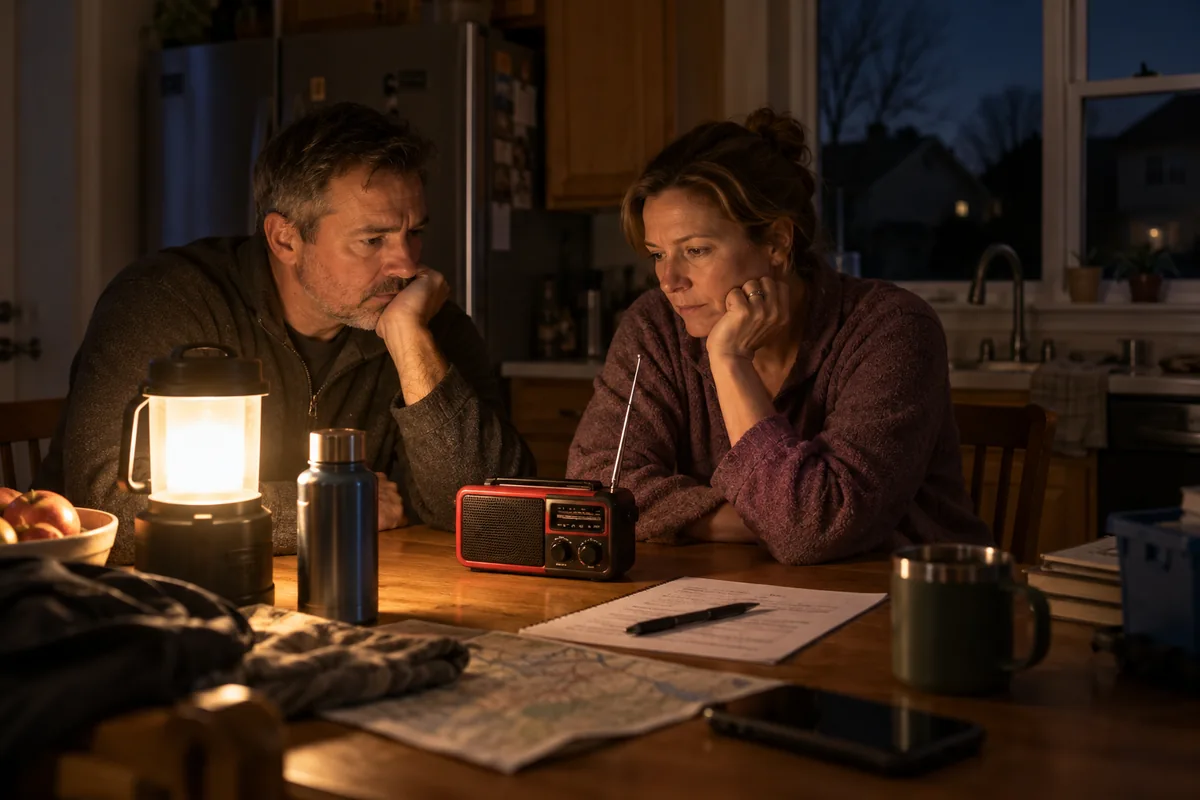
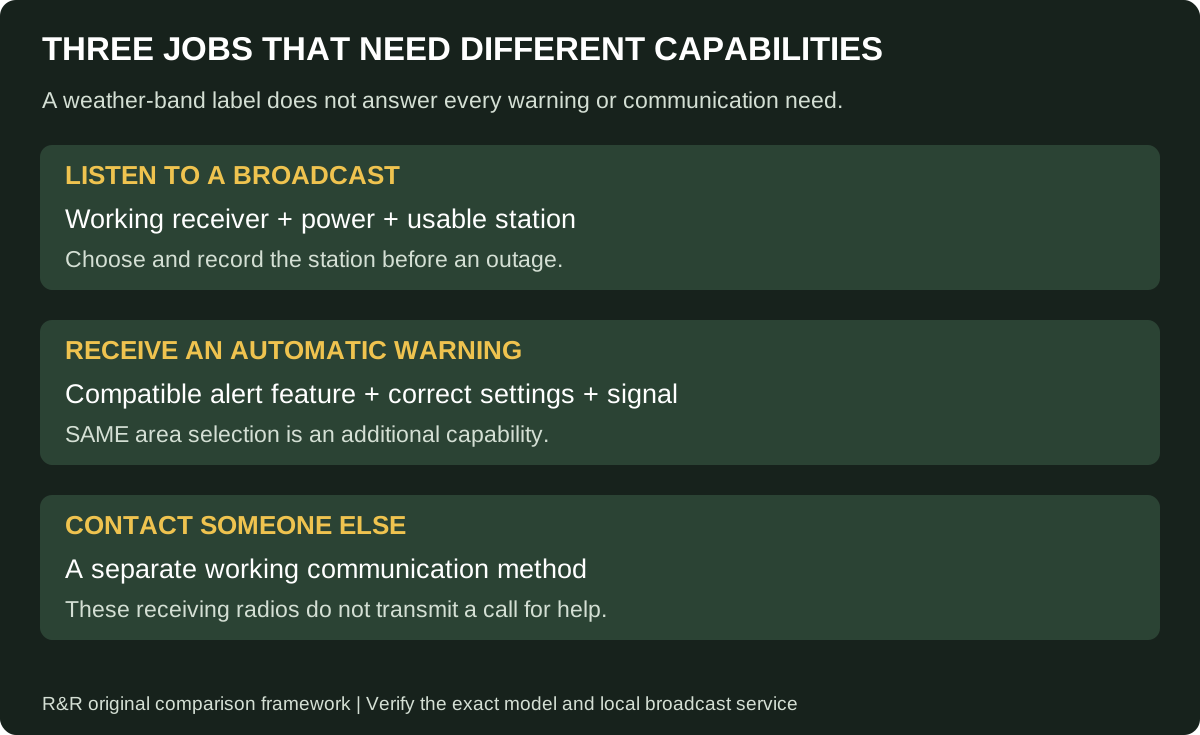
Picture two different situations. In the first, the electricity goes out while you are awake. You take a radio from a cupboard and tune to a local station. In the second, a warning is broadcast while everyone is asleep. A receiver that works beautifully when switched on may do nothing in that second situation unless it has an appropriate alert mode, is configured correctly and remains powered.
That distinction is the foundation of this guide. Listening, automatic alerting and two-way communication are separate jobs. A good buying decision starts by deciding which job is missing from your household plan.
For a U.S. home, the National Weather Service receiver guide explains that SAME, or Specific Area Message Encoding, lets compatible receivers respond to the areas you select. A weather-band tuner alone does not establish that capability. Check the feature in the exact model's instructions, rather than assuming every NOAA-branded listing includes it.
If you are preparing an apartment, start with the communication and lighting arrangements in our apartment power outage guide. If you need portable supplies, connect the radio decision to the weight, batteries and family arrangements in our bug-out bag guide and family evacuation bag plan.
Midland ER310PRO for an all-in-one portable blackout radio
Why it belongs on the shortlist. The ER310PRO combines AM/FM listening, NOAA weather-alert capability, a rechargeable battery, USB-C charging, a crank and a solar panel. That is a useful set of options for a radio that moves between a kitchen shelf, a shelter location and a packed emergency kit. The manufacturer's product page lists a 10,000mAh battery.
The important limitation. Midland's product page advertises more than 200 hours of radio operation, while its ER310PRO FAQ says up to 72 hours under conditions affected by volume and other functions. We cannot reconcile those figures from the available documentation. Neither is treated here as measured endurance or as a reason to claim it lasts longer than another radio. The same FAQ says the battery is not user-replaceable. Treat battery service as a manufacturer-support question rather than assume this model offers the spare-cell arrangement of the FosPower alternatives.
My buying judgment. I would consider this a portable listening and alert candidate, not a substitute for checking whether a bedside SAME receiver better suits the home. Its appeal is the combination of features, not a promise that the crank can keep every device charged indefinitely. Decide separately how the household phone will stay powered.
Before ordering. Match the ER310PRO name exactly; older ER310 listings describe a different product. Confirm the charging connection, supplied cable, battery service arrangements and alert-mode instructions against the unit you receive. A familiar-looking model number is not sufficient evidence that a marketplace bundle has the same specification.
Midland WR120B for a dedicated home weather-alert station
The WR120B product listing identifies a dedicated NOAA weather and emergency-alert radio. Midland's WR120B programming instructions explain choosing the location and receiving channel. This is the model I would investigate first when the missing job is an always-ready household warning, rather than general AM/FM listening.
Its role is deliberately narrower than the crank-radio options. It is not the choice for someone expecting an ordinary AM/FM receiver, a flashlight and a phone-charging bank in one housing. The purchasing question is whether a fixed warning point would be maintained more reliably than a portable radio that keeps moving around the house.
A desk or bedside position also makes setup part of the purchase. Find a location that receives the intended transmitter, choose the relevant area, install the prescribed backup batteries and check that household members understand the warning behavior. Midland uses related WR120 names across its documentation; consult the manual supplied with the exact B-version unit rather than transferring every specification from a newer WR120DSP page.
I would pair this type of receiver with a separate portable AM/FM radio if the household also needs ordinary broadcasts away from its normal listening position. That gives each device a clear job. It also avoids asking one multifunction radio to serve as a bedside alert station, a camping speaker and the shared phone charger at the same time.
Sangean MMR-99 FCC for buyers who want a more substantial portable receiver
The MMR-99 FCC adds AM/FM-RDS, weather reception and alerting, station memories, Bluetooth, USB-C input, crank and solar charging. Sangean lists IP55 protection and a weight of 900 grams. The case and feature set make it a candidate for someone prioritizing a household receiver over the smallest possible bag item.
The tradeoff is straightforward. At the listed weight, it earns its place in a portable kit only if those functions matter to you. I would not choose it solely because a longer feature list looks reassuring. Check whether the people using it prefer its controls and station presets, and whether its size works at the actual storage location.
Keep the regional suffix in the comparison. The FCC model includes U.S. weather-band functionality. Sangean also sells MMR-99 versions with other broadcast arrangements, including a separate DAB model. A similar case photograph does not make them interchangeable.
The IP55 rating is a useful specification, not permission to submerge the radio or leave charging connections exposed. Read the manual's conditions and keep it protected from floodwater. More importantly, do not infer superior reception, sound or drop survival from the published rating: those comparisons require testing we have not performed. Our reason for including it is its documented feature combination and clearly identifiable U.S. version.
FosPower A1 for a simpler radio with a replaceable-battery option
The FosPower A1, model FOSPWB-2376, offers AM/FM and NOAA weather-band reception, a 2,000mAh internal battery, solar and crank generation, and an AAA-battery option. Its listed 310-gram weight gives buyers a concrete comparison with the larger Sangean.
I would consider it for someone who wants a straightforward listening option and already manages spare AAA cells. That does not make it automatically the cheapest or best-value choice; current delivered prices and exact bundles still matter. The useful difference is the power arrangement, not the number of survival functions on the packaging.
The reviewed manufacturer page documents weather broadcasts but does not establish an automatic NOAA alert or SAME function. We therefore treat the A1 as a manual listening candidate, not a verified replacement for a configured household alert receiver. An SOS noise or flashing lamp is a separate feature from receiving an official warning.
Check the exact charging port and included cable before buying. Product revisions and marketplace photographs may differ, and the supplied instructions should settle the configuration you own. Also keep the radio battery available for the radio: a small internal reserve is not a complete household phone-charging strategy. The A1 makes most sense when its role is clear and another alert channel covers the times when nobody is listening.
FosPower A6 for a larger stored-energy option with AA backup
The A6, model FOSPWB-2418, is a distinct FosPower option rather than another color of the A1. Its published specification lists 5,200mAh, a 396-gram weight, USB-C charging, AM/FM and weather-band reception, a headphone connection, and AA-battery operation.
Those differences create a sensible comparison. A household already stocking AA cells might prefer that arrangement, while someone minimizing packed weight may lean toward a smaller receiver. The larger battery figure should not be converted into a promise of proportionally longer listening. Power consumption, settings, battery condition and use of the lamps or charging outputs also affect endurance.
As with the A1, the documentation reviewed here does not establish automatic alerting or county-specific SAME selection. We do not award either feature by assumption. If warning while asleep is the priority, resolve that requirement before choosing this model for its larger battery or reading lamp.
Both FosPower pages displayed sold-out selections during our check, so these shopping links are model searches, not claims that a particular seller has stock. Compare the exact model, condition and return terms. I would choose between the A1 and A6 only after deciding which battery format fits the household; buying two similar multifunction radios does not necessarily cover an otherwise missing alert function.
Emergency radio comparison by function and power source
| Model | Broadcasts | Warning behavior | Power arrangement |
|---|---|---|---|
| Midland ER310PRO | AM/FM + NOAA | Alert mode documented; SAME not established | 10,000mAh pack; USB-C, crank, solar |
| Midland WR120B | NOAA weather | SAME area programming documented | External adapter + prescribed backup cells |
| Sangean MMR-99 FCC | AM/FM-RDS + NOAA | Weather alert documented; SAME not established | 2,600mAh; USB-C, crank, solar |
| FosPower A1 | AM/FM + weather band | Manual listening; automatic alert not verified | 2,000mAh; AAA option; USB, crank, solar |
| FosPower A6 | AM/FM + weather band | Manual listening; automatic alert not verified | 5,200mAh; AA option; USB-C, crank, solar |
Read this matrix horizontally before comparing accessories. A radio that receives weather broadcasts may still require you to turn it on and tune it. A model with an alert function still needs the appropriate mode, a usable signal and sufficient power. A charging output consumes the same stored energy that may be needed for listening.
That is why this table does not assign a universal winner or combine battery labels into a performance score. It answers narrower questions that can actually guide a purchase. Use the model links to check the current manual and package, particularly when a listing combines several generations under one page.
How to choose the best emergency radio for your home
Start with broadcasts you can receive locally
Before comparing solar panels, identify a local AM/FM information source and, in the United States, the relevant NOAA transmitter. The NWS station directory is the starting point for that second task. Record frequencies on paper so the information is available without an internet search.
Do not assume that the physically nearest transmitter gives the clearest indoor signal. Building materials, terrain and the radio's position affect reception. The NWS reception guidance explains reception limitations and troubleshooting. A radio is only useful for a station you can hear where you intend to use it.
For a household buying its first radio, I would make reception a return-window check. Try the intended kitchen, bedroom and shelter positions while normal services are working. Record which station is intelligible at each position. Avoid turning a vague promise of long range into the foundation of the plan.
Understand weather reception, alert mode and SAME
Weather reception means you can listen to a weather-band broadcast. Automatic alerting means a compatible radio can react to a warning signal when correctly configured. SAME adds geographic selection on compatible receivers. These are related capabilities, but the words are not interchangeable.
A product description that lists seven weather channels has not, by itself, answered whether the radio alerts while you sleep. Ask the narrower question: What exactly must remain switched on or enabled for the warning to sound? Then find that answer in the manual. Put a short operating instruction beside the radio rather than relying on the person who set it up to remember every menu.
Also distinguish the warning tone from the broadcast volume. The household should understand both. People with hearing or other access needs should investigate suitable alert accessories and their compatibility through the NWS special-needs receiver information, rather than assuming a louder ordinary speaker solves the problem.
Treat crank and solar charging as fallback options
A hand crank is a way to add energy when other charging sources are unavailable. It does not remove the need to charge and maintain the battery beforehand. A small integrated solar panel also depends on conditions and should not be treated like a full-size household solar installation. Midland specifically describes the ER310PRO panel as maintenance charging in its FAQ.
My purchasing order would be a convenient normal charging method, a maintained reserve, an understandable backup arrangement and only then the extra generating features. Otherwise it is easy to buy several ways to recharge a radio that nobody remembers to keep ready.
There is no crank-output comparison in this guide because the manufacturers' different claims do not amount to a common test. We have not measured charging effort, sunlight conditions or useful listening time per minute of winding. Any precise ranking of those properties would imply evidence we do not have.
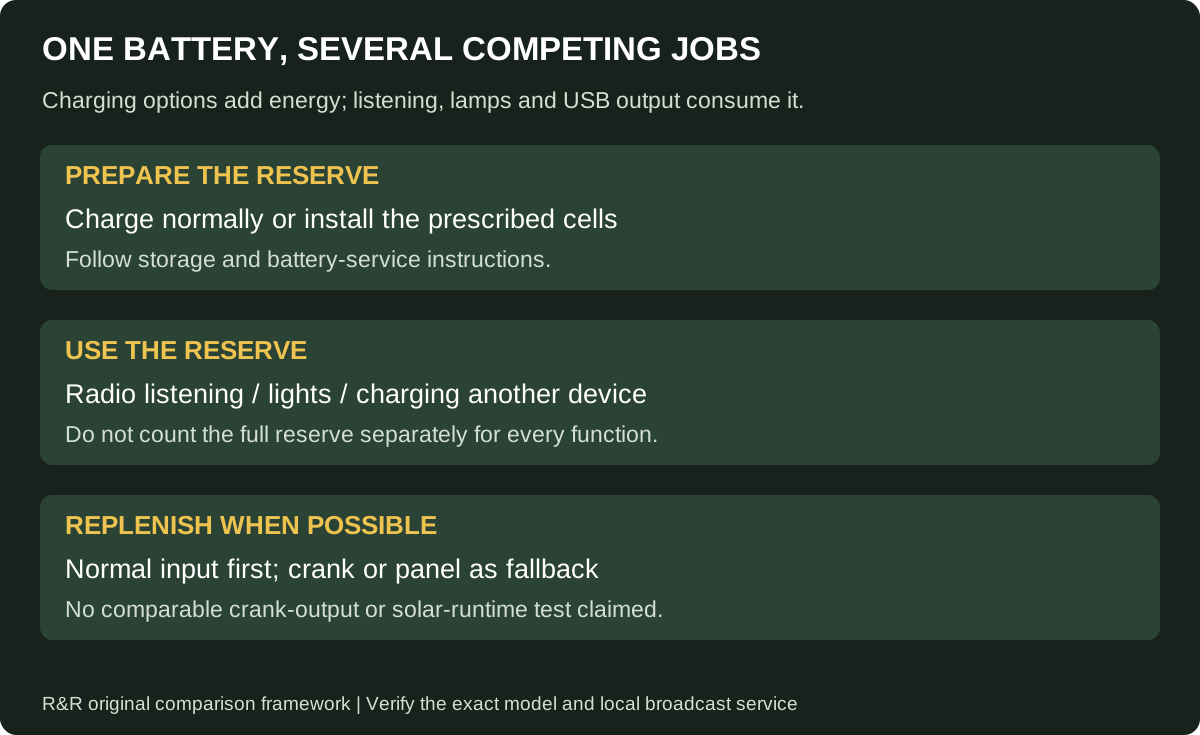
Keep phone charging separate from listening endurance
A radio with a USB output can be useful, but it is sharing energy between jobs. Decide which matters most at the time: receiving information, providing light or topping up another device. Do not count the same battery as a full reserve for all three simultaneously.
This is especially important for anyone comparing mAh figures. Stored energy, output conversion losses and device consumption matter; the label alone cannot establish how many hours your household gets. We deliberately avoid a runtime leaderboard assembled from unrelated marketing conditions.
Build the wider electricity plan around our apartment outage guide. If basement flooding is part of the concern, the sump pump outage decision guide addresses a different and much larger power task. A radio's charging socket is not equipment backup for a pump or appliance.
Choose a battery arrangement you will maintain
Replaceable household cells and internal rechargeable packs create different maintenance tasks. Spare cells are useful only if they are the correct type, in serviceable condition and stored appropriately. A rechargeable radio needs a charging routine and a plan for eventual battery service.
Write the battery type on the household inventory. Check the manual for charging and storage instructions, including whether primary cells are permitted and which functions use them. Never assume a radio can recharge disposable batteries just because it also has a charging input.
Use our emergency-kit maintenance guide to keep the radio, spare cells and cable in the same inspection routine as the rest of the kit. An organized maintenance habit is more useful than buying a second receiver and forgetting both in a cupboard.
Check controls, placement and household accessibility
A radio that one enthusiast enjoys programming may frustrate everyone else. Think about the person who will use it in dim light, without their usual glasses or while managing children. Clear labels, a reachable volume control and a written station list deserve a place in the buying decision.
For a fixed alert receiver, choose a stable location that allows normal use and appropriate antenna placement. Keep it away from places where water can collect. For portable storage, protect the antenna and controls from compression and accidental activation. Keep the instructions accessible with the equipment.
I would also assign a normal storage position. A shared radio that is sometimes in the garage, sometimes in a car and sometimes in a camping bag can be difficult to find when the lights fail. If it travels, make returning it to that position part of unpacking.
U.K. and European buyers need a different radio comparison
The U.S. shortlist should not be copied unchanged into another country's emergency plan. NOAA weather-band functionality does not establish access to a local European warning service. Check the broadcasts and official information channels relevant to your location before choosing an imported model.
The U.K. government's preparedness guidance includes a battery-powered or wind-up radio among suggested supplies. For buyers comparing digital receivers, the Sangean MMR-99 DAB is a separate DAB+/FM product. It is not the FCC weather-alert model under a different color name.
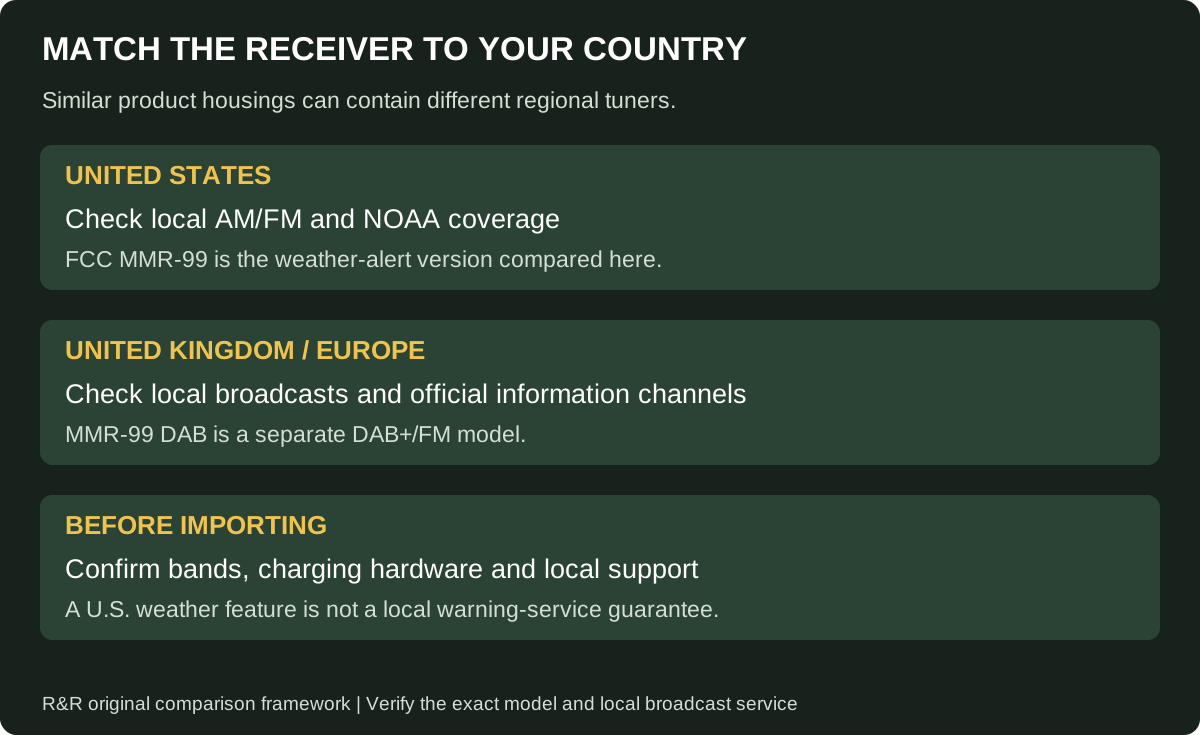
For a U.K. or European household, investigate the actual stations available on the receiver, charger compatibility and local warranty support. Do not make the presence of an American weather logo the deciding feature. An overseas shopping page can look convincing while answering the wrong regional requirement.
Canadian readers should likewise check their local official broadcast and alert arrangements rather than assume that a U.S. product description establishes coverage everywhere. Country-specific verification comes before choosing the hardware. This guide's Amazon searches are for U.S. models; they are not a regional availability guarantee.
What to check when an emergency radio is not receiving clearly
A weak signal does not immediately tell you the receiver is defective. Work through the broadcast path before buying another radio or an antenna accessory. The NWS reception guidance notes that terrain, construction and even changes of position within a room can affect reception.
| Symptom | Check first | Next step |
|---|---|---|
| No sound or display | Power source, charge, battery polarity and controls | Follow the model power-up procedure. |
| AM/FM works; weather is weak | Supported weather band, local transmitter and selected channel | Consult official coverage and transmitter information. |
| Reception changes between rooms | Antenna position and building obstruction | Try a different safe position, including near a window. |
| Weather audio works; no automatic warning | Whether alerting is supported and enabled | Verify settings and the official test procedure. |
| Alert receiver responds outside your intended area | Geographic selection if supported | Review the SAME area and channel configuration. |
| Listening stops after using the lamp or USB output | Shared battery reserve | Recharge normally and reassess energy allocation. |
Avoid buying an external antenna until you have confirmed that the exact receiver supports one and identified the correct connection and installation requirements. A useful location for ordinary listening may also differ from the room where you shelter. Check both while conditions are normal, then decide how you will maintain complementary information channels.
If the receiver works at one position but not another, record that result. If it fails everywhere, check the supported station information, transmitter status and manufacturer troubleshooting procedure. These observations help distinguish a placement problem from a settings, broadcast or equipment problem; they are not a substitute for a controlled reception comparison.
Make a one-page household radio record
Keep a short paper record beside the receiver. The point is to let someone else operate it without searching online or finding the person who configured it. Use the fields below as a starting point and fill them with information checked at your address.
| Write this down | What to record |
|---|---|
| Exact equipment | Model suffix, manual location and normal storage place |
| Information sources | Checked local AM/FM station and frequency; applicable weather transmitter |
| Working position | Room and safe antenna position where the broadcast is intelligible |
| Warning setup | Supported mode, selected areas and date the setup was checked |
| Power arrangement | Battery type, cable, normal input and next maintenance check |
| Household handover | Who else can operate it and where the contact plan is kept |
Include the instruction booklet or its relevant setup pages with the kit. Check the record after moving home, replacing the receiver or changing the normal storage location. A station written down years ago should not become an untested assumption. This record complements the wider household plan; it does not need to repeat the entire emergency checklist.
Set up the radio before the first blackout
Treat the first evening with the new radio as commissioning, not just unboxing. Keep the packaging until you have checked the equipment against the intended household job.
- Match the unit to the listing. Check model suffix, battery format, supplied cable and manual. Compare the actual controls with the instructions.
- Charge or install the prescribed batteries. Follow the manufacturer procedure. Keep charging equipment dry and do not modify the battery compartment.
- Identify a usable station. Check the intended room and write the frequency down. Record a second information source if available.
- Configure supported alerts. Use official location information and the model's instructions. Do not assume a factory default matches your address.
- Check backup operation. Follow the manual's safe procedure for confirming the receiver still works without its normal external power.
- Teach another household member. Ask them to find the station, adjust the volume and identify the alert setting without coaching.
- Record the next maintenance check. Keep the date, cable location and battery type with the household plan.
Use official test information when checking supported alert reception; do not generate or transmit a false emergency message. A local missed test can have several causes, so follow receiver and NWS troubleshooting guidance before concluding that the device is faulty.
Connect information to the rest of your preparedness plan
A broadcast is useful when the household knows what to do with it. Keep the radio alongside a written contact plan and the practical instructions relevant to your hazards. Our earthquake emergency-kit guide and earthquake preparation pillar explain how equipment fits into a wider household plan.
For storm concerns, connect warning information to the difference between storm surge and inland flooding, and the preparations in our El Niño household checklist. A clearer forecast does not replace following local evacuation instructions.
The same applies after the power fails. Keep the food-safety outage guide, emergency water storage guide and 72-hour preparedness guide accessible. These are different decisions from choosing a receiver, but they are the practical actions a household may need after listening.
Emergency radio questions answered
Do emergency radios work without internet?
The AM/FM and NOAA reception functions discussed here receive broadcast signals rather than an internet stream. You still need working receiver power and a usable broadcast signal. Bluetooth playback from a phone is a different function and does not demonstrate independent access to emergency information.
Can an emergency radio call for help?
These shortlisted products are receiving radios, not two-way emergency communication devices. A flashlight SOS pattern or local siren does not send your location to an emergency service. Plan a separate way to contact help, appropriate to your location and circumstances.
Is a hand crank radio better than a battery radio?
The crank adds a generating option, but it does not answer every buying question. Compare normal power, maintained reserve, broadcast compatibility and alert behavior first. A simple receiver with a workable battery routine may fill a household role that a more complicated, poorly maintained radio does not.
Can my phone replace a weather radio?
Phones and receivers have different dependencies. Keep official phone alerts enabled where available, but do not count a charged phone as proof that cellular service, internet access or a particular app will work. Conversely, a radio also needs receiver power and an operating transmitter. Use complementary information paths rather than declaring one device infallible.
What is the best emergency radio for a bug-out bag?
Start with the bag's actual purpose, available space and battery plan. The A1 has a lower manufacturer-listed weight than the A6 or MMR-99 FCC, but weight is not the only decision. Confirm the required broadcasts and whether portable alerting is part of the job before choosing the smallest unit.
Will a weather radio warn me about every emergency?
No receiver guarantees every warning in every location. Broadcast coverage, the issuing authority, supported alert functions, settings and power all matter. A radio is one information channel in the household plan, not an assurance that every local incident will arrive through its speaker.
How this guide was researched
We compared identifiable manufacturer models, official setup information and NWS receiver guidance. Selection emphasizes broadcast compatibility, warning behavior, power arrangements and household use. Manufacturer images identify the products; the original household scene is illustrative. Our diagrams explain functional differences and are not measurements. We have not performed reception, weather resistance, crank-output or runtime tests. We omit numerical review scores and do not claim that publication guarantees a search position.
Published runtime discrepancies for the ER310PRO are identified above. FosPower A1 and A6 automatic alerting is not verified by the pages reviewed. Prices and seller inventory are not asserted. See our editorial standards and corrections policy.