
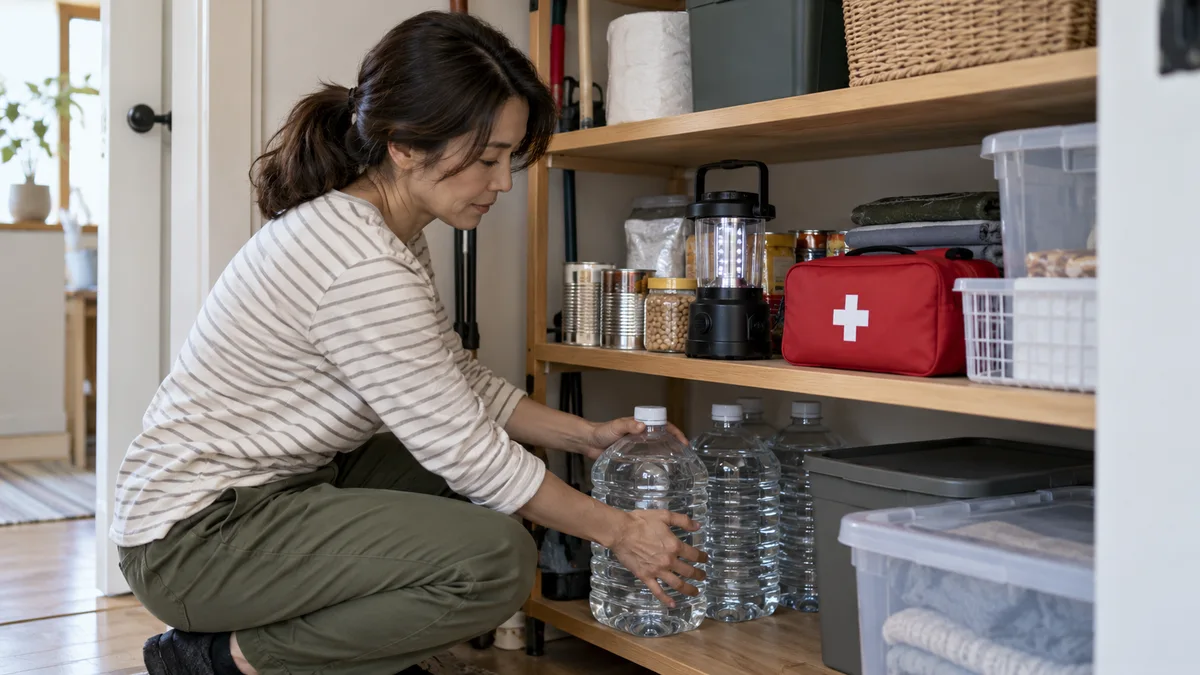
An earthquake emergency kit needs to work in a dark bedroom, an apartment hallway and a home without normal water or electricity. Those are different jobs. Trying to solve them with one enormous backpack usually leaves an awkward choice: carry too much, or leave something important behind.
I would build the kit around where each item will be used. Keep immediate essentials near the bed, put departure supplies in a manageable bag, and store the larger household reserve separately. This guide turns that approach into a practical earthquake kit checklist, with water calculations, packing decisions and supplies you can compare without buying a complete commercial kit.
Start with three kits rather than one oversized bag
The American Red Cross earthquake guidance distinguishes a bed kit, a go kit with at least three days of portable supplies, and a stay-at-home kit with at least two weeks of supplies. Its bedside examples include sturdy shoes, a flashlight, glasses, a dust mask and a whistle. That is a useful organizing principle, not a reason to postpone preparation until you can afford everything.
For this guide, I use three labels: reach, carry and reserve. Reach means supplies available where you sleep. Carry means the items assigned to the person leaving home. Reserve means supplies that support the household when remaining there is appropriate. These are R&R planning labels, not official kit certifications.
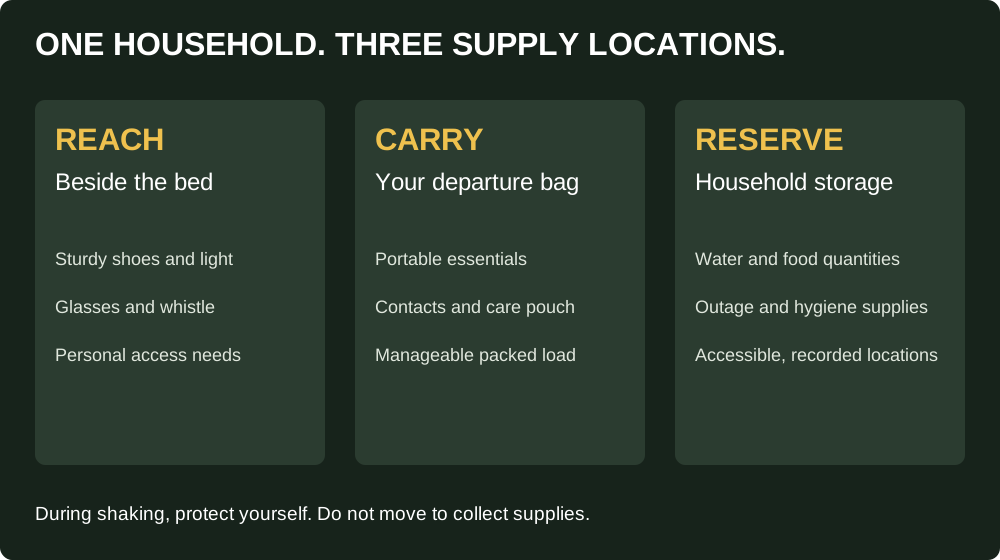
The kit supports your plan after shaking; collecting equipment is not your first action during it. CDC protective guidance prioritizes Drop, Cover and Hold On, with situation-specific instructions. Do not cross a room to retrieve a flashlight or bag while shaking continues. Our complete earthquake preparedness guide covers protective actions and the wider household plan.
Earthquake emergency kit checklist at a glance
Use the table as a starting inventory. Add the actual quantity, location and next review date to your own copy. “We own one” and “we can retrieve a working one” are different answers.
| Household need | Bedside / reach | Go bag / carry | Home reserve |
|---|---|---|---|
| Water and food | Keep essential individual items accessible | Portable portions and safe-water arrangement | Count filled water containers and usable meals |
| Light and power | Working light within reach | Light, compatible cable and charged phone supply | Spare batteries and a tested charging arrangement |
| Personal care | Glasses and immediate personal needs | Required care pouch and private information | Agreed medicine and equipment continuity plan |
| Clothing and hygiene | Sturdy footwear | Suitable layers and personal hygiene | Household washing and sanitation supplies |
| Information | Whistle and accessible contacts | Written contacts and needed documents | Broadcast information and household plan |
| Review | Can the person retrieve it? | Can the assigned person carry it? | Is the quantity present and accessible? |
The CDC earthquake preparation page recommends home and automobile emergency supplies, including food, water and first aid, with at least three days of supplies. It also identifies sturdy shoes, durable gloves and a signaling whistle among useful additions. Those items do not make entering a damaged building or undertaking rescue work safe.
Start by checking the household rather than buying duplicates. Find the flashlight, test its controls and write down the battery type. Open the first-aid kit and identify missing contents. Check whether the manual can opener works with the cans you already eat. Each completed check is more useful than an unopened parcel beside an unfinished list.
How much water belongs in an earthquake kit?
CDC emergency water guidance gives a baseline of at least one U.S. gallon per person per day for three days, and suggests trying to store two weeks if possible. Individual needs, pets and hot conditions can require more. Unopened commercially bottled water is its most reliable emergency option; follow its instructions for suitable containers and water you store yourself.
For planning arithmetic, multiply people by days. Four people need a three-day baseline of 12 U.S. gallons, approximately 45 liters. A two-week baseline for the same household is 56 gallons, approximately 212 liters. These are reserve quantities, not a recommendation to carry all that water on foot.
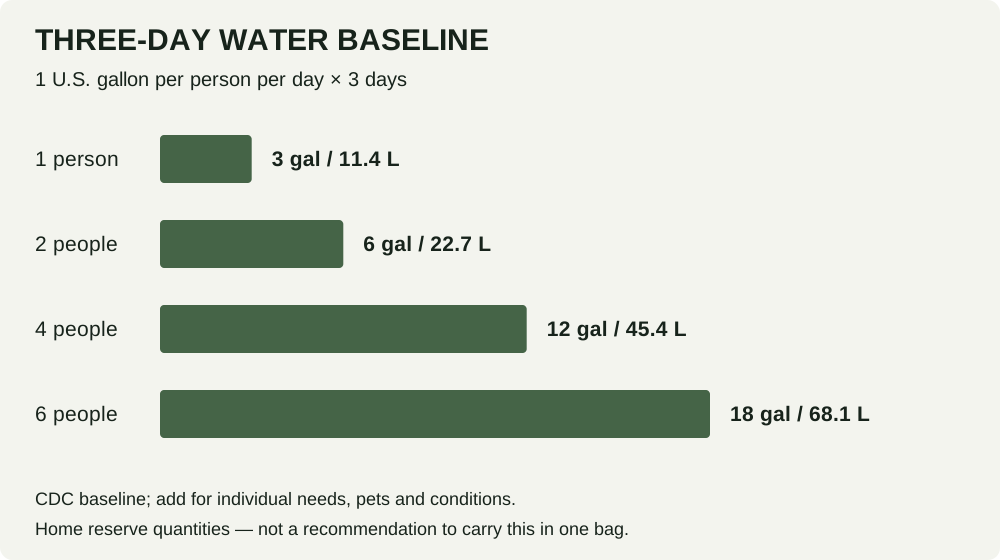
A seven-gallon container is convenient only if the intended user can move and dispense from it. Several smaller containers may suit stairs, limited hand strength or a crowded cupboard better. Test the arrangement under ordinary conditions. Record filled containers, not empty storage capacity, and keep drinking-water storage distinct from household chemicals.
A filter is not an automatic substitute for stored water. Earthquake damage can produce different water advisories, and treatment methods address different hazards. Follow the current utility or public-health instruction. Our apartment water-storage guide covers the space problem, while water filters versus purifiers explains why those product categories are not interchangeable.
Build the bedside kit for the person who sleeps there
The bedside setup is deliberately small. Place sturdy footwear, a working light and the person's ordinary glasses where they can be located after shaking. Keep a whistle with the supplies rather than treating shouting as the only way to attract attention. Choose a practical storage arrangement that does not create a trip hazard or interfere with everyday access.
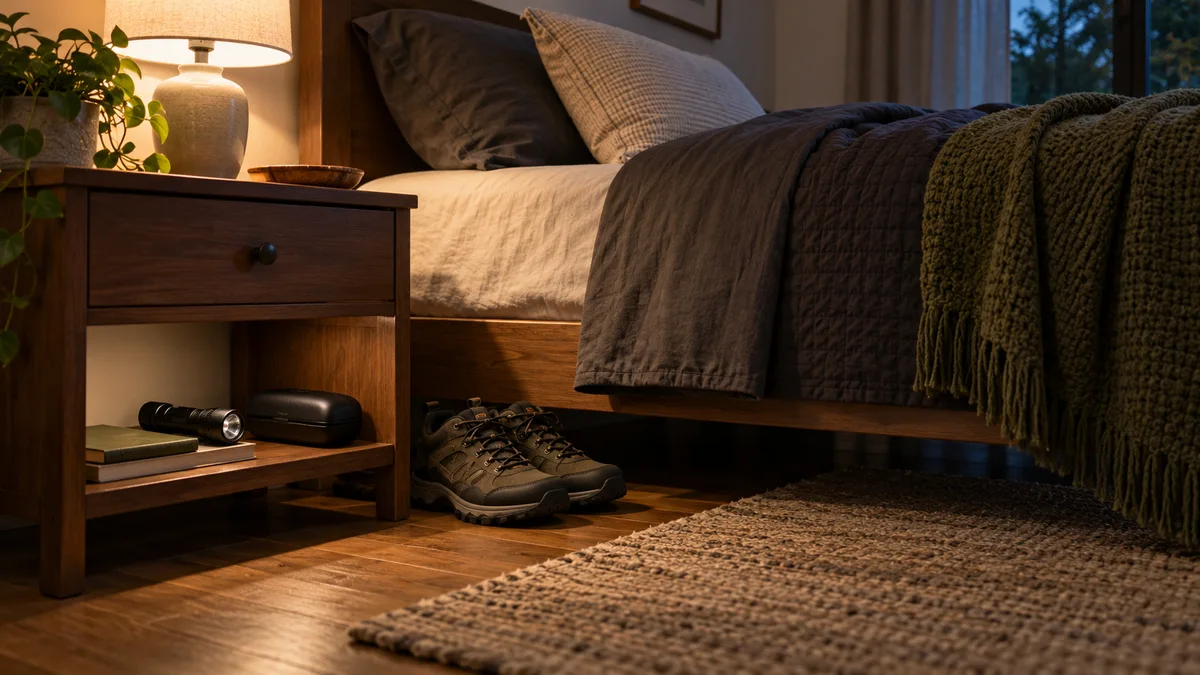
Try the retrieval step with the person who will use it. Can they find the light without turning on a ceiling lamp? Can they operate its switch? Are the shoes actually theirs? If a bedside pouch is shared, agree which items belong to whom. This is an ordinary access check, not a simulated earthquake or a test of whether the room is structurally safe.
A useful bedside kit is also easy to reset. If the flashlight becomes the household repair light, return it afterward. If a spare pair of glasses changes, replace the old pair in the plan. Put a simple reminder beside the inventory: supplies borrowed from this location must be returned or replaced.
Choose food you can eat without a working kitchen
The Red Cross general emergency kit list includes nonperishable, easy-to-prepare food, water, lighting, a radio, first aid, medicines, sanitation items, documents and personal supplies. Use its list to check categories, then choose the contents around the people eating them.
I would plan actual meals before counting packages. A cupboard of snacks can look substantial while offering very little that someone wants for breakfast or dinner. Pick familiar shelf-stable food, record dietary restrictions, and include a usable opener when the packaging requires one. Consider how the meal is opened, portioned and cleaned up, not just how long it can sit on a shelf.
Water needed for preparation belongs in the water calculation. A dry meal that needs cooking may be a poor fit for a go bag intended for a relative's home or a public shelter. Separate food that can be eaten immediately from food that assumes access to a specific appliance. Label that distinction in the inventory so the household does not discover it during an outage.
For refrigerated food, a kit of canned meals is a fallback, not evidence that existing perishables remain safe. FDA outage guidance says an unopened refrigerator keeps food cold for about four hours. Use official time-and-temperature guidance and our power-outage food-safety guide; do not decide by taste.
Three useful products to compare in the middle of your plan
These examples cover separate jobs: hands-free light, a portable drinking-water container and broadcast reception. They are not a complete earthquake kit. Suitable equipment you already own can fill those roles. Before choosing an item, decide whether it belongs beside the bed, in the bag or with the household reserve.
Compare supplies by the job they fill
As an Amazon Associate I earn from qualifying purchases. Research-based comparisons; no hands-on testing is claimed.
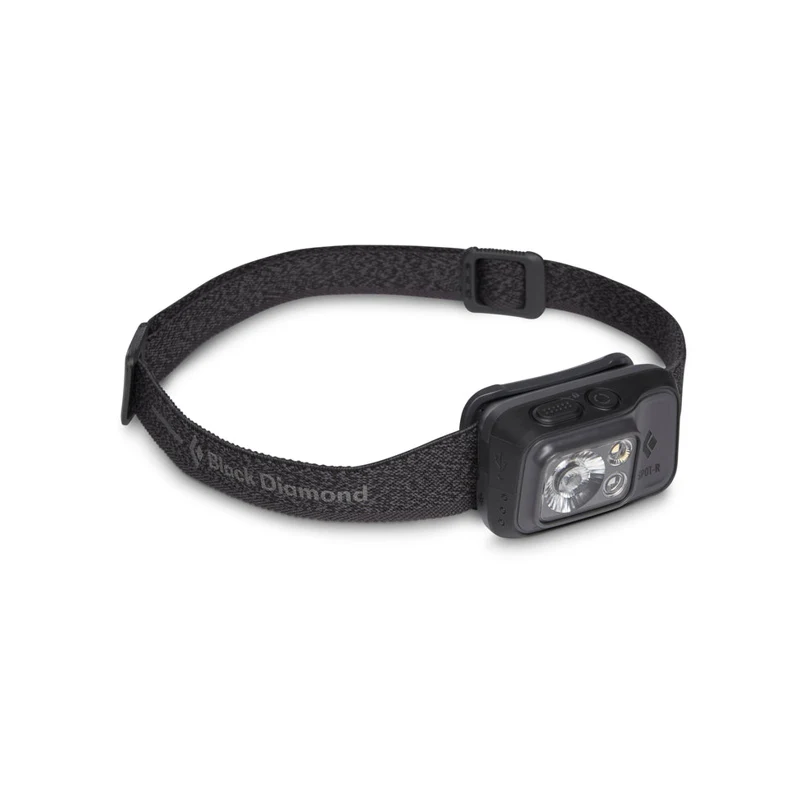
Hands-free lighting
Black Diamond Spot 400-R Headlamp
Up to 400 lumens with an integrated 1,500 mAh rechargeable battery. Suitable to compare when you want a dedicated light while handling supplies.
Check before choosing
Pack the compatible Micro-USB cable and a charging plan. This is the rechargeable 400-R, not the AAA-powered Spot 400.
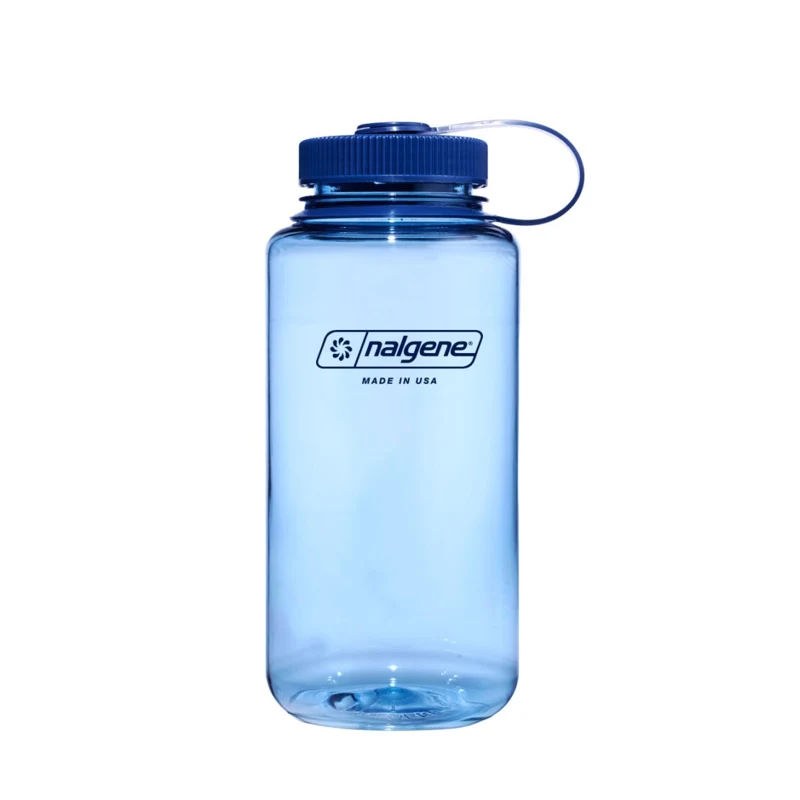
Portable drinking water
Nalgene 32 oz Wide Mouth Bottle
A refillable 32-fluid-ounce bottle with a wide opening and tethered cap. This is the Baby Blue model from the existing R&R product list.
Check before choosing
A bottle stores water; it does not filter it. Count the filled weight and plan the remaining household reserve separately.
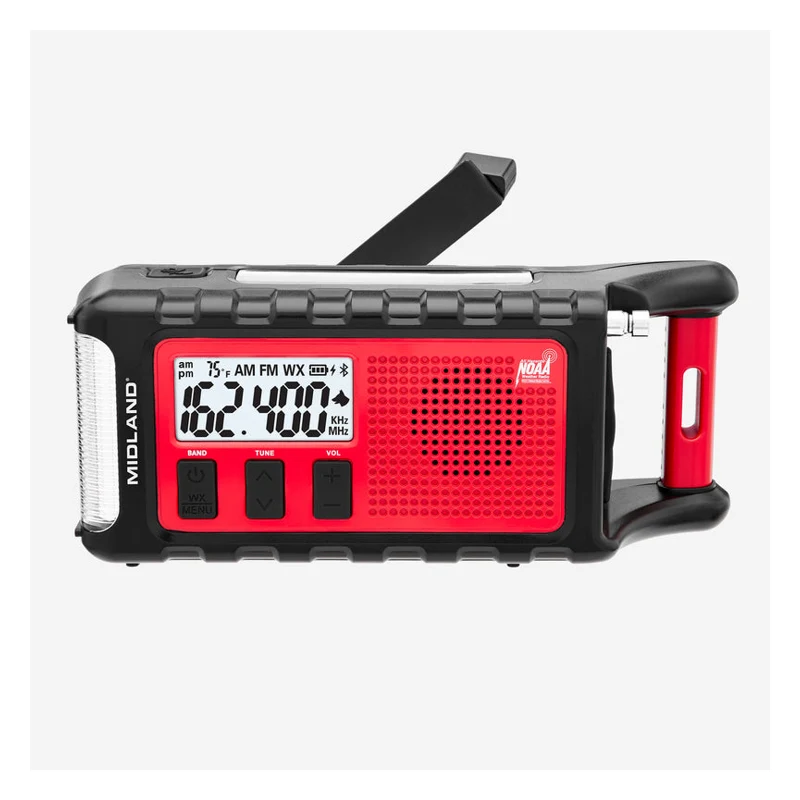
Broadcast information
Midland ER310PRO Emergency Radio
AM/FM and NOAA weather reception provide an information option beyond a phone connection. Tune and test reception where you plan to use it.
Check before choosing
This is not an earthquake prediction device or a dedicated ShakeAlert receiver. U.S. NOAA reception depends on local coverage.
The headlamp and bottle links open product listings. The radio link opens a model search; confirm the ER310PRO version and seller.
Choose the charging arrangement along with the light or radio. “Rechargeable” only describes how a battery receives energy; it does not tell you whether the right cable and power source are available in your kit. Keep those together and test them before relying on them. Our apartment outage checklist helps connect these purchases to an actual home plan.
Personal medicines and care equipment need their own list
A generic first-aid pouch cannot describe your household's daily care. Make a separate private record of medicines, necessary supplies, equipment dependencies and the people who can resolve a problem. Ask the relevant clinician or pharmacist about an emergency supply, storage requirements and replacement arrangements rather than choosing a universal quantity from a shopping list.
The CDC medical-kit guidance for children with special healthcare needs specifically advises discussing emergency medicine supplies with the child's doctor. Its approach is a useful reminder that personal care arrangements belong with the care team. Refrigerated medicines and electrically powered devices need their own confirmed continuity plan.
Keep practical information usable without exposing unnecessary private details. For example, an ordinary household inventory might say “care pouch with designated adult,” while a protected copy holds the medication record. Check whether the person providing assistance knows where that pouch is and has agreed to the role. A name written on a checklist does not establish consent or availability.
Pack the go bag around your likely destination
A go bag for walking to a pickup point is different from a box loaded into a vehicle. Write down the route, who carries each item and how the household will travel if its usual arrangement fails. Include suitable clothing, personal hygiene, contacts, necessary records, phone charging and individual supplies alongside food and water.
Use our free bug out bag checklist in Excel to record needed quantities, packed quantities, known weight and missing items. Its total excludes unweighed items, so an incomplete weight record should not be read as a light pack. Carry the packed bag under ordinary conditions and revise the arrangement around the actual user.
Do not put the entire household's paperwork, charging gear and water in one person's pack simply because it has room. Assign shared supplies intentionally. Consider what happens if that person is at work when another household member has to leave. The same question applies to the only house key, the only printed contact list and the only compatible charging cable.
For pets, give the transport arrangement a named owner and record the supplies that owner will collect. For children, check clothing sizes and familiar food rather than leaving last year's contents untouched. Avoid treating the bag's commercial “number of people” label as proof that it matches your family.
Plan sanitation before you need a bathroom alternative
Water supply, drinking-water quality and wastewater removal are separate questions. An earthquake can make those distinctions urgent. A toilet tank containing water does not establish that the sewer or a powered wastewater system can receive another flush. Obtain current instructions from the responsible utility or building management.
Keep hygiene supplies, soap, usable handwashing arrangements and a locally appropriate toilet contingency in the household plan. Read can you flush a toilet during a power outage? for system dependencies. If normal toilet use is unavailable, our apartment emergency toilet guide addresses privacy, accessibility and waste-management questions.
The kit inventory should name the unresolved question instead of hiding it. “Sanitation complete” is unhelpful when nobody has established where waste can be stored or what local collection instructions require. Write a specific action such as “obtain building wastewater procedure” or “confirm the responsible waste authority's advice.”
Store supplies where the household can actually access them
One large container makes an inventory look orderly, but its location can become a single point of failure. I would record separate locations for the immediate kit, departure bag and home reserve, then check that household members know the arrangement. Store heavy supplies low and address falling-object hazards using appropriate household or qualified installation guidance.
| Location | Check with the intended user | Write down |
|---|---|---|
| Bedside | Can you locate and operate the light? | Location, battery type, personal access needs |
| Go bag | Can you carry and find the actual contents? | Assigned carrier, destination, unresolved items |
| Home reserve | Can you reach and dispense the supplies? | Filled quantity, location, review date |
For an apartment, ask management about resident communication, assistance arrangements and the building's emergency procedures. Do not assume the elevator or a familiar corridor will always be available. The storage decision should account for the intended user's reach and carrying ability without leaving supplies in shared exits or obstructing everyday movement.
The CDC's after-earthquake guidance warns about damaged buildings, power lines and leaking utilities, and says to expect aftershocks. A well-stocked cupboard does not justify returning to an unsafe building. Follow official access and evacuation directions; replace the kit later if retrieving it would expose you to danger.
Build an affordable earthquake kit in three passes
First, gather what is already usable. Inventory ordinary drinking water, suitable food, lights, cables, footwear, hygiene supplies and documents. Put borrowed items back in normal use only when the kit record shows where their replacements will come from. This keeps the plan honest without demanding a large first purchase.
Second, resolve gaps that prevent existing supplies from working. The missing opener or incompatible cable can matter more than another gadget. Choose one owner and a next action for each gap. If the issue is landlord permission, a clinical arrangement or a utility question, record that work rather than forcing every problem into a shopping category.
Third, extend the reserve and refine access. Add quantities toward the applicable local recommendation, review spare clothing, check charging arrangements and improve storage. The order is a budgeting framework, not a prediction of what a future earthquake will damage. Keep progress visible so a limited budget leads to useful completed tasks rather than an all-or-nothing kit.
A fifteen-minute review that keeps the kit usable
Choose a review date you will remember, and repeat the check after a move, a change in care needs or any use of the supplies. Bring the inventory to the storage location. Looking at the sheet from another room makes it too easy to mark something complete from memory.
- Count stored water and usable food; follow package and storage guidance.
- Switch on the lights and check the actual batteries or charging connections.
- Review private care arrangements with the responsible person.
- Check clothing, glasses, pet supplies and documents for changes.
- Confirm the departure bag's contents and the person assigned to carry it.
- Leave unresolved quantities, questions and repairs visible with a named next action.
Download the earthquake household action plan for your broader preparation review, and use the editable go-bag workbook for packing quantities. Both can be saved locally. Our free resource collection also includes water, sanitation and outage checklists.
Questions about earthquake emergency kits
Is a 72-hour earthquake kit enough?
It is a starting duration, not a guarantee of restored services. The Red Cross distinguishes a three-day portable kit from a two-week home kit. Follow local recommendations and individual needs, and plan how larger household supplies differ from what each person can carry.
Should I buy a premade earthquake survival kit?
Compare its actual contents against your inventory, not its advertised piece count. Check useful quantities, batteries, charging connections, food suitability, fit and expiry dates. A premade kit may organize basics, but it still needs personal care items, documents and household-specific decisions.
What is different about an earthquake kit for an apartment?
Space, stairs, shared systems and management procedures change the arrangement. Prioritize reachable supplies, manageable containers and a confirmed communication and assistance plan. Avoid blocking shared exits. Keep the larger household reserve separate from the bag you expect to take away.
Should I retrieve my kit during the shaking?
No. Protect yourself using the recommended action for your situation. Retrieve supplies only when doing so is safe afterward. For the broader sequence, return to our earthquake preparedness pillar, which covers protective actions, room hazards and reconnecting with the household.
Your final earthquake kit check
These checkboxes are temporary. Save the linked PDF or workbook for an offline record.
Sources and editorial method
Researched October 15, 2026. R&R combines the linked public-health and earthquake guidance with original inventory tables, arithmetic and household organization examples. The planning scenes illustrate preparation; they do not document an actual earthquake. Product photographs come from the manufacturers. This guide does not claim firsthand product testing, a structural assessment or an individual medical review.