
A flashlight and a few water bottles are easy to picture in an emergency kit. A bathroom plan is less appealing, so it often gets left until the toilet stops working. In an apartment, the problem becomes practical very quickly: limited space, shared building systems, privacy and nowhere obvious to keep waste.
The right emergency toilet is an arrangement the people in your home can use, with hand hygiene and a locally permitted waste plan. It is not simply a bucket that fits in a cupboard. Start with whether the toilet can be used during a power outage, then use this guide if flushing is unavailable or prohibited.
Quick answer: a working toilet is the first option to check
If your apartment toilet cannot be used, first check for a safe, reachable functioning toilet or official temporary facility. If you need a temporary collection setup, follow local public-health guidance and the product instructions. Prepare privacy, stable seating, handwashing supplies, secure waste storage and an approved collection or disposal route. Do not assume a balcony, shared bin or trash chute is suitable.
Decide whether you need an emergency toilet at all
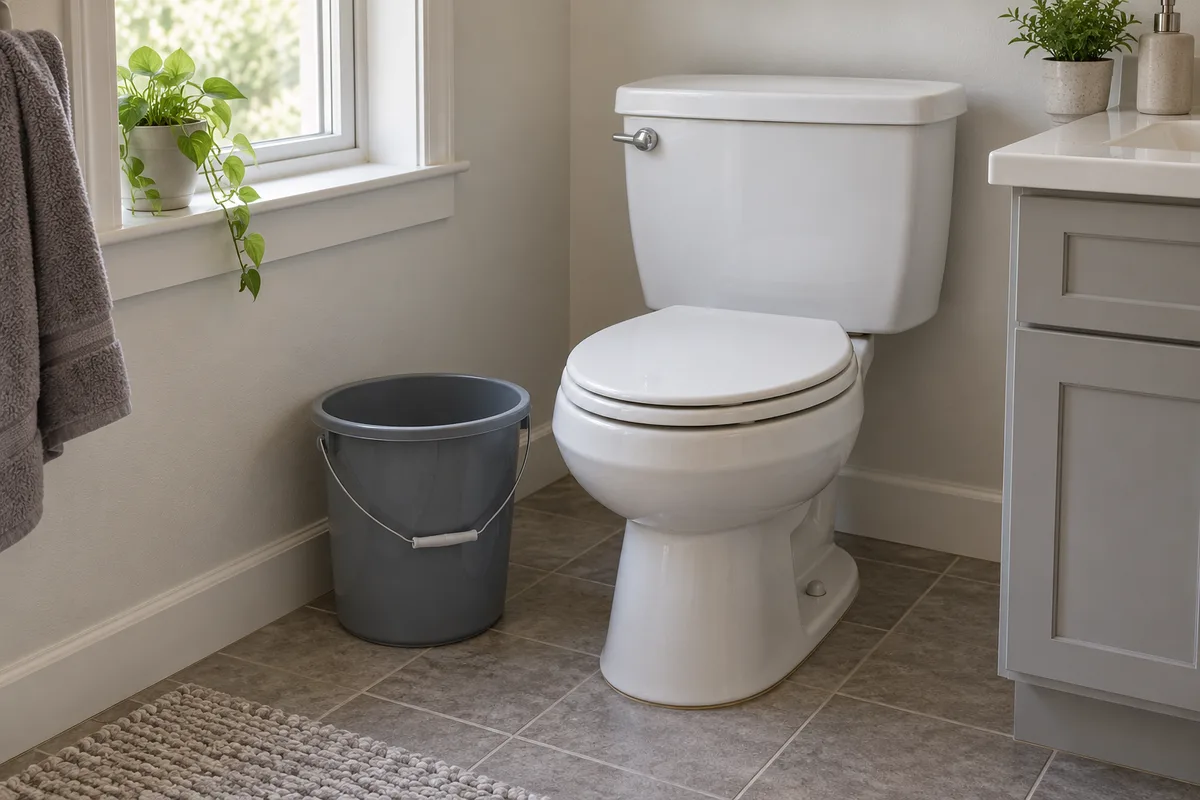
An interruption to incoming water does not necessarily disable the drain. If your conventional toilet's wastewater route is confirmed usable, manual flushing with suitable stored water may remain an option. A blocked drain, failed wastewater pump or official no-flush restriction changes that decision. More water is not a repair for those problems.
Ask management what has actually failed and which instruction applies to residents. “No water until evening” and “do not use toilets” mean different things. Keep a copy of the current notice and its time. If the situation changes, replace the household instruction rather than leaving different people to follow different versions.
North Carolina's emergency toilet handout lists another working toilet as one option and temporary collection arrangements as others. Use that hierarchy to think beyond a product purchase. A nearby functioning facility may solve the immediate problem more comfortably, provided it is available, safe to reach and appropriate for the intended user.
Compare the main options by household fit
| Option | What to check | What it does not solve by itself |
|---|---|---|
| Another functioning toilet | Availability, access, hours and transport | Toileting needs while the destination is closed or unreachable |
| Existing toilet adapted under local guidance | Fixture condition and the exact safe setup | A backup coming through the drain or a disposal route |
| Bucket-style emergency toilet | Stability, seat suitability, liners and safe placement | Hand hygiene, privacy or waste collection |
| Portable toilet with compatible supplies | Actual instructions, servicing and user needs | Permission to empty its contents into any available drain |
| Official temporary facility | Current location, access and assistance arrangements | Travel if the household cannot reach it safely |
This comparison is an organizing tool, not a performance rating. We have not personally tested these arrangements. Ask which option fits the actual person and space rather than choosing a category because an online list calls it the “best.”
Put accessibility ahead of compact storage
Think about who will sit, stand, transfer or assist. A low bucket might be inconvenient for one person and unusable for another. A seat that appears to fit a container is not proof that the assembled arrangement supports the user's needs. Check the maker's specifications and obtain appropriate assistance for individual mobility requirements.
Keep the route to the bathroom or temporary facility clear. Consider lighting, privacy and the space an assisting person needs. Do not place an improvised seat beside a doorway simply because the container fits there. The user has to reach it, use it and leave without the setup becoming another obstacle.
For household planning, write the requirement rather than a diagnosis. “Needs a stable seat at the usual height and room for assistance” is more useful on a kit record than private medical information. Discuss the arrangement with the person who will use it, where possible. Their preferences can reveal a practical difficulty that a shopping list misses.
Understand the two-bucket approach
Washington County's disaster-sanitation guidance describes separate containers for liquid and solid waste. Its supplies include two five-gallon buckets, heavy-duty liners and dry carbon-based material. For the solid-waste container, it describes limiting fill, double-bagging and keeping waste away from food, water and animals while awaiting local disposal information.
That is a regional public-health method, not a universal instruction to empty liquid waste anywhere you choose. An apartment resident may have no permitted outdoor disposal location. Check the instructions for your locality, property and incident. Do not pour waste into a storm drain, shared hallway, roof drain or public area because another region's leaflet describes a different setting.
If you adopt a locally supported method, keep its actual instructions with the kit. Label the containers clearly, using language everyone in the household understands. Avoid substituting a random online recipe for those instructions. Ask the health department or management what to do when the storage limit is reached or the collection schedule is unknown.
A supply kit organized around four jobs
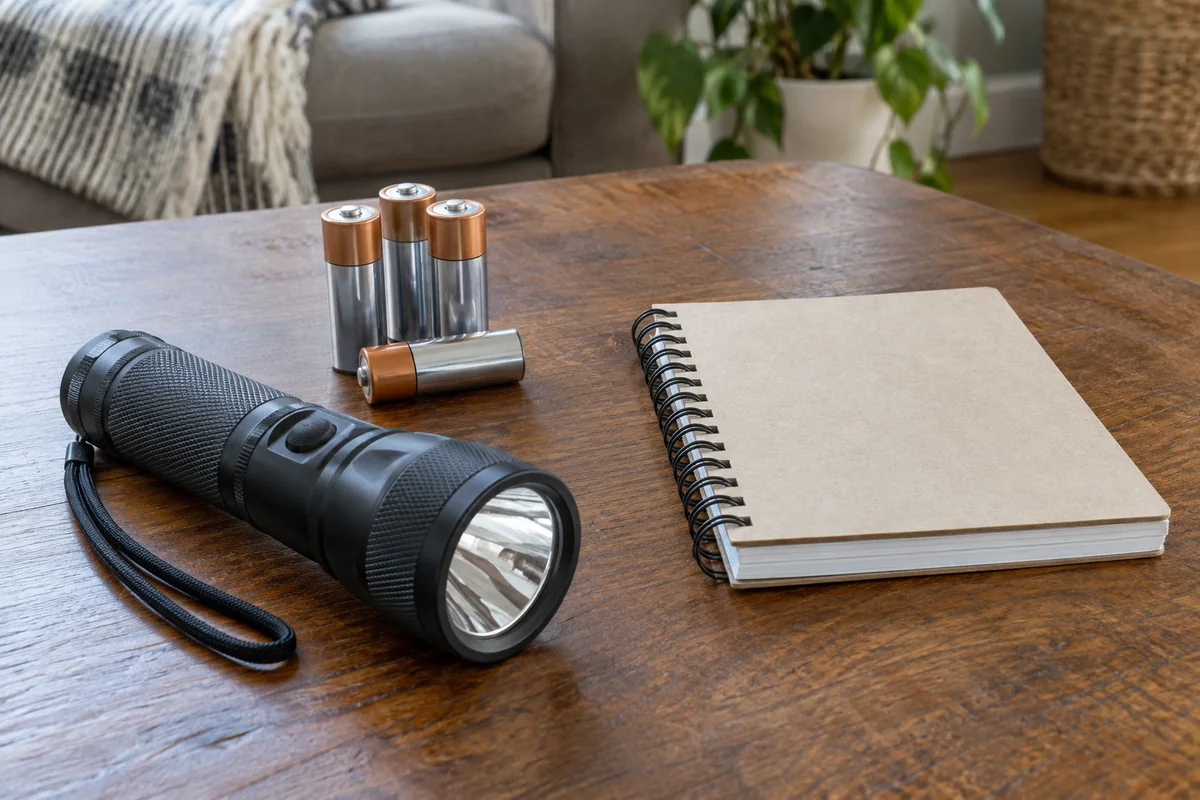
For planning, group supplies around use, containment, hygiene and information. This is our suggested way to keep the setup understandable. The exact items depend on the chosen method and its instructions. A container without the required liner, or a liner without a secure storage arrangement, leaves part of the job unresolved.
For use, identify the approved seat or fixture and suitable lighting. For containment, identify compatible bags or containers and where replacement supplies belong. For hygiene, record the handwashing arrangement and cleaning products used according to their labels. For information, keep the local waste instruction, management contact and chosen fallback together.
Inventory what you already own before purchasing. Mark “present,” “needs confirmation” or “missing.” A bag on a shopping list is not a bag in the kit. A seat borrowed from somewhere else is not automatically compatible. This small distinction makes the plan more honest and prevents a tidy-looking list from concealing the most important gaps.
Plan the clean side and the waste side
Give the arrangement a clear boundary. Soap, clean water, unused supplies and the household's drinking reserve belong on the clean side. Used containment materials belong in the designated waste arrangement. The goal is to make the difference obvious to another person, especially someone helping for the first time.
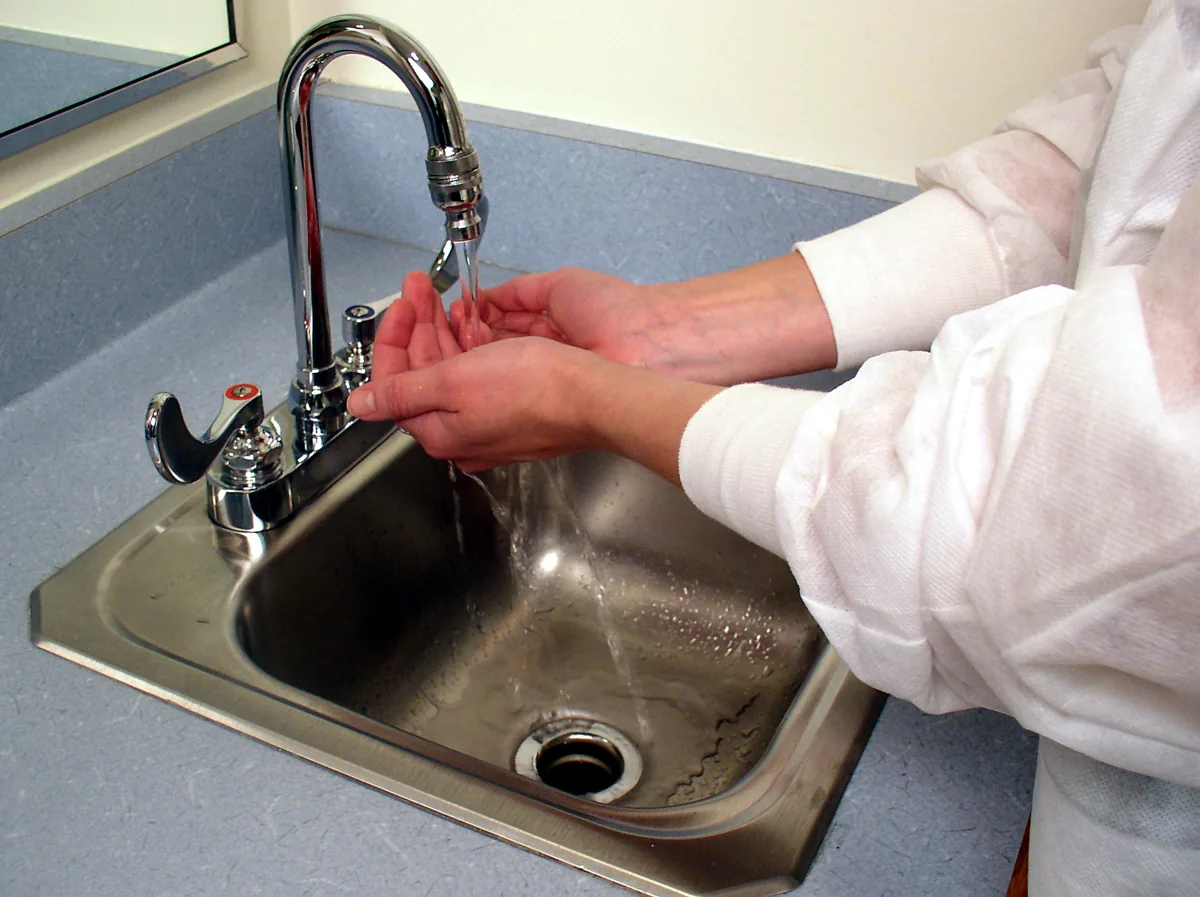
CDC's emergency hygiene guidance emphasizes handwashing and the limits of sanitizer. Plan a way to clean hands after toileting and waste handling, using water appropriate under the current advisory. Do not rely on an unspecified bottle of sanitizer as the entire bathroom plan.
Write a short instruction for where the hygiene supplies are and who replenishes them. If water is being dispensed from a container, keep that task separate from handling waste. Avoid posting private household details on the instruction. A location note can be useful without turning the bathroom into a noticeboard of personal information.
Waste storage is the question to resolve before purchase
PublicAlerts' emergency toilet project tells readers to follow public-agency information about disposing of collected waste. That matters in an apartment because ordinary collection arrangements may not cover an emergency sanitation setup. A sealed bag is containment, not proof of approval for a particular bin or storage location.
Ask management and the local waste or health authority what arrangements apply. Useful questions include whether a temporary collection point exists, which containers it accepts, and what residents should do if their unit cannot maintain a suitable storage area. Keep the answer in writing where possible. Do not invent a collection date to make the plan look complete.
Do not automatically use balconies, fire escapes, shared passages, basements or trash chutes. Those places may introduce access, pest, leakage or building-rule problems. If no workable storage and collection arrangement is available, seek a functioning facility or assistance. The answer should be a safe service arrangement, not a more elaborate attempt to hide waste in limited space.
Keep cleaning products within their real instructions
Avoid treating household chemicals as a universal solution to odor or disposal. Use the cleaning product for its labeled purpose and follow the actual toilet-kit instructions. Do not mix products or add chemicals merely because a forum post says they make an improvised setup safer. Odor reduction does not establish disinfection or a permitted disposal route.
EPA's septic-system guidance also explains why inappropriate materials should not be put into drains. The broader planning lesson is simple: a drain is not a convenient way to remove whatever the temporary setup collects. Check what the receiving system and local instructions allow.
Keep the original labels accessible. If the selected arrangement needs specific consumables, record those rather than replacing them with a vague entry such as “cleaner.” A household member should not have to guess whether a bottle is intended for hand hygiene, surfaces or another use. Plain labeling is more helpful than an extensive list of unsourced chemical alternatives.
A small-apartment setup worksheet
Complete this worksheet during normal conditions. You do not need to stage a sanitation emergency to answer it. Start with an empty container and the intended user, if appropriate. The exercise checks locations and questions; it does not validate the performance of an improvised toilet.
| Planning field | What to write |
|---|---|
| Normal toilet restriction | Where to check the current instruction |
| First alternative | A functioning facility or contact to confirm |
| Temporary method | Exact method, product or local guidance used |
| User requirements | Seating, assistance, privacy and lighting needs |
| Clean supplies | Location of soap, suitable water and unused items |
| Waste arrangement | Authority's instruction and unresolved questions |
| Review trigger | Move, household change, used supplies or new guidance |
Leave an unanswered field marked “not confirmed.” That is a task to resolve, not a reason to write a plausible answer. The worksheet is useful when it reflects the real apartment rather than a model home with unlimited space.
A fictional example of a complete decision
Consider a fictional renter whose building announces that toilets must not be used while a wastewater pump is unavailable. The renter does not begin by pouring stored water into the bowl. They check the notice, ask management about temporary facilities and confirm whether a nearby family member's bathroom is available and reachable.
The renter has a portable collection option at home, but has not confirmed waste handling. They record that gap rather than describing the kit as complete. Management provides the current facility arrangement, so the renter plans access and assistance first. The unused home option remains a contingency until its instructions and collection questions are resolved.
This example illustrates the order of decisions. It does not describe a real incident, a tested product or a recommended universal solution. The value is in making the missing dependency visible: the toilet seat was not the whole plan, and a working destination changed what the household needed to do.
If the outage continues longer than expected
Review the arrangement as conditions change. Check whether official facilities have opened, building restrictions have changed or the household needs assistance reaching a toilet. Watch supply use without inventing a safe storage duration for collected waste. The right limit comes from the selected method and local instructions, not the expected electricity-restoration time.
Keep updates in one place. Record the current notice, the person responsible for the next check and any action required. A group chat can help share information, but retain a paper or offline copy if phones are unreliable. Avoid forwarding rumors as though they came from the building or health authority.
If the apartment cannot support hygienic toileting, treat relocation or assistance as part of the plan. A fallback destination should be confirmed available and appropriate for the household. Preparing for that possibility is practical. It is not a failure because the supplies in a cupboard could not solve every part of a prolonged service interruption.
After normal facilities return
Wait for confirmation that the toilet and wastewater arrangement can be used. The return of tap water or lighting alone is not enough if a restriction remains. Follow product and local instructions for cleaning, collected waste and any consumables that cannot be reused. Keep records of unresolved servicing questions.
Restock the things actually used. Review which location note was unclear, which item was awkward to reach and which contact route worked. Do not automatically add more equipment because the experience was uncomfortable. A clearer instruction or a confirmed facility may be more useful than another bulky item in a small apartment.
Bring the plan back into the wider household kit. Our free resource hub and supply-location worksheet can help organize the next review. For water-related tasks before a scheduled interruption, use the water-shutoff preparation checklist.
Write a fallback someone else can follow
Use the one-page bathroom plan to record the alternative facility or collection arrangement, assistance needs, hygiene supplies and waste-handling contact. Ask building management about resident procedures. PublicAlerts' emergency toilet resources explain why the method depends on local conditions and why disposal instructions must come from public agencies.
Emergency toilet questions
Is a camping toilet automatically suitable for an apartment?
No. Check its instructions, user requirements, space and servicing or disposal route. A product category does not establish that the setup meets the needs of your building or household.
Can I dispose of bags with normal apartment garbage?
Obtain the current local and building instruction. Do not assume permission from the fact that the bag is sealed or that a shared bin is nearby.
Can I keep flushing if the tap still runs?
Only if the wastewater arrangement is usable and there is no restriction. The primary power-outage toilet guide explains why incoming water and outgoing waste must be checked separately.