
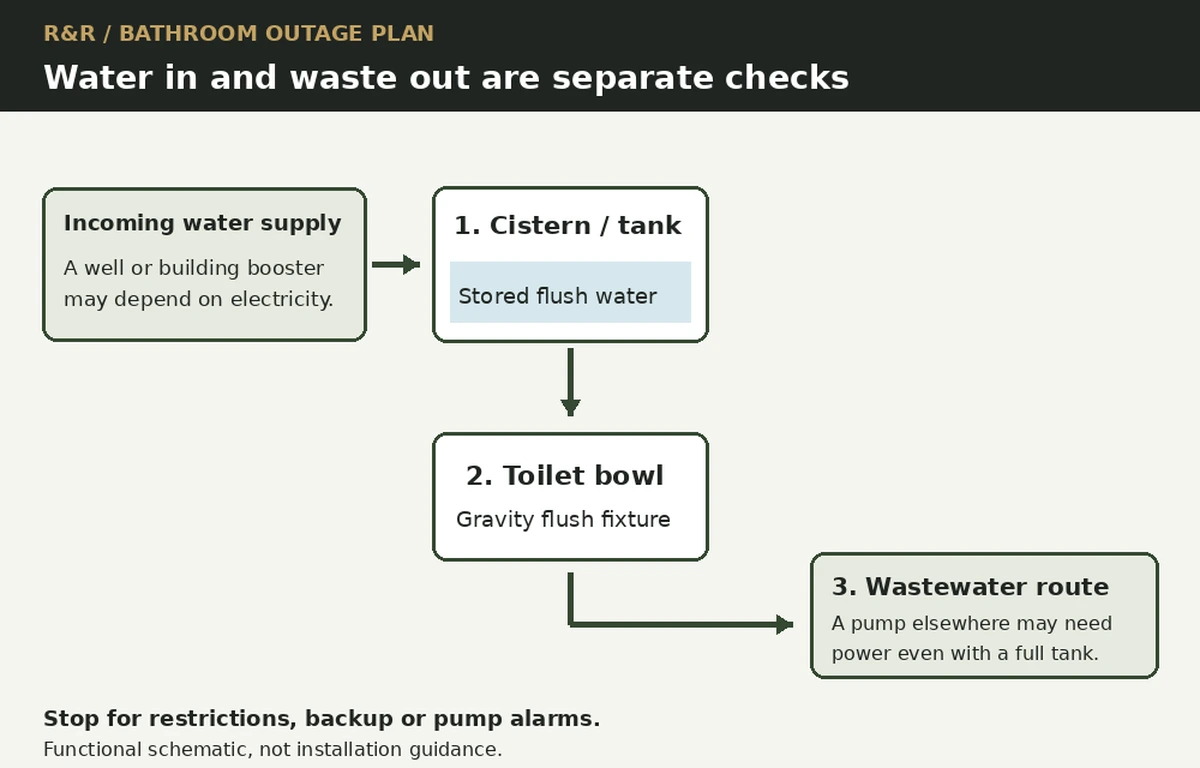
An empty toilet tank is an inconvenient discovery, especially when the water has already been shut off. Before you reach for a bucket, identify what has stopped working. A supply interruption can leave an ordinary toilet without refill water while its drain remains usable. A blocked, flooded or unpowered wastewater system is a different problem.
This guide is for a conventional gravity-flush toilet with a confirmed usable drain. It explains how to approach manual flushing without treating a bucket as a repair tool. If electricity is also unavailable, start with whether you can flush during a power outage to check pumps, building systems and wastewater restrictions first.
Quick answer: no running water is not the same as no water
You need a supply of water to flush a conventional toilet. When the tap supply is off, stored water can sometimes replace the water normally entering the tank or bowl. That works only when the fixture and wastewater route are suitable. If there is no available water, or drainage cannot be used, choose a functioning alternative toilet or an appropriate temporary sanitation arrangement.
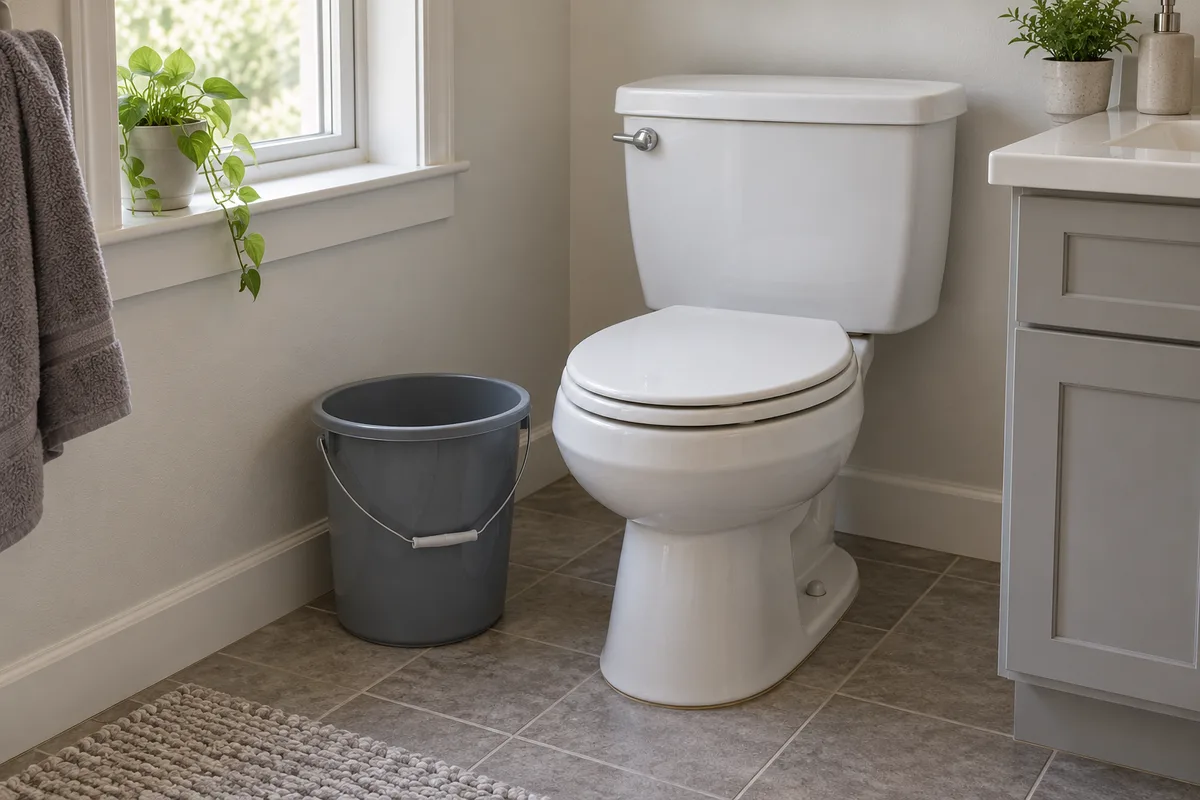
Before either method, use this stop checklist
- Do not flush when a utility or building notice prohibits wastewater use.
- Do not add water to a bowl that is rising, already unusually high or backing up.
- Do not treat manual flushing as a workaround for an unpowered ejector or macerator.
- Do not proceed when flood damage or a sewer problem makes drainage uncertain.
- Do not handle a container that is too heavy or awkward for you to control.
The absence of a tap supply is the problem this guide addresses. If you have a different fault, get the correct help rather than repeating a water-pouring experiment. Keep the stop conditions on your printed copy so that the instructions remain connected to the circumstances where they make sense.
Choose the tank method or the bowl method
| Method | Basic idea | Best question to resolve first |
|---|---|---|
| Tank refill | Put suitable stored water into a conventional tank, then operate the normal flush | Can you safely reach the tank and follow its normal fill-level instructions? |
| Direct bowl pour | Add water to the bowl in a controlled, continuous pour to initiate the flush | Is the bowl draining normally and can you control the container? |
| Neither | Do not add more water | Is the problem really an unavailable drain, pump or usable water source? |
Roto-Rooter's manual-flushing explanation describes both approaches. This is not a reason to try both repeatedly. Choose an appropriate method after checking the system, and stop if the result suggests the toilet is not accepting or moving water normally.
Method one: refill a suitable gravity toilet tank
- Read the toilet's manual and identify its normal tank water level. Do not open a pressure vessel or powered component.
- If the ordinary ceramic lid is safely accessible, lift it carefully and place it on a stable surface where it cannot fall.
- Add water to the conventional tank to the specified normal level. Avoid overfilling or disturbing the internal parts.
- Replace the lid safely and operate the usual flush control. Remember that the supply will not automatically replace the water while it is shut off.
Tank refill gives you a familiar control to use, but access can be awkward in a small bathroom. Decide whether the task is manageable before lifting the lid and a water container. You do not need to dismantle a valve, disconnect a hose or modify the mechanism for this basic approach. If the normal flush control is broken, you have a repair question beyond a water-supply interruption.
Use the actual fixture instructions rather than a fill level copied from another model. Fluidmaster's installation guidance illustrates why tank and bowl water levels are settings, not arbitrary amounts. That manual is a reference example, not an instruction to install or adjust its valve during an outage.
Method two: a controlled direct bowl pour
With a confirmed working drain and suitable gravity toilet, Seattle Public Utilities describes flushing during a planned supply outage by adding stored water to the bowl. Roto-Rooter explains that the water needs to enter as a single effective pour rather than merely trickling into the bowl.
Bring a manageable container to the bathroom, lift the seat and pour steadily without splashing. Watch the bowl. If water rises instead of clearing, stop adding it. Do not turn a failed attempt into repeated larger pours. Avoid tossing water from a height or trying to produce the strongest possible splash; control and the condition of the drain matter more than force.
If you cannot hold and tip a container comfortably, ask for appropriate assistance or choose another toilet arrangement. A smaller container may be easier to carry but may not produce a suitable flush by itself. The solution is not to strain yourself or combine unpredictable attempts. Plan the method around the user and fixture instead of making the user conform to a bucket size.
How much water do you need to flush manually?
There is no single amount that fits every toilet and every method. Seattle's planned-outage page gives approximately one gallon for its bowl-pour example. Older fixtures and different designs can need different amounts. The normal tank fill level is a separate consideration from the quantity used in a direct bowl pour.
Record the manufacturer's information where available. Avoid treating a gallon figure as a guarantee that a blocked or unusual toilet will flush. Also avoid confusing a household's emergency drinking-water target with its bathroom requirement. Water assigned to one task cannot be counted again as though it were still available for another.
For planning, make two lines: water reserved for drinking and food, and water identified for sanitation where permitted. Leave uncertain quantities marked as uncertain. If the expected interruption is longer than the available utility supply can support, arrange a fallback early rather than assuming that one successful manual flush solves the next several days.
Choose water for the task, not just water you can find
The bathroom bucket and the drinking-water container should have different jobs. CDC's emergency water guidance recommends a household reserve and suitable storage containers. Keep that reserve identifiable. Do not put a bucket that has held toilet-related materials back into service for drinking-water collection.
For non-drinking water, check the source and current local instructions. Do not assume that every puddle, floodwater source or contaminated container is appropriate to bring into the bathroom. An outage can involve both service loss and water-quality warnings. The instructions for a planned maintenance interruption may not apply to a chemical incident or a flooded property.
You can prepare a labeled utility container before a planned shutoff when the current supply is suitable for that use. Our water-shutoff checklist organizes the wider household tasks. For longer-term storage, use the separate small-apartment water-storage guide rather than trying to store an open bathroom bucket indefinitely.
A water advisory changes the decision
Read the type of advisory rather than relying on the word “water.” CDC distinguishes boil-water, do-not-drink and do-not-use notices. A do-not-use advisory is not permission to keep using tap water for non-drinking tasks. Follow the specific local instructions about toilet flushing and contact with the supply.
Save the notice with its date and issuing authority. If you share a home, make sure the person filling the bathroom container is following the same instruction as the person preparing food. A vague comment such as “the water is bad” does not explain which uses are allowed. Copy the permitted-use instruction accurately or point to the original notice.
If instructions are unclear, ask the utility or health department. Do not solve the uncertainty by deciding that boiling makes every water source harmless. CDC's water-treatment overview explains that fuel and toxic chemical contamination are not corrected by boiling or disinfecting. This article does not supply a new treatment recipe for such a situation.
If a manual flush fails, pause before trying again
A failed pour can mean that the method, fixture or drainage needs attention. It is not proof that the answer is simply a larger bucket. If the bowl is high, draining unusually slowly or receiving sewage, stop adding water and contact the appropriate property manager or plumber. Avoid flushing another bathroom as a substitute test when a shared drainage problem is suspected.
Describe what happened in plain observations: the tank did not refill, water rose in the bowl, a pump had no power, or a notice restricted sewer use. Those details help the person responsible distinguish the supply problem from a wastewater problem. Do not claim a diagnosis you have not established.
Keep the area accessible and choose a functioning alternative while the problem is resolved. A friend, neighbor or public facility should be confirmed available before you rely on it. If the interruption is widespread, check official temporary facilities. A clean, reachable working toilet can be a more practical answer than improvising increasingly complicated equipment at home.
Protect hand hygiene while the taps are off
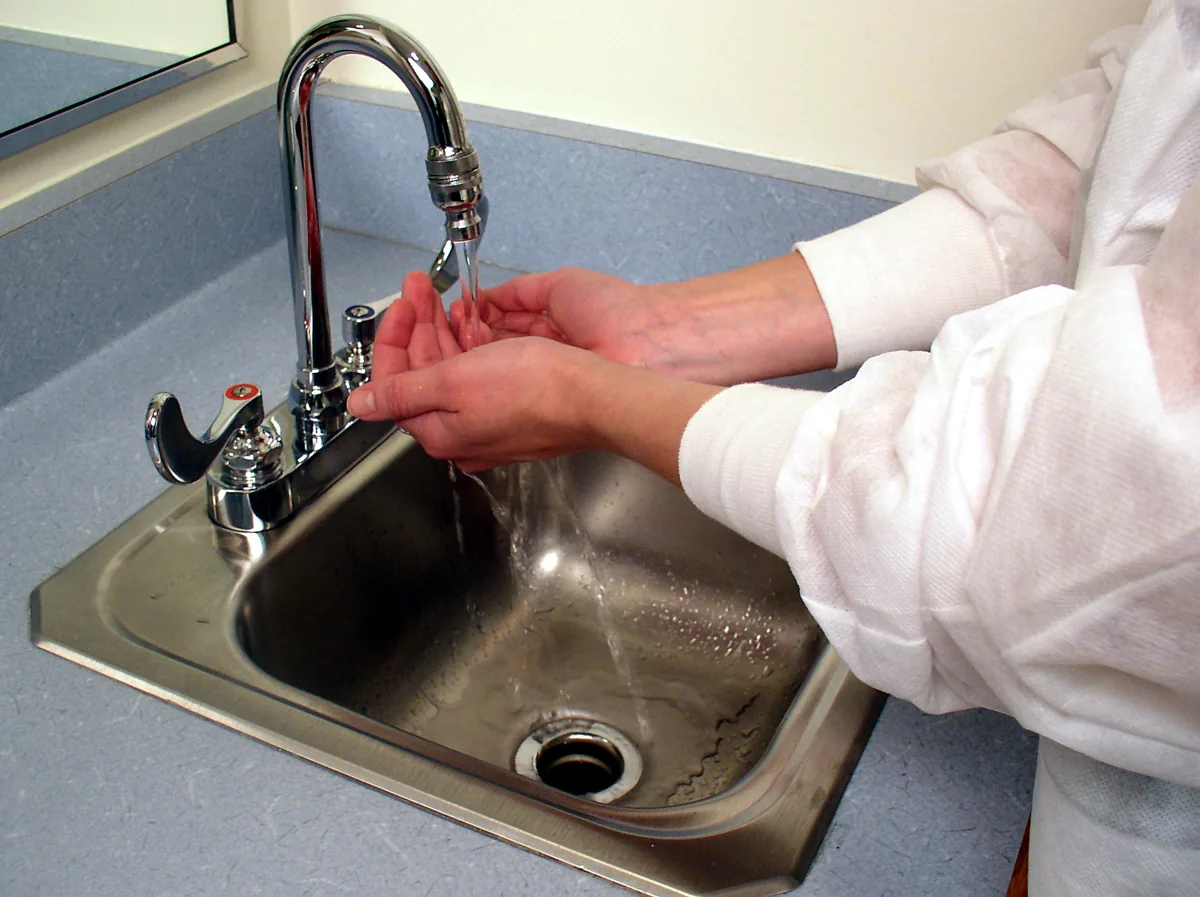
Bathroom planning includes what happens immediately afterward. CDC recommends soap-and-water handwashing and describes sanitizer limitations. If soap and water are unavailable, its emergency guidance specifies sanitizer containing at least 60% alcohol; visibly dirty hands and chemical contamination need particular attention.
Arrange the hygiene supplies before you need them. Identify which water is suitable for handwashing under the current advisory and how people will dispense it. Keep the container and clean supplies separate from any waste-handling materials. A towel, soap or paper supply placed just out of reach can make an otherwise reasonable setup inconvenient for the actual user.
If someone provides assistance, explain the arrangement without making them search cupboards. The household supply-location worksheet can point to soap, suitable water, lights and contact information. It should not display private medical details or sensitive access information.
A renter's version of the plan
In a rented home, confirm whether the notice affects only the water supply or also the building's drainage. Ask management how to obtain updates and what bathroom alternative is available if residents cannot use the plumbing. Keep the after-hours contact with the notice. Do not operate shared valves, building pumps or equipment outside your responsibility.
Make your own plan around the usable space in the apartment. Where will the utility container sit without blocking a walkway? Can the intended user carry it from that location? Is there a suitable place for hygiene supplies? Answer these questions during normal conditions, with an empty container if that is enough to check the arrangement.
For electricity-related uncertainty, return to the primary power-outage toilet guide. A water container can address an empty tank; it cannot confirm that building wastewater pumps have backup power. Keep those two decisions separate in the written plan so nobody treats a household workaround as permission to ignore a building restriction.
When you need a no-flush alternative
If you have no usable flushing water or cannot use the drain, switch the question from “How do I flush?” to “Which bathroom arrangement can we use safely?” North Carolina's emergency toilet handout describes using another working toilet and temporary collection options. Follow the relevant local waste instructions rather than assuming ordinary trash collection will accept everything.
Our emergency toilet guide for apartments explains how to evaluate privacy, accessibility, supplies and the disposal plan. It does not recommend pouring waste into storm drains, placing bags in shared trash chutes or storing them wherever space happens to be available. Those decisions need the local arrangements and the responsible authority's instruction.
Avoid making the shopping decision first. A commercial portable toilet still requires compatible supplies, suitable placement and a servicing or waste route. A basic collection setup still needs a user who can safely use it. Choose an option that fits the real household, and seek assistance if sanitation cannot be maintained at home.
Record the method your household can use
On the printable bathroom plan, record the toilet model, the source confirming usable drainage, the utility-water location and who can handle the container comfortably. Leave an unknown answer blank rather than turning a guess into an instruction. Recheck current restrictions before using the stored plan.
A short preparation exercise before the next shutoff
Write down your toilet model, the usual tank-level instruction and the contact for plumbing questions. Identify a utility-water container and label its purpose. Check that a household member can locate the container and the flashlight. You can review these details without cutting the water or repeatedly flushing.
Next, mark the unresolved questions. Perhaps the building has not confirmed its drain restrictions or the intended user needs a different container arrangement. Assign each question a next step. Keep the exercise practical: a plan should reveal missing information rather than disguise it behind a long list of equipment.
Finish with the fallback. Record a place or contact you could use if manual flushing is inappropriate, and the circumstances in which you would ask for help. The written plan is stronger when it includes that branch. It keeps a convenient technique from becoming the only option the household remembers.
Manual-flushing checklist and common questions
- Confirm a conventional gravity toilet and usable wastewater route.
- Read the current local or building notice.
- Choose a manageable container and suitable water source.
- Follow the fixture's tank instructions or an appropriate bowl-pour method.
- Stop if water rises, drainage is abnormal or restrictions change.
- Protect drinking water and arrange hand hygiene.
- Keep a functioning alternative available.
Can I flush a toilet with absolutely no water?
A conventional flush toilet needs water to move its contents. “Without water” in many searches really means without running tap water. If no usable water is available, use an appropriate no-flush alternative rather than repeatedly operating the handle.
Can I use this method on a tankless or pressure-assisted toilet?
Do not apply conventional-tank instructions to an unfamiliar fixture. Check the manufacturer's manual and get qualified guidance. A pressure vessel, flushometer or powered fixture is not the same as an open gravity tank.
Should I keep trying if the first pour does not work?
Not if the bowl is rising or drainage appears abnormal. Stop and resolve the problem. Repeating the method can add water to a toilet or wastewater system that is not accepting it.