
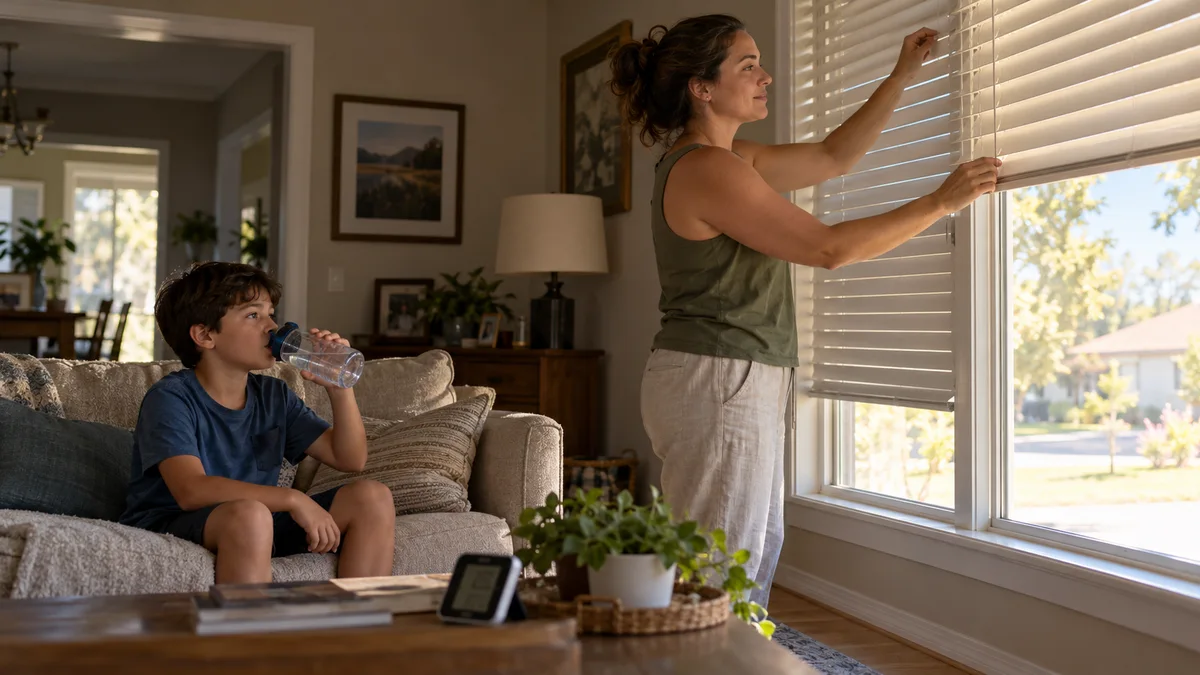
A heatwave becomes a household problem long before anyone calls it a disaster. The bedroom stays warm after sunset. An older relative says the apartment is uncomfortable. Your usual afternoon walk no longer feels sensible. Then the air conditioner stops, and the question changes from what the forecast means to where everyone can cool down.
El Niño matters because it can influence temperatures and weather patterns across large areas. But your family's heat plan should not depend on whether a particular hot afternoon can be attributed to it. I would start with the room where people sleep, a confirmed cooler destination and a way to get there. Those are decisions you can make before the next warning.
Does El Niño cause heatwaves?
El Niño can contribute to conditions that favor unusual heat, but it does not cause every heatwave and does not make every region hotter in every season. It is the warm phase of the El Niño–Southern Oscillation, an ocean–atmosphere pattern centered on the tropical Pacific. Changes in ocean temperatures and atmospheric circulation can affect distant weather. Local pressure systems, other oceans and long-term warming also matter.
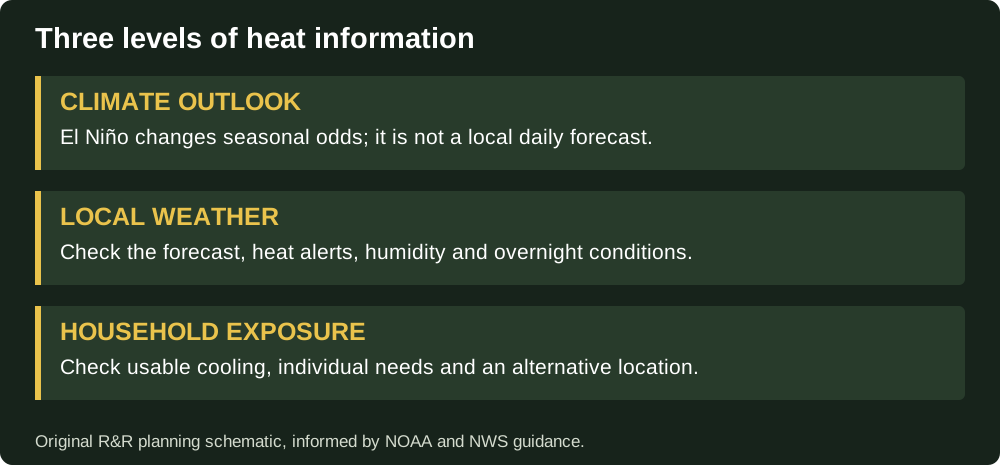
The distinction is useful rather than academic. A seasonal outlook describes changing odds across a period; it is not tomorrow's street-level forecast. A global temperature anomaly is an average across land and ocean; it is not the increase you should add to your city's temperature. Use the NOAA ENSO explanation for the climate pattern and your local weather service for the heat actually expected where you live.
For household decisions, I separate three questions. What does the climate outlook suggest we should prepare for over coming months? What does the local forecast say about the next several days? What is happening in the home right now? Keeping those questions separate stops a distant ocean measurement from becoming a misleading thermostat reading.
What the latest 2026–2027 El Niño outlook actually says
NOAA's Climate Prediction Center issued its checked update on October 8, 2026. It reported a greater-than-83% chance of a strong-to-very strong El Niño continuing through January–March 2027. The discussion explicitly says that a larger event increases the chance of familiar El Niño impacts without guaranteeing them. That probability describes the ENSO event's strength and persistence, not an 83% probability that your home will experience a heatwave. Read the dated CPC discussion.
That is the forecast detail worth preserving. Do not turn an ocean outlook into a list of cities certain to break temperature records. Nor should a dramatic phrase such as super El Niño become your only reason to prepare. A household without reliable cooling needs a heat plan during neutral years too.
Our El Niño home-preparedness guide covers property checks, supplies and interrupted services. This article fills the heat-specific gap: reading warnings, reducing indoor exposure and arranging somewhere cooler. For water-related risks, use the separate El Niño flooding and regional-risk guide. Preparation for one hazard should not crowd out another.
El Niño, a heat dome and climate change are different things
A heat dome is commonly used to describe a persistent high-pressure pattern associated with hot conditions. El Niño is a climate pattern in the tropical Pacific. Climate change describes the longer-term shift in the climate system. These can interact, but they are not interchangeable names for the same event. An NWS account of the July 2022 UK heatwave describes the high-pressure situation; it is a historical explanation, not a current forecast.
A useful example comes from research on the long 2023 southwestern U.S. and northern Mexico heatwave. A 2025 Nature Communications study examined ocean conditions and atmospheric circulation. NOAA's research summary identifies exceptionally warm tropical Atlantic water as the dominant influence in that analysis, with developing El Niño playing a smaller role. Blaming the whole event on the Pacific would miss a central finding.
The practical lesson is to avoid single-cause explanations. When several influences can keep heat in place, preparation should address prolonged exposure and interrupted cooling rather than wait for certainty about which influence contributed most. Scientific attribution improves understanding; a functioning household plan improves your ability to act on an actual warning.
Which U.S. and Western regions should pay attention?
The answer changes with the season and the forecast. In the United States, treat the local NWS forecast and current alerts as your operational source. A general El Niño winter pattern is not a map of next summer's heatwaves. Southern, northern, coastal and inland locations can face different combinations of temperature, humidity and duration. Do not assume a familiar hot climate makes every household prepared, or that a cooler climate makes preparation unnecessary.
For the UK and northwestern Europe, the Met Office describes El Niño's influence as indirect and competing with other weather drivers. Its September 2026 explanation discusses warmer, wetter and stormier tendencies in late autumn and early winter, rather than promising a European heatwave. The local heat-health forecast remains more useful for deciding when to alter activities or arrange support.
Australia's Bureau of Meteorology links El Niño with a greater likelihood of hotter conditions and reduced rainfall in relevant regions, while emphasizing the role of other climate drivers. See its El Niño climate explanation. The southern-hemisphere seasonal calendar is different from North America's; avoid copying northern summer advice into a forecast for Australian spring or summer without checking the dates.
For Canadian readers, pair Environment and Climate Change Canada's alerts with local public-health instructions. The key household question is whether people can remain cool indoors. Health Canada's June 2026 guidance recommends an upper indoor temperature of 26°C, about 79°F, to protect adults aged 60 and over. It notes that this may not protect everyone with severe frailty or multiple conditions. This is a specific health-protection recommendation, not a universal legal limit or a guarantee of safety.
| Reader location | Source to check | Avoid assuming |
|---|---|---|
| United States | Local NWS forecast and heat alerts | An ENSO winter pattern predicts a local summer heatwave |
| Canada | ECCC alerts and local public health | Outdoor temperature establishes indoor protection |
| UK / northwestern Europe | Met Office and local heat-health advice | Pacific warming has a simple direct effect everywhere |
| Australia | Bureau of Meteorology forecasts and alerts | Northern and southern seasons follow the same calendar |
Rather than ranking whole countries from safest to most dangerous, check the actual home and the person using it. A shaded lower-floor room, a sun-exposed upper-floor apartment and a house with reliable air conditioning have different practical constraints. Our suggested planning record asks for those details because they help determine what action is available, regardless of a broad national climate label.
Heat advisory, heat index, HeatRisk and WBGT explained
An NWS Heat Advisory means dangerous heat is expected below warning criteria. An Extreme Heat Watch means conditions could support an extreme event but timing or occurrence remains uncertain. An Extreme Heat Warning calls for action when extremely dangerous heat is expected or occurring. Local offices use locally appropriate criteria; there is no single temperature that defines every U.S. alert. NWS heat-alert definitions are the reference to check.
The heat index combines air temperature and humidity. It is calculated for shade and light wind, so it does not fully describe exposure in direct sunshine. NWS says full sun can increase heat-index values by as much as 15°F. WBGT considers additional factors including sunlight and wind and is useful for active outdoor populations. HeatRisk considers how unusual and persistent heat is for a location, including overnight conditions. These are different tools, not competing readings of one identical measurement. Compare the NWS heat tools.
| Tool | Question it helps answer | Important qualification |
|---|---|---|
| Heat advisory / watch / warning | What action does the local service call for? | Read location, dates and instructions; criteria vary |
| Heat index | How do temperature and humidity combine? | Shade and light-wind assumptions; direct sun matters |
| WBGT | How do environmental factors affect active exposure? | Relevant to work or exercise; use applicable procedures |
| HeatRisk | How unusual and persistent is local forecast heat? | Includes overnight context; not an indoor room reading |
When reading a weather app, notice which measurement it displays. A feels-like value, air temperature and risk category answer different questions. Save the actual warning text rather than relying on an isolated screenshot of a number. Record the location and time too: a forecast for the nearest city center may not describe the precise conditions beside an exposed worksite or trail.
I would put the local forecast and warning link at the top of the household sheet. Below it, record the home's indoor conditions and the people who need help. That arrangement makes the information usable: forecast, exposure, action. It also avoids expecting everyone in the household to learn climate terminology before they can follow the plan.
How to prepare your home for a heatwave
Walk through the rooms people actually use. Which windows get afternoon sun? Where does an older relative sleep? Can everyone reach the coolest usable room? What equipment is required for that room to remain cool? Answer those questions before buying a new item. A thermometer can help you record conditions, but a reading is only useful if someone knows what action to take next.
UKHSA's keep-cool-at-home checklist provides the building-focused reference. Shade sun-exposed windows and manage ventilation according to indoor and outdoor conditions. Opening a window is not automatically helpful when outside air is hotter; nighttime ventilation also needs to account for security, falls, air quality and other local concerns. Seek landlord or maintenance support for problems beyond ordinary household adjustments.
Our suggested room record has four columns: room, time checked, indoor condition and next action. It does not need a complicated dashboard. Write a clear observation such as bedroom still warm after sunset, then assign the task that follows: confirm cooling access, contact maintenance or use the agreed alternative. Avoid writing a precise safe temperature unless it comes from applicable guidance or an individual care plan.
If you rent, record maintenance contacts and the building's arrangements separately from your own supplies. You may control curtains and personal belongings while management controls shared systems. A reported fault is not a resolved fault. Keep the date reported, the response and the fallback arrangement together so that unresolved cooling problems remain visible.
Make your cooling destination a real arrangement
A cooling center, library or other air-conditioned location is only a useful alternative when it is open and reachable. Confirm opening hours, eligibility or access requirements, transport, accessibility and whether a pet can come with you. A map pin without those details is an idea, not a completed plan. Local public-health or emergency-management contacts can help identify appropriate options.
Pick a first option and a fallback. Write who will drive, call or accompany someone, and what happens if that helper is unavailable. Keep the address and phone number offline. Discuss the arrangement while everyone is comfortable rather than introducing it for the first time when somebody feels unwell or the home is already overheating.
For a person living alone, agree how to check in and what to do if there is no reply. Do not rely on vague promises to keep an eye on things. Our suggested record uses an agreed contact method, check-in time and escalation contact. These are organization prompts, not a replacement for a clinician's heat action plan or emergency services.
Can a fan keep you safe during extreme heat?
A fan is not a substitute for access to a sufficiently cool environment. The CDC's current heat-health guidance says to use fans only when indoor temperatures are below 90°F, about 32°C, because above that they can increase body temperature. Do not interpret the number as proof that conditions below it are safe for every person. Health needs, exposure and the applicable advice still matter.
This is why I would not make a battery fan the centerpiece of a heatwave kit. It can support a suitable cooling arrangement under appropriate conditions, but it cannot confirm that the room or person is safe. Buying two fans instead of one does not resolve the question of where someone will go if the house becomes unsuitable.
Keep comfort and protection distinct when reading product advertising. Long battery life tells you about the device, not about the temperature of the room. A large airflow number tells you about a manufacturer's performance claim, not whether an older relative can stay there overnight. Match equipment to the plan; do not rewrite the plan around an attractive listing.
What to do when a heatwave and power outage overlap
Start by identifying the cooling function you would lose. A stopped air conditioner, an inaccessible lift and an uncharged phone create different problems. Record which household tasks depend on electricity and which have a functioning alternative. Do this before comparing batteries or generators, because equipment selection cannot compensate for an unclear requirement.
Our apartment power-outage checklist covers building access and basic supplies. Pair it with a heat-specific destination and transport arrangement. For medicines requiring refrigeration or equipment requiring power, ask the pharmacist, clinician or equipment provider for a product-specific plan; do not improvise storage temperatures or runtime guarantees.
A portable power station's energy capacity is not the same as its output rating. If you intend to power cooling equipment, verify the actual appliance load, starting requirements and realistic operating time. Our BLUETTI Elite 100 V2 planning review explains the difference and labels runtime estimates rather than presenting them as measurements. A small battery used for communications may be useful even when it cannot sustain an air conditioner.
Fuel-powered generators add a separate carbon-monoxide hazard. CDC says to operate them outside, more than 20 feet from windows, doors and vents, never inside a home or garage. An open garage door does not make indoor operation safe. Use the relevant instructions and a battery-powered or battery-backup CO detector. CDC generator and CO guidance explains the requirement.
Keep food assessment separate from cooling people. The food-safety power-outage guide helps organize refrigerator and freezer decisions. Searching through a warming fridge or repeatedly opening it should not become the task that delays an agreed move to a cooler place. Assign food follow-up to someone able to manage it while household health remains the priority.
EQUIPMENT THAT SUPPORTS THE PLAN
Measure the room. Keep communication working.
As an Amazon Associate I earn from qualifying purchases.
Indoor room thermometer
Check readable display, suitable measuring range and where the manufacturer says to place it. A reading supports observation; it does not establish that a person is safe.
Compare options on Amazon →Compatible phone power bank
Choose a connection and charging specification that match the actual phone. Test the cable and store the working set together before an interruption.
Compare options on Amazon →These links open category searches, not tested product recommendations. Use existing suitable equipment first.
Build a useful heatwave kit without buying random gear
I would divide the kit into information, access and everyday support. Information means current contacts, warning sources and the address of a confirmed cooling destination. Access means the keys, transport arrangement, mobility needs and phone charging needed to use that destination. Everyday support means suitable water containers, the person's agreed medicines and the essentials they would normally need away from home.
A reusable bottle is useful when it is filled, available and manageable for the person carrying it. A power bank is useful when its cable works with the actual phone. Written contacts are useful when they are legible to the intended user. Treat those practical checks as part of preparation rather than expecting the purchase itself to finish the task.
For household reserves, use the emergency-water storage guide. Heat may change individual needs, so do not assume a basic stored-water amount covers every situation. Follow personal medical advice where fluid intake needs managing. A shopping list and a record of water already available are two different documents.
If the cooler destination requires leaving home, adapt the bug out bag checklist to a short practical departure. Do not automatically pack every object from a generic survival list. Keep the contents manageable, include what the destination requires and account for items that cannot remain permanently packed. The Excel workbook can help separate packed items from things still missing.
A short review with the household is more valuable than a shelf of unopened supplies. Find the bottle, cable, contacts and keys. Confirm who owns the next unfinished task. Then stop: this is an ordinary organization check, not an exercise in enduring heat or staging an outage. Preparation should reduce friction without creating new exposure.
Heat exhaustion and heat stroke need different urgency
Heat exhaustion can involve headache, nausea, dizziness, weakness, thirst and heavy sweating. Stop the activity, move out of the heat, begin cooling and seek medical assessment. Confusion, seizures or loss of consciousness can indicate heat stroke, a medical emergency. Call emergency services immediately and start rapid cooling while help is coming. A person with heat stroke may still sweat; dry skin is not required. CDC/NIOSH symptoms and first aid are the reference.
Do not wait to finish the checklist, find a special product or decide which climate pattern is responsible. In the United States and Canada call 911; in the UK call 999 or 112. Elsewhere use the local emergency number. Do not force drinks on someone who is unconscious, confused or unable to swallow safely; follow dispatcher instructions and the NHS heat exhaustion and heatstroke guidance.
Our role here is to organize prevention and access to help, not diagnose illness. Keep a concise emergency instruction visible to the people using the plan. A lengthy article is useful for preparation, but the response to a potentially life-threatening symptom must be simple enough to follow immediately.
Plan for children, older adults and medicines individually
Do not build the plan around an average household member who does not exist. Ask who needs help reaching the cooler room, understanding an alert or getting to an alternative location. Someone may be independent in ordinary conditions yet need support when a lift stops or transport arrangements change. Record the task and agreed helper rather than labeling a whole person as incapable.
For older adults, CDC guidance emphasizes access to air-conditioned places and medical advice where fluid restrictions apply. A brief phone call asking whether someone is fine may leave practical gaps. Ask whether the cooling equipment is functioning, whether the planned destination is available and whether they need assistance getting there.
Medicines belong in an individual plan, not a generic product recommendation. CDC advises against changing or stopping medicines without talking with the doctor. Ask how to handle heat exposure, refrigeration and interruptions for the actual medication or equipment. Record where that professional advice is kept; do not place sensitive diagnoses or identity details on a publicly visible household sheet.
Children and pets also need explicit arrangements. CDC says never to leave children or pets in parked cars. Check who is supervising during a change of plans. Confirm destination policies before assuming a family member with a pet can use the same cooling facility as everyone else.

Extreme heat, smoke and outdoor plans
When wildfire smoke and extreme heat occur together, the usual instruction to open windows can conflict with keeping polluted air out. Health Canada's combined smoke-and-heat guidance recommends prioritizing cooling and considering a location that provides cleaner, cooler air when the home cannot. Check both air-quality information and the heat forecast; do not solve one exposure by ignoring the other.
For a hike, ask whether the route still suits the whole group and the available conditions. A plan made during mild weather should not become an obligation. Our beginner day-hike checklist covers route choice, contacts and essential systems. Heat adds another reason to change the start time, shorten the outing, choose a different route or cancel.
Keep the return and assistance arrangements visible to a trusted contact. Record where conditions and access were checked. Equipment photographs and packing lists cannot confirm a shaded trail, a functioning water source or someone else's heat tolerance. A gear list should support a route decision that has already accounted for current conditions.
If outdoor work is unavoidable, use workplace heat procedures and appropriate supervision. NWS explains why WBGT can be more informative for active populations than heat index alone. Water, shade, rest and acclimatization need an actual work arrangement; owning a bottle does not establish that breaks or assistance will be available.

A household heatwave checklist you can actually complete
Mark an item complete only when the arrangement works, not when you intend to buy or arrange something. Start with cooling access, then information and transport. The checklist is deliberately organized around functions so it remains useful in a rented apartment, a house or a household visiting relatives.
Check the arrangements, not just the supplies
The on-page ticks are a temporary reading aid; use the PDF to keep a record.
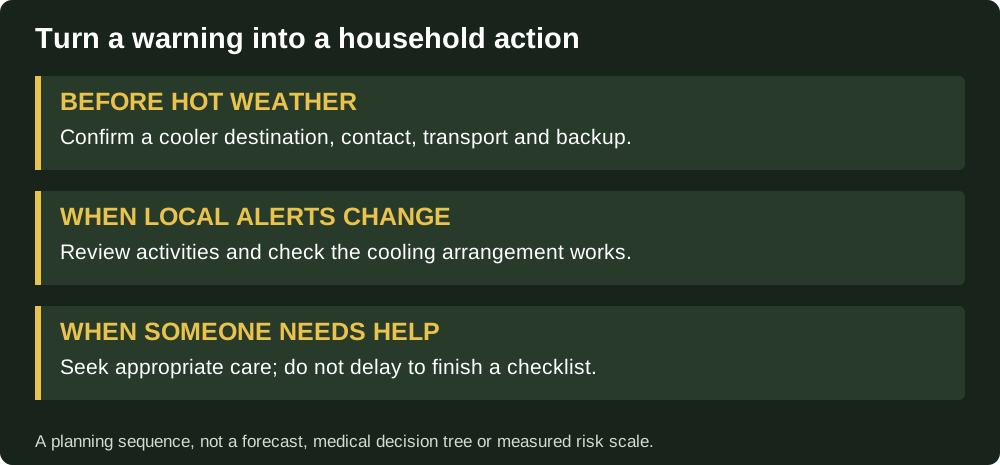
Use the notes area to record the first unresolved problem. If the cooling destination is closed when you might need it, resolve that before adding optional kit. If transport depends on one helper, agree the fallback. A finished document is not the goal; a confirmed arrangement is.
Our resource library contains printable household, outage and outdoor worksheets. Store a copy where the intended person can reach it, and review after moving, changing equipment or using supplies. Keep private medical details in an appropriate secure record rather than expanding the general checklist until it becomes too sensitive to share.
Common questions about El Niño and extreme heat
Does a strong El Niño mean a heatwave is certain?
No. The checked CPC outlook concerns ENSO strength and persistence. Local heat depends on region, season and other conditions. Use current local forecasts to decide what action is needed. Prepare cooling access even when a particular hot spell has not been attributed to El Niño.
Is a heat advisory less important than a warning?
It describes a different alert category, not permission to ignore risk. The NWS calls for action under an advisory too. Check the local alert's dates and instructions, then adapt the plan to the people exposed. An individual can need help before conditions meet a community-wide warning threshold.
Can I stay home without air conditioning?
That depends on the actual indoor conditions, available cooling and individual needs. Do not treat a fan or a weather-app reading as a guarantee. Confirm a cooler destination and transport in advance, follow public-health advice and seek help promptly if someone becomes unwell.
Will a portable battery run my air conditioner all night?
You cannot tell from a headline output number. Check the appliance's actual demand, starting requirements, battery energy and operating losses. Use measured or clearly qualified information for the equipment involved, and keep a cooling alternative if the proposed setup has not been established to meet the need.
Should I prepare only for heat during El Niño?
No. Heat, drought, flooding and interruptions can require different actions in different places. Use the home El Niño guide for the wider plan and the regional flooding guide for water-related exposure. Let local conditions decide which tasks come first.
What to do next
Write down where your household can cool down, how everyone will get there and what could prevent that arrangement from working. Check the local forecast and indoor conditions. Assign one unresolved task today. That gives the climate information a practical purpose and leaves you with something more useful than another alarming headline.
Sources and editorial method
Researched October 15, 2026. This is an independent preparedness guide, not a live warning, field report or clinical assessment. We checked the dated ENSO outlook, primary research and national weather/public-health guidance, then created the planning diagrams, comparison tables and household worksheet. Forecast probability, regional tendencies and personal exposure are kept separate.
Lifestyle visuals depict planning situations. They are illustrative scenes, not photographs documenting an actual heatwave or a tested intervention. Medical advice is linked to its public-health source; no clinician review is claimed.
Open the reference list
- NOAA ENSO explanation
- October 8, 2026 CPC outlook
- Nature Communications 2025 ocean/heatwave study
- NWS heat alerts
- NWS forecast tools
- CDC heat and health
- CDC/NIOSH heat-related illness
- UKHSA home-cooling checklist
- Health Canada older-adult indoor-temperature guidance
- Health Canada smoke and extreme heat
- Met Office 2026 autumn ENSO discussion
- Australia Bureau of Meteorology ENSO explanation