START HERE
Emergency Preparedness for Beginners: A Practical Starting Plan
Start with one practical household task, then connect it to a wider plan.
By Ready & Resourceful · Published 7 October 2026 · Original planning framework; no professional review or product testing claimed.
Choose the problem you need to solve first
If a blackout is your concern, begin with the apartment outage guide. If supplies are difficult to find, begin with the storage project. If an outdoor trip is coming up, use the day-hike checklist. Work from your actual situation rather than buying a generic collection of equipment.
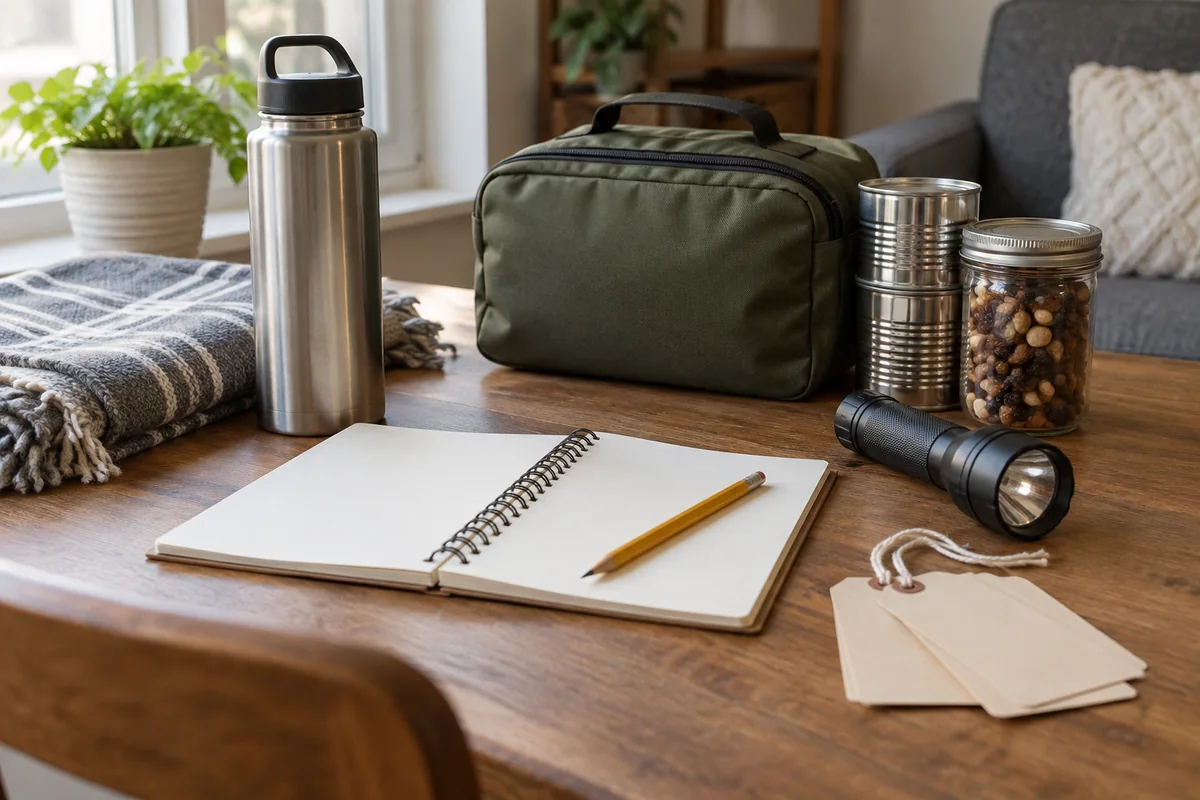
Start with a task you can finish
Choose an action with a clear result. “Get prepared” is too vague to check off. “Find and test the flashlight, then record its location” gives you something specific to do and a way to tell whether it is done. Begin with the guide that matches your situation rather than trying to complete every guide today.
| Starting problem | A concrete first task | Visible result |
|---|---|---|
| Scattered supplies | Sort the lighting and charging items | A labeled location and a list of missing parts. |
| Apartment outage worries | Ask management one unanswered access question | A recorded answer or a clear follow-up task. |
| Water reserve uncertainty | Record the amount currently available | A real quantity rather than a shopping intention. |
| Upcoming first hike | Name the route and check current information | A trip-specific decision before packing. |
These are starting examples, not a complete emergency plan. Follow the linked focused guides for the relevant preparation and source-backed safety guidance.
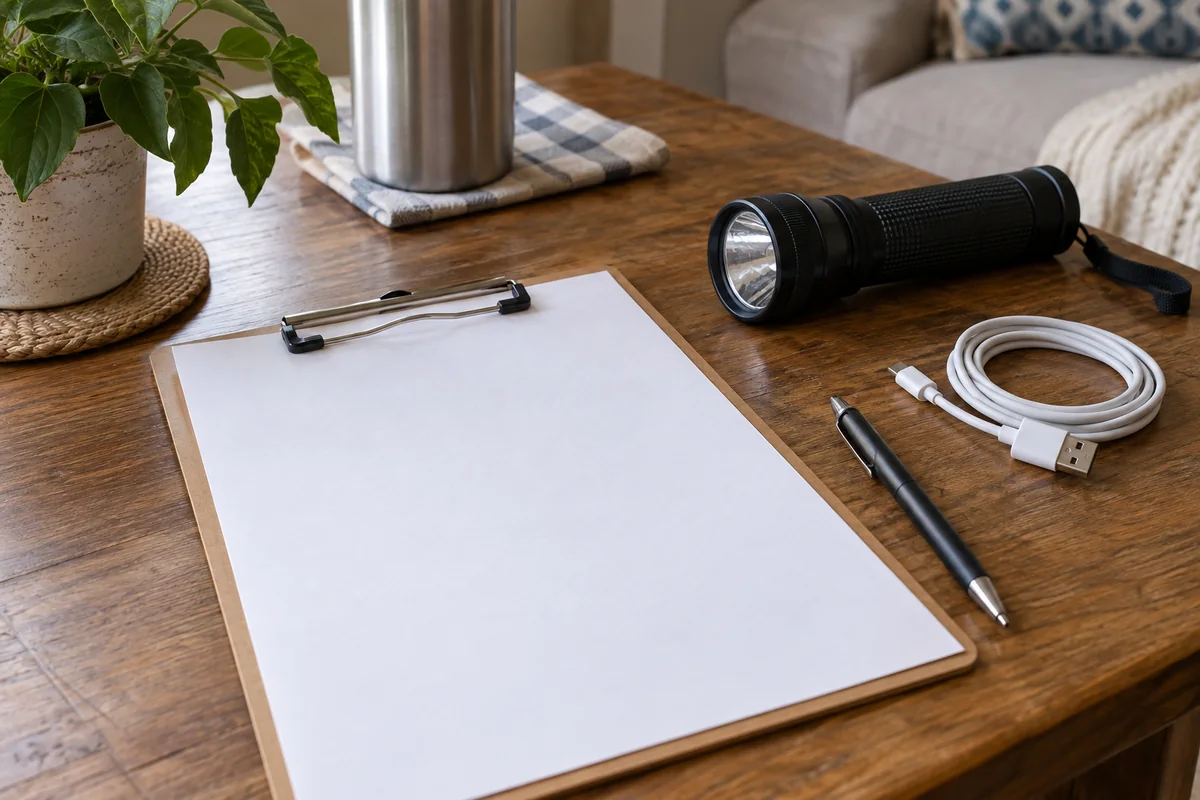
Separate questions, supplies and purchases
Use three short lists. Questions name what you need to learn and who can answer. Supplies record what is actually present and where it is. Purchases name a gap that remains after checking the first two lists. This prevents a planned purchase from appearing as an available item.
For example, a flashlight without compatible batteries is an incomplete set; an unknown exit procedure is an information gap. Put each on the appropriate list. When you resolve a task, update the record and tell anyone else who relies on it.
You can keep this system on paper. The website tracker is optional and stores entries in the current browser. It has no automatic reminders or device synchronization, so keep the necessary offline record and use your own calendar for review dates.
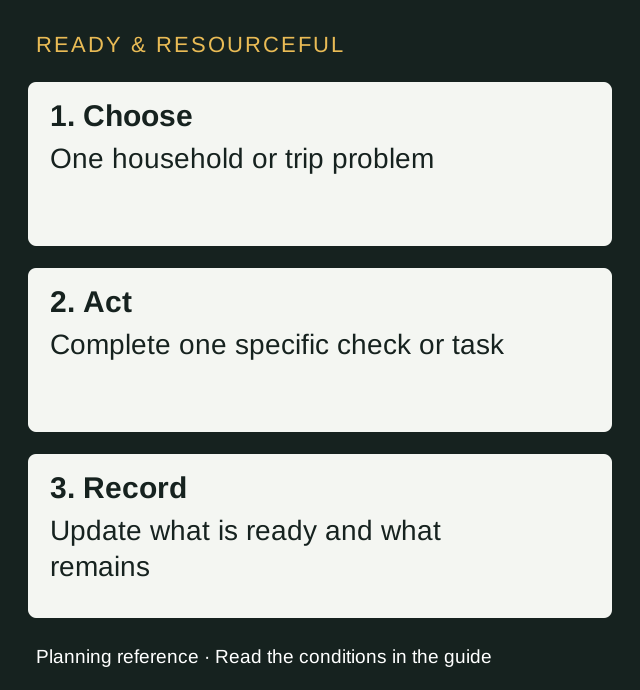
If getting prepared feels like an endless shopping list, start smaller. Choose one problem you want to make easier: finding supplies, handling an apartment outage, arranging drinking water, or planning a first hike. You can make a useful start by checking what you have and resolving the next unanswered question.
Find your starting point
| Your situation | Start with | Then follow up |
|---|---|---|
| I live in an apartment and worry about outages. | Apartment outage checklist | Food safety during an outage |
| I need to plan a drinking-water reserve. | Water storage in limited space | Supply organization |
| My supplies are scattered or hard to find. | Build a supply station | Record quantities and review dates |
| I am preparing for a first day hike. | Beginner day-hike checklist | Keep equipment organized between trips |
Make a one-page action plan
Use four headings: situation, what is already ready, what needs checking, and next action. Keep purchases on a separate list. This makes it easier to distinguish an equipment gap from a planning gap.
For example, an untested charging cable needs a compatibility check; an unknown building exit needs information from management. Buying another item does not resolve either question. Write the person or organization to contact beside the action.
Choose one task you can finish today and a date to revisit the remaining actions. Keep the record where the people who need it can find it. Avoid putting sensitive medical details or private identification information into a shared browser inventory.
Check the plan before you rely on it
Review your chosen guide’s action checklist and download a copy. In daylight, locate the relevant supplies and confirm that components belong together. Ask another household member to find an item using your labels. Do not disable critical equipment or safety systems to rehearse.
The local supply tracker records items and displays review dates when opened. It does not send reminders, synchronize between devices or replace a paper emergency record. Download a backup after important changes and set any needed reminder in your own calendar.
Know what needs local or qualified guidance
Our preparation articles link to primary references for the safety statements they include. They cannot establish current conditions in your building or at a trail. Consult your building management, local emergency authority, land manager and equipment instructions where applicable.
Powered medical equipment, medication storage, electrical installation and other specialist tasks need appropriate professional input. A general checklist should help you identify questions, not encourage an improvised solution.
Keep the plan current
Revisit it when household needs change, supplies are used, equipment is replaced or a trip changes. Update the real quantities rather than leaving intended purchases on the inventory. A manageable plan that accurately reflects what you have is a useful starting point.