
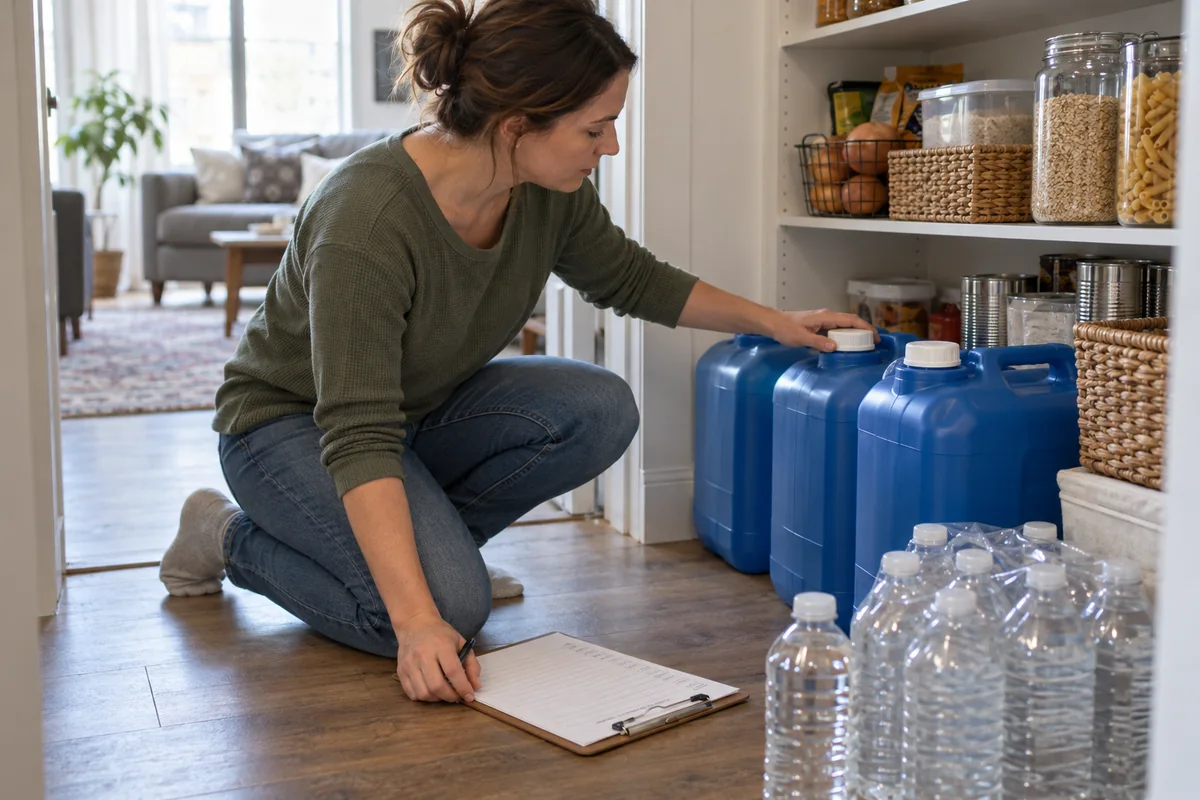
The best emergency water storage containers are the ones you can fill safely, fit into your home, move when necessary and dispense from without creating another problem. A seven-gallon jug may offer an appealing price per gallon, but the water alone weighs approximately 58 pounds. A container described as stackable may permit stacking only when empty. Those details matter more than a dramatic survival photograph.
For modular apartment water storage, I would start by comparing the WaterBrick Standard 3.5-gallon with the Reliance Aqua-Stack. For a larger stationary dispensing reserve, investigate the Reliance Aqua-Tainer 7-gallon. The Scepter 04933 and Reliance Rhino-Pak provide upright alternatives. The waterBOB bathtub bladder is a supplemental option for warned disruptions while safe running water is still available, not a replacement for a ready-filled supply.
This guide compares six identifiable products using manufacturer documentation and public-health guidance. Our original charts explain capacity, handling and layout decisions. We have not performed drop, leak, chemical-migration or longevity tests, and we do not invent numerical review scores. The recommendations are based on fit for a particular household task rather than a universal winner.
Best emergency water storage containers at a glance
As an Amazon Associate I earn from qualifying purchases. Buttons open model searches; check the exact model, selected size and included accessories.
Low modular storage
WaterBrick Standard 3.5-gallon
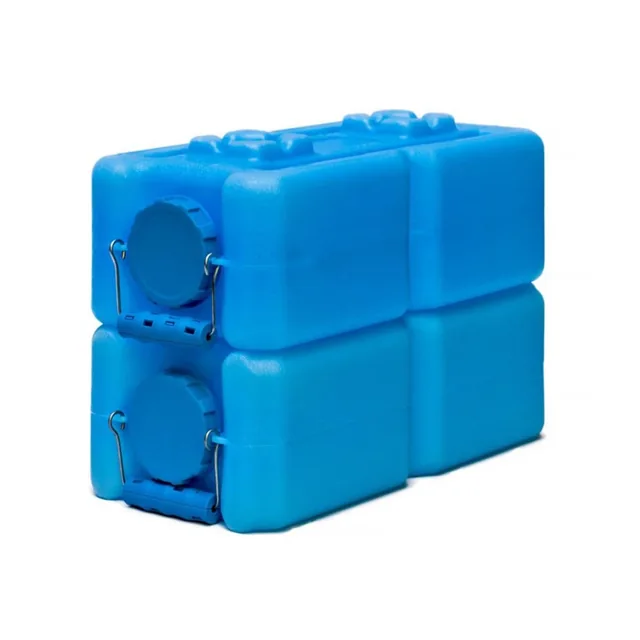
18 × 9 × 6-inch format for measured shallow spaces
Check Check cross-stacking directions and spigot inclusion.
Larger dispensing reserve
Reliance Aqua-Tainer 7-gallon
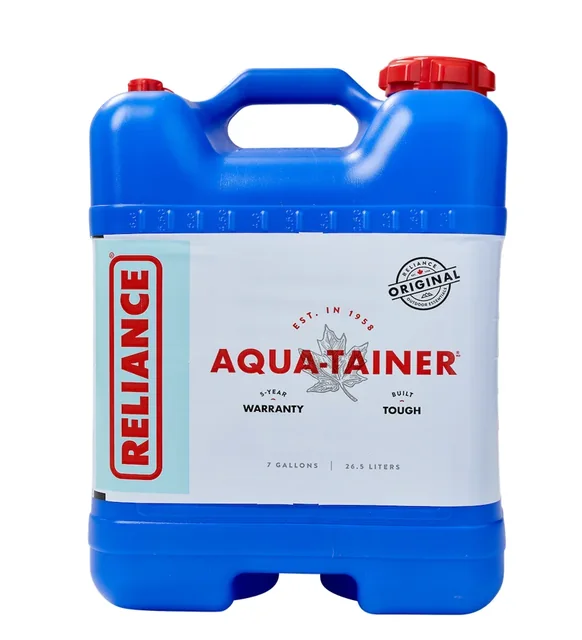
Seven-gallon model #9410-03R with hideaway spigot
Check Stack only when empty; 7 US gal of water is about 58 lb.
Permitted filled stacking
Reliance Aqua-Stack
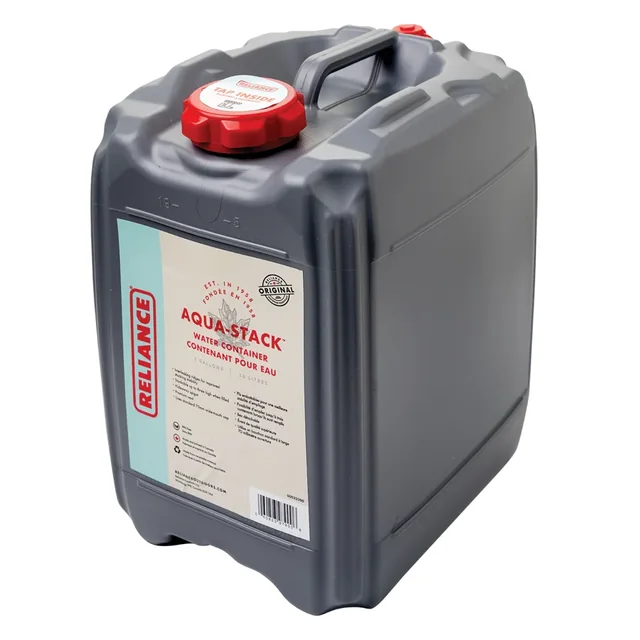
Five-gallon/20-liter model #09790-03
Check Up to three high filled per manufacturer; assess support.
Upright refill arrangement
Scepter 04933 Water Can
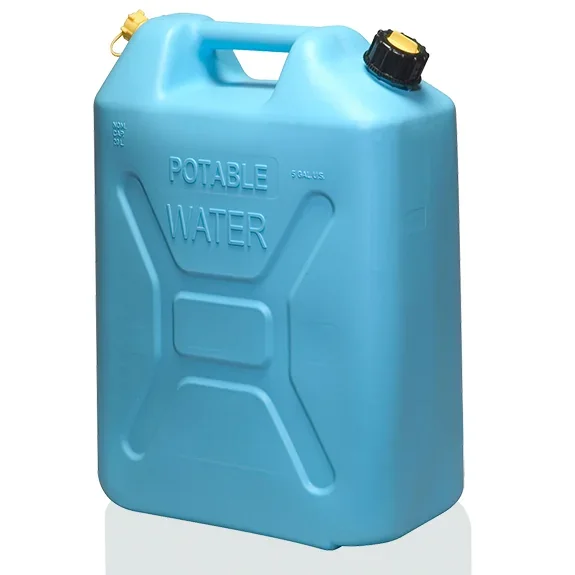
Consumer water can with stowable flexible pouring spout
Check Water model, not fuel can; no assumed filled stacking.
Narrow-profile storage
Reliance Rhino-Pak
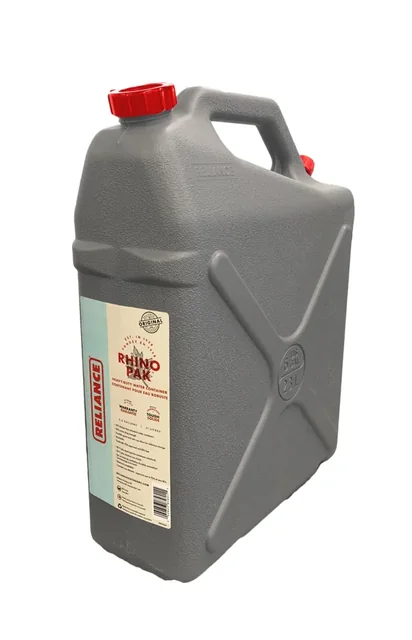
6.3-inch listed width; model #8580-45
Check 5.5G / 23L is not an exact US-unit conversion.
Temporary supplemental volume
waterBOB Bathtub Bladder
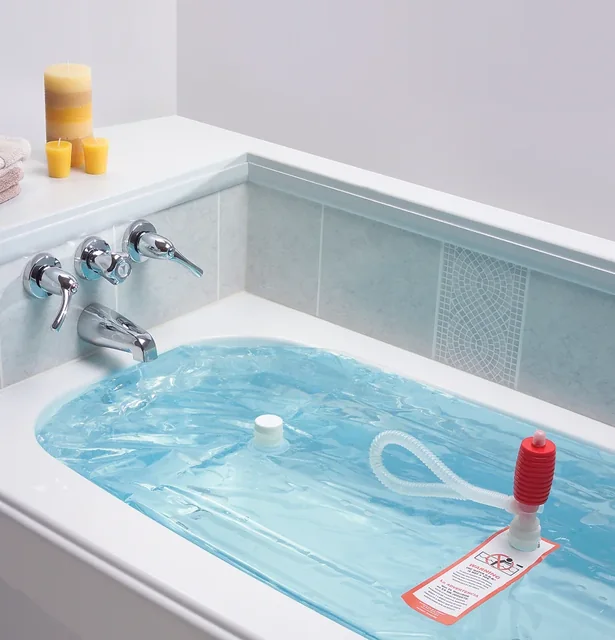
Up to 100 gallons; constrained by tub and instructions
Check One-time use; needs safe water still flowing before outage.
Choose a container for the job you actually need
Start with three questions. Will the water stay in place or travel to a refill point? Where will the filled container sit? How will the least mobile household member get water into a cup? Those questions narrow the field more effectively than comparing the largest advertised capacities.
A shallow container can solve a storage-height problem but may require several purchases to reach your target volume. A large spigot jug can simplify dispensing while making carrying harder. An upright water can may work for refill trips but require controlled tipping. A bathtub bladder can provide temporary capacity, but an empty one contributes no water after an unexpected service failure.
| Your priority | Compare first | Check before buying |
|---|---|---|
| Shallow modular space | WaterBrick Standard | Removal clearance, lift and spigot bundle |
| Larger stationary jug | Aqua-Tainer 7G | Full load, dispensing and EMPTY-only stacking |
| Containers stacked while filled | Aqua-Stack | Three-high limit, support and access |
| Upright refill can | Scepter 04933 | Exact water model and controlled pouring |
| Narrow storage gap | Rhino-Pak | Height and cap access as well as width |
| Temporary bathtub capacity | waterBOB | Safe water still flowing; tub fit; one-time use |
I would build the plan around actual usable water, then choose the containers. For many small households, that can mean unopened bottled water for immediate access and manageable refillable vessels for a larger reserve. This is a planning approach, not a requirement to buy two different systems or a claim that dedicated containers are automatically safer than bottled water.
Our small-apartment emergency water storage guide covers the wider household plan. Here, the focus is the buying decision: model identity, dimensions, permitted stacking, realistic handling and dispensing. Keep the target volume visible so the hardware purchase closes a real gap instead of becoming a collection of empty equipment.
WaterBrick Standard 3.5-gallon for shallow modular storage
WaterBrick is the first format I would investigate when the available space is shallow or divided between several suitable locations. The manufacturer's specification page lists a 3.5-gallon capacity and an exterior measuring 18 by 9 by 6 inches. That low shape creates different placement possibilities from a tall upright can.
The main advantage is portion size and shape. A 3.5-U.S.-gallon water fill weighs approximately 29.2 pounds before the vessel is added. The manufacturer’s specification page also lists a 27-pound water-filled figure, which does not reconcile with a full 3.5-U.S.-gallon calculation. We use explicit volume-based arithmetic for comparison rather than treating that listing as a measured total. Check the actual fill and complete weight when planning handling. That remains a substantial load, but it is half the water carried in a seven-gallon fill. Multiple containers also allow one portion to be used or rotated while the others remain closed.
The compromise is more components. Every additional unit adds a lid, seal, label and inspection point. Compare the complete package, particularly whether the compatible spigot is included. A photograph showing a dispensing accessory does not establish that every bundle contains it. Decide how you will remove water without dismantling an awkward arrangement or repeatedly dipping objects into the supply.
WaterBrick's owner's manual describes cross-stacking and recommends that the average user stay within four feet or their own safe handling ability. That is not a target to reach inside an apartment closet. Keep the arrangement manageable, leave access to closures and follow the exact configuration instructions rather than improvising a mixed-container tower.
I would choose WaterBrick for a household willing to organize a modular reserve and measure the removal route carefully. I would reconsider it if the plan depends on a tight under-bed gap with no hand clearance, an unknown shelf capacity or a stack nobody can inspect. Its shape saves useful space only when the stored water remains accessible.
Reliance Aqua-Tainer 7-gallon for a stationary dispensing reserve
The Aqua-Tainer is a candidate when the container will remain in a known position and dispensing matters more than easy carrying. Reliance's product page covers both four- and seven-gallon versions. This comparison concerns the 7G model #9410-03R, not the shorter four-gallon option shown in some family photographs.
The published dimensions are 11.5 by 11.25 by 15.75 inches. Its cap houses a reversible hideaway spigot, and it includes a vent and molded handle. Those features support a clear household role: keep a larger portion of the reserve in a planned position and dispense it into a smaller vessel.
The handling consequence is considerable. Seven U.S. gallons contain approximately 58.4 pounds of water before adding the container. A molded handle does not establish that everyone in the household can lift that load. Think through the filling route and final position before buying this size. A jug filled at a distant sink may become difficult to move once the water is inside.
Do not stack filled Aqua-Tainers. Reliance's FAQ explicitly says this product stacks only when empty. Its square shape and nesting appearance do not change that instruction. This is a key difference from Aqua-Stack, even though the names and brand are similar.
I would shortlist the Aqua-Tainer for accessible storage where its full load and dispensing arrangement are manageable. I would choose a smaller fill or container if regular carrying is unavoidable. Also check the intended orientation and receiving-vessel clearance. A faucet positioned very close to the floor may be inconvenient if the household pitcher cannot fit beneath it; an improvised stand creates a separate support problem.
Reliance Aqua-Stack for documented filled stacking
The Aqua-Stack #09790-03 addresses filled stacking directly. Reliance lists a five-gallon/20-liter designation, interlocking ridges, a hideaway spigot and a manufacturer limit of three high when filled. Its listed exterior dimensions are 12.1 by 10 by 14 inches.
That documented limit is the reason to compare it when vertical organization is an actual requirement. The important difference is not merely that the top looks flat. It is that the manufacturer identifies a filled configuration for this exact product. Do not transfer that instruction to an Aqua-Tainer or another visually similar jug.
The location still needs assessment. A permitted stack does not certify a shelf, cabinet or floor, and it does not establish earthquake stability. Three nominal five-U.S.-gallon fills contain approximately 125 pounds of water before the vessels are added. That arithmetic describes the load, not a structural safety determination.
Access can be the deciding issue. Consider how the lower container will be inspected, dispensed from and rotated. If retrieving it requires dismantling a heavy arrangement in a narrow cupboard, the footprint saving may create an inconvenient maintenance task. The maximum permitted height is not necessarily the most practical height for your household.
I would shortlist Aqua-Stack when the storage position is suitable, the filled-stack instructions match the intended arrangement and everyone understands the access routine. I would not buy it simply because stacking sounds efficient. One level of reachable containers can be a better operating system than a taller configuration that is rarely checked.
Scepter 04933 water can for upright storage and refill trips
Scepter's consumer water can #04933 is the upright jerry-style choice in this comparison. The manufacturer describes an HDPE, BPA-free container with a five-gallon/20-liter designation and a flexible pouring spout that stores inside when not in use.
The exact identity matters. Scepter makes both water and fuel containers, along with several military-pattern water products. This review does not treat those models as interchangeable. Match the water designation, product number and cap arrangement rather than assuming a familiar shape guarantees the same intended use or accessories.
Its useful role is a defined upright storage or refill task. A can with a pouring spout offers a different workflow from a low module or a stationary spigot vessel. Whether it suits the household depends on the actual route, receiving container and lift. The product description alone does not establish that it will be comfortable for a particular person.
Pouring requires controlling a shifting load. Someone may be able to carry the can a short distance but struggle to tip it accurately into a narrow bottle. Check that task with a manageable amount before depending on a full fill. A pouring spout guides the stream; it does not remove the weight that must be controlled.
I would investigate this model for an upright position or planned refill journey after confirming the exact seller package. I would not assume it permits permanent filled stacking: the reviewed consumer product page does not establish that instruction. Keep it in the orientation and arrangement specified for the actual unit, and consult the current documentation for dimensions and replacement parts before committing to a tight storage gap.
Reliance Rhino-Pak for a narrow storage position
The Rhino-Pak #8580-45 is worth considering when width is the limiting dimension. Reliance lists an exterior measuring 14.8 by 6.3 by 19.3 inches, a 5.5-gallon capacity designation, and a spout and vent cap. The upright form is narrower and taller than the Aqua-Tainer's.
That creates a specific buying case. A narrow utility gap may accept this format where a wider cube will not fit, provided there is enough height, hand clearance and access to the top. Measure the route as well as the final position. A container that fits only after furniture is moved may be troublesome to maintain.
Reliance markets the Rhino-Pak as a heavier-duty option. We do not translate that description into our own puncture, drop or service-life results. The recommendation here concerns its documented form and features. A reader seeking verified impact performance needs evidence from testing of the same model, not a stronger adjective in a product description.
There is also a unit-label inconsistency: the current page prints 5.5 gallons alongside 23 liters, which are not exact equivalents in U.S. units. We retain the manufacturer's product designation, but do not use those labels to promise an exact usable fill. The calculations elsewhere in this guide use explicitly stated U.S.-gallon quantities.
I would compare Rhino-Pak for a narrow upright reserve if the user can still manage carrying and pouring. I would reconsider a position that obstructs a service point or leaves the cap unreachable. Check the current model, included dispensing pieces and specific stacking instructions; a narrow profile is not permission to build an unsupported filled tower.
waterBOB for temporary bathtub storage before a warned disruption
The waterBOB is a supplemental bathtub bladder, not water already stored in the home. The manufacturer advertises up to 100 gallons, includes a dispensing pump and specifies one-time use. It needs a suitable tub and a safe source still flowing before the interruption.
This is a different purchase from a refillable rigid can. You are buying temporary capacity that can be deployed with warning. If the tap has already stopped, the folded bladder contributes no water. If authorities say the supply is unsafe, transferring it into a new bladder does not make it suitable for drinking.
Actual capacity depends on the installation. The bathtub and permitted filling level may limit storage below the advertised maximum. Do not count 100 usable gallons simply because the package displays that number. Follow the filling instructions and never exceed the tub's permitted level. Once full, this is a substantial stationary load, not an evacuation vessel.
The occupied bathtub also changes household use. In a one-bathroom apartment, discuss bathing and care routines before planning to fill it. An arrangement that works during a brief storm warning may be less practical when someone depends on the tub for regular assistance or another essential task.
I would treat waterBOB as an optional supplement for a suitable home and a warned event. I would not make it the only water reserve, buy it for a shower-only apartment or assume repeated drying and refilling is its intended use. Keep a ready-filled supply for the first hours of an unannounced outage, then count only the water actually added to the bladder when it is deployed.
Compare dimensions, capacity labels and stacking rules
| Container | Listed capacity | Exterior dimensions | Filled stacking | Dispensing |
|---|---|---|---|---|
| WaterBrick Standard 3.5-gallon | 3.5 gallons | 18 × 9 × 6 in | Filled cross-stacking per manual; stay within handling ability | Verify whether compatible spigot is included |
| Reliance Aqua-Tainer 7-gallon | 7G / 26L label | 11.5 × 11.25 × 15.75 in | EMPTY ONLY | Hideaway spigot; check operating clearance |
| Reliance Aqua-Stack | 5G / 20L label | 12.1 × 10 × 14 in | Up to 3 high filled per manufacturer | Hideaway spigot |
| Scepter 04933 Water Can | 5 gallon / 20 liter label | Verify current exact-model dimensions | No filled-stack instruction established here | Flexible pouring spout |
| Reliance Rhino-Pak | 5.5G / 23L label; see unit note | 14.8 × 6.3 × 19.3 in | Verify exact instructions; no assumed filled tower | Spout and vent cap |
| waterBOB Bathtub Bladder | Up to 100 gal; installation-dependent | Bathtub-dependent; stationary when full | Not a stacking vessel | Included siphon pump |
Read this table as a set of buying checks, not a performance ranking. Exterior dimensions exclude the room needed for hands, caps, handles, dispensing and removal. A published capacity does not establish how much the household will actually fill or comfortably manage. Manufacturer instructions govern the exact storage configuration.
I would use these details to eliminate obvious mismatches, then compare complete workable packages. A lower advertised price or higher nominal volume should not revive a container that cannot fit the home or be used safely by the intended person. The comparison becomes useful when it leads to a specific storage position and an achievable fill.
How much emergency water should you store?
The CDC emergency-water guidance recommends at least one gallon per person per day for three days, with a two-week supply where possible. Requirements can be greater in heat or particular household circumstances. Use that as a baseline, then account explicitly for additional needs and pets.
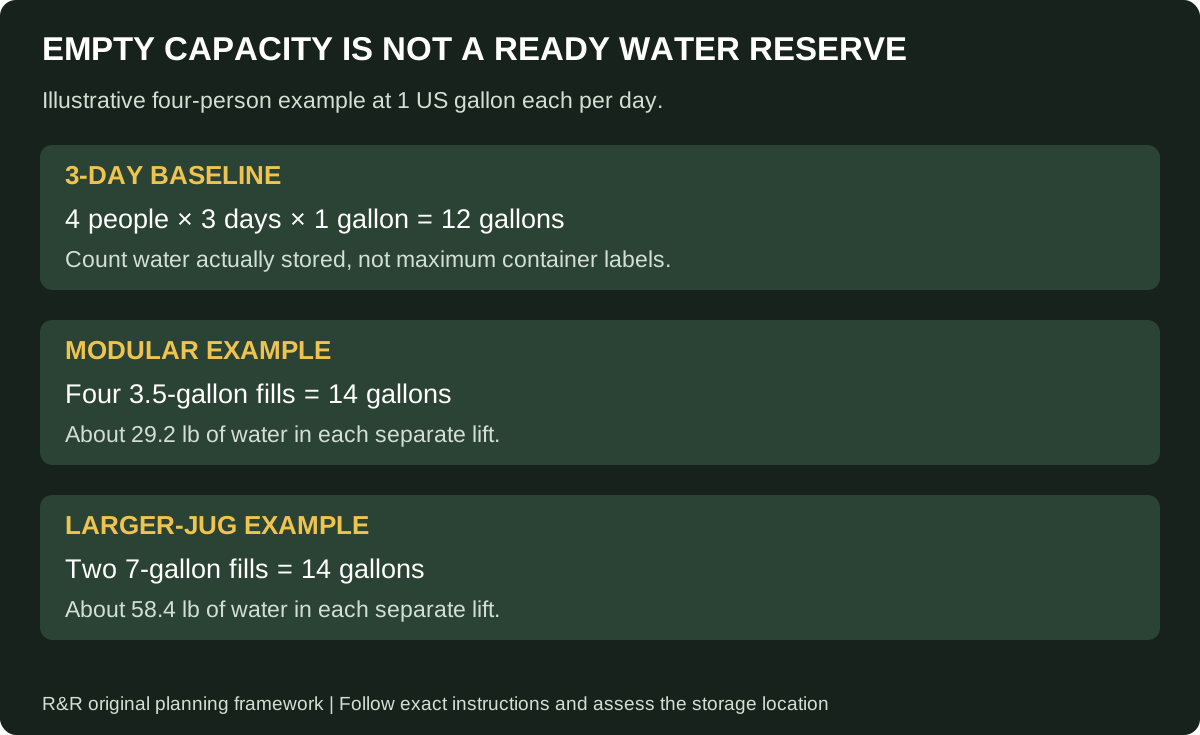
The arithmetic is people × days × planned daily gallons per person. Four people at the one-gallon baseline need 12 gallons for three days, 28 for seven days and 56 for fourteen. These are calculated examples, not measurements of your family's actual consumption or a promise that every household task fits the baseline.
| People | 3 days | 7 days | 14 days |
|---|---|---|---|
| 1 | 3 gal | 7 gal | 14 gal |
| 2 | 6 gal | 14 gal | 28 gal |
| 3 | 9 gal | 21 gal | 42 gal |
| 4 | 12 gal | 28 gal | 56 gal |
Convert the target into actual container fills
A two-person, three-day baseline is six gallons. Two actual 3.5-gallon fills provide seven gallons. For four people over three days, four such fills provide fourteen gallons against a twelve-gallon baseline. Two seven-gallon fills also provide fourteen, but each individual handling task is much heavier.
Round container counts up rather than pretending a fraction of a purchased vessel is another full unit. Then record the actual fill. If two seven-gallon containers each hold only three gallons, the reserve is six gallons, not fourteen. The inventory should reflect water present, not the largest number printed on the plastic.
Compare arrangements with similar usable totals before comparing prices. Three smaller vessels may require more closures and labels, while two larger ones may be harder to move. The best compromise depends on the storage route, the people using the water and how often the reserve will be rotated.
Build a real reserve in stages
If space or budget is limited, establish the first workable amount and record what remains missing. An apartment does not gain a two-week water reserve by owning a two-week collection of empty containers. The next purchase should have a measured location, a planned fill and a maintenance task.
For example, identify the initial three-day supply before adding the next storage portion. Decide where that portion belongs and who can handle it. This turns expansion into a concrete household improvement rather than a large checkout total followed by boxes left in a cupboard.
Where the target cannot be met, keep the gap visible and investigate official local distribution information and refill arrangements. Do not count an unconfirmed future delivery as stored water. Our water shutoff guide connects the reserve with the first decisions after service stops.
Understand the water weight before buying
For planning, this guide uses approximately 8.34 pounds per U.S. gallon. One liter of water is roughly one kilogram. Exact weight varies slightly with conditions and rounding; add the empty vessel and accessories to obtain the actual filled load.
The scale of the difference is important. A seven-gallon water fill weighs about twice a 3.5-gallon fill. A handle, shoulder strap or narrow shape changes how the weight is held, not how much water is present. Plan around the individual user and route instead of assuming a container sold as portable is easy for everyone to carry.
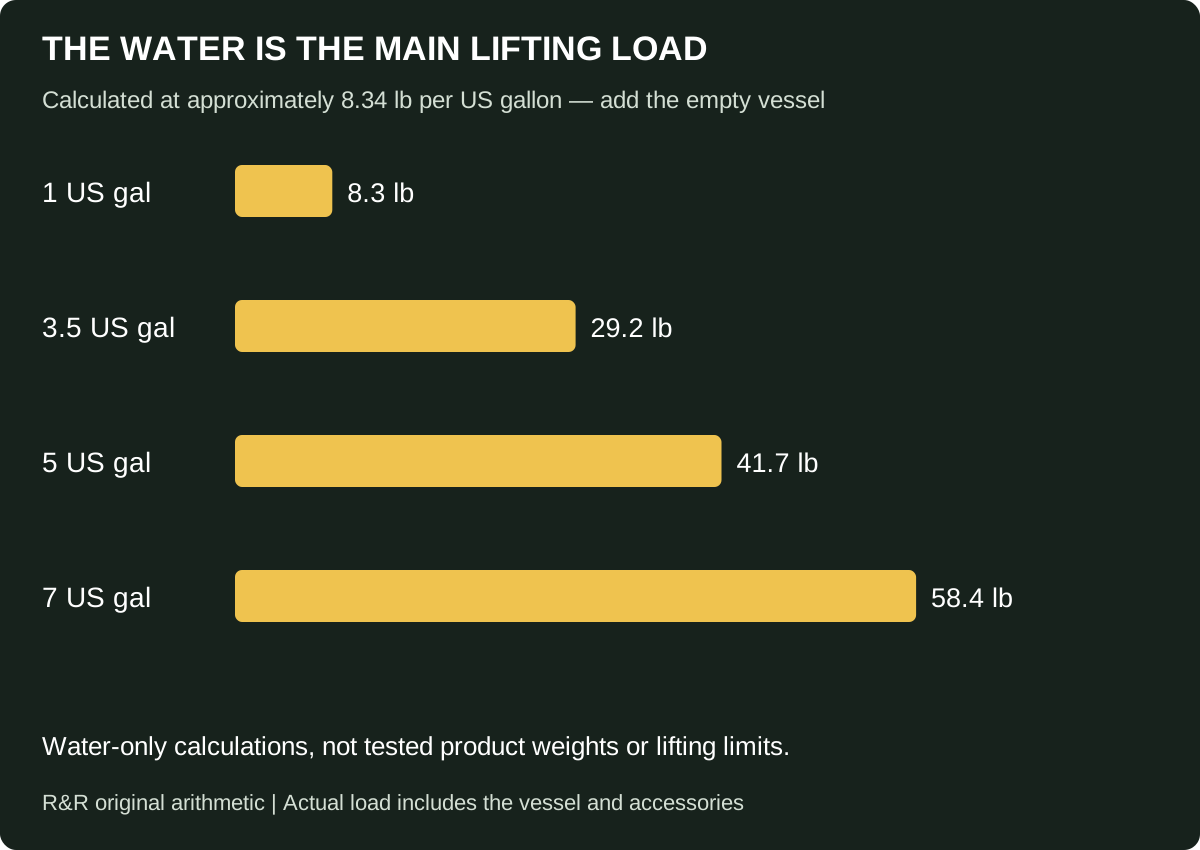
These figures are calculated water-only loads, not lifting recommendations. Use smaller portions or a different arrangement when the planned fill is not manageable. Consider where a spill would go, particularly near electrical equipment, other stored supplies or an exit route. Do not turn a product photograph into a lifting expectation.
Carrying, tipping and dispensing are separate checks
A person may carry a jug successfully but struggle to tip it into a bottle. Another may operate a spigot easily but be unable to lift the vessel onto its support. Evaluate the whole sequence: filling, moving, positioning, dispensing, inspecting and emptying.
I would rehearse with a modest amount of safe water before finalizing the arrangement. Check hand position, doorway clearance, the cap and the receiving vessel. Increase the fill only within the instructions and the user's ability. This is household commissioning, not a controlled durability or ergonomics test.
If a partial fill is the workable choice, label that actual amount. There is nothing useful about preserving an impressive nominal inventory at the expense of a practical reserve. A smaller amount someone can access may answer the household's first needs more effectively than a heavy container nobody can use.
Apartment water storage that remains accessible
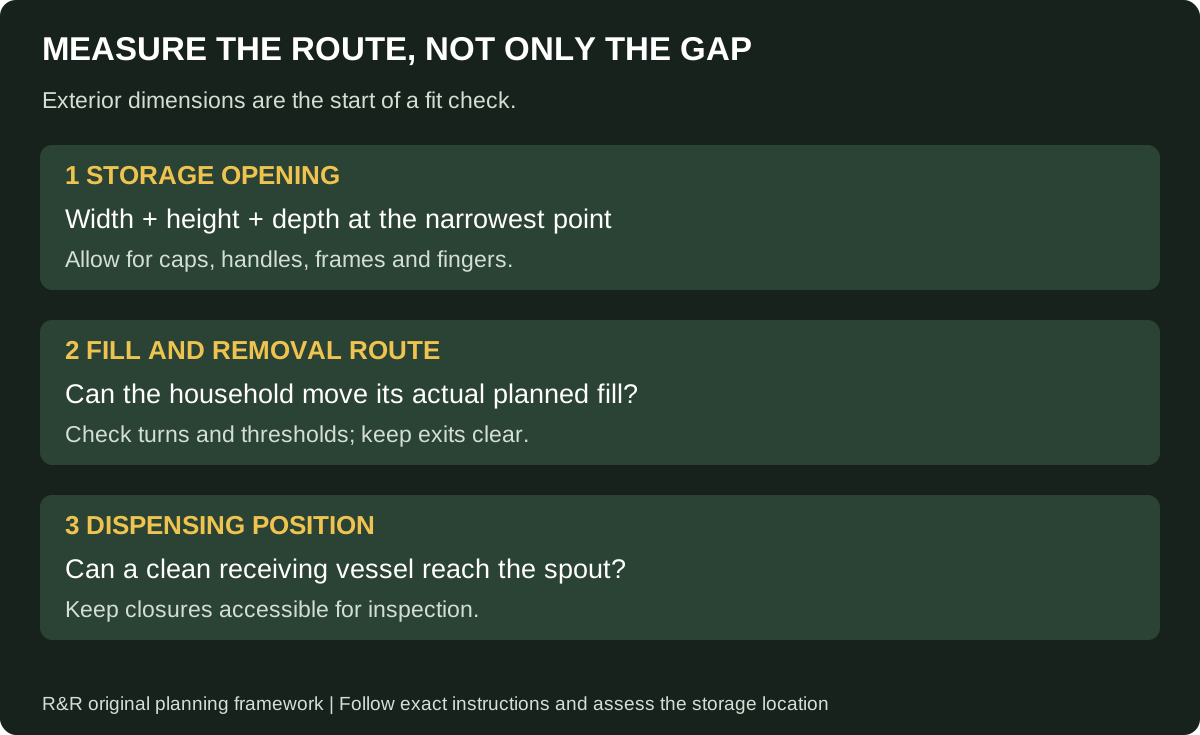
Measure the opening and the removal route
A six-inch-high container does not automatically fit through every six-inch furniture gap. Frames, flooring, handles, closures and the motion needed to remove it all matter. Measure the narrowest point and allow space for fingers instead of planning a friction fit.
Write down opening width, height, depth and the route through the room. Check whether a door swings into the area or whether moving the vessel requires shifting other furniture. These details can eliminate an unsuitable product before it arrives and reveal whether a nominally space-saving shape is actually useful.
Inspect the location in ordinary use as well. Does the household store shoes, cleaners or seasonal items there? Will the reserve remain visible enough to inspect? A tidy arrangement for one photograph is not necessarily a practical arrangement for six months of normal living.
Assess the support instead of assuming it
Keeping containers low may reduce lifting onto furniture, but every support still needs sensible assessment. An unknown shelf rating, flimsy cabinet base or improvised stand should not become part of the plan merely because the container fits on top. Product stacking instructions do not certify the structure underneath.
For a substantial reserve or uncertain support, obtain building-specific advice. We cannot determine an apartment floor's capacity from a review or prescribe a universally safe concentrated load. A generic pounds-per-square-foot calculation is not a structural assessment of your home.
Earthquake-prone households also need to consider movement and access after shaking. Our apartment earthquake guide and earthquake preparation pillar address the broader context. Interlocking containers are not an earthquake certification and do not remove the need for an appropriate arrangement.
Keep exits and service points available
Water storage should not obstruct doors, hallways, emergency exits, electrical panels, appliance servicing or building safety equipment. A hidden position is not automatically a suitable one. Check that the area remains inspectable and that a leak can be addressed without dismantling the entire reserve first.
Renters should distinguish portable household storage from changes to the building. Buying a closed vessel differs from installing plumbing, anchoring equipment or modifying a structure. Discuss proposed building work with the appropriate management or qualified professional rather than treating a buying guide as installation permission.
Distributing manageable containers among suitable positions can improve access, but does not make every position safe or change the total load. Record each location so the household can find it. A second reserve is useful only when people know it exists and can reach the water.
Food-grade water containers and material claims
Choose equipment intended for drinking-water storage and verify the description of the exact model. A recycling symbol or BPA-free label alone does not establish prior contents, cleanliness, closure condition or compatibility of every accessory touching the water.
The CDC safe-storage guidance emphasizes protecting safe water from recontamination and avoiding containers previously used for toxic chemicals. Do not repurpose a fuel, pesticide or chemical can because its shape resembles a water vessel or because it has been washed.
Material statements in this guide are attributed to manufacturers, not independent R&R laboratory certification. If a page references FDA compliance or a food-contact standard, check the scope instead of translating that into a blanket agency approval for every use. The intended contents, fittings and instructions remain important.
Treat the closure and accessories as part of the system
Inspect the cap, gasket, vent and dispensing pieces rather than looking only at the main body. A compatible replacement part and a generic part that happens to screw on are not necessarily equivalent. Match the model and fitting instructions before putting an accessory into the drinking-water workflow.
Consider how clean water leaves the vessel. A suitable pour or spigot arrangement avoids repeatedly inserting hands or objects into the stored supply. Protect dispensing surfaces and keep the receiving container clean. A wide opening can improve inspection access but does not remove contamination-control needs during use.
Agree which household pitcher or bottle will receive the dispensed water. This does not require another expensive preparedness product. It is a practical way to avoid improvised handling when several people begin using the reserve during an outage, possibly with limited lighting and no ordinary sink service.
Check cold storage and cleaning limits before choosing the location
Reliance’s current care guidance says its water containers have not been tested under freezing conditions and advises against storing them where they may freeze. It also says components are not dishwasher safe: hand-wash them, rinse with clear water and follow the exact product’s care instructions. These are Reliance-specific limits, not a temperature or cleaning specification for every brand.
For example, an unheated garage may have enough floor space but still fail the selected container’s winter-storage requirements. A kitchen cupboard may fit the jug but leave its vent or spigot inaccessible. Resolve the location and care method before counting that container as part of the usable reserve. This is a planning example, not a product test.
Stackable water containers need model-specific instructions
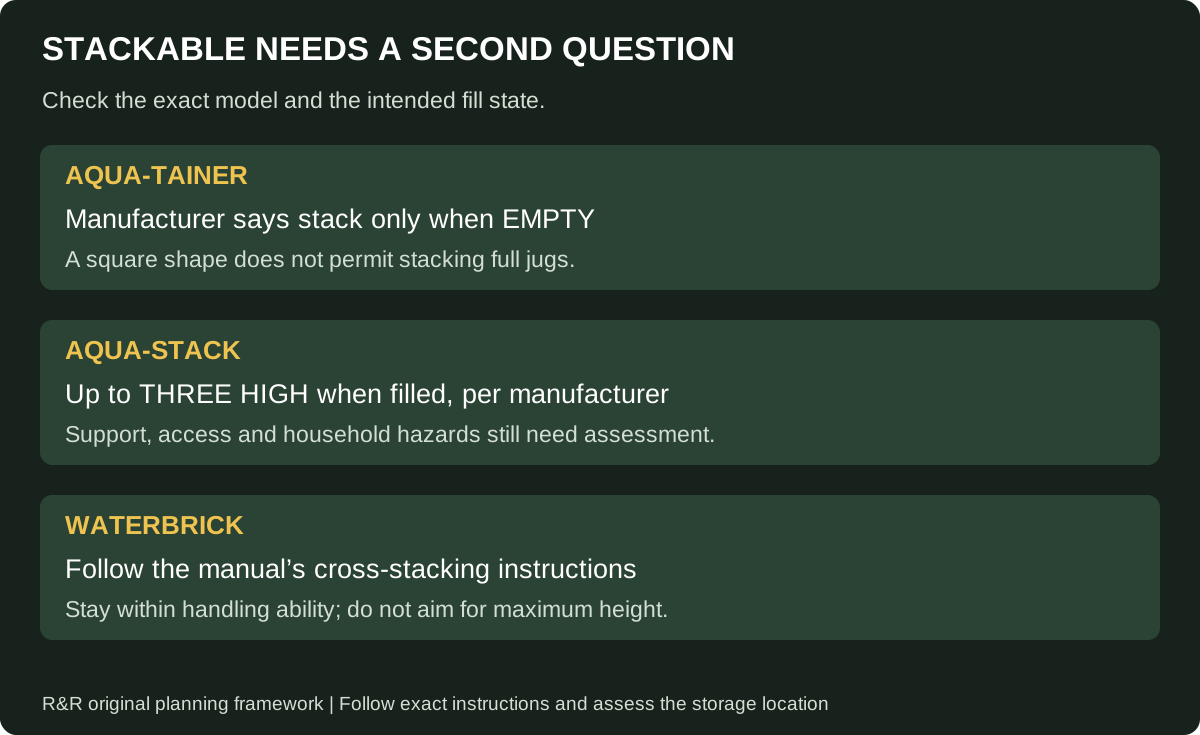
The word stackable needs three follow-up questions: empty or filled, in which configuration, and to what limit? The answer should come from the exact model's directions. Aqua-Tainer and Aqua-Stack illustrate why a generic shopping label is inadequate.
Aqua-Tainer permits empty-only stacking. Aqua-Stack has a documented filled limit. WaterBrick has a distinct cross-stacking arrangement. The reviewed Scepter consumer and Rhino-Pak pages do not establish permission for an unspecified permanent filled tower. Do not borrow instructions from another product that looks similar.
Even an allowed configuration needs a suitable supporting surface and access for maintenance. The manufacturer's maximum height is not an instruction to fill every vertical inch available. Choose a layout the household can inspect and rotate without unsafe lifting or blocking an essential route.
Check the instructions again when expanding later. A replacement model can look almost identical while using a different lid or base. Avoid mixing unrelated shapes into a stack and assuming they interlock correctly. Keep the model codes and relevant instructions with the inventory so the arrangement remains understandable over time.
Compare the cost of a usable reserve
Work out cost per planned gallon
Divide the delivered price of the complete proposed setup by the gallons actually intended for storage. Include required dispensing accessories and other components necessary for the arrangement. That gives a comparison of your plan, not a permanent claim that one manufacturer is cheapest.
For illustration, a hypothetical $48 setup holding twelve usable gallons costs $4 per planned gallon. A hypothetical $60 setup holding twenty costs $3 per gallon. These round numbers demonstrate the calculation only; they are not product prices or capacities assigned to a particular model.
Then check whether both arrangements genuinely work. A lower cost per gallon is irrelevant if the container cannot be lifted, cannot fit at the tap or cannot be stacked as intended. Compare workable systems first, then compare their complete delivered costs rather than the headline price of an incomplete bundle.
Count the parts and future inspection tasks
Compare the written contents against the photographs. Check container count, size variation, caps, gaskets, vents, spigots and pumps. A page offering several sizes or multipacks can display a photograph that is broader than the selected option. Save the relevant instructions and identify the actual model arriving.
Smaller vessels provide flexibility but create more closures and labels. Larger ones reduce the number of pieces while increasing each handling task. Neither approach automatically wins. Select the compromise the household is likely to maintain instead of optimizing only the checkout total.
Replacement support also matters. A named model with identifiable parts can be easier to maintain than an anonymous vessel with no documented seal or fitting. That is why this guide compares specific products and links their documentation rather than treating visually similar marketplace containers as interchangeable.
Filling, cleaning and rotating your water
Start with a safe source and prepare the vessel
A storage container does not treat unsafe water. Follow current public-health instructions for preparing it and use an appropriate source. The CDC safe-storage page provides a cleaning and sanitizing procedure. A solution used to sanitize an empty container is not automatically the correct dose for treating drinking water.
Where the supply is under an advisory, follow the issuing authority before filling or using it. The EPA emergency-disinfection guidance explains that boiling and disinfection do not remove many chemical contaminants. A new vessel and clear appearance cannot establish source safety.
For related source questions, use our flooded-well water guide and guide to the period after a boil-water advisory is lifted. Those are different decisions from choosing hardware. A well-designed container cannot compensate for an unsafe fill or permission to use water that authorities have restricted.
Label the actual amount and the maintenance date
Give each unit an identifier and record actual fill volume, fill date and intended use. Keep a separate inventory if labels are difficult to see in the final storage position. The purpose is to distinguish a ready reserve from several containers whose history nobody remembers.
For home-filled water, CDC's emergency guidance recommends replacement every six months; follow the label for commercially bottled water. Store suitably away from heat, direct sunlight and toxic substances. Check closures and condition during the routine rather than waiting until the household needs the supply.
When appropriate, plan an ordinary use for suitable water before rotation, then prepare and refill the container according to current instructions. Do not let avoiding waste override uncertainty about safety. Record what was completed, which unit was refilled and when the next inspection is due.
Check the complete dispensing arrangement
After preparation, test the fitting and dispensing workflow where an ordinary spill can be managed safely. Follow the manufacturer's tightening and venting instructions. Overtightening an unfamiliar part is not a universal solution to seepage and can create a different problem.
If a closure leaks, inspect the model compatibility, gasket placement and directions, then contact the manufacturer as necessary. A tray under a known leaking drinking-water vessel is not a repair strategy. Resolve the issue before the container becomes part of the household's expected ready supply.
Ask another person to dispense water into the intended receiving vessel. This can reveal inconvenient cap access, unclear labels, a spout too close to the floor or a lift the installer did not anticipate. Correct the arrangement while normal water and lighting are available, not during the first stressful hour of a disruption.
Keep drinking water and sanitation planning separate
A limited reserve can disappear quickly if every household task draws from it without a plan. Decide how drinking, food preparation and other uses are accounted for. Keep drinking-water containers distinct from vessels used for non-drinking water so uncertain contents cannot be mistaken for the potable supply.
Having a bucket of water does not automatically make toilet flushing appropriate. Building plumbing, sewer conditions and local restrictions matter. Our toilet flushing during power outages guide and apartment emergency-toilet guide explain the wider decisions. Follow local instructions where sewage or flood conditions are involved.
Clean supply storage is also a different job from collecting floodwater. Our guides to basement water after heavy rain and drying a flooded house address recovery. Do not let the same container become a drinking-water reserve and an improvised contaminated-water cleanup tool.
Where collapsible containers, drums and bottled water fit
Use soft containers for a defined role
A folded bag may take little space and help with a planned collection or temporary task. But an empty vessel represents capacity, not water. Evaluate how it stands, closes, carries and dispenses when filled, along with intended drinking-water use and any reuse instructions.
This guide does not credit an unnamed camping bag with the same role as a documented rigid storage system. If unattended long-term storage is the goal, confirm that the product is intended for that arrangement. A photograph showing water is insufficient evidence of suitability for every duration or configuration.
I would choose soft temporary storage for a clear supplemental purpose and keep the main ready supply in a filled, maintained arrangement. That distinction prevents a drawer of folded empty equipment from being counted as a household reserve.
Large drums are a different storage project
A drum requires a suitable location, filling route, dispensing equipment, access and a maintenance plan. A low price per gallon does not remove those requirements. Once filled, it may not be practically movable by the household, so the location decision becomes even more important.
For an apartment, I would establish a manageable initial reserve before considering a large vessel. Substantial stationary storage can make sense in an appropriate setting, but this portable-container comparison does not certify a drum installation or assess its supporting structure.
Keep evacuation water separate from stay-at-home capacity. A stationary reserve can support sheltering while smaller portions support leaving. Our family bug-out bag guide develops that distinction. The amount stored in the building and the amount the household can carry out are different numbers.
Bottled water is a legitimate starting supply
A buying guide should not suggest that preparedness begins only after purchasing a specialized jug. Unopened commercially bottled water provides an immediate reserve. Refillable equipment adds options for shape, portion size and future filling; it does not make a simple bottled supply obsolete.
Compare actual positions and access rather than assuming specialized hardware is always superior. One household may combine small bottles with rigid vessels. Another may start with bottles while evaluating a refillable setup. Budget and handling ability should influence the choice rather than becoming reasons to postpone every useful action.
The meaningful inventory is suitable water actually present and accessible, not the number of preparedness products purchased. A modest maintained supply is a concrete starting point. An ambitious collection of empty or awkward equipment can look more impressive without closing the household's first practical gap.
Buying mistakes that undermine a good reserve
Choosing capacity before measuring the home is one common error. Treating empty-only stacking as permission for filled storage is another. Overlooking water weight because the empty product is light creates a third. All three are easier to catch when the final position and handling routine are part of the purchasing decision.
A bundle photograph can also mislead the hurried buyer. A faucet, extra cap or pump may be optional, and one product page may combine sizes and pack counts. Confirm the selected variation, written contents and model code rather than assuming every item pictured will arrive.
Avoid unsupported rankings based on leak resistance, lifespan or chemical-removal claims. We have not performed those tests, and the reviewed containers should not be assigned treatment functions they do not have. Match evidence to the actual question instead of accepting broad survival language as proof.
Finally, avoid making the reserve so inaccessible that inspection becomes a major household project. If rotating one jug means moving furniture and dismantling a heavy stack, reconsider before buying more. Maintenance is part of the design, not something added after every spare space is occupied.
A practical purchasing sequence
Write the people count, desired days and planned daily amount first. Include additional needs separately. Identify the immediate ready water, then decide which portion should use refillable containers. This gives the shortlist a measurable purpose rather than treating every attractive product as another required purchase.
Measure two or three realistic locations and their access routes. Eliminate shapes that cannot fit, fills that cannot be managed and stacking arrangements not permitted by the manufacturer. Price the remaining complete setups, including necessary accessories, only after those checks.
Choose a single model or a purposeful combination. Smaller modular units and one dispensing jug can serve different jobs. Two similar upright cans may add capacity without fixing a pouring problem.
When the equipment arrives, inspect it, read the directions, prepare it appropriately and rehearse the fill and dispensing sequence. Label the actual reserve and schedule maintenance. Connect the arrangement to our 72-hour household preparedness guide and emergency-kit maintenance routine.
Emergency water storage questions answered
What are the best emergency water storage containers for apartments?
Start with the shape and load the household can manage. WaterBrick provides a low modular format; Aqua-Stack has documented filled stacking; Aqua-Tainer offers larger stationary dispensing without filled-stacking permission. An upright Scepter or Rhino-Pak may suit a narrow location. Check the actual space and workflow before selecting among them.
Can I stack full water containers?
Only in a configuration permitted for the exact model. Reliance says Aqua-Tainers stack only when empty; Aqua-Stack permits up to three high filled; WaterBrick has cross-stacking instructions. Also assess support and access. A container stacking rule does not certify your shelf, floor or earthquake arrangement.
How heavy is a full five-gallon or seven-gallon container?
At the U.S.-gallon quantities used for our calculations, the water alone weighs approximately 41.7 or 58.4 pounds respectively. Add the vessel and accessories. These numbers are not tested product weights or a recommendation that a particular person should lift them. Actual planned fill is the relevant quantity.
How long can I keep water in food-grade containers?
The material label is not an indefinite safety guarantee. Follow current public-health guidance for home-filled water, commercial bottle labels and the equipment instructions. Source, preparation, storage conditions and closure condition all matter. Keep an inventory and maintenance routine rather than relying only on a strong-looking plastic body.
Do all water containers need preservative drops?
Do not assume an add-on is universally required. Follow the applicable source-water guidance and any treatment product's exact instructions where treatment is needed. Container sanitizing and drinking-water treatment are different procedures. A storage product is not evidence that every source or treatment approach is appropriate.
Can a bathtub bladder replace a ready reserve?
It is supplemental capacity for a suitable tub while safe water still runs. waterBOB is stationary when filled and designed for one-time use. Keep a ready supply for unannounced disruptions and count the bladder only after it has actually been deployed and filled appropriately.
Does this guide apply to the U.K. and Europe?
The handling principles remain useful, but model availability, instructions and units can differ. These shopping searches target U.S. products and our calculations use U.S. gallons. Check local drinking-water guidance and liters-based labels, and verify the exact model and package sold in your country before importing equipment.
Which water container should I buy first?
Choose one that closes a real gap in the reserve and fits a measured, accessible position. Investigate WaterBrick for shallow modules, Aqua-Tainer for larger dispensing and Aqua-Stack for permitted filled stacking. Keep handling, access and maintenance ahead of maximizing a number on the package.
How we researched these containers
We checked exact manufacturer models, dimensions, intended uses and stacking instructions alongside CDC and EPA guidance. Selection emphasizes household fit, manageable portions, dispensing and maintenance. We have not performed drop, leak, migration, taste or longevity tests. Original charts show arithmetic and planning scenarios, not measured product performance.
The product photographs identify the equipment and are credited to their sources. Our comparison charts and selection analysis are original R&R work. The original household scene illustrates a storage arrangement. Prices, stock, universal structural capacity and ranking outcomes are not asserted. See our editorial standards and corrections policy.