
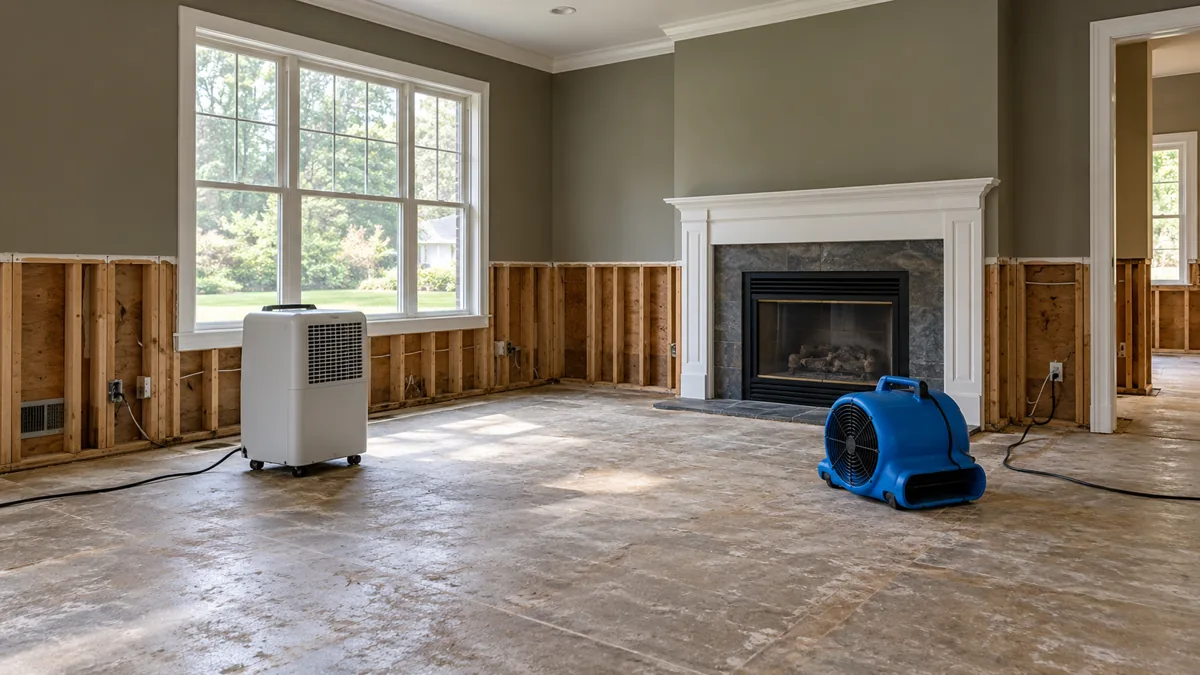
How to dry out a flooded house without hiding the damage
To dry out a flooded house, first establish that entry and electrical use are safe, stop the water source where that can be done safely, and arrange removal of standing water and contaminated materials. Then clean the appropriate surfaces, use a suitable drying strategy and verify the condition of the affected materials before rebuilding. A floor that looks dry does not prove that the wall, insulation or subfloor beneath it is ready to close up.
Our central recommendation is to organize the work around decisions, not the number of fans you can buy. The questions are whether the building is safe, what the water affected, which materials can remain, what equipment is appropriate and how the drying result will be checked. Those questions determine the job.
This guide addresses household recovery after flooding in the United States and other Western markets. It is not a remote inspection. River flooding, storm surge, sewage backup and a small supply-pipe leak are not interchangeable situations. If contaminated water, structural damage or hidden building hazards are involved, bring in qualified help rather than treating the project as ordinary household cleaning.
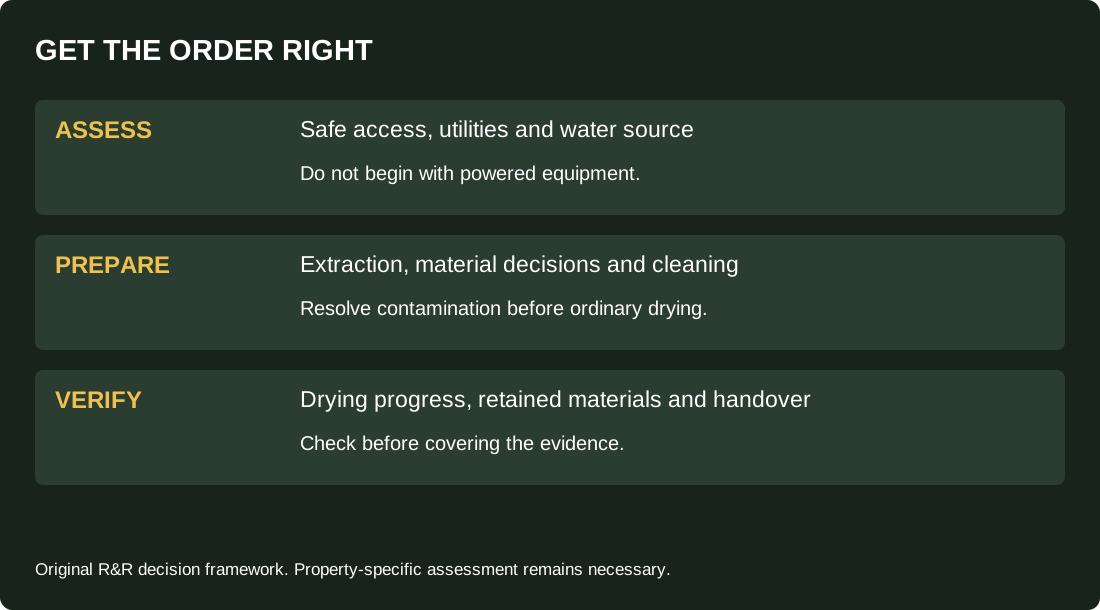
Start with safe entry, not a wet vacuum
Do not enter a flooded building until the appropriate professionals or authorities say it is safe. Check official return instructions and arrange assessment of structural and electrical concerns. Water receding is not the same as the building being cleared for work.
CDC warns never to turn electrical power on or off, or use an electric tool or appliance, while standing in water. If you cannot reach the electrical system safely, have the utility or a qualified electrician handle the situation. A familiar breaker panel is not permission to cross a wet room to operate it.
Keep the first visit focused. Identify whether you can safely inspect from an authorized location, whom to contact and whether the household needs somewhere else to stay. Do not turn a short assessment visit into demolition because tools happen to be in the car.
Make a separate note of utility status, building access and equipment status. “Power is back in the neighborhood” does not establish that your flooded outlets or appliances are safe. CDC also advises against restarting flood-affected HVAC equipment without appropriate attention; distributing air is not useful if it distributes contamination.
Identify the water source and the affected area
Record what you know: a supply pipe broke, water entered from outside, a drain backed up or the source remains uncertain. Describe observations rather than assigning a professional contamination category yourself. Water entering from outdoors can carry pollutants that are not visible in a photograph.
Ask whether the source has actually stopped. If rain, groundwater or a plumbing fault is still adding water, an extraction-only plan leaves the cause unresolved. A restoration contractor and the relevant building or plumbing professional may need to coordinate different parts of that problem.
Separate affected spaces from spaces that appear unaffected. List the rooms, built-in cabinets, floor coverings and adjoining areas that need assessment. The visible waterline is a useful observation, but it does not by itself identify the full extent of moisture inside materials.
If the water came from a sewer or drain backup, use our sewage backup in a basement guide for the specific escalation questions. Do not reuse a clean-water spill routine for a sewage incident. A homeowner's most useful early contribution is accurate information, not an unsupported declaration that everything is safe to keep.
Document damage without delaying urgent safety work
Once access is authorized, take photographs from safe positions and keep a factual record of affected rooms and belongings. Contact your insurer and ask what evidence it needs before disposal or repair. Do not delay emergency protective action merely to create a perfect photo inventory.
An effective record is easy to interpret later. Label images by room and date, keep an overview before close-ups and record who performed each assessment. “Kitchen, exterior wall, before material removal” tells a clearer story than dozens of unlabeled images scattered across several phones.
Keep receipts, equipment hire records and written scopes of work together. Ask contractors to explain what is included in extraction, removal, cleaning, drying and rebuilding. Those are separate activities even when one company provides them.
Do not assume this article establishes insurance coverage or a right to payment. Policy wording, the cause of loss and local rules matter. The organizational aim is to preserve a clear timeline and reduce confusion between what was damaged, what was removed and what remains to be verified.
Remove standing water with an appropriate plan
Standing-water removal is the extraction stage. It is necessary in many jobs, but it is not the entire drying process. Equipment must suit the water and working conditions, and electrical use must be cleared before powered tools enter the plan.
Flooded basements need particular care. FEMA explains that pumping a basement too quickly can create dangerous differences between water pressure outside and inside the foundation. Do not apply an aggressive pump-out schedule simply because a larger pump is available. Ask the appropriate professional to assess the situation and determine a safe approach.
A household wet-dry vacuum is not a universal answer to deep water, contaminated floodwater or an unsafe building. Consider who is handling the water, where it can legally and safely be discharged, and how the equipment will be cleaned or managed afterward. These are job-planning questions, not reasons to experiment in a flooded basement.
If power has not been cleared, do not improvise temporary indoor electrical arrangements. Keep fuel-powered generators outside and follow official generator guidance. Our apartment power-outage guide explains the separate household disruption plan; it does not authorize electrical work on a flooded property.
Decide what must come out before drying begins
Drying equipment cannot make every flood-affected item suitable to keep. Materials and belongings require assessment for contamination, damage and whether they can be cleaned and dried appropriately. EPA's flooded-home guidance separates removal of damaged materials from the later clean-and-dry stage.
Ask the contractor to identify what is being retained and why. If lower wall materials or flooring are removed, ask what hidden spaces that exposes and what remains inaccessible. A removal boundary should come from the assessed damage and construction, not a universal line drawn from an online image.
Do not start cutting walls or lifting flooring before building hazards and utilities have been considered. Older materials can introduce additional concerns, and demolition may require qualified assessment or specific precautions. Ask before disturbing suspect materials rather than trying to identify every hazard from appearance.
Protect retained belongings and unaffected areas using the professional plan. Avoid moving suspect materials into the room where the household is sleeping. Keep a record of disposal decisions and items awaiting further advice so that a second person does not unknowingly return them to use.
| Question | What to establish | Who may need to decide |
|---|---|---|
| What was wet? | Surface, backing, adjoining materials and inaccessible spaces | Restoration/building professional |
| Can it remain? | Contamination, condition and appropriate cleaning/drying | Qualified assessor for the affected material |
| Is removal safe? | Utilities, building hazards and disposal requirements | Relevant trade or qualified remediation professional |
| Is it ready to cover? | Documented condition and applicable completion criteria | Responsible restoration/building professional |
Clean before treating the space as a drying room
Water removal, cleaning and drying are connected but different jobs. Once debris and unsuitable materials have been addressed, the remaining surfaces need the cleaning approach appropriate to their condition. Do not let the availability of an air mover decide whether a contaminated space is ready for airflow.
Follow public-health guidance and the professional work plan for protective equipment, separation of work areas and cleaning. CDC warns against mixing cleaning chemicals. Adding more products does not automatically improve the result, and painting over mold or damp surfaces does not remove the underlying problem.
If mold is present or suspected, assess that issue before circulating air through the space. Ask the remediation professional how unaffected areas and the ventilation system will be protected. A box fan pointed through a contaminated room is not a substitute for a contamination-control plan.
Keep children and people who should not participate in cleanup away from the work area, following health guidance. Arrange access so that necessary household activities do not repeatedly cross the recovery zone. The practical objective is an orderly workspace with a defined condition, not a busy-looking room full of equipment.
Air movers and dehumidifiers do different jobs
An air mover changes airflow across a space or material surface. A dehumidifier removes moisture from the air it processes. Neither one removes the need to address standing water, contamination, unsuitable materials or ongoing leaks first.
EPA supports using fans and dehumidifiers when electricity is safe, as part of an appropriate cleanup and drying process. The details still depend on the room and materials. Equipment placement, drainage arrangements and the condition of connected spaces should be part of the drying plan rather than guessed from a product photograph.
Ask how the chosen equipment addresses the assessed job. Is the space ready for air movement? Where is collected water going? Who checks equipment operation? What happens if power fails or a collection bucket fills? These questions matter more than comparing advertised airflow figures alone.
Renting or hiring professional equipment can be more appropriate than buying several household units for an uncertain job. If you are working with a restoration contractor, ask before adding your own fans or changing its setup. More equipment does not necessarily mean a better-controlled process.
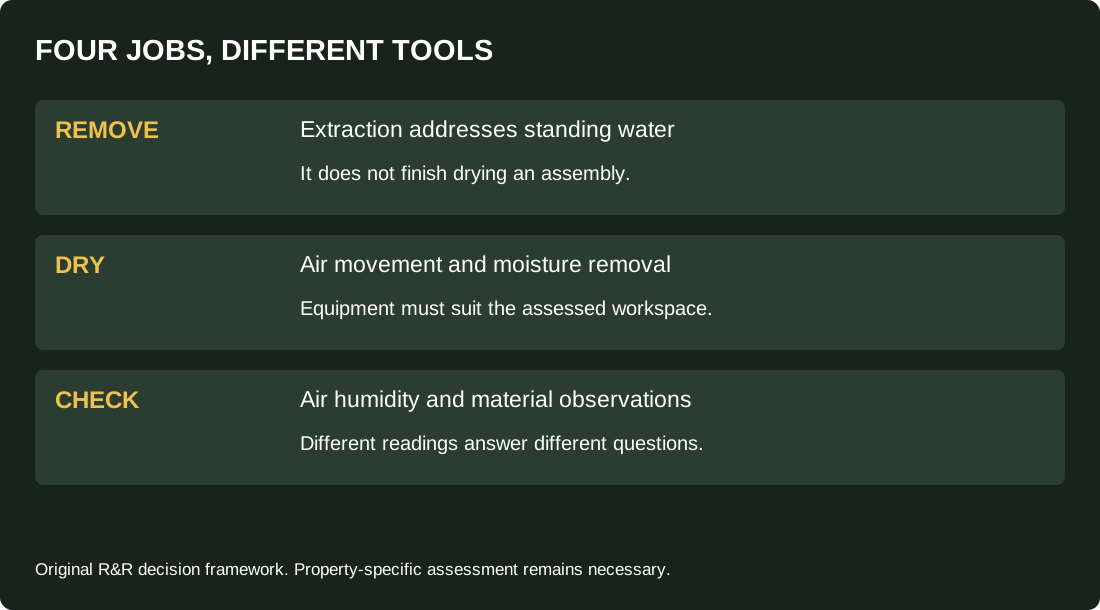
Should windows stay open while drying a flooded house?
Ventilation and controlled mechanical drying are not one fixed setup. Official cleanup guidance discusses opening doors and windows where safe; a contractor's later dehumidification plan may manage the space differently. Ask which stage you are in and what openings the plan requires.
Do not interpret “open windows” as permission to leave a property unsecured or to operate equipment in unsafe weather. Equally, do not close a contaminated work area and assume a household dehumidifier resolves air-quality concerns. Conditions, contamination and the work being performed all matter.
Write down who controls the drying arrangement. If a contractor asks that a room remain configured in a particular way, have it explain why and provide a contact for questions. This prevents a well-meaning relative from changing the setup each evening.
A useful daily note records meaningful changes: an opening altered, equipment moved, electricity interrupted or new water observed. That gives the person assessing progress context for later measurements. Without that context, two readings taken under different conditions can appear to tell a simple story that the job does not support.
Measure air humidity and material moisture separately
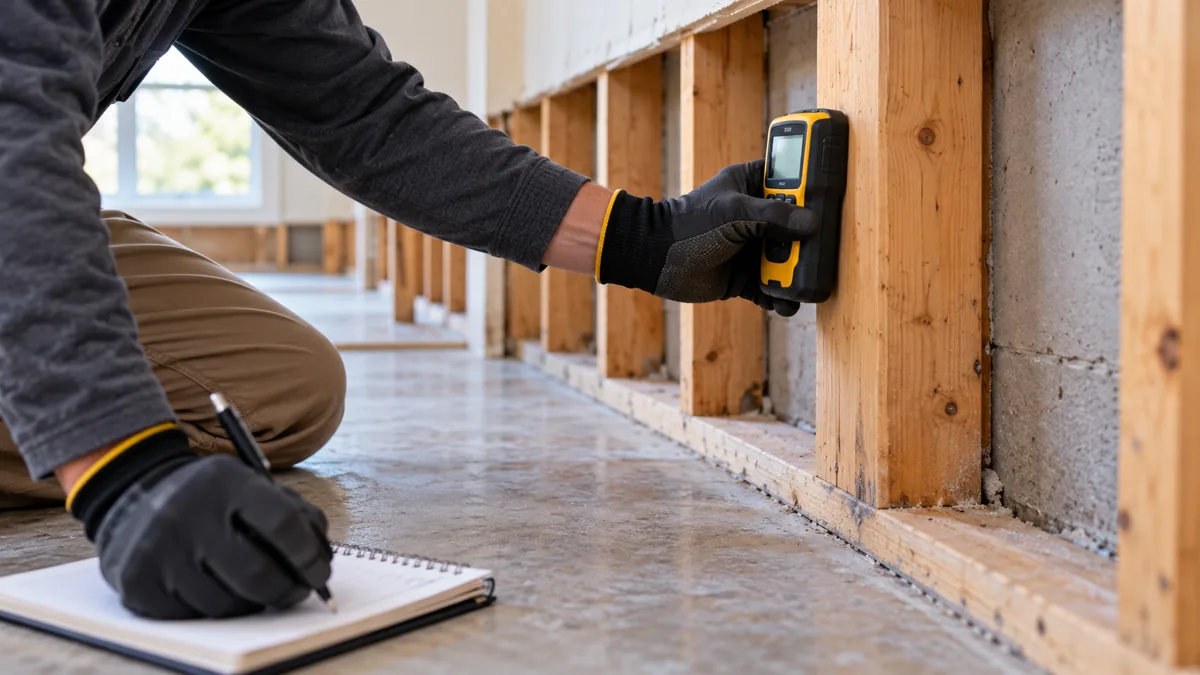
A hygrometer describes the air around the instrument. A material moisture meter assesses a different question, subject to its technology, material setting and limitations. A comfortable humidity reading does not establish that a subfloor or wall cavity is ready for reconstruction.
EPA notes that moisture meters can help determine whether building materials are dry and ready for refinishing. Use a suitable instrument according to its instructions, and ask a qualified professional how results should be interpreted for the specific construction. There is no single consumer-meter reading that certifies every flooded building safe.
Keep comparisons consistent. Record the material, location, instrument setting, date and the person making the observation. If you compare different locations or materials, label that difference instead of treating every number as directly comparable. Do not invent a drying target to make a graph look conclusive.
Measurements should answer a question: is a retained material progressing, is an area still unresolved, or is further investigation needed? They should not be used to claim that mold, chemicals or electrical hazards are absent. Those require their own assessments.
Practical equipment options for an assessed drying job
The selections below serve three different roles: checking relative material moisture, observing room humidity and moving air in a suitable cleared workspace. They are research-based product examples, not a complete restoration package or proof that a property is ready for DIY work.
How long does it take to dry out a flooded house?
There is no honest fixed answer based only on room size or the number of days since the flood. Water exposure, retained materials, hidden spaces, continuing intrusion and the drying conditions affect the job. Ask for an estimated process and the evidence used to decide completion, not a guaranteed deadline without an assessment.
The commonly cited 24–48-hour window is an urgent cleanup and drying goal associated with mold prevention. It is not a promise that a flooded building will be fully restored in two days. EPA advises assuming mold growth when a flooded home and belongings could not be dried within that period.
A practical progress conversation has three parts. What has been completed? What is still wet or inaccessible? What decision or measurement is needed next? These questions avoid confusing equipment running time with a verified result.
If the contractor's initial estimate changes, ask for the reason and the revised plan. A newly discovered wet cavity is different from an unexplained extension of equipment hire. Keep the explanation with the job record and avoid rebuilding simply to meet an arbitrary date.
A drying log should describe observations, not manufacture certainty
Use a simple room-by-room record instead of a percentage-ready score. The most useful entries show what was checked, what changed and what remains unresolved. They help a professional understand the sequence and help the household keep track of decisions.
For a fictional example, one room might have standing water removed, unsuitable material taken out and remaining material awaiting assessment. Another room may be outside the identified work area. Those are different statuses, and neither should be reduced to a green symbol without context.
Record the evidence behind completion. That may include the professional assessment, material readings and the documented scope of work. Do not turn a manufacturer's display category into an official building clearance. A meter is one source of information, not the person responsible for the final decision.
| Fictional entry | Useful record | What it does not prove |
|---|---|---|
| Room A: lower wall exposed | Date, assessed area, retained material, next assessment | All concealed spaces are dry |
| Room B: equipment interruption | Time, observed cause, contractor notified | The original drying estimate still applies |
| Room C: meter observation | Location, material, instrument setting and date | Absence of mold or chemical contamination |
If you maintain the record digitally, keep a copy accessible to the people making decisions. Avoid placing private account details, security information or unrestricted photographs of personal documents into a file shared with several vendors. A clear job record does not need to expose unrelated household information.
Wet drywall, flooring and cabinets need construction-specific decisions
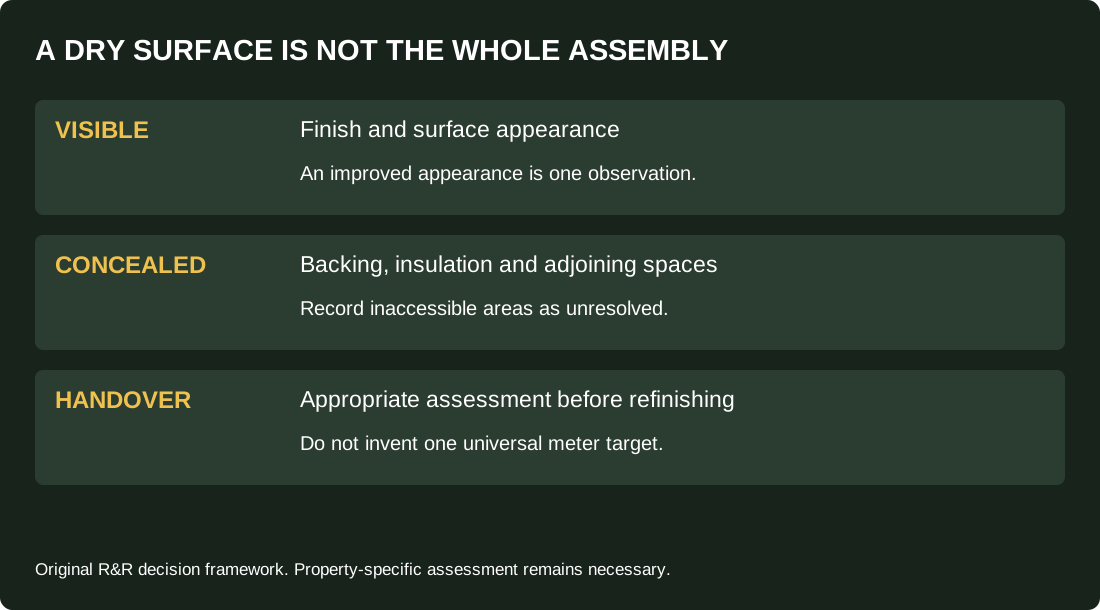
Different materials and assemblies can conceal moisture in different places. A finished surface may look improved while backing, insulation or adjoining materials still require attention. Ask what the assessment includes behind or beneath the visible finish.
Avoid universal instructions such as “cut every wall at the same height” or “keep all hardwood if it looks flat.” The affected water, duration, material condition and construction need to be considered together. A qualified restoration or building professional should explain what can remain and what requires removal or replacement.
Cabinets and built-ins can make access difficult. Record areas that cannot be inspected without further work, and distinguish them from areas already examined. An inaccessible space is an unresolved question, not a dry one by default.
Before choosing replacement finishes, establish that the underlying cause and moisture condition have been addressed. Rebuilding over an unresolved problem can hide the evidence you need to understand it. The right sequence is assessment, appropriate remediation and drying, verification, then reconstruction under the applicable requirements.
Know when the job needs a restoration professional
Get qualified help when the work involves unsafe access, electrical concerns, contaminated water, substantial damage, mold issues, inaccessible spaces or uncertainty about the retained materials. A guide can help you ask better questions; it cannot inspect the property through a screen.
Ask how the contractor assesses the water source, affected area, contamination and drying plan. Request a written scope separating extraction, removal, cleaning, drying and repair. Check relevant qualifications, licensing where applicable and what evidence of completion it will provide.
Be wary of a proposal consisting only of an equipment count and a promised finish date. Ask who will monitor the job, how changes will be documented and which tasks are outside the quoted scope. Clear responsibilities make a complicated project easier to manage.
If you rent, notify management promptly and ask who is authorized to approve work. Do not assume that buying equipment gives you permission to remove building materials or alter shared systems. Keep household belongings and temporary living arrangements distinct from the building repair process, and obtain the advice appropriate to your situation.
Do not restart HVAC or rebuild just because the floor looks dry
A dry-looking floor is an observation about a visible surface. It does not answer whether the ventilation system, wall cavities, insulation, wiring or retained contents have been assessed. Treat those as separate questions rather than letting one improved surface stand in for the whole property.
EPA's flooded-home guidance cautions against turning HVAC back on before the necessary cleanup, drying and remediation steps are completed. Ask who will assess affected equipment and what the restart instructions are. Do not use the system as a shortcut while its condition is unresolved.
Before refinishing, ask for a handover that identifies the completed work and any exclusions. Which spaces were checked? Which materials remain? What still requires a specialist? A signed invoice for equipment hire is not necessarily a statement that every building system has been cleared.
Keep the handover useful after contractors leave. File the scope, observations and repair information together. If a new leak or odor appears, those records give the next professional a better starting point than a memory of how many days a fan ran.
Drinking water, food and sanitation remain separate recovery tasks
Drying the building does not clear the drinking-water supply. Check the supplier's current notice and use our guide to what to do after a boil water advisory is lifted for appliance and household restart questions. A private well affected by flooding needs its own official guidance and assessment.
A separate power interruption can affect refrigerated food even where floodwater never entered the kitchen. Our power-outage food-safety guide addresses that decision. Do not treat restored electricity as evidence of the temperature history before it returned.
Wastewater service can also remain disrupted. Follow the sewer authority's instructions and use the emergency toilet guide for apartments for planning context. A working faucet does not prove that an affected drain or sewer system can be used normally.
For longer-term prevention, our El Niño flood-risk guide may cover relevant seasonal planning. The immediate drying job still takes priority over buying future gear or cosmetic upgrades. Resolve the present source and the affected materials before turning the work into a general home-improvement project.
Questions about drying a flooded house
Can I dry a flooded house with fans alone?
Do not assume so. Extraction, contamination control, material removal, cleaning and moisture assessment may all be necessary. Air movement is one possible part of an assessed drying plan, not a substitute for those decisions.
Will a dehumidifier dry wet walls?
It can be part of a suitable strategy, but a room dehumidifier does not prove moisture hidden in an assembly has been resolved. Material condition, access and verification matter. Ask how the affected walls will be assessed before refinishing.
Does a low humidity reading mean the house is dry?
No. Room humidity and material moisture are different measurements. A hygrometer cannot inspect the inside of a wall, and a material meter has its own limitations. Completion needs an assessment appropriate to the property.
Should I pump all the water out of the basement immediately?
Do not use a universal pump-out rule. Flooded basements can have structural pressure concerns. Have the conditions assessed and follow a safe plan rather than maximizing extraction speed without knowing the consequences.
Can I paint over water-damaged areas once they look better?
Do not cover unresolved moisture or mold. Establish what remains damaged, complete the appropriate cleaning and drying process and verify the retained materials before refinishing. Ask what repair and permit requirements apply.
Sources and editorial method
This research-based guide combines original household decision frameworks with primary guidance from CDC on reentering a flooded home, CDC mold cleanup tips, EPA's flooded-home guidance, EPA's flood-cleanup resource and FEMA basement flood guidance. Sources checked October 17, 2026. The diagrams and fictional log illustrate task organization; they are not engineering assessments, field measurements or product tests. Use local officials and qualified professionals for the decisions that require a property inspection.