
Editorial — this article presents the position of Ready & Resourceful. A household should not have to choose between accepting an unexplained reassurance and believing the worst thing in its news feed. When a serious illness becomes an international story, the public deserves something more useful: a clear account of the evidence, the limits of that evidence, and what people should actually do.
The reporting around a laboratory worker's death in Irkutsk raises that communication problem. It does not give this website authority to diagnose the worker, accuse a laboratory of a proven accident, or declare an outbreak. Our position is narrower and firmer. Institutions should explain consequential health findings as clearly as they can, and publishers should resist making uncertainty more frightening in order to attract attention. Both responsibilities matter, including on a preparedness website that earns revenue from some product links.
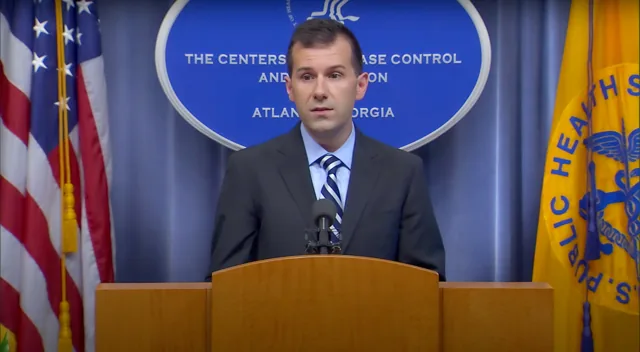

The factual starting point for this opinion
The news reporting concerns an unexplained pneumonia death, official rejection of secondary-infection claims, and international requests for clarification. Read our latest Russia update for the source-linked account and our WHO explainer for the information questions. This editorial argues for a standard of communication; it adds no new evidence about the illness.
WHO's October 7 briefing emphasised timely, complete and transparent information sharing. We agree with that principle. It should apply to a worrying event regardless of the country involved or the political sympathies of the audience.
Our disagreement with vague messaging is not a diagnosis. Nor is it a finding of deliberate concealment. Those claims would need evidence this article does not have. Readers should be able to distinguish an argument about the quality of public communication from a factual allegation about what caused someone's death.
Reassurance should explain its reasoning
“Everything is under control” can sound comforting, but a reader still needs to know what “everything” means. Does the statement concern people already examined, a suspected source, a geographic area, or the possibility of further illness? Without that scope, reassurance becomes difficult to evaluate. It asks for trust without explaining the basis on which trust is requested.
We think public updates should identify the question being answered. A conclusion about contacts should explain the relevant monitoring. A conclusion about a pathogen should identify the basis of the finding at a suitable public level. A conclusion about broader risk should distinguish the people assessed from everyone else.
This is not a demand that officials publish confidential patient records. It is a demand for intelligible summaries. Readers can understand that findings have limits if those limits are described. A plainly bounded statement is stronger than an absolute slogan because it makes clear what could change the assessment and why the current action follows from the available information.
An unanswered question is not a conspiracy
There is a tempting move in tense coverage: take the gap in the public record and fill it with a confident accusation. It gives the story a villain and makes the uncertainty feel resolved. But the resolution comes from imagination rather than evidence. A publisher doing that has not solved the information problem; it has created another one.
We favour questions that can receive meaningful answers. What tests were conducted? What conclusion do they support? What exactly is being denied? These questions sharpen the story. A broad allegation that every unexplained detail proves a cover-up makes it harder to identify what evidence would settle the disagreement.
The same standard applies when a claim happens to match our audience's expectations. A preparedness publication should not reward a dramatic theory merely because it sounds compatible with concern about institutional failure. Scepticism is useful when it examines claims consistently. It loses its value when it becomes a rule that reassuring information must be false and alarming information must be true.
Respect the person at the centre of the story
Behind a search trend is a worker who died and people who knew her. That should affect editorial choices. A name may be relevant to identifying the event; speculation about private conversations, family circumstances or supposed personal mistakes may be neither necessary nor supported.
We do not think a person should become a prop for a laboratory-leak narrative simply because the workplace makes the narrative compelling. Accountability should follow evidence. Until there are documented findings, assigning individual blame can harm people while adding little reliable information for readers.
The public interest is in what happened, what can be learned, and whether others need protection. Those questions can be pursued without reproducing every invasive detail circulating online. A serious tone comes from disciplined coverage and respect, not from photographs of grieving relatives or invented descriptions of someone's final moments. The absence of those details should make an article more trustworthy, rather than less dramatic.
Numbers deserve labels, not theatrical treatment
A count becomes misleading when its category changes. Samples are not automatically people. Contacts are not automatically infections. An observation group is not automatically an outbreak tally. We think editors should check the noun attached to every number with the same care they apply to the number itself.
A headline can make a precautionary count look like a case total without stating an outright false number. That is still a bad service to the reader. The correction belongs in the headline and opening, rather than buried in a paragraph that few people reach.
A useful presentation would define the group, period and result. If the underlying statement does not supply those details, the article can say so. It should not repair the gap with a guessed denominator. The aim is to help readers understand the scale of a documented development. Increasing its apparent scale to make the article more clickable does the opposite, even when the arithmetic itself looks impressive.
Preparedness websites have a commercial responsibility
This website uses Amazon affiliate links in some guides. That creates a reason to be especially clear when a health story sits near a supplies article. A commission must not become an incentive to imply that a frightening overseas report makes every reader an immediate customer for protective equipment.
Our position is that a shopping guide should explain a practical task, say when existing supplies are adequate, and identify the limits of any product. It should never suggest that buying a household item treats plague, verifies a diagnosis or replaces an urgent medical assessment. Affiliate relationships should be visible before readers start comparing products.
The proper question is “what would help this household carry out its plan?” It is not “what can this headline persuade people to buy?” Those questions can lead to very different recommendations. We have chosen ordinary continuity items in the accompanying checklist and excluded antibiotic stockpiles, purported plague cures and expensive equipment justified only by an unresolved news event.


Urgency belongs where action can make a difference
There is a legitimate urgent message in health reporting: do not delay appropriate care for a serious illness. CDC identifies trouble breathing and chest pain as emergency warning signs requiring immediate medical care. That is a concrete action linked to a person's condition. It should be communicated plainly.
By contrast, telling every reader to panic-buy because an investigation remains incomplete converts uncertainty into sales pressure. It does not connect the purchase to a documented exposure or a specific official instruction. We reject that approach.
A preparedness article can still be purposeful. Find your medical contact. Check the thermometer you already own. Arrange help with an ordinary household task if someone becomes ill. These actions do not need a prediction of catastrophe to become worthwhile. The distinction is between encouraging useful preparation and manufacturing the fear required to sell it. A serious publication should be capable of the first without relying on the second.
Corrections should be easy to see
When a developing story changes, an article should explain the substantive change. Readers should not have to compare screenshots to discover that a suspected case is now disputed or that an earlier total used a different category. A visible update note is an editorial tool, not an admission that reporting should never evolve.
We think a good correction identifies the original problem, states the corrected fact and gives the date. A quiet rewrite may improve the current page but leave people who shared the earlier version unaware of the change. A meaningful update should help them correct their own understanding.
The standard also applies to this site. Our articles should carry a reporting cutoff and keep source links close to consequential claims. If the evidence changes, the wording should change with it. We should not leave an alarming title untouched merely because it performs well in search. Readers returning to the page deserve the current account, not the most commercially successful version of yesterday's uncertainty.
Do not turn a foreign event into a local exposure claim
A story can be internationally important without documenting a risk in every reader's neighbourhood. A U.S. family, a U.K. student or a Canadian outdoor enthusiast may reasonably follow events in Russia. Their interest does not provide an exposure history. Coverage should make the geographic limits visible.
We think articles should distinguish global attention from a local instruction. If an authority publishes a travel notice or exposure advisory, that specific development belongs in the story. If the reviewed evidence does not establish one, the article should not imply it through a broad warning to “prepare before it reaches you.”
That phrase makes a future event sound inevitable. It should not be used when inevitability is unsupported. A clearer message is to follow the advice that applies to your location and circumstances. Readers are capable of understanding the difference. Treating them as capable produces better public communication than using distance, uncertainty and a frightening disease name to keep them in a constant state of alarm.
Images should inform rather than impersonate evidence
A laboratory photograph can help explain the setting of scientific work. It becomes misleading when its caption or placement suggests it shows the specific facility or investigation under discussion. The same problem arises with a generic ambulance, an old street photograph or a dramatic image of someone wearing protective clothing.
Our position is simple: identify the actual subject and context. If an image is archival, say so when that matters. If it is a general laboratory scene, avoid writing a caption that assigns it to Irkutsk. If it is a photograph of a different public health event, make the difference unmistakable.
This is compatible with useful image captions and search optimisation. A caption can describe what a reader sees and why it is relevant without pretending it documents the incident. Accuracy is particularly important on a health story because pictures often remain memorable after qualifications in the prose are forgotten. A serious visual style should not smuggle in certainty the reporting does not support.
A practical standard for readers who share the story
Before forwarding an update, read beyond the headline and ask what changed. If the article describes an official denial, preserve that fact in your summary. If it describes a request for verification, do not rewrite it as confirmation. If it is an editorial, identify it as an opinion rather than new reporting.
Consider adding one sentence explaining why the link matters. “This covers the latest official response” gives a reader a clearer purpose than “this is terrifying.” You can take an event seriously without prescribing the emotional reaction other people should have. That is particularly useful in a family group where someone may already be worried about an unrelated illness.
Finally, avoid reposting a claim whose source you cannot identify. A screenshot that omits its date or attribution is difficult to assess. Find the original statement or a traceable report. If you cannot, it is reasonable to wait. Choosing not to amplify an uncertain detail is a practical contribution to a healthier information environment.
What institutions should provide next
We would like to see a public explanation that separates the clinical account, testing findings, monitoring of contacts and assessment of wider implications. Where information remains unknown, the explanation should say so. Where an earlier claim is rejected, it should identify the claim precisely enough that readers understand the rejection's scope.
This is our editorial recommendation, rather than a claim that a particular format is legally required. The aim is clarity. A short, comprehensible summary can be more valuable than a large volume of statements that do not address the central questions.
The same recommendation applies to publishers. Ask questions with answers that could change the story, represent the responses fairly, and do not repeat unsupported details solely to keep a narrative alive. Coverage should become clearer over time. If each update makes the public more anxious without explaining what is newly known, the publication should reconsider whether it is informing readers or simply extending their attention.
The standard this site intends to follow
For Ready & Resourceful, seriousness means sourced facts, bounded conclusions and useful action. It means separate news and opinion labels. It means visible affiliate disclosure, accurate image captions and correction routes. It means acknowledging when a product recommendation comes from a researched selection rather than hands-on testing.
None of those choices promises that uncertainty will disappear. They provide a way to live with uncertainty without filling it with guesswork. That is the value a preparedness site should offer: practical orientation, not an endless escalation of fear.
The Russia story deserves continued attention as evidence becomes available. Readers deserve coverage that can say both “this is important” and “this is not yet established.” Our household illness checklist turns the practical side into manageable tasks. It starts with contacts, existing supplies and ordinary household continuity. That is preparation people can use, whether this particular investigation becomes clearer tomorrow or remains unresolved for longer.