
NEWS / EUROPE & INFRASTRUCTURE
Cyberattack Alters French Blood-Service Refrigeration Controls, but Plasma Supplies Are Protected
The reported EFS response protected stored products. A separate wave of supermarket incidents shows why refrigeration security matters beyond the screen.
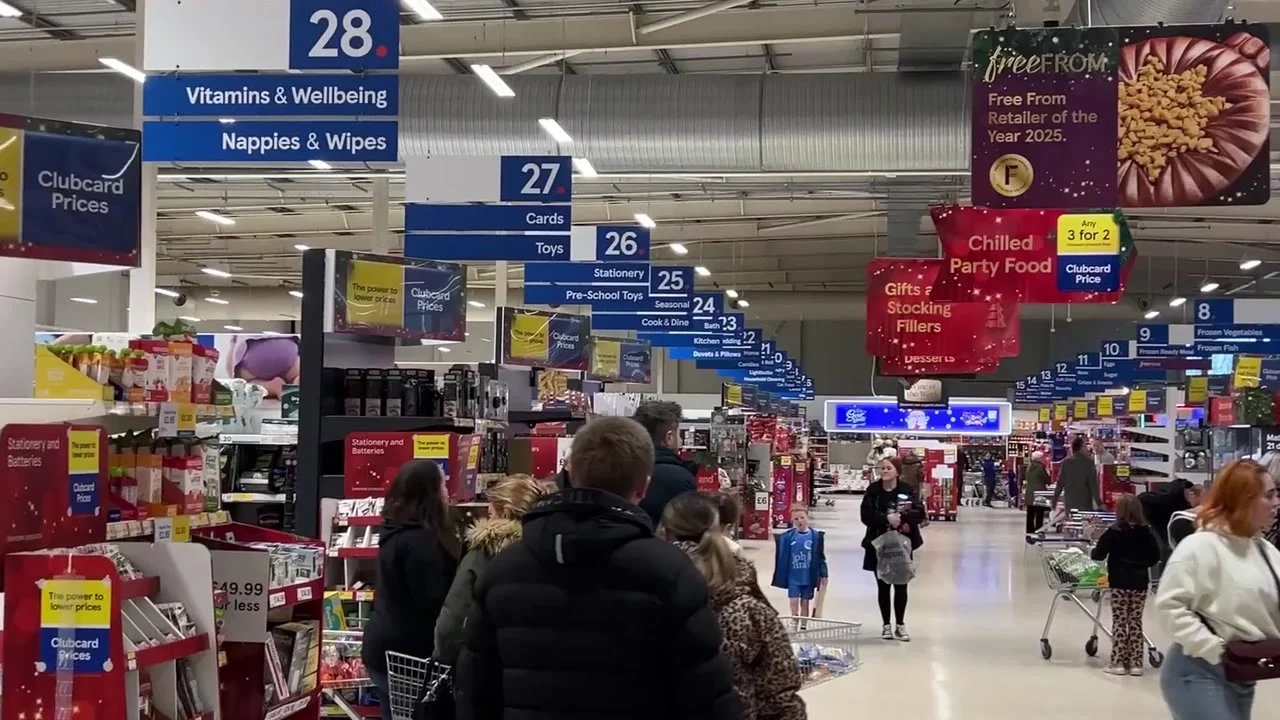
A cyberattack altered refrigeration controls at three French blood-service sites this week, but monitoring alarms and rapid staff intervention prevented reported losses of plasma and other stored products. The incident comes after refrigeration attacks disrupted European supermarkets, although a common attacker or a direct connection between the events has not been established.
The Établissement français du sang (EFS), France’s national blood service, said the affected equipment was used to supervise and control cold rooms. Temperature and defrost settings were raised to unusually high levels during the night of November 1–2, according to its statement quoted by the Associated Press and other outlets.
EFS reported no identified health consequences, no losses of blood products and no interruption to blood collection and distribution. Stored plasma was secured or transferred. Those outcomes are central to understanding the incident: an attempt to disrupt storage is not evidence that damaged products reached patients.
The essential facts
- When: Night of November 1–2; supplier statement published November 4.
- Where: Refrigeration equipment at three EFS sites in France.
- What changed: Temperature and defrost control settings.
- Reported outcome: Products protected; no reported blood-product losses or identified health impact.
- Still unresolved: Full technical cause, attribution and any connection with supermarket incidents.
Alarms gave staff time to protect the plasma
The affected cold rooms held plasma intended for transfusions and for manufacturing medicines, as well as biological samples. EFS described a response in which equipment was brought under control or taken out of service and stored products were transferred where necessary.
That distinction matters. A changed temperature target, a rising chamber temperature and the temperature actually reached by a stored product are different measurements. An alarming control setting alone does not establish what happened inside each plasma bag.
The widely repeated figure of 110°C should therefore be treated carefully. It originated in press reporting. When The Connexion asked EFS about exact figures, the service said it had not communicated specific temperatures and could not confirm them. This article does not present that figure as a verified storage temperature or claim that blood was boiled.
Coolworld acknowledges a remote-monitoring incident
In a November 4 public statement, refrigeration supplier Coolworld Rentals acknowledged a cybersecurity incident involving remote-monitoring software. The company said a limited number of its units were affected and that it had taken appropriate measures and was supporting customers.
Coolworld attributed the vulnerability described in reporting to a third-party component outside its direct control. That explanation is the company’s account. It does not independently establish the complete intrusion route, identify an attacker or settle responsibility across the supply chain. The statement did not discuss individual customer cases.
Health-sector security reporting described technical work involving EFS, France’s cybersecurity agency ANSSI and the Health Ministry. A directly hosted EFS incident release was not retrieved for this article; the service’s account is attributed to reporting that quotes or directly contacted EFS.
How the refrigeration incidents unfolded
| Date | Development | Important distinction |
|---|---|---|
| October 2026 | French supermarket refrigeration systems were disrupted in an earlier attack wave. | Do not assume every October corporate cyber incident was a refrigeration attack. |
| November 1–2 | Controls at three EFS sites were altered; European retailers also reported refrigeration incidents. | Timing and similar effects do not prove common perpetrators. |
| November 3–4 | Reporting detailed EFS’s protective response; Coolworld issued its public statement on November 4. | No reported plasma losses or identified health impact. |
| November 5 | This article reviews the available statements and reporting. | Attribution and the complete technical cause remain unresolved in the evidence reviewed. |
Supermarkets faced a different outcome
Retailers in several European countries reported refrigeration disruptions on November 2. Reuters and AP coverage identified affected operations including Delhaize and Carrefour stores in Belgium and Swedish grocers. Some businesses removed chilled or frozen stock from sale after temperatures rose.
The supermarket reports illustrate the physical consequences of compromised controls. They do not establish that every affected organization used identical equipment or suffered the same losses. The number of countries cited in coverage also varies with reporting time and scope, so this article avoids a definitive continent-wide total.
Ahold Delhaize’s financial warnings require another separation. Reporting about its wider October cybersecurity disruption includes projected business impacts. Those figures should not be assigned wholesale to the November refrigeration incidents without evidence connecting the costs.
Why connected cooling is a physical-security issue
Refrigeration relies on equipment that measures conditions and controls cooling and defrost cycles. Remote supervision can help technicians maintain that equipment. It also creates a security concern when access to a control system is exposed or inadequately protected.
Censys’s research into the broader supermarket incidents discusses internet-exposed refrigeration controllers. It is relevant context, not a forensic report establishing the entry point at EFS. Likewise, a discussion of default passwords or outdated software elsewhere should not be converted into a confirmed cause for this particular incident.
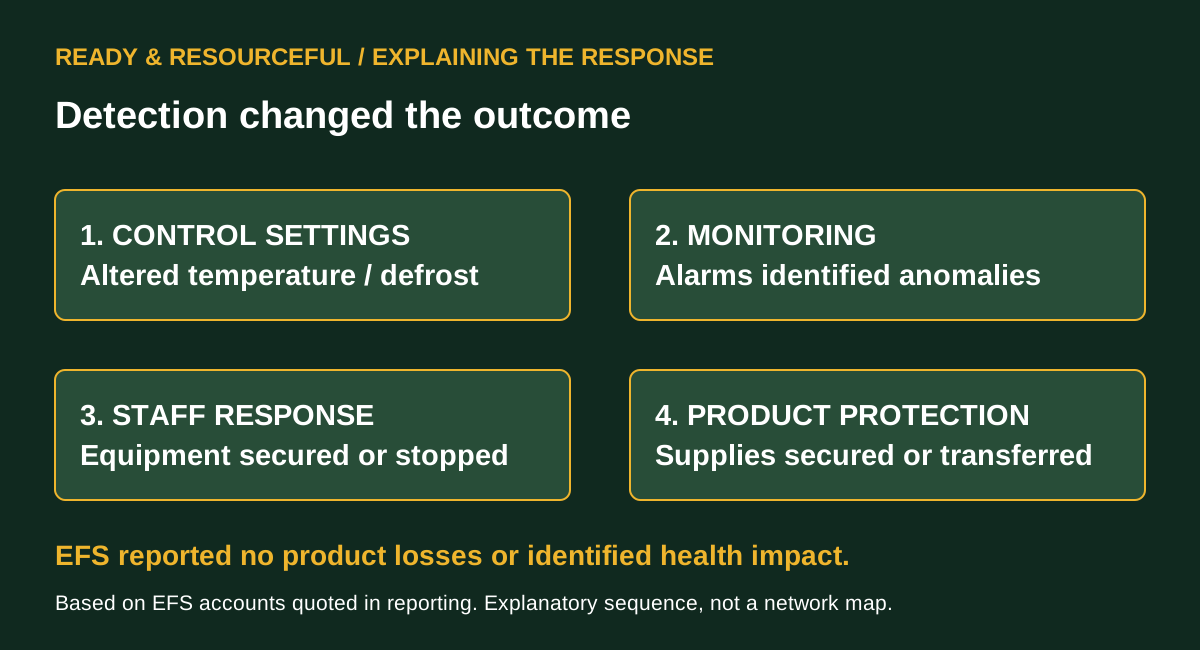
The practical lesson is about layers of protection. A control system tells equipment what to do; monitoring must reveal whether conditions remain acceptable; trained staff need an effective response when an alarm appears. The EFS account describes detection followed by intervention, rather than a successful destruction of plasma stocks.
Confirmed accounts and unanswered questions
| Supported by the reviewed evidence | Not established |
|---|---|
| EFS described altered control settings at three sites and a protective response. | The identity, nationality or motive of the attacker. |
| Coolworld acknowledged a limited incident involving remote-monitoring software. | The full technical entry point or every affected component. |
| EFS reported no losses or identified health impact. | Claims that blood was boiled, contaminated or supplied to patients after damage. |
| European supermarkets separately reported refrigeration disruptions. | A single coordinated campaign linking every reported incident. |
What this means for household preparedness
This is a story about institutional and commercial equipment, not evidence that ordinary household refrigerators are being targeted in the same way. It does show why an emergency can involve the loss of a useful service even while other systems remain available.
For readers planning at home, separate backup electricity from the service you actually need. Power is useful, but it does not by itself confirm that a device is operating correctly. Avoid drawing medical-storage or food-safety decisions from this news report: follow the relevant product instructions and official guidance for those decisions.
Our 72-hour preparedness guide covers a broader household plan. Our power-bank comparison concerns phones and compatible small devices; it is not a refrigerator backup-power recommendation. Practical preparation starts by identifying which service a household needs to maintain, rather than treating every battery as interchangeable.
For businesses and healthcare facilities, changes to refrigeration access, alarms or physical safeguards belong with qualified facilities, clinical and security teams. Disconnecting equipment or altering controls without an approved plan can create additional risks. This article does not provide a do-it-yourself intervention procedure.
Watch the news summary
Transcript and visual context
European supermarket refrigeration attacks have turned a digital security problem into physical losses. Separately, refrigeration controls were altered at three French blood-service sites.
The French blood service reported no product losses or identified health impact. Alarms and staff intervention helped secure or transfer stored plasma.
Coolworld acknowledged an incident involving remote-monitoring software. Its third-party explanation is the supplier’s account, not a complete independent forensic finding.
A common attacker linking every incident has not been established. Nor is this evidence that household refrigerators are being targeted. Read the source-linked report at Ready Resourceful dot com.
Original R&R narration and edit. Licensed Pexels supermarket and laboratory footage illustrates the subject and does not depict the attacks, EFS premises or affected products. Original explanatory graphics are not forensic evidence. Footage sources and license are listed below.
Sources and reporting notes
- Coolworld: November 4 supplier statement
- AP reporting, syndicated by ABC News: EFS account and protected plasma
- The Record: EFS response and unresolved attribution
- The Connexion: EFS did not confirm specific temperatures
- Reuters: November 2 supermarket refrigeration incidents
- Censys: research on the broader refrigeration attacks
- Health-ISAC bulletin, hosted by AHA: evidence limitations and professional safeguards
- Pexels supermarket footage
- Pexels laboratory footage
- Pexels reuse license
Published November 5, 2026. This report distinguishes the supplier’s own statement from accounts attributed to EFS through news organizations. We have not independently examined affected equipment or obtained the incident’s forensic findings. No attacker attribution, product contamination or household refrigerator targeting is asserted.