
Hundreds of thousands of people marched across France on October 17 over living costs and school conditions, while fires, looting and clashes with police struck several cities. President Emmanuel Macron condemned the violence in a televised address the following evening and called for talks on the underlying grievances.
The central distinction is between the demonstrations and the violence that accompanied some of them. Peaceful participants, people suspected of damaging property and people detained by police are not interchangeable groups. A national turnout estimate does not measure how many people took part in disorder.
France protests at a glance
| Question | What is established | Attribution and date |
|---|---|---|
| How many people marched? | About 550,000 nationwide, compared with organizers’ estimate of 800,000 | Interior Ministry and organizers, reported by AP on October 17 |
| How widespread were the marches? | 110 marches | Interior Minister Laurent Nuñez, October 17 |
| Why were people protesting? | School conditions and wider frustration about living costs and public services | AP and Reuters reporting, October 17–18 |
| What is the later arrest figure? | At least 2,400 | AP’s October 18 update |
| Where was major damage reported? | Paris, Limoges, Marseille and Lyon, among other locations | AP’s October 18 update |
These figures answer different questions. The turnout estimates are attributed counts, not independently audited totals. Arrests are not convictions. The table is a dated snapshot, not a live police or transport feed.
Why are people protesting in France?
The movement grew from high-school grievances into a broader dispute over living standards. Reuters traced its beginnings to schools in Paris’s northern suburbs, where teacher shortages and deteriorating facilities helped mobilize students. Their demands subsequently connected with concerns about inequality and public spending.
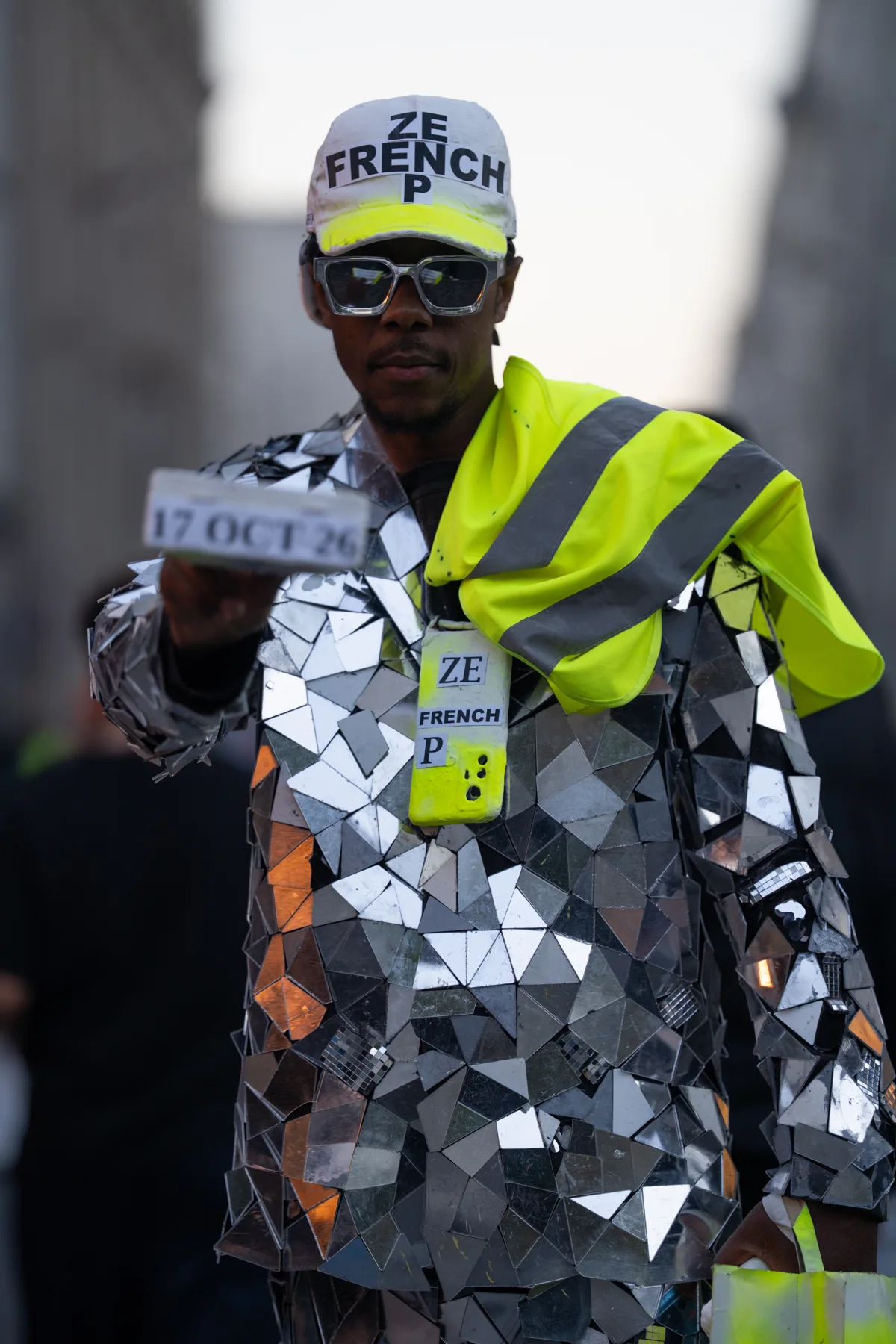
On October 17, students were joined by trade union supporters and people associated with the yellow vest movement. The CGT backed demands for better wages and pensions, lower prices and protection of public services. Those overlapping concerns help explain why describing the event only as a youth riot leaves out much of the political and social context.
The yellow vests are relevant because their participation connects this mobilization with an earlier cost-of-living movement. It does not establish that every participant shared one organization, one set of demands or one view of the violence. Neither a fluorescent vest nor presence at a march demonstrates responsibility for an offense.
What happened in Paris and other cities?
In Paris, confrontations occurred around Place de la République and elsewhere. Police used tear gas and water cannons, while people in some groups threw objects and damaged property. AP’s initial account also described peaceful marchers moving toward northwestern Paris. These were simultaneous parts of the day, rather than evidence that every procession became violent.
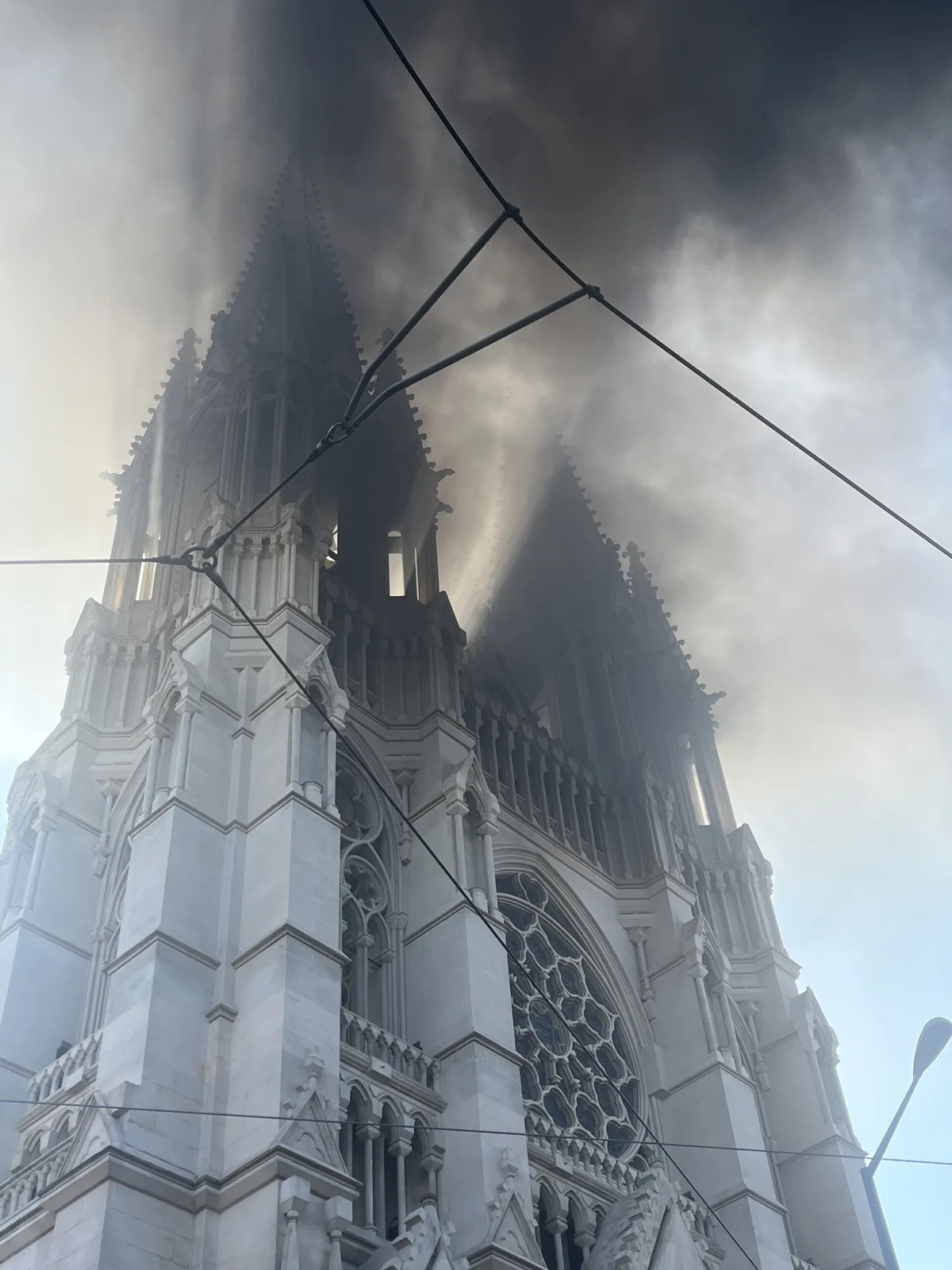
Limoges’s historic city hall suffered a major fire. Marseille’s city hall was entered briefly, and a tourist office burned in Lyon. The damage to civic buildings became a prominent part of the government’s response, but photographs of one burning building cannot establish the conditions across an entire city or country.
Le Monde’s reconstruction described a fragmented policing challenge: gatherings at multiple locations, mobile groups and units forced to redeploy. That account raises questions about preparation and crowd management without, by itself, settling responsibility for individual incidents. Establishing who committed a specific act requires evidence about that act.
Why do reports give different arrest totals?
The counts changed as the weekend developed. Reuters’s October 17 account gave a provisional total of about 1,200 arrests. A later Guardian update carried an 1,800 figure, and AP’s October 18 account reported at least 2,400. These should not be added together.
The later number supersedes an earlier snapshot for the purpose of this article; it does not prove that earlier reporting was false. A properly dated update is more useful than a large number stripped of its reporting time and source.
The same caution applies to injuries. Police injuries and injuries among demonstrators are separate measures, and an incomplete count for one group cannot substitute for the other. We have not constructed a combined casualty total from incompatible updates.
What has Macron announced?
Macron called for a review of possible intelligence or police-preparedness failings. He also asked the government to bring students, teachers, lawmakers, unions and business representatives together during the coming week to develop proposals. Reuters reported those announcements after his October 18 address; detailed outcomes were not yet established in that account.
The government attributed violence to radical far-left groups and criminals. That is the government’s attribution, not a finding that every arrested person belongs to either category. The political dispute also involves criticism of policing and whether ministers have adequately addressed the original demands.
Promises of talks should be distinguished from an agreement. Until participants, proposals and decisions are published, the announcement does not establish that the dispute has been resolved or that future demonstrations have been canceled.
What should residents and travelers check?
AP reported that some Paris Métro stations were closed at police request on October 17. Those dated closures are not a current service bulletin. Anyone planning a journey should check the RATP traffic service, their rail or airline operator, and relevant local authority notices before departing.
For U.S. readers, the State Department’s France travel information is a separate source for official advice. UK readers can consult FCDO advice for France. This article does not declare France open, closed or uniformly unsafe on the basis of isolated footage.
Practical preparation should match the actual disruption. Keep accommodation and transport contacts available, check the route before leaving, and avoid moving toward an active confrontation to obtain photographs. A change to one station or street is a reason to verify an alternative route, not evidence that an entire national transport network has stopped.
Our 72-hour household preparedness guide and free planning PDFs cover ordinary household readiness. They are background resources, not a claim that the protests will cause a nationwide supply emergency. There is no event-specific product recommendation in this article.
What remains unresolved?
The outstanding questions are specific: the final damage assessment, the outcomes of investigations, what the announced talks produce, and which new gatherings or restrictions authorities confirm. We have not treated political accusations, social-media descriptions or old clips as answers to those questions.
For readers searching “France protests October 2026,” the useful distinction is what is confirmed, what is attributed and what remains unknown. This article is an independently written synthesis of linked reporting, not an account from an R&R reporter at the scene. Photographs are credited to their actual creators.
Reporting and source record
Reporting checked October 19, 2026. The October 17 CNN reference was not directly retrievable; the story was cross-checked against the sources below. No on-scene interviews were conducted by R&R.
- AP, October 17: turnout, marches and initial events
- AFP, October 17: demonstrations and damage
- Reuters, October 17: origins and provisional figures
- AP, October 18: later arrests and government response
- Reuters, October 18: Macron’s announced review and talks
- Le Monde, October 18: policing reconstruction
- The Guardian: later arrest update