PREPAREDNESS / WINTER TRAVEL
Can You Drive During a Winter Storm Warning? How to Make a Safer Decision
Decide whether to postpone, check the whole route and prepare for an interrupted journey—with official sources, a return-trip example and a printable trip check.
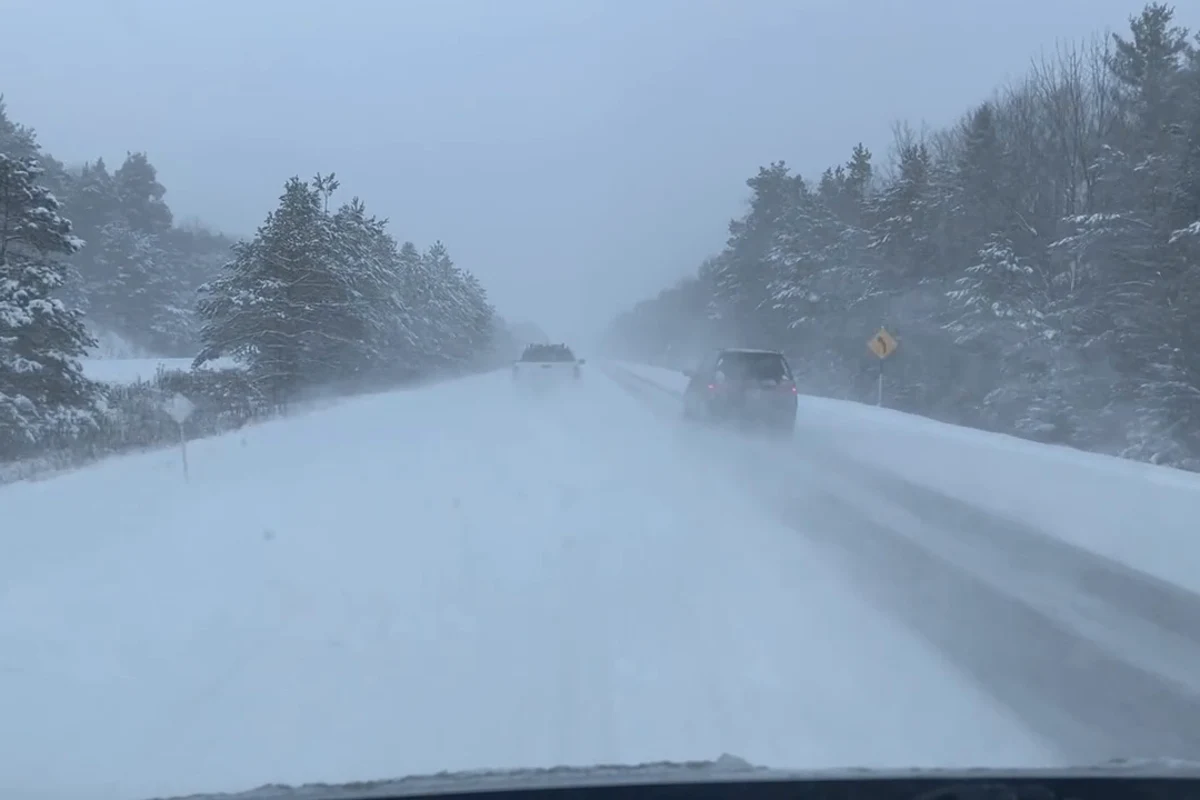
THE SHORT ANSWER
Delay optional trips. Check the route. Plan for the return.
If a winter storm warning covers your route, postpone nonessential driving until conditions improve. The National Weather Service warns that travel can become difficult or impossible. If a trip cannot wait, check the full warning, official road conditions and local travel restrictions before deciding whether to leave. A prepared vehicle reduces some risks; it does not make a dangerous route safe. NWS winter warning guidance.
WATCH / ORIGINAL R&R VIDEO
Should you drive? Make the decision before you leave
Our original narrated explainer walks through the warning, road restrictions, return journey and a fallback plan. Original edit using licensed winter driving and vehicle preparation footage, a brief moving route diagram and synthetic narration. Illustrative scenes, not live road information or R&R field reporting.
Read the video transcript
A winter storm warning changes the travel decision. Postpone optional trips until conditions improve. A clear driveway does not tell you what the rest of your route looks like.
Read the full warning for your route at Weather dot gov. Then check official transportation reports and local restrictions. Follow closures and emergency instructions. A navigation app is not permission to enter a closed road.
Check the forecast for the return journey, too. A manageable morning drive can become a hazardous afternoon return. If delays could put you into worsening weather, reschedule or arrange a safe place to stay.
All wheel drive may help you get moving. It does not remove the limits of tire grip when stopping or turning. A jump starter, snow brush and blanket prepare you for problems. They do not make dangerous travel safe.
If travel truly cannot wait, prepare the vehicle and carry warm clothing, water, food, necessary medicines and phone charging equipment. Share your route and expected arrival. If you become stranded, call for help and generally stay with the vehicle.
Use the full Ready and Resourceful guide to check the warning, road restrictions, return trip and fallback. Complete the six trip checks. If a serious hazard remains, delay the drive while you still have safe shelter.
Footage credits and license
Illustrative stock footage edited by Ready & Resourceful. These scenes do not show current road conditions or imply endorsement.
- Car driving along road in winter — I Am Sorin / Pexels
- Clearing snow off car — The Instagrapher / Pexels
- Clearing snow and ice from windshield — The Instagrapher / Pexels
- Snowfall over parked cars — With. Me / Pexels
- Snowy highway in harsh conditions — Kim Dodge / Pexels
Pexels license: free footage used in an original edited video.
A clear driveway can make the decision feel easier than it is. Your neighborhood may be passable while an exposed highway, bridge or stretch farther along the route is deteriorating.
The useful question is: Can this trip wait—and what happens if I cannot finish it?
This guide uses U.S. National Weather Service terminology. Check the agencies responsible for your location and every area you plan to cross.
What a winter storm warning means for drivers
A winter storm warning alerts you to significant winter weather, which may include snow, sleet, ice or blowing snow. It is a reason to change travel plans, even if the worst conditions have not reached your street.
Warning criteria vary by location. There is no single nationwide snowfall amount that tells every driver when a trip becomes unsafe. Read the warning’s expected impacts, affected area and timing—not just the snow total.
Three different information sources answer three different questions:
| Information | What it tells you |
|---|---|
| NWS forecast and warning | What weather is expected, where and when |
| State transportation department or official 511 service | Reported road conditions, incidents, closures and restrictions |
| Local emergency management or law enforcement | Local travel instructions, bans and applicable exceptions |
A weather warning and a local travel order are different notices. For example, Indiana has a separate county travel-status system whose highest level directs people to refrain from travel and may restrict travel to emergency management workers. Check the actual order where you are; do not assume that calling your trip “essential” creates an exception. Indiana’s local travel-status definitions.
For the household actions behind the alert, read our winter storm warning preparation guide. If the alert wording is unclear, compare watches, warnings and advisories.
Should I drive in a winter storm? Use this decision table
If you are asking, “Should I drive in a winter storm?” start with whether the trip can be postponed. Then look for a reason to stop the plan.
The table below is a planning aid, not an official road-safety rating.
| Your situation | Safer next step |
|---|---|
| The trip is shopping, a social visit or another flexible errand | Reschedule it |
| Officials advise against travel on your route | Delay and follow their instructions |
| A road is closed or a travel restriction applies | Do not enter; check official instructions |
| Freezing rain or severe visibility loss is affecting the route | Stay where you have safe shelter; reassess later |
| The outward trip looks manageable, but the return overlaps worsening weather | Change the timing or arrange safe accommodation before leaving |
| Your tires, visibility equipment, fuel or charge are inadequate | Resolve the problem before reconsidering travel |
| You cannot establish current conditions on a critical section | Treat the uncertainty as a reason to delay |
| Someone faces an immediate threat to life or safety | Call 911 and explain the conditions rather than assuming you should drive |
Do not count reassuring factors against a serious hazard. An experienced driver, a capable SUV and a short distance do not cancel a closure or whiteout.
Check these four things before you leave
1. Read the warning for the entire route
Open the full alert at weather.gov. Check the affected locations, expected hazards, timing and travel advice.
A forecast for your home does not describe every road between you and your destination. Pay particular attention to where your route enters the warning area and whether conditions are expected to worsen before you finish.
2. Check official road reports
Use the transportation department or official 511 service for each state you will cross. Look for closures, incidents, road-surface reports and equipment restrictions.
For example, 511NY, 511 Wisconsin and Wyoming 511 provide official traveler information. Check report timestamps and camera times when available. A camera shows one place at one moment, not a guarantee for the whole route.
Keep navigation directions separate from the decision to travel. Before accepting a suggested detour, verify that the alternative is open and suitable through official information.
3. Check the return trip
Write down your departure, arrival and return times. Compare all three with the forecast.
Fictional example: You plan to leave at 9 a.m., finish an appointment at noon and return home at 1 p.m. Freezing rain is forecast along the route from late morning. The morning drive alone does not justify the trip. Call about rescheduling, a remote appointment or a safe place to stay.
Allow for delays without treating extra time as protection from dangerous conditions. NHTSA recommends adjusting departure plans to avoid the worst weather and preparing for unexpected delays. NHTSA winter-driving guidance.
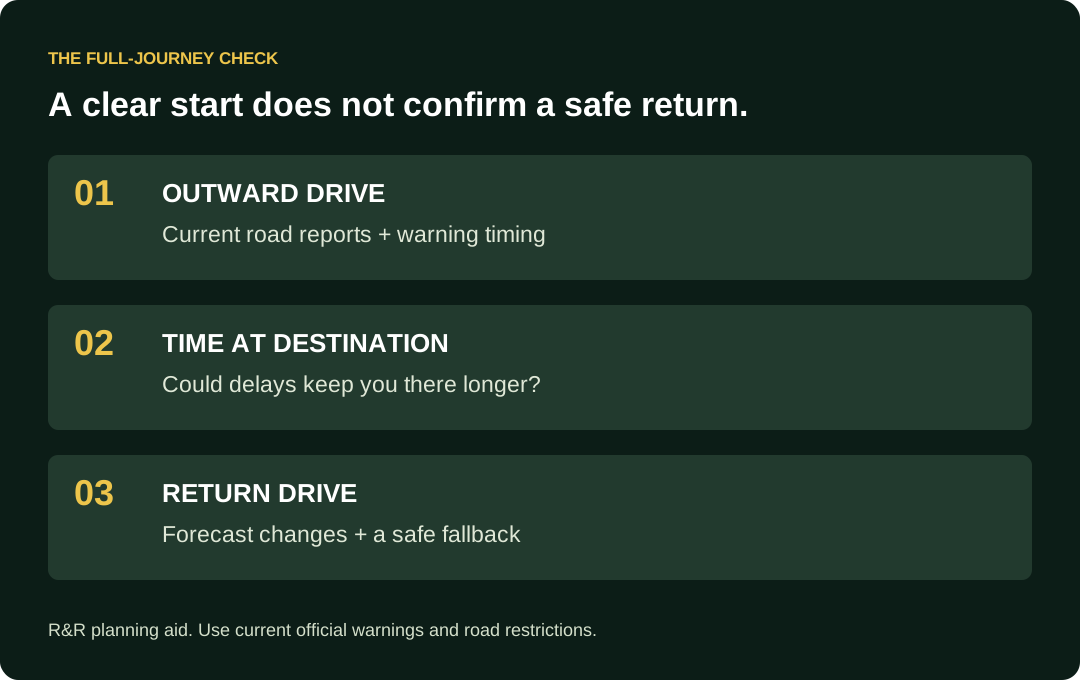
4. Confirm what you will do if the plan fails
Before starting, answer:
- Where can I safely stop if I cannot continue?
- Is the destination open and able to receive me?
- Who knows my route and expected arrival?
- What will I do if the return becomes unsafe?
If the plan depends on “getting through somehow,” it needs another look.
Does AWD or 4WD make it safe to drive?
No. AWD or 4WD does not make driving during a winter storm warning automatically safe.
These systems may help a vehicle accelerate on slippery surfaces. They do not remove the limits of tire grip when you need to stop or turn. Colorado’s transportation department emphasizes the importance of tires for stopping and turning in winter conditions. Colorado DOT tire and traction guidance.
Check the tire and traction requirements for the roads you intend to use. Carrying chains does not mean you know how to fit them, and fitting requirements depend on the vehicle and local rules.
Winter equipment belongs in the preparation decision. It should not become a reason to disregard travel advice.
If travel cannot wait, prepare for a delay
First consider alternatives: a later departure, a remote appointment, staying overnight or coordinating with the organization expecting you.
If you still need to travel and no applicable restriction prevents it, prepare the vehicle before moving:
- Clear snow and ice from the windows, roof, mirrors and lights.
- Check that wipers, defrosters and lights work.
- Check tires and follow the manufacturer’s recommended inflation pressure.
- Have ample fuel or battery charge.
- Put warm clothing, blankets, drinking water, food, necessary medicines, a flashlight and phone-charging equipment within reach.
NHTSA recommends winter vehicle checks and emergency supplies; these preparations help if a journey takes longer than planned.
Share your route and expected arrival with a trusted contact. Tell them when you arrive or if your plan changes.
On the road, slow down, increase following space and avoid abrupt acceleration, braking or steering. Leave cruise control off on snowy roads. Use low-beam headlights in heavy or blowing snow, and give plows room to work. PennDOT winter-driving advice.
There is no single speed that makes every snowy road safe. If you cannot maintain visibility or control, continuing more slowly may still be the wrong decision.
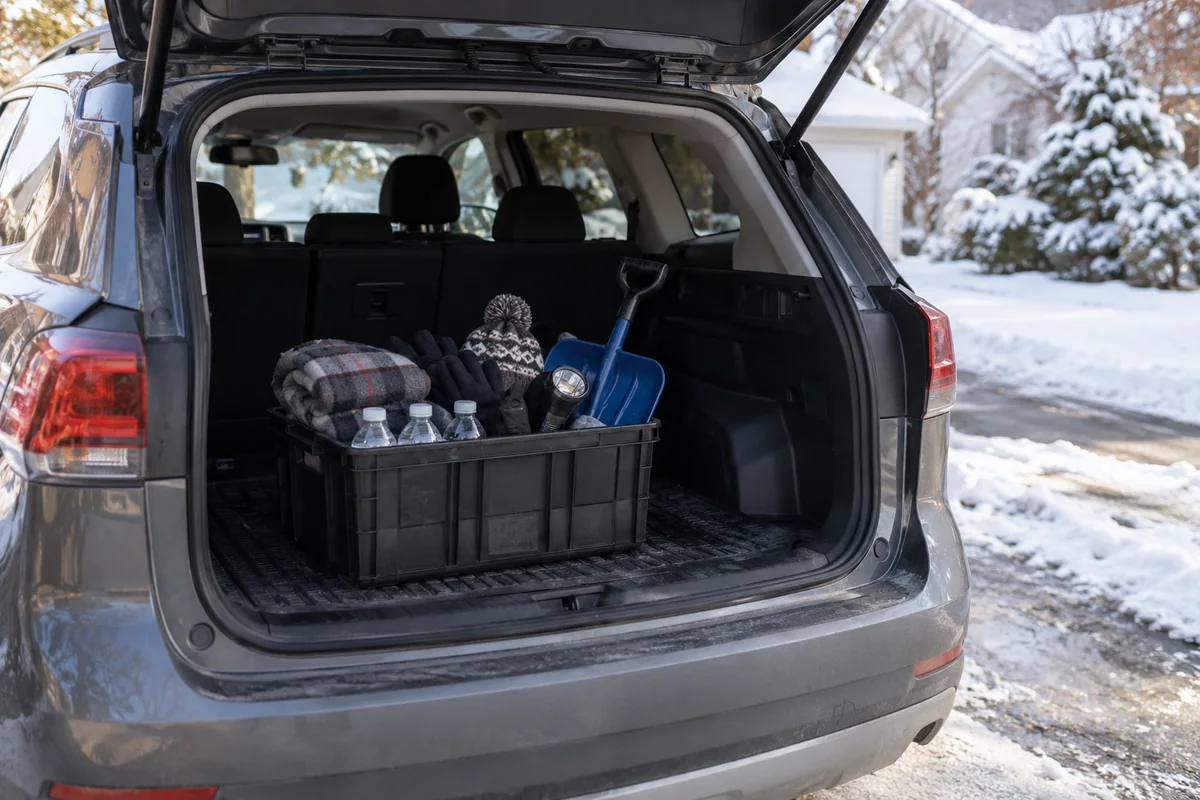
OPTIONAL GEAR / CHECK WHAT YOU ALREADY OWN
Three products worth considering for a winter car kit
These recommendations address clearing the vehicle, a compatible starter-battery problem and warmth during delays. None changes the decision to obey a closure or postpone hazardous travel.
Affiliate disclosure: As an Amazon Associate I earn from qualifying purchases. The buttons below open Amazon model searches (paid links). Check the exact model, seller, options and current price there. We have not hands-on tested these products.
01 / CLEAR THE VEHICLE
Snow Joe SJBLZD snow broom
For clearing snow before a permitted trip
The manufacturer’s guide specifies an 18-inch foam head and a separate ice scraper. This is a practical option if a short scraper cannot reach across your vehicle.
Before buying: Check the exact model, reach and storage length. Use the scraper on appropriate glass surfaces; do not treat “no scratch” marketing as permission to scrape paint.
COMPARE NOW02 / BATTERY BACKUP
NOCO Boost GB40
For a compatible discharged 12-volt starter battery
NOCO rates the GB40 at 1,000 peak amps for 12-volt lead-acid batteries, with engine ratings up to 6.0-liter gasoline or 3.0-liter diesel. Consider it only after checking your vehicle’s instructions.
Before buying: It cannot charge an EV traction battery, fix a mechanical fault or make a frozen battery safe to jump. Follow the unit’s operating, storage and charging temperature limits.
COMPARE NOW03 / PASSIVE WARMTH
Arcturus Military Wool Blanket — Twin
For a substantial blanket kept dry inside the vehicle
Arcturus lists the twin blanket at 64 by 88 inches and about 4.5 pounds. It is worth considering if you have room for a heavier blanket rather than relying only on a thin emergency sheet.
Before buying: Check the size and fiber option on the listing. One blanket is not a complete cold-weather plan or a guarantee against hypothermia. Keep warm layers for each passenger.
COMPARE NOWAlready have suitable equivalents? Keep them. For the rest of the supplies, use our winter emergency car kit checklist rather than buying a prepacked kit just because a warning was issued.
If the weather gets worse while you are driving
Do not wait until you have lost visibility to think about stopping. When conditions deteriorate, seek a safe opportunity to leave the road and reach an appropriate stopping place. Avoid sudden maneuvers.
Snow squalls deserve particular attention because intense snow and wind can cause abrupt whiteout conditions. NOAA recommends delaying travel when squalls are forecast and safely exiting the road at the next opportunity if a warning reaches you while traveling. NOAA snow-squall advice.
Do not stop in a travel lane to check your phone or read a forecast.
If you become stranded
Call 911 if you are in danger. Give your location, direction of travel, vehicle description, number of occupants and any urgent needs.
Generally, stay with the vehicle rather than walking into wind-driven snow. NWS guidance warns that people can quickly become disoriented outside. Follow responders’ instructions, and tell dispatch if the vehicle itself presents an immediate danger. NWS stranded-driver guidance.
Use clothing and blankets for warmth. If you run a combustion engine for heat, follow official stranded-driver guidance: keep the exhaust clear of snow, run the engine intermittently and allow fresh air as directed. A snow-blocked exhaust can cause deadly carbon monoxide buildup. Never run the engine in an enclosed space.
When is it safer to drive after a winter storm?
An expired warning is not confirmation that your route is safe.
Snow or ice can remain after precipitation stops. Melting snow may refreeze into black ice, which can resemble a wet patch. North Carolina’s transportation department cautions that driving can remain dangerous during and after winter weather. NCDOT guidance on black ice.
Before leaving, check that:
- Relevant restrictions and closures have been lifted.
- Official road reports support travel along the route.
- Visibility has improved.
- The forecast does not place you back into worsening conditions.
- Your vehicle and passengers are prepared for remaining delays.
Choose a new departure time based on those checks, not simply the time the warning expires.
BEFORE AN UNAVOIDABLE TRIP
Review these six trip checks
Checkmarks record what you reviewed; they do not certify safe travel. Keep the trip postponed if a restriction or serious hazard prevents it. Checks stay only on this open page.
0 of 6 planning checks reviewed.
Trip / route ____________________
Warning and road reports checked at ____________________
Conditions that cancel the trip ____________________
Safe fallback ____________________
Trusted contact / check-in ____________________
Frequently asked questions
Can I drive to work during a winter storm warning?
Check official travel instructions and contact your employer before leaving. Ask about remote work, a delayed start or accommodation if the return trip becomes unsafe. An employer remaining open does not establish that your route is safe or that your journey is exempt from a restriction.
Is a short drive safer than a long drive?
A short drive reduces distance, but it can still include an icy bridge, steep road or dangerous intersection. PennDOT specifically warns about ice on bridges and ramps. Evaluate the actual route rather than relying on minutes or miles.
Is driving during a winter storm warning illegal?
Check local orders. The NWS weather warning describes a weather hazard; separate authorities may impose road closures or travel restrictions. The rules and exceptions depend on the location and order in force.
Can I drive before the snow starts?
Possibly, but assess the full journey and current official advice. Leaving before precipitation begins does not solve a return trip that overlaps the storm. Do not rush to beat the weather.
What if the road looks only wet?
Do not assume it is free of ice. Black ice can look like a wet surface, and bridges or ramps may be especially hazardous. Check official conditions and postpone unnecessary travel.
Sources
Research method and official references
This AI-assisted guide uses the official weather and transportation guidance below. The example is fictional, and the decision aids are original R&R planning tools. No driving tests, responder credentials or professional review are claimed. Illustrative scenes are generated, not event photographs. Product specifications were checked against manufacturer information on October 27, 2026; Amazon pricing and availability are not tracked on this page.
- National Weather Service: Winter Weather Warnings, Watches and Advisories
- Indiana: Travel Advisories
- New York DOT: Safe Winter Driving; Wisconsin 511 road conditions; Wyoming 511
- NHTSA: Winter Weather Driving Tips
- Colorado DOT: Winter Driving FAQs
- PennDOT: Winter Driving
- NOAA: Four Tips to Keep You Safe During a Snow Squall
- National Weather Service: What to Do If You Are Caught in a Winter Storm
- North Carolina DOT: Driving in Winter Weather
KEEP THE PLAN CONNECTED
If staying put means managing an outage
Resolve the next problem where you are: our power-outage warmth guide covers household heat decisions, while the apartment outage checklist helps organize building contacts and essential needs.