
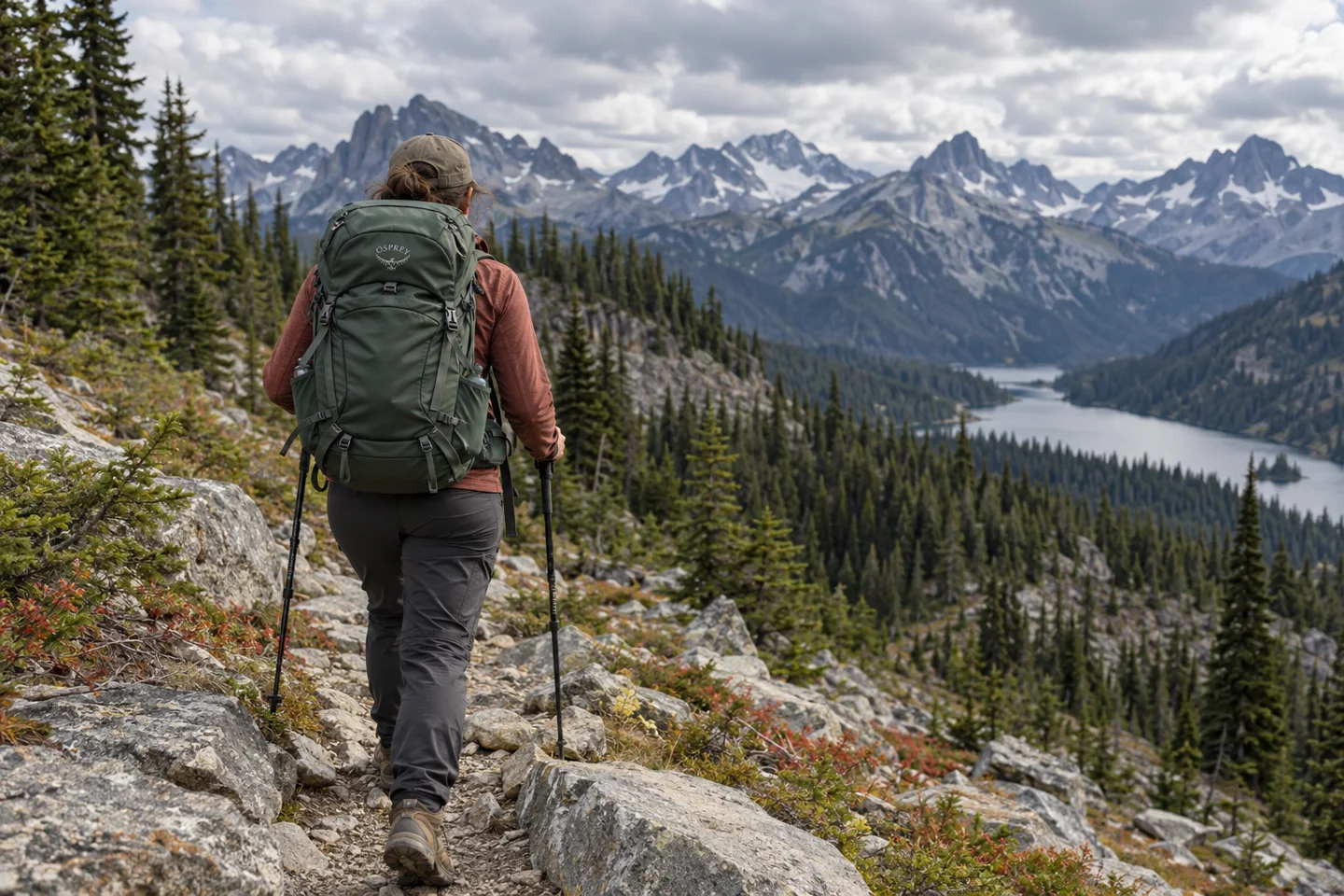
The lightest backpack is an appealing choice until you discover that the rest of the kit was never light. That is why I would compare the Osprey Atmos AG 65 and Exos 58 around the finished load, not simply their empty weights. These are different ways to organize and carry backpacking equipment, even though they come from the same manufacturer.
My shortlist favors the Atmos when access and a fuller feature set drive the decision. The Exos earns consideration when the equipment list is more restrained and reducing the backpack's own weight matters. I would not choose either until the correct size has been fitted with a realistic load.
This is a research-based review using manufacturer specifications checked October 12, 2026. We have not field-tested either pack or measured their comfort. Recommendations reflect original buying analysis, not fabricated trail experience. Our best Osprey backpacks guide compares these with six other packs for different uses.
As an Amazon Associate I earn from qualifying purchases. Buttons open model searches; check the exact generation and size.
Osprey Atmos AG 65 at a glance
ORGANIZED MULTI-DAY LOADS
- Capacity checked
- 65 L · S/M
- Published weight
- 4.613 lb
- Carrying design
- AntiGravity
Reason to shortlist
Side access and included raincover
Tradeoff to consider
Higher empty weight
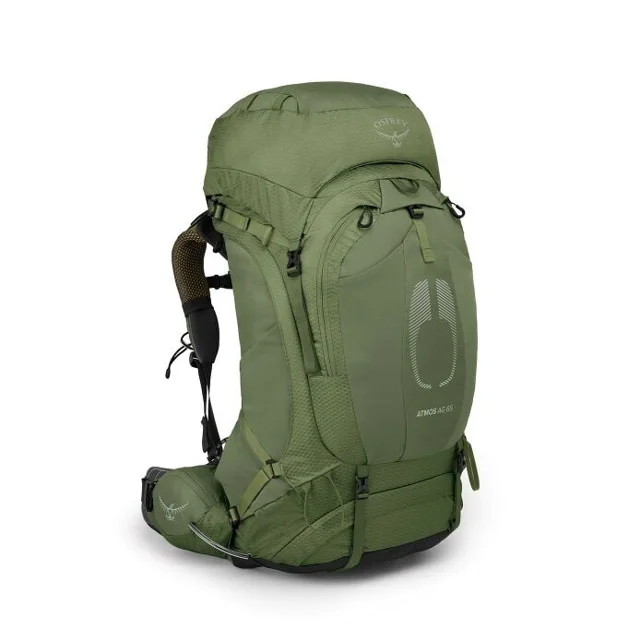
The checked S/M Atmos AG 65 is listed at 65 liters and 4.613 pounds. Osprey gives the model a 30–40-pound load range. Its AntiGravity suspension, side access and included raincover establish the product's feature-rich backpacking role. Check the Atmos AG 65 manufacturer page for the size and generation under consideration.
My reason to shortlist it is organization. When a load contains food, shelter and sleeping equipment, convenient access can influence the daily packing routine. A feature can be worth its weight if it solves an actual problem. The mistake would be deciding that every additional compartment is automatically useful.
I would examine which items need to come out while the rest stay packed. If the answer supports multiple access points and separate organization, the Atmos has a coherent case. If the entire kit is compact and simple, its additional empty weight needs a stronger explanation. The pack should serve the system, not encourage adding equipment merely because the space and attachments are available.
Osprey Exos 58 at a glance
LIGHTER BACKPACKING KITS
- Capacity checked
- 58 L · S/M
- Published weight
- 2.84 lb
- Carrying design
- AirSpeed
Reason to shortlist
Lower specified backpacking weight
Tradeoff to consider
Published load range 30–35 lb
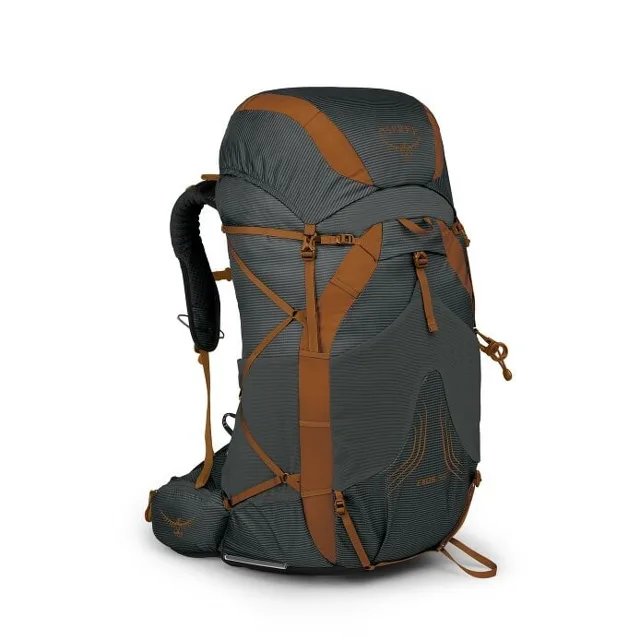
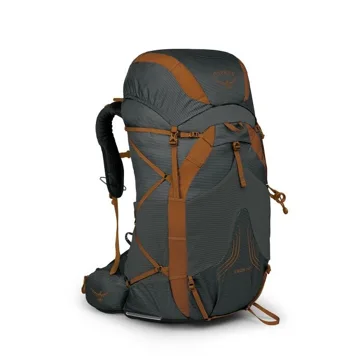
The S/M Exos 58 is listed at 58 liters and 2.84 pounds, with a 30–35-pound manufacturer load range. Its AirSpeed suspension and removable lid belong to a lower-weight backpacking design. The Exos 58 specifications are the reference for this comparison.
I would shortlist it when the contents have already been evaluated carefully. Choosing a lighter bag is more convincing after unnecessary equipment has been removed, rather than before the packing list is known. The empty-weight difference is a measurable specification comparison; personal carrying comfort remains a fitting question.
The Exos's main attraction here is the lower published weight. Its tradeoff is accepting a different access and organization arrangement and a narrower stated load range. I would not treat a lower empty weight as a guarantee that a heavy finished load will feel better. That conclusion requires evidence we do not have, and it may not be the right decision for the particular wearer.
Product comparison
| Buying check | Atmos AG 65, S/M | Exos 58, S/M |
|---|---|---|
| Listed capacity | 65 liters | 58 liters |
| Published empty weight | 4.613 pounds | 2.84 pounds |
| Manufacturer load range | 30–40 pounds | 30–35 pounds |
| Suspension | AntiGravity | AirSpeed |
| Our shortlist reason | Access and organization | Lower backpack empty weight |
| Main tradeoff | More pack weight | Different access and narrower load guidance |
The specified empty-weight difference is 1.773 pounds, approximately 28.4 ounces. That calculation uses the two S/M figures above. It is not a measured trail result or an estimate of how much easier one pack will feel to carry. Larger sizes also change the comparison: Osprey lists the Atmos L/XL at 68 liters and the Exos L/XL at 61 liters.
Atmos versus Exos for a complete backpacking load
The first useful exercise is to assemble the load outside either bag. Include consumables and items strapped externally. I would write down what is required for the actual route, what is optional and what duplicates another item's job. This is where a meaningful pack comparison begins.
Consider a hypothetical kit that is light before water and food are added but becomes considerably heavier at departure. The empty backpack is only part of that total. I would compare the complete departing load with the manufacturer's guidance, rather than judge suitability from a base-weight discussion alone. The range is a buying reference, not a personal comfort promise.
Our camping checklist includes items relevant to beginners, but car-camping comforts should not be transferred blindly into a carried backpacking setup. Make that distinction before choosing capacity. A larger Atmos may fit more equipment, but unused space does not explain why the equipment belongs on the trip.
Access versus fewer packing complications
My preference depends on the unpacking routine. Someone who wants several ways to retrieve equipment can reasonably prioritize the Atmos's access arrangement. Someone who packs a compact, predictable kit may prefer a simpler routine in the Exos. Both approaches can be sensible when they match the contents.
For example, imagine needing a clothing layer while the shelter and food remain packed. Ask where that layer would be stored and how it would be retrieved in each bag. Then repeat the question for items that should remain separated. This exercise assesses the proposed organization; it is not a claim that we performed a timed access test.
The opposite mistake is over-organizing. If you create a separate category for every small object, the packing system can become harder to maintain. I would keep the organization explainable to another person without a lengthy tour. Features help when they reduce the effort of a routine task, not when they turn packing into a puzzle.
Buying guide
Compare the right sizes
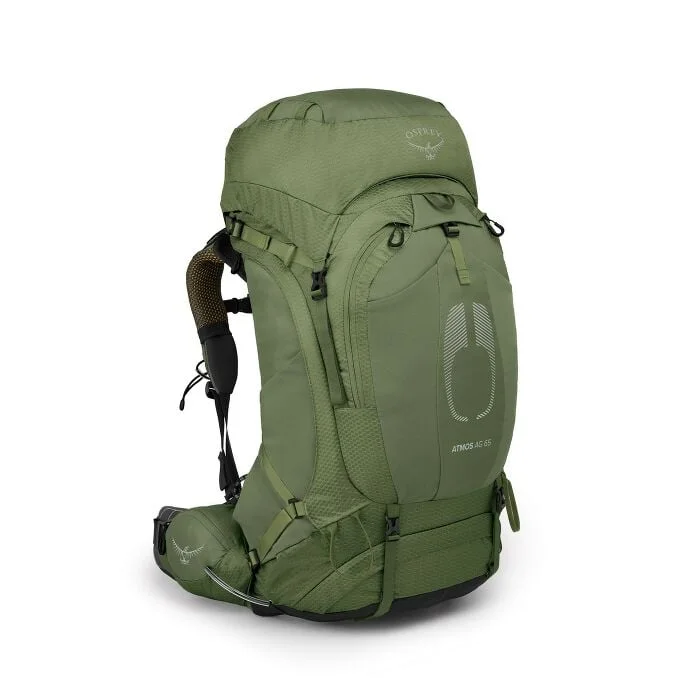
A comparison between Atmos AG 65 and Exos 58 needs more detail than the numbers in their names. Both checked product pages list different capacities for their larger sizes. Start with the torso size that fits, then use that size's figures throughout the buying decision.
I would not select a smaller harness merely to obtain a lighter published weight. That reverses the proper order of the comparison. First establish the viable fit, then evaluate the pack weight, volume and features attached to that fit. A specification advantage has little value if it depends on the wrong size.
Keep a short record of the exact version you are comparing. Include the model, torso-size label, capacity and weight. If a retailer quotes a different figure, check whether it refers to another size or generation. This record makes it easier to compare listings without repeatedly starting the research from scratch.
Put suspension names in context
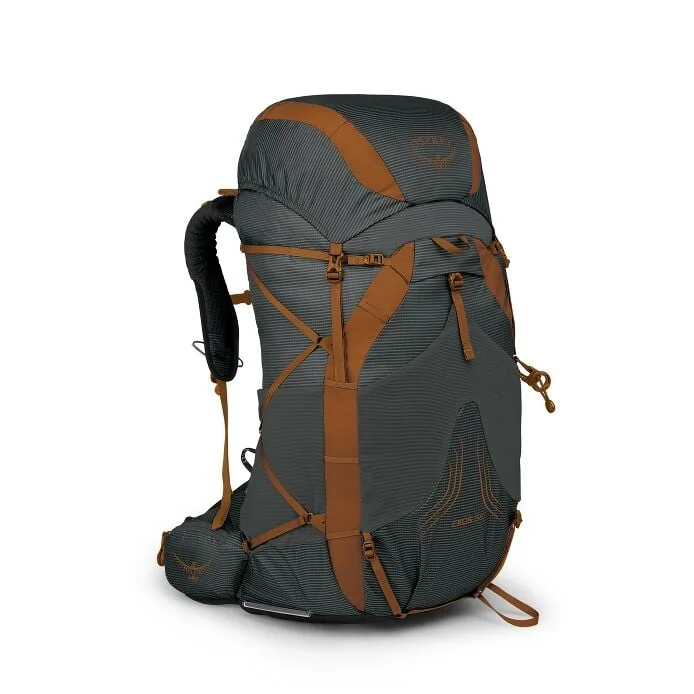
AntiGravity and AirSpeed describe different Osprey suspension arrangements. They are not universal rankings of comfort. I would compare how the actual loaded pack sits, how the hipbelt engages and whether the harness can be adjusted appropriately for the wearer.
The buying question is what the carrying design contributes to your use. Ventilation, movement and load placement all deserve attention, but a specification sheet cannot determine their personal result. A pack that looks impressive in an empty photograph still needs to be assessed with the intended contents.
I would ask a store fitter to explain the adjustment of each candidate instead of assuming the same strap position transfers between designs. That can reveal a simple setup error before you dismiss a pack. Our Osprey sizing guide provides a way to organize those questions without assigning a size from height alone.
Weigh food and water before choosing
Food and water make a packing plan dynamic. The initial load, the amount carried between resupply opportunities and the equipment remaining near the end of the trip are different situations. I would use the largest planned load for the purchasing decision, not the lightest point of an imagined itinerary.
That does not require an elaborate spreadsheet. A list of categories and a measured total can expose an unrealistic assumption quickly. Record what is inside the bag and what is attached outside. Equipment does not stop contributing to the carried load because it is placed on a strap.
If the plan only fits a pack after removing something necessary, revise the plan rather than declare the pack suitable. Equally, remove unused extras before replacing the pack with a larger one. The objective is a realistic equipment system; a backpack cannot correct every decision made earlier in the packing process.
Choose access around changing conditions
The items needed during movement deserve their own access plan. Water, snacks and layers should be placed deliberately. I would compare that plan with each bag's pockets and openings instead of equating more compartments with better organization.
For the Atmos, the case for extra access should be concrete. Identify the thing it allows you to retrieve more conveniently. For the Exos, consider whether a simpler arrangement remains convenient once the kit is fully packed. These are questions the buyer can evaluate directly with their own equipment.
I would also consider what happens when something becomes wet or dirty. Where will it go without interfering with protected equipment? The answer might involve an internal packing barrier or a separate bag, not a different backpack. Do not ask the pack's pocket layout to solve a problem that requires separation of contents.
Match weather protection to the contents
The checked Atmos includes a raincover. That is a feature worth noting when comparing supplied accessories, but it does not establish that every packed item is protected under every condition. I would decide how to protect moisture-sensitive contents independently of the external cover.
For the Exos, check exactly which accessories the retailer supplies and which would need to be bought separately. Avoid relying on a generic image that shows equipment not included in the purchase. A tidy product photograph is useful identification, not a complete packing specification.
The same principle applies to water-treatment equipment. Choose the treatment method for the water risks and instructions relevant to the trip, then plan its storage. Our water-treatment comparison addresses that separate decision. The backpack's capacity and brand cannot establish that a filter is suitable.
Evaluate value without imaginary scores
Current prices vary by seller, size and offer. I would compare the complete purchase cost, the return conditions and the features that actually matter. An invented numerical comfort score would make this decision look more precise without adding evidence.
For a buyer who uses the Atmos's organization regularly, accepting the greater empty weight can be a deliberate tradeoff. For a buyer whose kit is restrained and straightforward, the Exos can make more sense. Neither conclusion requires declaring one product superior for all backpackers.
A reasonable value check includes the likelihood of buying the wrong category. If a pack will mostly be used for occasional travel or ordinary day outings, neither of these large backpacking options should win automatically. Compare the smaller packs in the pillar before committing to features that have little relationship to the main use.
A packing decision I would make before ordering
Write three sentences about the intended trip. The first should describe the equipment and maximum planned load. The second should explain which access features will be used. The third should identify the fit that has actually been checked. If one of those sentences is still an assumption, that is the part of the decision to resolve next.
I find that approach more useful than starting with a winner and collecting reasons to justify it. The Atmos should win your shortlist because its fit and organization match the load. The Exos should win because its lower pack weight and carrying arrangement match a suitable equipment plan. Brand preference alone does not answer either question.
Record the decision on the free backpack buying worksheet. It contains no product links and works offline. Keep the completed sheet alongside your packing list so a later retailer offer can be compared with the original requirements instead of prompting another impulsive decision.
Frequently asked questions
Is the Exos 58 lighter than the Atmos AG 65?
Yes, for the checked S/M versions: 2.84 pounds versus 4.613 pounds. Compare equivalent sizes and generations. The weight difference alone does not establish the more comfortable pack for a particular person or load.
Does the Atmos carry more equipment?
The checked S/M listed capacities are 65 and 58 liters. The Atmos therefore has more stated volume in this comparison. The contents and their shape determine how effectively that volume can be used, and a loaded fitting remains necessary.
Which would I choose for a lighter kit?
I would shortlist the Exos after confirming the full load and suitable fit. Its lower published empty weight is meaningful when the equipment plan supports the choice. I would keep the Atmos in consideration if access and organization justify the additional pack weight.
Are Atmos AG and Atmos AG LT interchangeable names?
No. Check the exact model designation rather than assuming a review of another Atmos variant describes the AG 65 in this article. The same caution applies to different capacities and generations within the Exos family.