
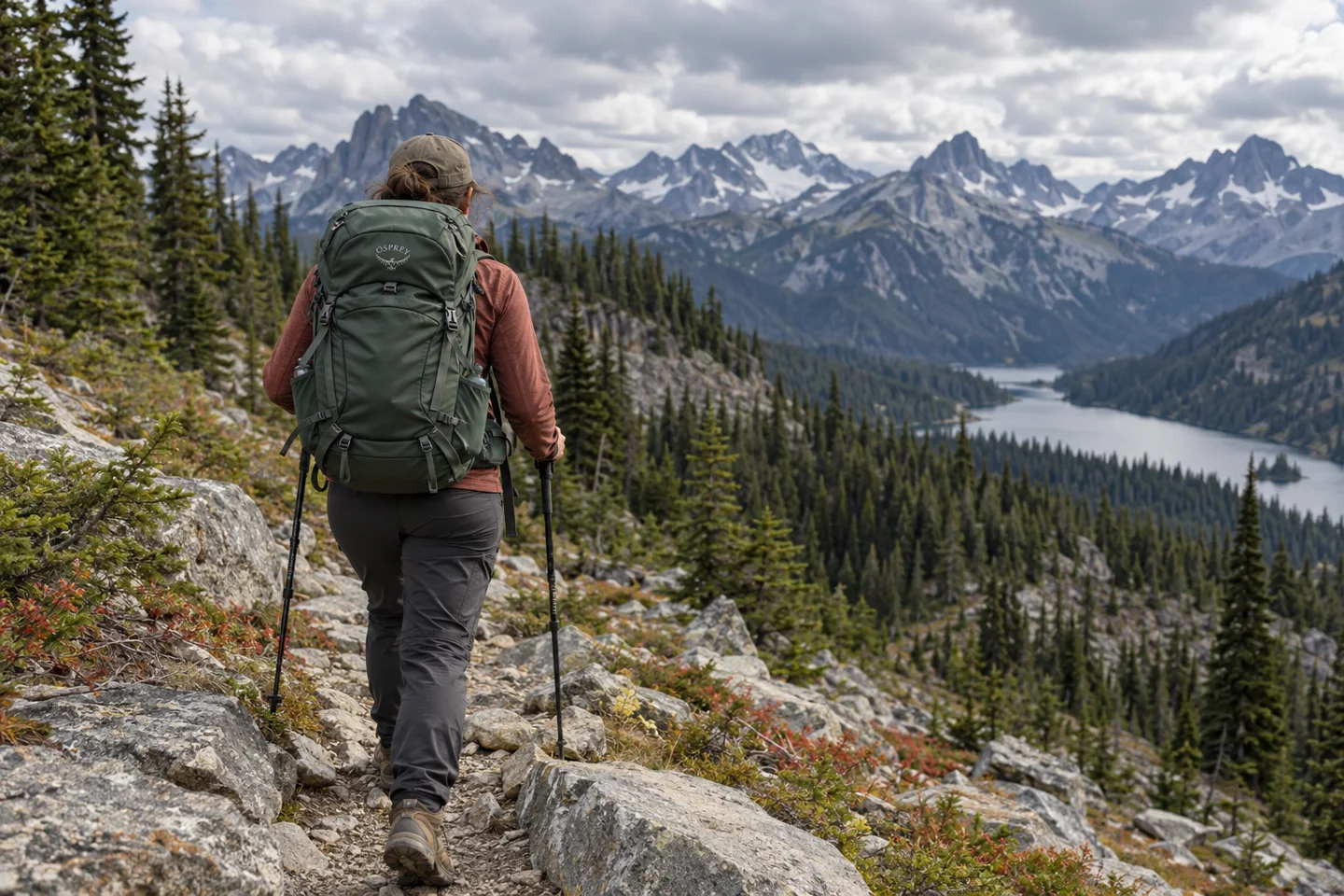
Buying the biggest Osprey backpack can solve the wrong problem. A pack that swallows your gear may still put the weight in the wrong place, make a quick day hike unnecessarily awkward, or give you travel features you never use. I would start with the trip you actually take, then choose the carrying system and capacity that support it.
This review compares eight Osprey backpacks for everyday carry, hiking, backpacking and travel. My shortlist favors the Daylite Plus for mixed daily use, the Talon 22 for active day hikes, and the Atmos AG 65 for organized multi-day loads. Those are research-based choices, not claims that one pack fits every body.
Our method is straightforward. We checked Osprey's U.S. product specifications on October 12, 2026, compared capacity, empty weight, suspension, access and intended use, and separated manufacturer facts from our buying judgments. We have not field-tested these packs. Model generations and sizes matter, so use the linked specification page when comparing a retailer's listing.
As an Amazon Associate I earn from qualifying purchases. Amazon buttons open model searches; compare the listing generation and size.
The best Osprey backpacks at a glance
| Backpack | Our suggested use | Capacity checked | Published empty weight | Main buying check |
|---|---|---|---|---|
| Daylite Plus | Everyday carry and lighter day hikes | 20 L | 1.29 lb | Webbing hipbelt rather than a backpacking support system |
| Daylite | Minimal daily essentials | 13 L | About 1.23 lb | Space for your actual layers and water |
| Talon 22 | Active day hiking | 22 L | 2.38 lb | Close-fitting harness and hipbelt |
| Hikelite 26 | Ventilated day hiking | 26 L | 1.8 lb | Current-generation fit and included raincover |
| Atmos AG 65 | Feature-rich backpacking | 65 L, S/M | 4.613 lb | Loaded fit and a 30–40 lb manufacturer load range |
| Aura AG 65 | Women's-fit backpacking | 65 L, WM/L | 4.597 lb | Torso and hipbelt shape, not just the label |
| Exos 58 | Lighter backpacking setups | 58 L, S/M | 2.84 lb | Complete load within the 30–35 lb published range |
| Farpoint 40 | Travel with walking transfers | 40 L | 3.27 lb | Airline dimensions and the exact model generation |
These weights describe the versions linked below, not every pack sold under the same family name. Larger Atmos and Exos sizes have different capacities. Compare a fully packed bag rather than choosing from empty weight alone.
Published backpack weights compared
Manufacturer figures for the sizes in our table. Lower weight does not mean better fit or greater carrying ability.
Different capacities and uses are shown together for reference. These are not measured test results or performance scores.
Osprey Daylite Plus for everyday carry and lighter hikes
OUR SHORTLIST · EVERYDAY VERSATILITY
- Capacity checked
- 20 L
- Published weight
- 1.29 lb
- Carrying design
- Webbing hipbelt
Reasons to shortlist
Versatile organization
Tradeoff to consider
Simple hipbelt support
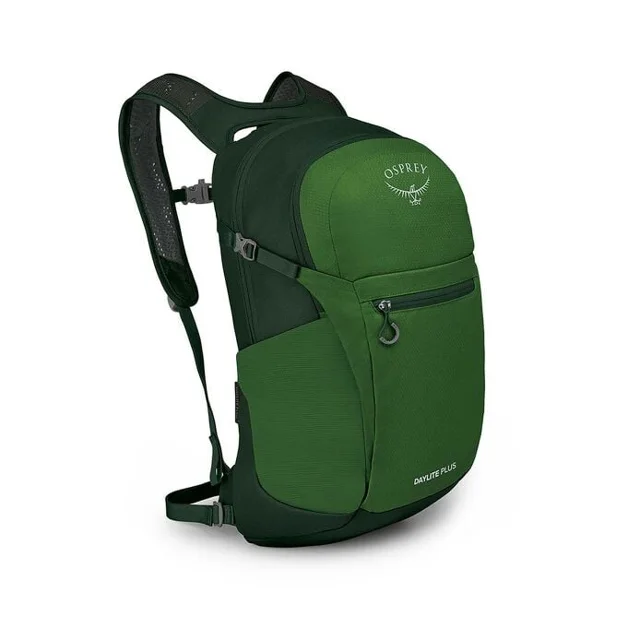
The Daylite Plus is my first shortlist option when the backpack has to earn its place Monday through Sunday. Its 20-liter compartment provides room for ordinary carry and a restrained hiking kit without jumping straight to an overnight pack. The front shove-it pocket adds a useful place for an extra layer, while separate organization helps keep small items from drifting to the bottom.
Osprey lists a 1.29-pound empty weight, bottle pockets, a multifunctional interior sleeve and a removable webbing hipbelt. The sleeve fits most 14-inch laptops according to the manufacturer, but I would check the actual device dimensions instead of treating screen size as a guarantee. See the Daylite Plus specifications.
My reason to choose it is versatility, not maximum support. A webbing belt can stabilize a small pack, but it is a different proposition from the framed backpacking designs later in this list. If your day-hiking load keeps getting heavier, the Talon or Hikelite deserves a fitting before you buy. If daily errands and short outings dominate, the Plus makes a more coherent starting point than a 65-liter expedition-shaped purchase.
Strengths are accessible organization and a useful middle-size capacity. The tradeoff is a simpler carrying system. Pack your beginner day-hike essentials first to see whether this category meets your needs.
Osprey Daylite for a smaller everyday load
OUR SHORTLIST · MINIMAL DAILY ESSENTIALS
- Capacity checked
- 13 L
- Published weight
- About 1.23 lb
- Carrying design
- Compact daypack
Reasons to shortlist
Small everyday packing footprint
Tradeoff to consider
Limited space for extra layers
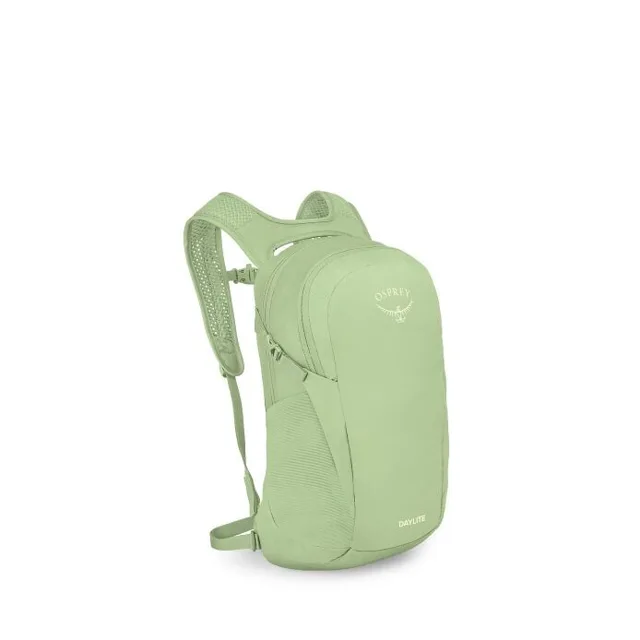
Thirteen liters forces a useful question. Are you carrying what the outing needs, or filling whatever bag happens to be available? The regular Daylite is the smaller choice here, with Osprey listing roughly 1.23 pounds of empty weight and a 13-liter capacity. Its role is compact everyday carry rather than a complete backpacking system. Check the Daylite product page for the configuration being sold.
I would shortlist it for someone who already knows their small kit fits. That could mean a local walk, a travel excursion, or daily essentials with limited spare clothing. The attraction is a contained packing space; the drawback is that an extra insulated layer or additional water may use that space quickly. Buying small only works when the packing list is small too.
Between the Daylite and Daylite Plus, I would make the decision on volume before appearance. The Plus offers seven more liters of stated capacity. That difference does not mean seven liters of useful space for every arrangement, but it is substantial enough to test with your normal contents. For winter layers or changing plans, I would lean toward the Plus. For a consistently minimal load, the regular Daylite avoids buying capacity simply because it is available.
Osprey Talon 22 for active day hiking
OUR SHORTLIST · ACTIVE DAY HIKES
- Capacity checked
- 22 L
- Published weight
- 2.38 lb
- Carrying design
- AirScape
Reasons to shortlist
Trail-focused harness and pockets
Tradeoff to consider
Heavier than simpler daypacks
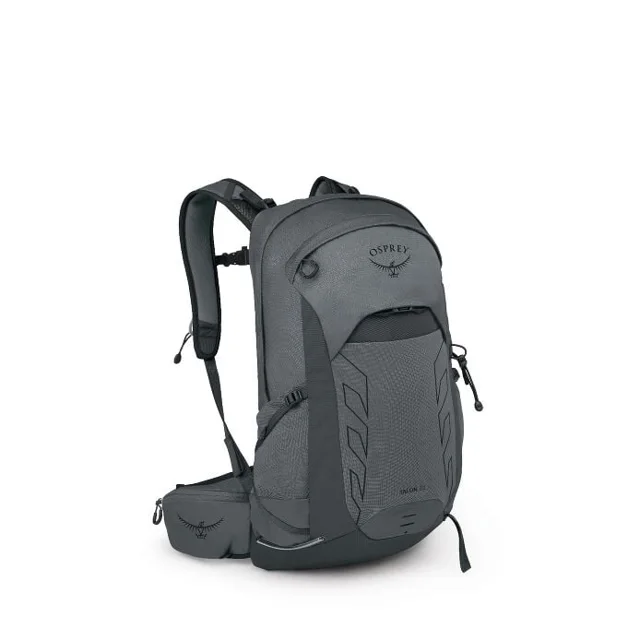
The Talon 22 belongs on the shortlist when the backpack needs to move with the wearer rather than function mainly as a daily organizer. The checked model uses Osprey's close-to-body AirScape backpanel, an adjustable harness, and a continuous-wrap hipbelt. Its 22-liter capacity and published 2.38-pound weight put it in a different design category from the lighter, simpler Daylite Plus.
The Talon 22 specifications list a 10–30-pound load range, hipbelt pockets, a hydration sleeve, trekking-pole attachment and a helmet attachment. Those features give the comparison substance, but they do not establish personal comfort. I would evaluate whether you can reach the pockets, turn your upper body and tighten the belt without the pack shifting awkwardly.
My buying judgment is that the Talon makes sense when trail use drives the purchase. I would not pay for its attachments just to transport a laptop between rooms. Conversely, a hiker who needs structured support and accessible small items should not dismiss it because the Plus is lighter on paper.
The advantage is a trail-focused carrying arrangement. The compromise is additional empty weight and features that some users will not need. Match the exact generation before comparing weights from older reviews; a familiar model name does not prove an unchanged pack.
Osprey Hikelite 26 for ventilation and extra day-hike space
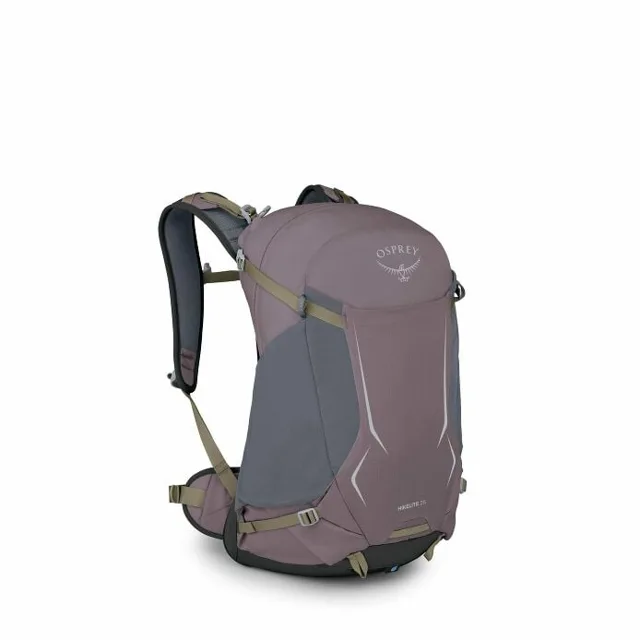
OUR SHORTLIST · VENTILATED DAY HIKES
- Capacity checked
- 26 L
- Published weight
- 1.8 lb
- Carrying design
- AirSpeed
Reasons to shortlist
Raincover and suspended mesh
Tradeoff to consider
Published load range 5–20 lb
The Hikelite 26 offers a different route through the daypack decision. The current U.S. version lists 26 liters, a 1.8-pound empty weight and a 5–20-pound load range. Its AirSpeed suspension uses a tensioned mesh backpanel, and the pack includes a raincover. Those are the specific reasons I would put it beside the Talon during a store fitting.
The current Hikelite 26 page also identifies a front shove-it pocket, side pockets and padded hipwings. I would choose between it and the Talon by loaded fit and access rather than declaring one suspension universally superior. One emphasizes a suspended mesh arrangement; the other has a closer-fitting backpanel design.
For somebody carrying extra layers on longer day outings, its larger listed capacity is relevant. The limit is equally important: more liters do not cancel the manufacturer's lower stated load range. If you routinely carry a heavy family load, a larger-volume daypack is not automatically the right solution.
This is also where generation checking matters most. Older Hikelite listings can show different weights, dimensions and belt arrangements. Make sure the retailer's photographs and specification sheet describe the version you intend to buy. A raincover is useful weather protection, but I would still protect sensitive contents separately rather than assume the whole packed system is waterproof.
Osprey Atmos AG 65 for organized multi-day backpacking
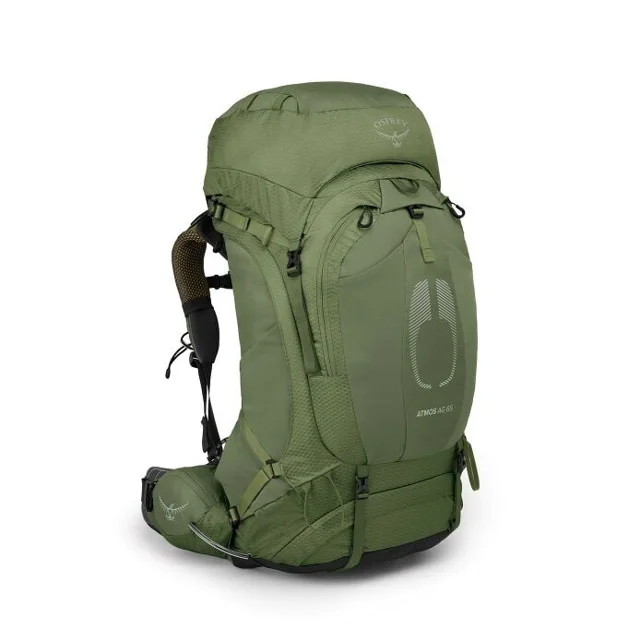
OUR SHORTLIST · ORGANIZED MULTI-DAY LOADS
- Capacity checked
- 65 L · S/M
- Published weight
- 4.613 lb
- Carrying design
- AntiGravity
Reasons to shortlist
Side access and included raincover
Tradeoff to consider
Higher empty weight
Once food, shelter and sleeping equipment enter the packing list, the Atmos AG 65 becomes a much more relevant comparison. Osprey lists 65 liters and 4.613 pounds for S/M, with a 30–40-pound load range. Its AntiGravity suspension, adjustable fit components, included raincover and side access explain why I would shortlist it for an organized multi-day setup.
The Atmos AG 65 specification page identifies a separate sleeping-bag compartment, hipbelt pockets and removable sleeping-pad straps. My preference here is access: being able to organize the load can matter more than shaving a small amount from the bag itself when your equipment is already substantial.
The compromise is clear before purchase. The S/M Atmos weighs about 1.77 pounds more than the S/M Exos 58 in the checked specifications. That is a calculation from their published empty weights, not a measured trail result. I would accept that difference only if the loaded fit and features justify it for the actual trip.
Do not treat 65 liters as permission to keep adding equipment. Start with our camping checklist, separate car-camping extras from carried equipment, and weigh the finished load. The larger L/XL Atmos is listed at 68 liters, another reason to compare the size rather than the model name alone.
Osprey Aura AG 65 for women's-fit backpacking
OUR SHORTLIST · WOMEN’S-FIT BACKPACKING
- Capacity checked
- 65 L · WM/L
- Published weight
- 4.597 lb
- Carrying design
- AntiGravity
Reasons to shortlist
Adjustable fit and organization
Tradeoff to consider
Substantial empty weight
The Aura AG 65 provides a women's-specific fit within the same feature-rich backpacking category. The checked WM/L version lists 65 liters and 4.597 pounds; WXS/S is listed at 62 liters. Osprey gives the family a 30–40-pound load range and includes AntiGravity suspension, a raincover, side access and adjustable harness and hipbelt components.
I would put fit ahead of the product label. Shoulder shape, torso length and hipbelt position determine whether the pack suits the wearer. The Aura AG 65 specifications make it possible to compare the correct size, but a loaded fitting remains the decisive step.
My reason to shortlist the Aura is the combination of backpacking organization and its specific fit options. The downside is the same general tradeoff as the Atmos: this is a substantial pack before food and water are added. Someone with a compact, lighter kit may prefer a different category altogether.
I would resist choosing Atmos versus Aura as if this were a contest with a universal winner. Try the appropriate sizes, check whether the belt grips without reaching its adjustment limit, and notice where the shoulder straps contact the body. The better pack is the one that fits your load and your shape, not the one whose name appears first in a ranking.
Osprey Exos 58 for a lighter backpacking setup
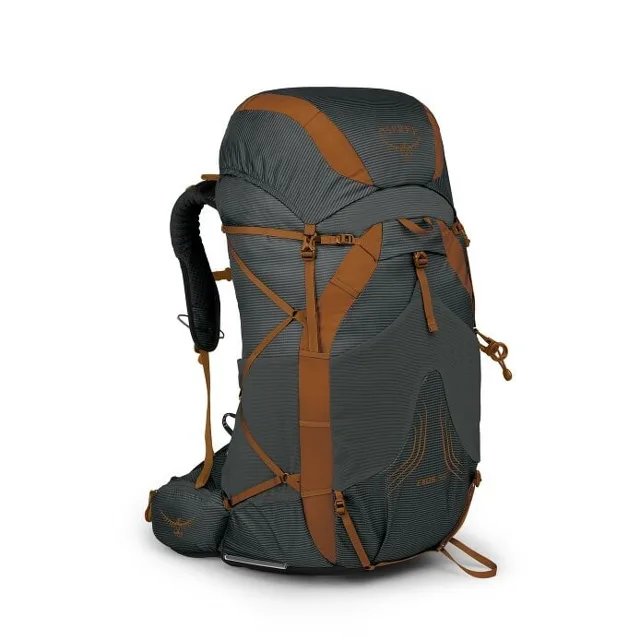
OUR SHORTLIST · LIGHTER BACKPACKING KITS
- Capacity checked
- 58 L · S/M
- Published weight
- 2.84 lb
- Carrying design
- AirSpeed
Reasons to shortlist
Lower specified backpacking weight
Tradeoff to consider
Published load range 30–35 lb
The Exos 58 is the pack I would investigate when the equipment list is already disciplined. Osprey lists 58 liters and 2.84 pounds for S/M, with a 30–35-pound load range. The L/XL version has 61 liters. Its AirSpeed suspension, removable lid and hipbelt pockets offer a framed backpacking arrangement without the Atmos's published empty weight.
That lighter starting point is meaningful, but it does not fix an overloaded kit. The Exos 58 specifications support a comparison built around the complete load. I would include food, water and everything attached outside before deciding that a lighter pack is appropriate.
The strength is a lower published empty weight with backpacking features retained. The compromise is a narrower stated load range than the Atmos and a different organization arrangement. If you prefer several access points and routinely carry the fuller end of the load range, saving bag weight may not be your most important priority.
For lighter trips, I would compare the Exos against what you actually need rather than against an imaginary perfect ultralight setup. Keep water treatment realistic with our water filter versus purifier guide, and remove duplicated equipment before changing the backpack. Reducing unnecessary contents helps every carrying system.
Osprey Farpoint 40 for travel and walking transfers
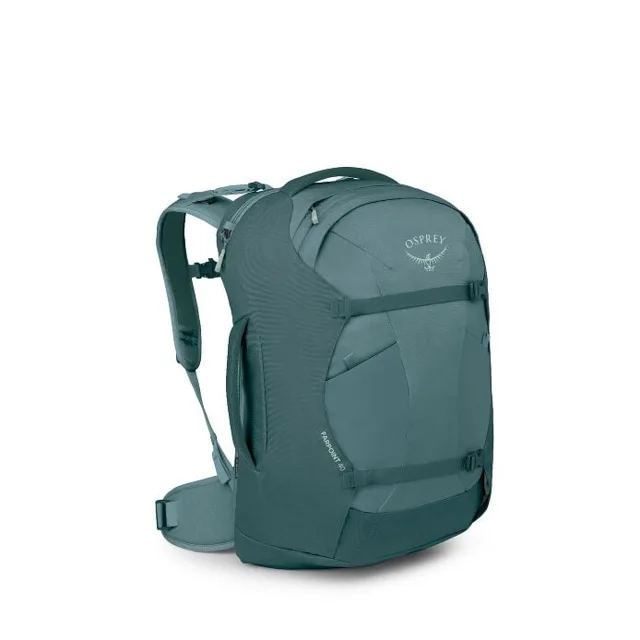
OUR SHORTLIST · TRAVEL AND WALKING TRANSFERS
- Capacity checked
- 40 L
- Published weight
- 3.27 lb
- Carrying design
- Stowaway harness
Reasons to shortlist
Panel access and travel organization
Tradeoff to consider
Check airline and generation
The Farpoint 40 solves a travel problem that the hiking packs do not prioritize. The current U.S. product page lists 40 liters, 3.27 pounds, panel access, a stowaway harness and hipbelt, and a sleeve fitting most laptops up to 16 inches. The dimensions are 21.7 by 13.8 by 9.1 inches. Check the Farpoint 40 specifications against the exact retailer version.
I would shortlist it for airport, rail and accommodation transfers where luggage-style access earns its keep. Unpacking clothing from a front panel is a different job from managing a backpacking load around shelter and food. Its stronger case is travel organization, not being the automatic choice for every 40-liter outdoor trip.
Osprey describes the pack as meeting domestic carry-on requirements, but airlines set their own limits. Compare dimensions, weight rules and your fare before travel. I would also check the laptop pocket with the actual device; older Farpoint generations differ from the current listed configuration.
The advantage is accessible travel packing with a stowable carrying system. The tradeoff is that travel-focused features may add little to a hiking-only kit. For an evacuation plan involving transport rather than days on foot, that distinction can be useful. Build the contents from our bug-out bag checklist instead of assuming a particular capacity makes the bag emergency-ready.
Osprey backpack product comparison
Compare all eight packs side by side. Scroll horizontally to see every model; use the product names to return to each review.
| Buying check | 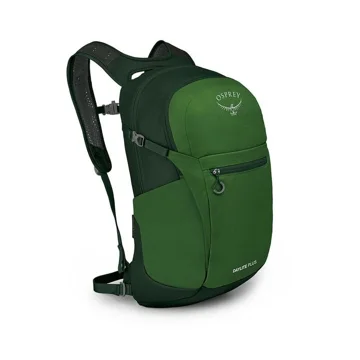 Osprey Daylite Plus Osprey Daylite Plus | 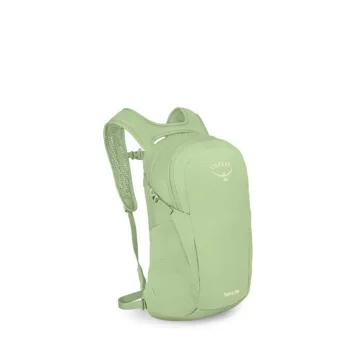 Osprey Daylite Osprey Daylite | 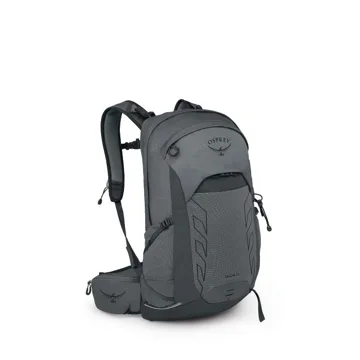 Osprey Talon 22 Osprey Talon 22 | 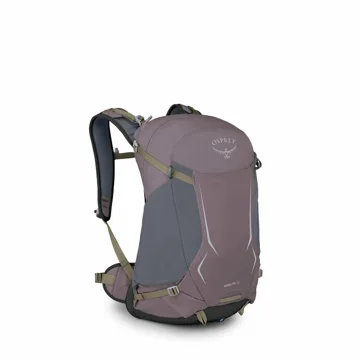 Osprey Hikelite 26 Osprey Hikelite 26 | 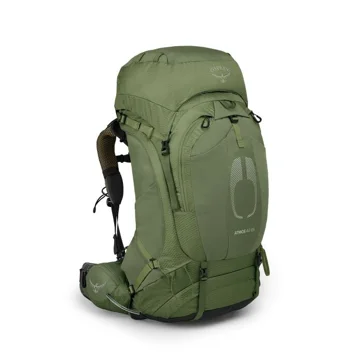 Osprey Atmos AG 65 Osprey Atmos AG 65 | 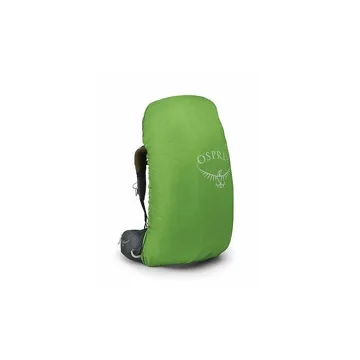 Osprey Aura AG 65 Osprey Aura AG 65 | 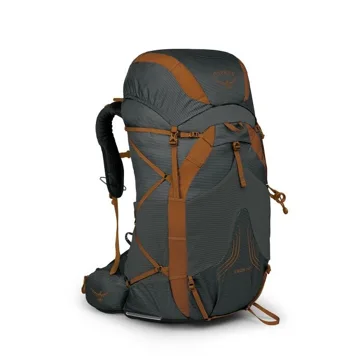 Osprey Exos 58 Osprey Exos 58 | 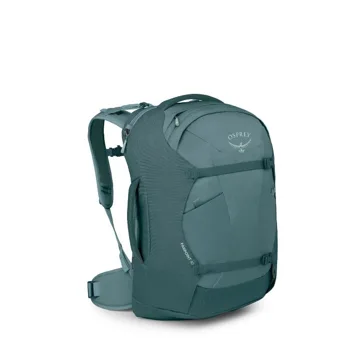 Osprey Farpoint 40 Osprey Farpoint 40 |
|---|---|---|---|---|---|---|---|---|
| Best fit for | Everyday versatility | Minimal daily essentials | Active day hikes | Ventilated day hikes | Organized multi-day loads | Women’s-fit backpacking | Lighter backpacking kits | Travel and walking transfers |
| Capacity checked | 20 L | 13 L | 22 L | 26 L | 65 L · S/M | 65 L · WM/L | 58 L · S/M | 40 L |
| Published empty weight | 1.29 lb | About 1.23 lb | 2.38 lb | 1.8 lb | 4.613 lb | 4.597 lb | 2.84 lb | 3.27 lb |
| Carrying design | Webbing hipbelt | Compact daypack | AirScape | AirSpeed | AntiGravity | AntiGravity | AirSpeed | Stowaway harness |
| Main strength | Versatile organization | Small everyday packing footprint | Trail-focused harness and pockets | Raincover and suspended mesh | Side access and included raincover | Adjustable fit and organization | Lower specified backpacking weight | Panel access and travel organization |
| Main tradeoff | Simple hipbelt support | Limited space for extra layers | Heavier than simpler daypacks | Published load range 5–20 lb | Higher empty weight | Substantial empty weight | Published load range 30–35 lb | Check airline and generation |
How I would choose between these Osprey backpacks
First, lay out the contents. Daily essentials suggest the Daylite family; a walking day with additional layers points toward Talon or Hikelite; carried sleeping equipment brings Atmos, Aura and Exos into the conversation. Travel organization points toward Farpoint. This avoids buying a category and then inventing a use for it.
Next, measure torso length and check hipbelt fit. REI's backpack fitting guide explains why overall height is not the right sizing shortcut. Try the pack with a realistic load, use its adjustment instructions, and assess movement and access. I would repeat the fitting with the size beside it when the adjustment sits near an endpoint.
Finally, check the return policy and the listing generation. Photographs, capacity, weight and included accessories should tell a consistent story. A discount on an older version can be reasonable, but only when you know what differs. I would rather buy the appropriate simpler pack than a premium model with an impressive name and an uncomfortable loaded fit.
Buying guide for Osprey hiking and travel backpacks
Choose capacity from your equipment, not a trip label
My first buying rule is to stop treating liters as a score. A 65-liter backpack is not automatically better than a 22-liter hiking daypack. Capacity describes available packing volume; your contents determine whether that volume is useful. Put water, food, rainwear, an insulating layer and the remaining essentials together before deciding which range belongs on your shortlist.
For overnight trips, add the actual shelter and sleeping system. Bulky equipment can change the decision even when its weight seems modest. For travel, lay out clothing and electronics rather than borrowing a backpacking capacity recommendation. I prefer a bag that holds the planned kit without requiring delicate packing gymnastics every morning. Equally, unused space should not become an invitation to carry things with no purpose.
Understand AirScape, AirSpeed and AntiGravity
The suspension names can make shopping feel more complicated than it needs to be. In this shortlist, Talon uses the closer-fitting AirScape arrangement. Hikelite and Exos use AirSpeed suspended mesh, while Atmos and Aura use AntiGravity suspension. These names identify construction choices; they are not independent test scores or guarantees of comfort.
I focus on what the arrangement asks me to evaluate. With a close-fitting pack, check movement and where the backpanel contacts the body. With suspended mesh, check how the loaded bag sits behind you and whether the belt and harness fit together. Ventilation is worth considering, but I would not sacrifice a secure fit merely to get a particular suspension name. The actual load changes the decision more than a marketing term.
Measure torso length and check the hipbelt
Height is a poor shortcut for backpack sizing. Two people of similar height can need different harness adjustments. Use the manufacturer's torso-measuring instructions and size chart, then try the appropriate pack with the belt positioned correctly. A hipbelt that reaches the end of its adjustment before gripping securely is a reason to reconsider the size or model.
For a store fitting, take time to check the shoulder contact and load-lifter arrangement using the pack instructions. Walk, reach for a bottle and turn as you would on a trail. I want the fitting to answer ordinary questions, not merely prove the buckle closes. This is especially important when comparing Atmos and Aura: the correct harness shape matters more than assigning a product label to yourself.
Compare weight without losing sight of load
Empty weight is useful because you carry the bag before adding anything else. But a published weight comparison needs matched sizes and generations. The Atmos S/M and Exos S/M figures in this article are comparable specified versions, while their larger sizes have different volumes. A weight copied from an older review may refer to a different product.
My approach is to weigh the finished contents, including water and attached accessories, and compare that figure with the manufacturer's load guidance. A light bag cannot make excessive supplies disappear. If the load already pushes a pack's stated range, remove unnecessary contents or compare a carrying system suited to that load. Do not buy first and hope the weight calculation works afterward.
Check access, hydration and organization
Pocket arrangements should match how you use the pack. An everyday backpack benefits from keeping keys and devices easy to retrieve. A day-hiking bag needs a sensible place for water and changing layers. A backpacking pack may benefit from separate sleeping-equipment access. Travel panel loading is useful when packing clothing, but that alone does not make Farpoint the right hiking pack.
Hydration compatibility also deserves a careful listing check. A sleeve and hose-routing arrangement do not establish that a reservoir is included. Compare the accessory requirements before paying, and check whether your bottles suit the side pockets. I would rather identify these small mismatches at home or in a store than discover them while trying to leave for a trip.
Buy the right generation and protect the contents
The name on the listing is only the beginning. Check photographs, product code, stated weight, capacity and included accessories against the manufacturer's page. This matters for the refreshed Hikelite and Farpoint designs, as well as packs sold in multiple torso sizes. An older model can still be suitable; the problem is accidentally buying a different specification than the one you compared.
Read the retailer's return conditions before doing a loaded fitting. For carry-on travel, check your airline and fare rules directly. For wet weather, separate external rain protection from protection of sensitive contents. I treat electronics, spare clothing and sleeping equipment as items requiring their own packing decisions. The goal is a complete usable system, not a backpack that looks persuasive in a product photograph.
Questions before buying
Is the Daylite Plus better than the Daylite?
For a larger everyday kit, I would shortlist the 20-liter Plus. For a consistently minimal load, the 13-liter Daylite may be sufficient. The extra capacity is useful only if your contents need it.
Which Osprey backpack suits overnight hiking?
Atmos, Aura and Exos are the backpacking options in this comparison. Pick by torso fit, equipment volume and complete load. A daypack is not an equivalent substitute just because you can strap equipment outside.
Are these backpacks waterproof?
Do not infer waterproof construction from a water-repellent treatment or included raincover. Check the exact pack instructions and protect moisture-sensitive equipment with an appropriate internal barrier.
Which pack would I shortlist first?
Daylite Plus for mixed daily use, Talon 22 for active day hiking, and Atmos or Aura for organized backpacking. Exos deserves a place when the carried kit is lighter; Farpoint belongs in a travel-focused comparison. Start with the use, then let fit make the final decision.