The best home safe for emergency cash and important documents is the one that protects against your actual risks and still lets the right person retrieve the contents. A keyhole does not establish burglary resistance. A fire rating does not establish flood protection. A large outside cabinet does not tell you whether a legal-size document fits inside.
For mixed household fire and water concerns, start with the SentrySafe SFW123GDC, subject to the installation caveat below. For a smaller collection, compare the CHW30220 chest. For cash storage where a stated physical-attack rating matters, investigate the American Security BF1512 with a qualified dealer. These are best-fit recommendations among seven researched models, not results from destructive testing.
A safe complements an access plan. Use our emergency cash guide and calculator to decide what reserve serves your household, and the bank-account access guide to handle an outage or restriction. A safe cannot make a pending transfer settle or restore a failed banking app.
Best home safes at a glance
As an Amazon Associate I earn from qualifying purchases. Amazon buttons open exact-model U.S. searches, not verified live offers. Check the model, seller, lock configuration and delivery terms. Our recommendations are based on documented suitability, not commission rates.
MIXED FIRE + WATER NEEDS
SentrySafe SFW123GDC
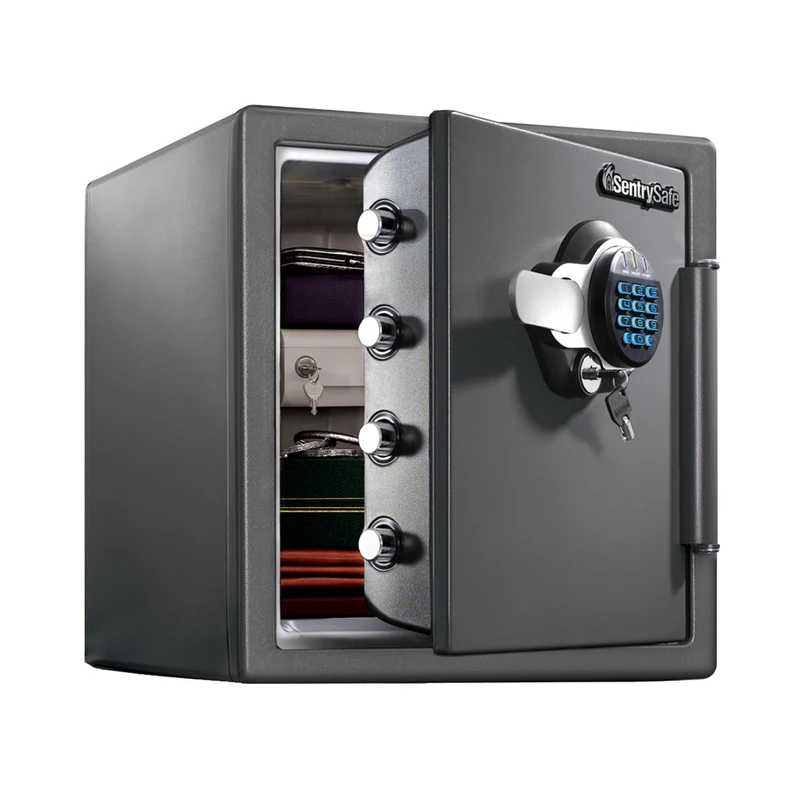
Our starting pick for mixed fire and water protection
CHECK AMAZON OPTIONSSMALL DOCUMENT COLLECTION
SentrySafe CHW30220
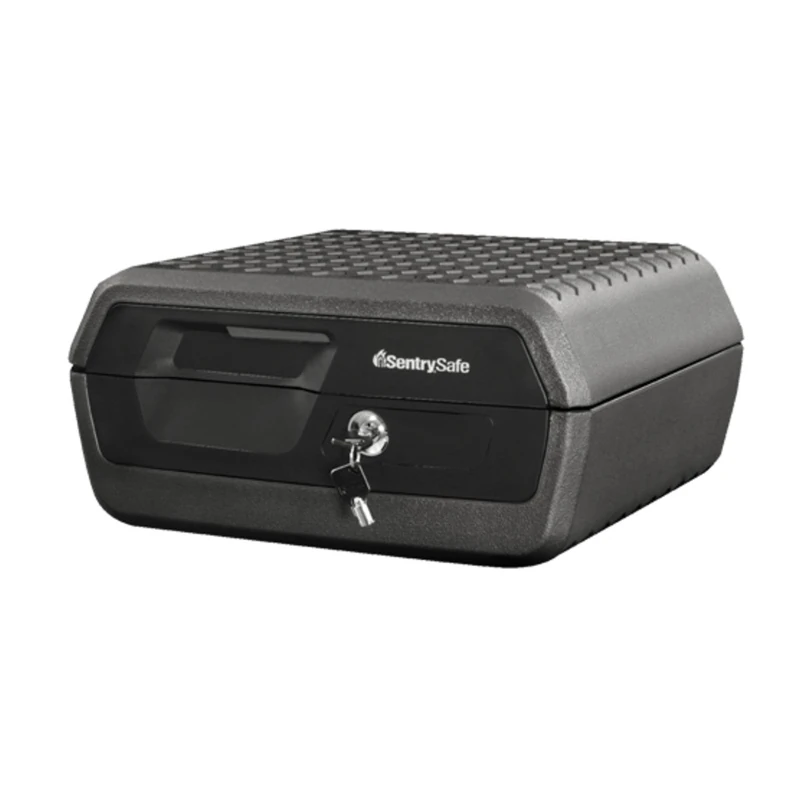
Compact chest for a smaller document set
CHECK AMAZON OPTIONSSTATED ATTACK RATING
American Security BF1512
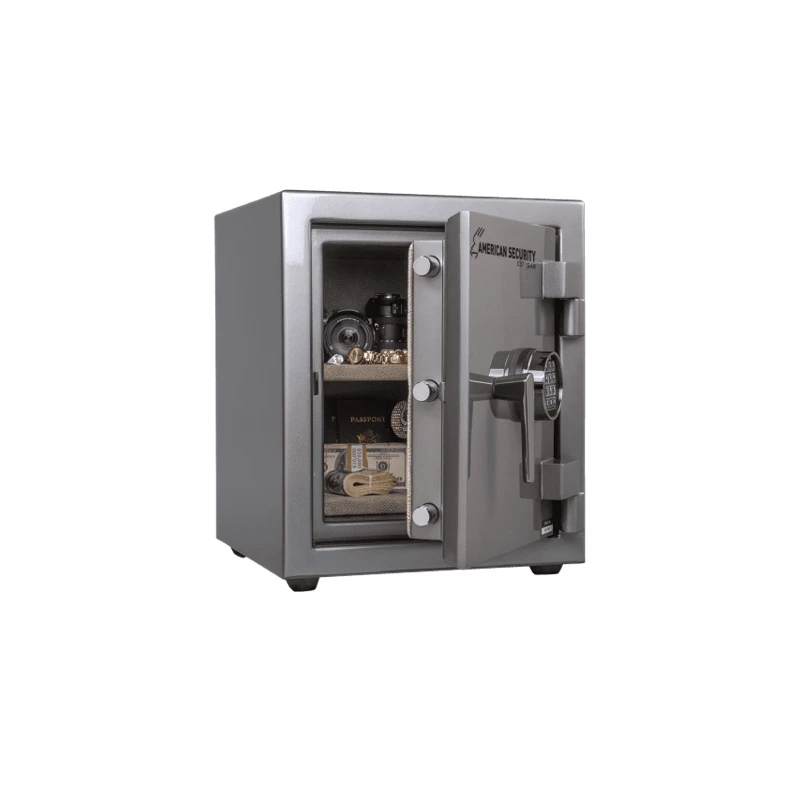
For buyers who prioritize a stated burglary-resistance rating
CHECK AMAZON OPTIONSSee all seven models or jump to the full specification comparison.
How we chose these safes
We checked manufacturer product pages, model-specific manuals and published security-rating guidance. We prioritized clearly stated protection, dimensions, lock requirements and installation constraints. We did not invent test scores, customer-survey results or personal ownership experience. No fire, flood or forced-entry tests were conducted by R&R.
There are deliberately different product types here: three document chests, compact and larger cabinet safes, and an explicitly RSC-rated security step-up. The two SentrySafe cabinet variants answer a real lock-choice question rather than pretending that changing a keypad to a dial produces a completely different protection category. Missing or conflicting specifications stay visible.
WATCH / ORIGINAL COMPARISON
Which protection are you buying?
Our narrated comparison explains the seven buying cases and the limits that matter before ordering.
Read the video transcript
A home safe needs to match the problem. Fire, water and theft are different risks. A large cabinet or a keyhole does not establish all three protections.
The SentrySafe G D C is our starting cabinet pick for mixed fire and water concerns. Compare the D S B if you prefer a battery-free dial. Battery keypads can still work in a blackout. Check the installation caveat on water resistance.
The C H W chest suits a smaller document collection. The F H W file organizes hanging folders. Their privacy locks should not be mistaken for an independently rated defense against a tool attack.
The Honeywell eleven oh four is the wide document option. It is heavy for a handled chest. Its current water claim differs from older manuals, so confirm the exact unit before buying.
The Hollon H S three ten E is compact and has a stated two-hour fire rating. Do not translate its water-resistance description into a flood-submersion claim. Confirm its dimensions and supplied lock.
The American Security B F fifteen twelve is the security-focused step-up, with a manufacturer-listed R S C Level One rating. Its weight, lock configuration and professional installation arrangements belong in the buying decision.
Measure your actual folders, not just loose paper. Check the door opening and closure. A secondary dual key is not necessarily a backup override. Use the document-fit checker and full comparison at Ready Resourceful dot com.
Video credits
Original comparison animation using the credited model photographs, synthetic narration and original music. The opening planning scene is illustrative footage by cottonbro studio, used under the Pexels license. This is not a filmed safe test or a product endorsement by the person shown.
The seven safes and document chests worth comparing
SentrySafe SFW123GDC
Our starting pick for mixed fire and water protection
Reasons to choose it
- Published fire and conditional water protection
- Keypad access and interior organization
- Useful middle ground between a document chest and dealer-installed safe
Trade-offs to understand
- Dual key is not a dead-battery override
- Bolt-down instructions affect the stated water claim
- Not a substitute for a separately rated burglary safe
Start here if your household needs room for cash envelopes, passports and a modest document collection, and you want stated fire and water protection in one cabinet. The digital keypad is convenient for regular access; its batteries, rather than the electrical outlet, power the lock. A blackout alone is not a reason to rule it out.
The trade-off is installation. The owner's manual linked by SentrySafe states that the product is not water resistant once bolted down using its described kit. That matters more than an attractive waterproof badge. Ask the manufacturer to confirm the instructions supplied with your exact unit before deciding where and how to anchor it.
Choose this model for its balanced household storage arrangement, not because its steel construction establishes the same burglary resistance as the AMSEC below. Its secondary key can disable the primary lock; it is not a backup key that replaces a forgotten code or dead batteries. Set up access while the safe is empty, and make sure another authorized adult understands the process.
Our buying decision: this is the first cabinet-style option to compare for ordinary household papers and emergency cash. Move to the dial version if avoiding batteries is a priority, or to an independently attack-rated model if theft resistance is the main reason you are buying.
SentrySafe SFW123DSB
Battery-free dial alternative
Reasons to choose it
- No lock batteries to maintain
- Same published interior dimensions as the GDC
- Fire and conditional water specifications are clearly stated
Trade-offs to understand
- Dial sequence takes practice
- Factory-set combination is not user-changeable
- Secondary key is not an override; installation still matters
The SFW123DSB is the sensible comparison when you like the cabinet format but prefer a mechanical dial. That removes a battery-maintenance task. It does not remove the need to remember the combination, turn the dial correctly or keep a secondary key available when that feature is engaged.
Do not buy it simply because you assume electronic safes stop working whenever the lights go out. The more useful distinction is whether you want to maintain batteries and use a keypad, or practice a mechanical sequence. Try the method while the safe is empty. Household members with reduced vision, dexterity or difficulty following a sequence may have a different preference from the person placing the order.
This is a close alternative to the GDC rather than an additional layer of protection. Both have the same published interior dimensions. Their current listings use different nominal capacity figures, which is why our document-fit tool uses dimensions instead of assuming the capacity label settles the question.
Our buying decision: choose the DSB for a deliberate battery-free access plan. Keep its installation and water-protection limitations in view, and arrange secure recovery information outside the safe. A combination that nobody can retrieve defeats the purpose of keeping emergency papers accessible.
SentrySafe CHW30220
Compact chest for a smaller document set
Reasons to choose it
- Compact format for cash envelopes and papers
- Published fire and submersion protection
- Simple keyed access without batteries
Trade-offs to understand
- Privacy lock is basic access control
- Limited interior height
- A compact chest can still be removed
The CHW30220 makes more sense than a large cabinet when your important originals fit into a small, organized set. Think passports, a cash envelope and a limited number of flat papers rather than a shelf of household binders. Its low profile can be easier to accommodate than a tall file chest.
The decisive limitation is not hidden in the dimensions: SentrySafe describes this privacy-lock category as basic protection that is not intended for tool attacks. Treat it as a document-protection chest. Do not turn a keyhole into a claim that determined theft has been solved.
Its stated submersion period also should not become a reason to place it in a spot that repeatedly floods. The condition of the seal, correct closure and the unit's own instructions still matter. Keep the lid area clear of overstuffed folders or a thick envelope that prevents proper closure.
Our buying decision: this is a practical small-home-safe alternative when fire and water are the main concerns and the contents are modest. If your real concern is someone carrying off cash, revisit the heavier, anchored and attack-rated options rather than expecting a small chest to perform a different job.
Honeywell 1104
Legal-size documents stored flat
Reasons to choose it
- Wide interior accommodates legal-size papers
- Compression latches and stated water protection
- A document-focused alternative to a cabinet
Trade-offs to understand
- Heavy for a handled chest
- Shallow stacking space
- Older manuals carry different water claims; verify the supplied unit
Choose the 1104 for the shape of your paperwork, not its capacity number alone. A 14-inch legal document needs more uninterrupted length than a letter sheet. This chest's published interior offers that length without requiring you to fold every original or squeeze the contents into a small cash box.
The trade-off is a broad, heavy chest with relatively little stacking height. A carry handle does not make a unit weighing about 54 pounds an effortless evacuation item. Plan where it will remain, how the lid will open and whether you can handle it safely before filling it.
There is a specification detail worth resolving before purchase. Honeywell's current product page advertises 100 hours of waterproof protection at one meter, while older manuals show different water durations. We report the current page's claim, not a promise that every older 1104 on a marketplace has identical documentation. Ask the seller or manufacturer to confirm the supplied unit and its manual.
Our buying decision: the 1104 is the strongest starting point here for legal-size papers kept flat. Keep a separate lightweight departure folder for copies you may need to take quickly. Do not plan to delay evacuation to retrieve a heavy chest.
SentrySafe FHW40100
Hanging-file organization
Reasons to choose it
- Purpose-built hanging-file arrangement
- Taller storage format
- Published fire and submersion specifications
Trade-offs to understand
- Hanging folders are not included
- Privacy lock is not an attack-resistance rating
- Heavy enough to need deliberate placement
The FHW40100 is for the household whose biggest problem is finding the correct paper. Hanging files can separate identification records, insurance, property documents and other originals without turning the bottom of a chest into an undifferentiated stack.
That organization is its reason to be on this list. It is not automatically a better cash safe because it is taller or has a larger capacity figure. A privacy lock controls casual access; it does not establish burglary performance. Keep that distinction in mind if the contents expand beyond a modest household reserve.
Measure your actual folders, including their tabs and rails. A file that fits loosely outside the safe may not clear the lid or internal supports when packed. The manufacturer states that hanging files are not included, so allow for the organizational accessories rather than assuming the photograph shows everything in the box.
Our buying decision: compare this with the CHW30220 when paper organization matters more than minimum footprint. Choose the shallow, wider Honeywell if long originals must lie flat. Neither a handle nor a good filing system makes a document chest the place to concentrate large amounts of cash.
Hollon HS-310E
Compact cabinet with a stated two-hour fire rating
Reasons to choose it
- Compact cabinet footprint
- Longer manufacturer-stated fire duration
- Anchoring provision
Trade-offs to understand
- Water resistance is not a verified flood-submersion specification
- Website and catalog dimensions/weight differ
- Small cavity; ask about the exact lock and unit
The HS-310E is worth comparing when you want a small cabinet rather than a chest, and fire protection is the priority. Its stated two-hour duration is useful information, but it is not a universal performance score. Different protocols and certification descriptions cannot be ranked solely by the largest number of minutes.
Keep the water language precise. Hollon describes a grooved door and resistance to water and smoke; the page does not establish the same submersion conditions quoted for the document chests. Do not select it as a substitute for a specifically verified flood-storage product without further confirmation.
We also found a purchase-stage uncertainty. The current page lists 81 pounds and an interior depth of 9¼ inches; the 2025–2026 catalog lists different figures. This guide and the fit tool use the current page, with the discrepancy visible. Ask the dealer for the specifications of the actual unit and lock configuration being delivered.
Our buying decision: shortlist it for compact, fire-focused storage if those details are confirmed. The body is small enough that folder bulk, cash-envelope thickness and door clearance deserve more attention than the attractive outside dimensions. A heavier-looking cabinet is not proof that your paperwork fits.
American Security BF1512
For buyers who prioritize a stated burglary-resistance rating
Reasons to choose it
- Explicit RSC Level I claim, distinct from a privacy lock
- Substantial steel door and anchoring provision
- Dealer configuration and mechanical-lock options
Trade-offs to understand
- Heavy and substantially more involved to install
- No flood-submersion rating established here
- Exact lock, delivery and installation should be confirmed with a dealer
The BF1512 belongs in a different buying conversation from a small document chest. American Security lists a UL RSC Level I security rating alongside its fire rating. If protecting cash against physical attack is the principal reason you are spending more, that explicit distinction is more useful than a generic anti-theft label.
It is still a rated residential container, not an unlimited guarantee against every attack. Ask your insurer or qualified safe dealer what security level and installation are appropriate for the value you intend to keep. The rating should inform the decision; it should not encourage storing more money than you otherwise would.
Delivery and placement are part of the purchase. At a listed 288 pounds before contents, this is not a casual carry-upstairs project. Check the route, supporting structure, door swing and professional installation arrangements. Confirm whether the quoted unit has the standard mechanical dial or an electronic option; photos and marketplace bundles can show different configurations.
Our buying decision: this is the security-focused step-up among the researched models, especially when a dealer can match the installation to your needs. It is not the best choice merely because it is heavy, and its fire rating does not establish flood-submersion protection. Confirm the full delivered and installed cost rather than comparing box prices alone.
Compare fire, water, security and usable space
Read across the row rather than choosing the largest fire number. The conditions and evidence differ. “No rating established here” means our reviewed sources did not establish that claim; it does not mean we tested the product and found no protection.
| Model / listed capacity | Fire evidence | Water conditions | Security evidence | Lock / listed weight |
|---|---|---|---|---|
| SentrySafe SFW123GDC 1.23 cu ft listed | UL Classified: 60 min at 1,700°F | ETL Verified: 8 in of water, 24 h; installation caveat | Steel body, locking bolts and pry-resistant hinge bar; no RSC rating established here | Battery keypad + secondary dual key 86.69 lb |
| SentrySafe SFW123DSB 1.19 cu ft on current store listing | UL Classified: 60 min at 1,700°F | ETL Verified: 8 in of water, 24 h; installation caveat | Steel construction and pry-resistant hinge bar; no RSC rating established here | Mechanical dial + secondary dual key 86.3 lb |
| SentrySafe CHW30220 0.36 cu ft | UL Classified: 30 min at 1,550°F | ETL Verified: up to 72 h submersion | Privacy key lock; manufacturer says not intended for tool attacks | Key 24 lb |
| Honeywell 1104 0.39 cu ft | UL Certified: 60 min at 1,700°F, per manufacturer | Current manufacturer page: 100 h at 1 m; verify unit manual | Privacy key lock; no attack rating established here | Key + compression latches 54.3 lb |
| SentrySafe FHW40100 0.66 cu ft | UL Classified: 30 min at 1,550°F | ETL Verified: up to 72 h submersion | Privacy key lock; no RSC rating established here | Key 41 lb |
| Hollon HS-310E 0.53 cu ft listed | Manufacturer-rated: 120 min at 1,850°F; not treated here as a UL claim | Grooved door for water/smoke resistance; no submersion claim established here | Anchoring provision and locking bolts; no RSC rating established here | Battery-powered electronic lock; confirm exact supplied lock 81 lb |
| American Security BF1512 About 1.35 cu ft from published interior dimensions | UL: 60 min at 1,700°F, per manufacturer | No flood-submersion specification established here | Manufacturer lists UL RSC Level I | Mechanical dial standard; electronic configurations available 288 lb |
Manufacturer information checked November 6, 2026. Dimensions and weights are approximate. Listed fire durations are test or manufacturer conditions, not predictions of survival in a particular house fire. The SFW cabinet water claim has an installation limitation; Honeywell and Hollon specification conflicts are explained in their reviews.
How to choose the best safe for cash and documents
Start with the risk, not the word “safe”

Write down what would cause the most consequential loss. A burst pipe above a document cupboard is a different concern from repeated basement flooding. Casual access by a visitor is different from someone trying to remove the entire container. Your choice should follow that distinction.
A household with a few passports and a modest reserve may reasonably prioritize a document chest with clear fire and water specifications. A buyer storing substantially more valuable contents may need advice about an appropriate security rating, installation and insurance. Do not let a reassuring product name make that decision for you.
A portable chest is also not the same as a departure folder. A heavy insulated box may be suitable for records that remain at home, while copies and immediately necessary papers travel in a lightweight organizer. Connect that arrangement to your departure-bag plan. Never plan to re-enter a dangerous building to retrieve the safe.
Read fire and water claims as test conditions

“Fireproof waterproof safe” is a common shopping phrase, but it compresses several qualifications. For fire protection, look for the exact model, the named classification or test, its duration and what type of contents the claim covers. An outside furnace temperature does not mean the contents are rated to withstand that temperature.
For water protection, look for depth or submersion conditions and duration. A description about hose or sprinkler resistance is not automatically equivalent to a verified submersion claim. Nor can a number of hours be meaningfully compared without the other conditions.
Do not assume the same protection applies after alteration. SentrySafe's linked SFW owner manual states that its water-resistance claim applies before the described bolt-down kit is used. That is a genuine purchasing trade-off. Ask the manufacturer about your exact unit, installation method and location rather than improvising a seal or drilling additional holes.
Placement still matters. If your home has a history of basement water entry, assess the source and likely exposure instead of treating a safe as the solution to the building problem. Our water-leak detector comparison addresses detection; it does not upgrade the safe's water rating.
Separate a privacy lock from tested theft resistance

A lock can keep papers out of casual view without making the box resistant to a sustained tool attack. Steel construction, locking bolts and a pry-resistant hinge are useful design descriptions, but a separately stated attack classification answers a different question.
UL describes residential security-container testing under UL 1037. Its published explanation of the performance levels distinguishes the levels of physical-attack testing. Do not confuse a residential security-container classification with every higher-security safe standard, or with the fire classification on a different label.
Installation is part of that decision. Before ordering, confirm the manufacturer's approved anchoring method and the supporting surface. For a heavy safe, include delivery access, stairs, floor suitability and professional handling in the budget. In a rental, obtain the necessary permission before making structural changes. Do not publish photographs that disclose your cash-storage location.
Ask your insurer which conditions apply to your intended contents; do not assume a fire-replacement warranty reimburses the value inside. A replacement box, contents cover and a burglary rating are three different things.
Will your documents actually fit?

Capacity in cubic feet is a rough volume label. It does not tell you whether a long original can lie flat, whether a binder clears the door or whether hanging-file rails leave enough room for the lid to close. A small envelope and a rigid legal folder can have very different fit requirements even when their total volume is modest.
Check a rectangular document stack against the published interior
This tool runs in your browser. It collects no account or document contents. Add your own clearance allowance; its results still need a physical check.
A worked example that changes the shortlist
Consider a household storing four passports, a small cash envelope and several rigid legal-size folders. A broad, shallow chest may suit the papers better than a taller cabinet with less than 14 inches along every interior axis. If those legal originals must remain unfolded, the Honeywell 1104 becomes more relevant than the outside cabinet size initially suggests.
Now change one condition: the same household wants hanging files organized by topic and most pages are letter-size. The FHW40100's arrangement becomes more useful, provided the real folders fit. Change the main concern again to theft of the contents, and the security-rated option deserves attention even if the filing arrangement is less convenient.
These examples are decisions, not physical fit tests. Check the door opening, shelf arrangement, lock mechanism and clearance against the actual items. Do not use pressure on the lid to make an overfilled chest appear closed.
Which home safe can you open during a power outage?

A mains outage does not necessarily stop a safe's electronic lock. The battery-operated models in this comparison do not need a working household outlet to power the keypad. Their practical vulnerability is an exhausted or unsuitable lock battery, or a problem with access credentials or the lock itself.
A mechanical dial removes the lock-battery task but introduces a sequence that must be learned and usable. A key removes the dialing task but makes key availability essential. Neither is universally the best choice for every household member.
Keep instructions and recovery information in a separate secure location, not solely inside the locked safe. Check the exact lock's battery type and replacement method. Do not assume a key shown beside a keypad is an override: the secondary dual keys on the SFW models have a different purpose. Our apartment power-outage guide can help connect this to the rest of your household access plan.
A useful setup check before adding valuables
With the unit empty, follow its manual to verify opening and closing, authorize the appropriate household members and confirm where the spare key or recovery record will be kept. Check that the handle, shelving and document stack do not obstruct closure. Practice the ordinary authorized access method; this guide does not provide lock-bypass instructions.
Keep the contents useful, dry and recoverable
Moisture can accumulate inside a closed fire/water safe. Follow the supplied manual's instructions on airing, approved desiccants and contents. Do not treat a water-resistant seal as proof that the contents can never develop a moisture problem. The maintenance schedule can differ by model and manual revision.
Keep an inventory of the document categories you store, without placing unnecessary account numbers or access secrets on a public checklist. Review it when insurance, identification, property or household circumstances change. Consider secure copies stored separately from the originals; a single container is not a complete recovery system.
After a fire or flood, prioritize official access and safety instructions. Do not enter a hazardous structure or attempt to move a heavy damaged safe yourself. For the wider recovery decisions, use our flooded-house drying guide and mold-prevention guide. Those steps protect the home; the safe addresses only the items inside it.
Home-safe questions answered
What is the best safe for cash and documents?
For mixed fire and water concerns, start with the SFW123GDC or its dial alternative after resolving installation requirements. A compact document collection may suit the CHW30220. If physical-attack resistance is the priority, compare an explicitly rated product such as the BF1512 with a qualified dealer. The best choice depends on the risk, contents and installation.
Is a small home safe enough for emergency cash?
It can be appropriate for a modest reserve, but size alone does not establish protection. Check the actual fire, water and security claims, where the safe will be installed, and who needs access. A portable privacy-lock chest should not be mistaken for an attack-rated cash safe.
Is a fireproof document bag the same as a safe?
No. A soft organizer, a tested document chest and an attack-rated cabinet address different jobs. Check the bag's exact evidence before relying on a temperature claim, and do not assume a soft bag provides the safe's fire or burglary classification.
Can I bolt down a fireproof waterproof safe without changing its protection?
Not universally. The SFW owner manual reviewed here states that its water-resistance claim applies before the described bolt-down kit is installed. Follow your exact unit's instructions and obtain manufacturer confirmation where necessary. Do not improvise drilling or sealing.
Do digital safes work without electricity?
Battery-operated keypads can operate during a mains outage if their own batteries and lock are working. Battery failure is a separate problem. Confirm the battery specification and the recovery method for your exact model.
Should I keep all my emergency money in the safe?
Organize access around actual household needs and risks rather than a universal cash amount. A reserve that nobody authorized can retrieve is not useful, while concentrating more cash creates its own exposure. Use the emergency-cash planner and discuss relevant coverage with your insurer.
Are the ratings and listed prices guaranteed?
No price is tracked on this page, and the shopping buttons open searches rather than verified offers. Protection claims are tied to the cited model and conditions. Confirm the supplied unit, manual, lock, finish, accessories and delivery terms before purchase.
Research notes and sources
Reviewed November 6, 2026. This is an original research-based comparison for household cash and documents. We distinguish published classifications from broader manufacturer claims and flag conflicting specifications. The fit checker is a dimensional screening tool, not a physical test. No paid placements, destructive tests or invented scoring are used.
Manufacturer references, standards and visual credits
- SentrySafe SFW123GDC specifications
- SentrySafe SFW123DSB specifications
- SentrySafe CHW30220 specifications
- Honeywell 1104 specifications
- SentrySafe FHW40100 specifications
- Hollon HS-310E specifications
- American Security BF1512 specifications
- SentrySafe: linked SFW owner manual, including access and installation notices
- SentrySafe: dual key versus override key
- SentrySafe: battery guidance by model
- Honeywell: product and moisture FAQs
- Honeywell: older 1101–1108 manual, showing specification variation
- Hollon: 2025–2026 catalog, compared with current product page
- Hollon: battery and lock support
- American Security: current BF catalog
- UL Solutions: anti-theft testing and certification
- UL Solutions: RSC performance levels
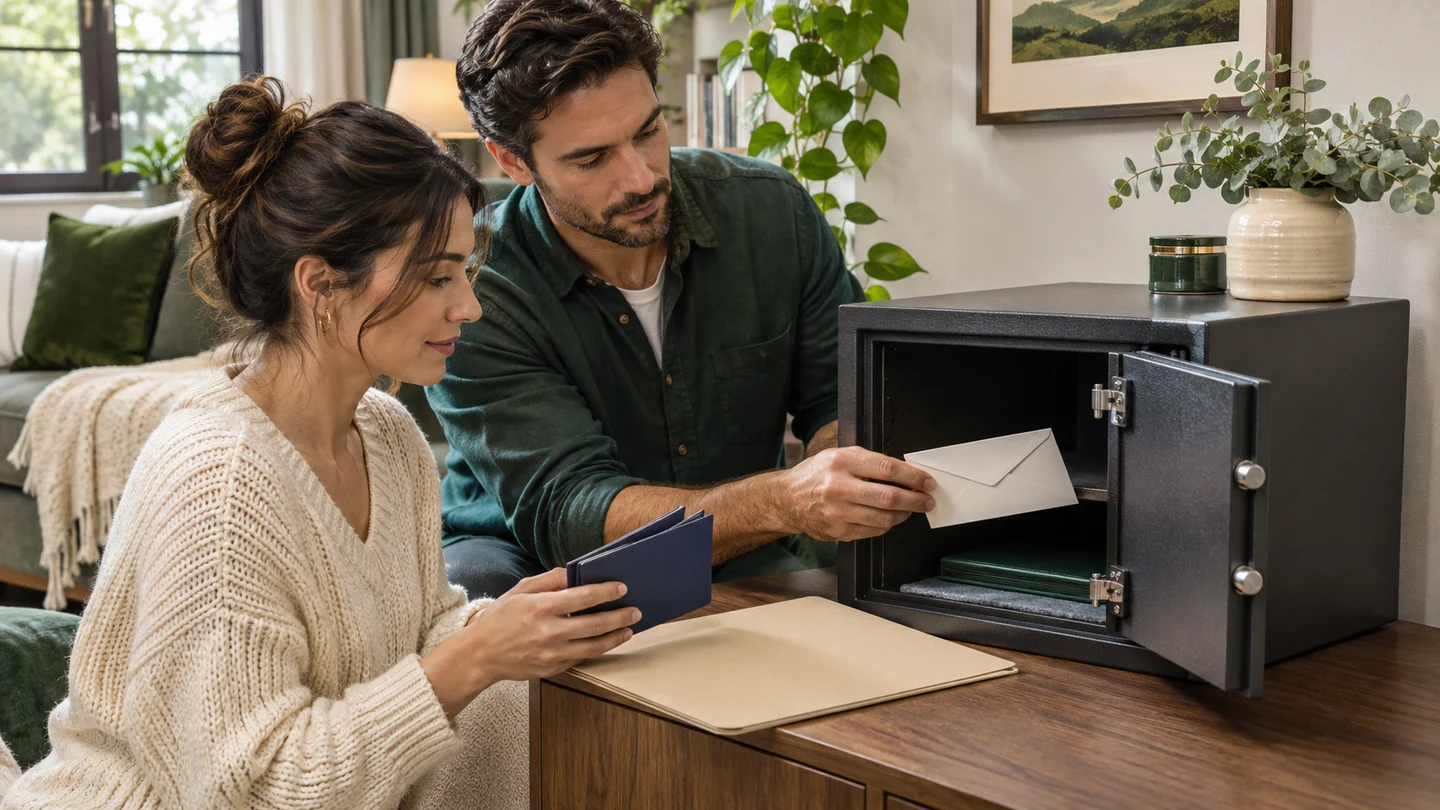
Model photographs are credited to their manufacturer or product-listing source beside the image. They are used to identify the reviewed products; lock and finish options can vary. Separate commercial reuse permissions were not obtained or represented as blanket clearance. The lead household scene is an original illustrative composition, not an exact reviewed model or a test photograph. Decision diagrams and comparison animation are original R&R work. Narration is synthetic. Amazon availability, price and stock are not verified.