
How to prevent mold after a flood
The most useful question after a flood is not “Which mold spray should I buy?” It is “What is still wet, what was contaminated, and what must happen before we close this room back up?” A freshly mopped floor can look reassuring while its carpet backing, wall cavity or adjoining materials remain unresolved.
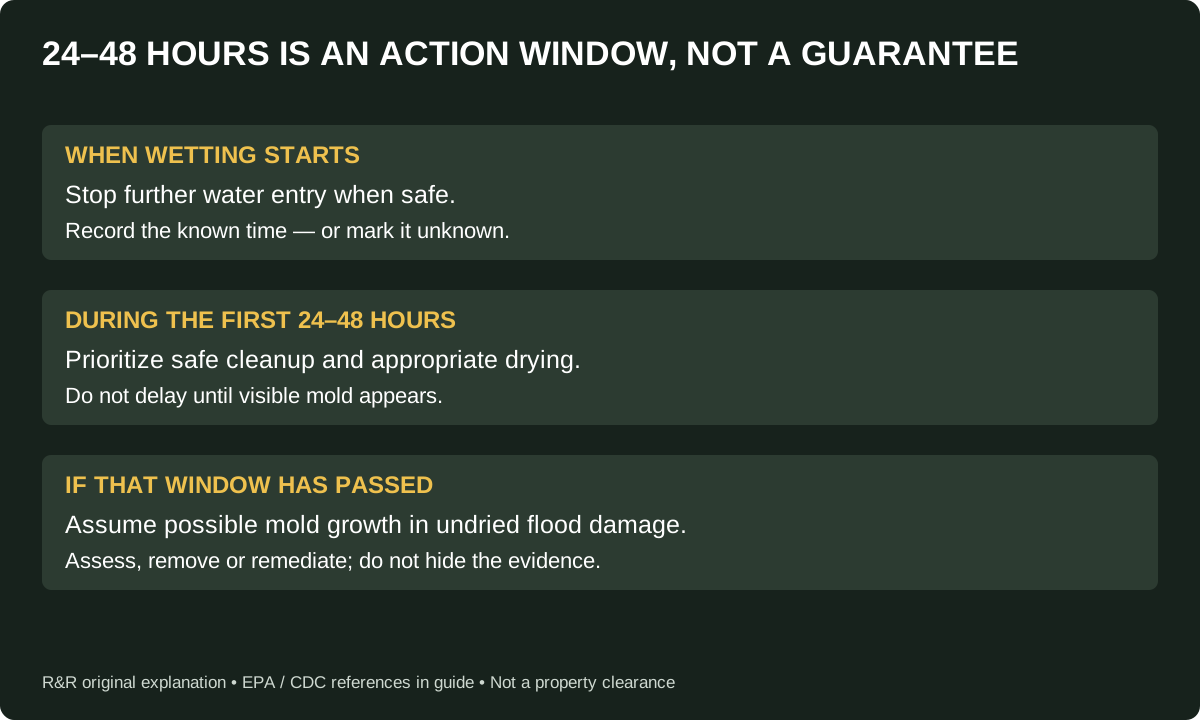
To prevent mold after a flood, first establish safe access, identify the water source, remove materials that cannot be safely cleaned and dried, and dry retained materials promptly. Aim to clean and dry within 24–48 hours when safe and possible. If that window has passed, do not assume the absence of visible spots means the house is mold-free. EPA’s flooded-home guidance says to assume mold growth when flooded belongings and the home were not dried in that period.
This guide focuses on the material decisions behind mold prevention. For extraction equipment, room drying and contractor handover, use our companion guide to drying out a flooded house. Here, we will work through the carpet, the wall and the decisions that keep a cosmetic repair from concealing a moisture problem.
How quickly does mold grow after flooding?
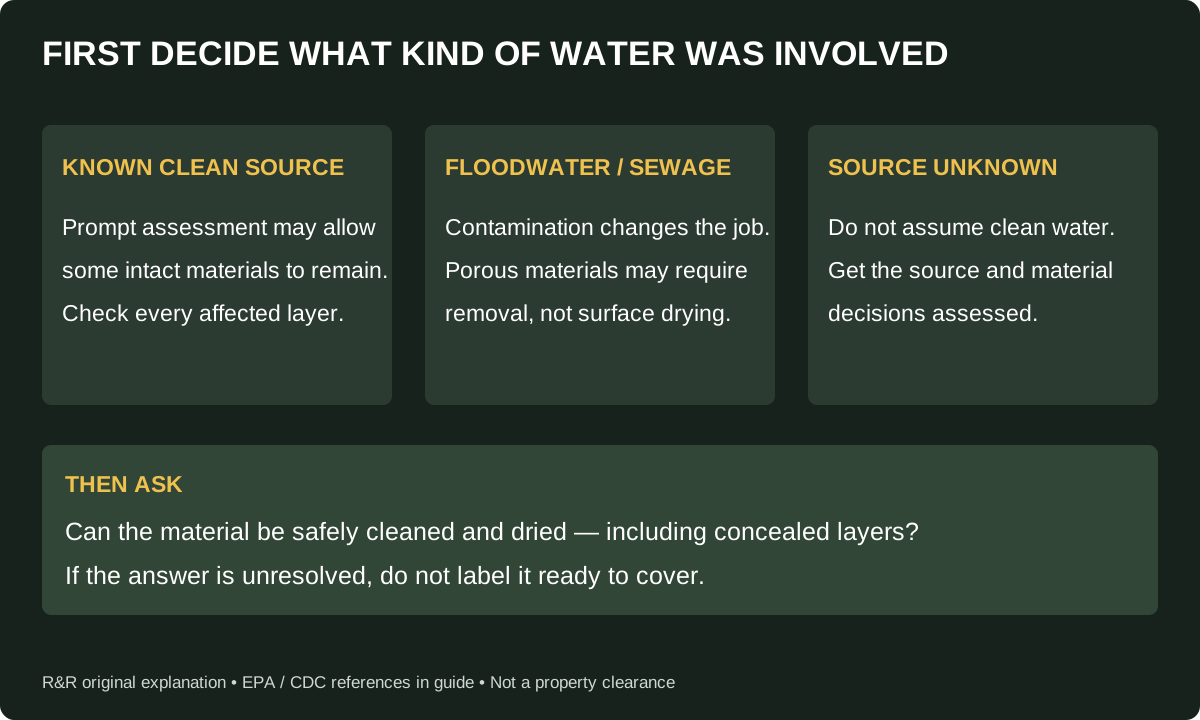
Mold can begin growing on wet building materials within roughly 24–48 hours under suitable conditions. That is an action window, not a stopwatch that certifies a house safe at hour 23 or makes every item unsalvageable at hour 49. The water source, material condition, inaccessible moisture and speed of drying still matter.
EPA’s flood cleanup guidance explains that wet wood, drywall, carpet and furniture can support mold when moisture persists. You do not need to wait for a wall to turn black before taking water damage seriously.
Start your record with when materials became wet, when water stopped entering and when you regained safe access. If the first time is unknown, write “unknown.” Do not restart the clock when a contractor arrives or when you first notice the damage. A house that has been inaccessible for several days needs an assessment of what happened during those days.
I would use the timeline to prioritize work and explain uncertainty, rather than calculate a household “mold risk percentage.” No defensible percentage follows from the number of hours alone. The practical objective is to stop continued wetting, make appropriate material decisions and establish whether retained layers have actually dried.
Check safety before starting cleanup
Do not enter an unsafe building to beat the drying window. Wait for permission to return, and address structural, gas and electrical hazards first. If reaching the electrical disconnect requires standing in water, do not wade over to it; arrange qualified help. Our flood recovery guide explains how these checks fit before powered drying.
People with asthma, COPD, immune suppression or other relevant health concerns should not participate in mold cleanup; CDC also advises some vulnerable people not to stay in a moldy home during cleanup. Follow its mold cleanup recommendations, including appropriate respiratory, eye and hand protection. Extended demolition needs a higher level of planning than picking up a damp box.
Before disturbing old finishes, ask about asbestos, lead and concealed services. This article is not permission to cut into a wall, remove a ceiling or disconnect wiring. That work can involve hazards separate from mold.
Take photographs and record affected rooms when it is safe. Notify your insurer or landlord promptly. Documentation should support recovery, not require remaining in a hazardous space. Keep children and pets outside the affected work area. If suitable cleanup help is unavailable immediately, record the unresolved condition and keep people away rather than describe an unsafe room as ready to use.
The water source changes the material decision
A recent leak from a clean supply pipe is not the same situation as river water, storm surge or a sewer backup. Floodwater can carry contaminants; its appearance does not establish that it is sanitary. CDC’s floodwater safety guidance treats contaminated surfaces and unsalvageable materials as a cleanup problem, not merely a drying problem.
This distinction explains why seemingly contradictory advice appears online. EPA’s technical drying guidance describes situations in which intact drywall or carpet affected by clean water may be dried. CDC’s disaster guidance calls for removing drywall and insulation contaminated by sewage or floodwater. Those instructions address different exposure conditions.
For your own record, use three plain-language entries: “known clean source,” “floodwater/sewage,” or “not established.” The third is a reason to get an assessment, not a reason to choose the easiest cleanup method. Ask the assessor to explain which materials can remain and which must be removed for the actual source involved.
If your incident involves a sewer backup, read our basement sewage-backup guide. Do not use this article’s discussion of drying clean-water damage as a way to bypass contaminated-water remediation.
Wet carpet after a flood needs a layered decision
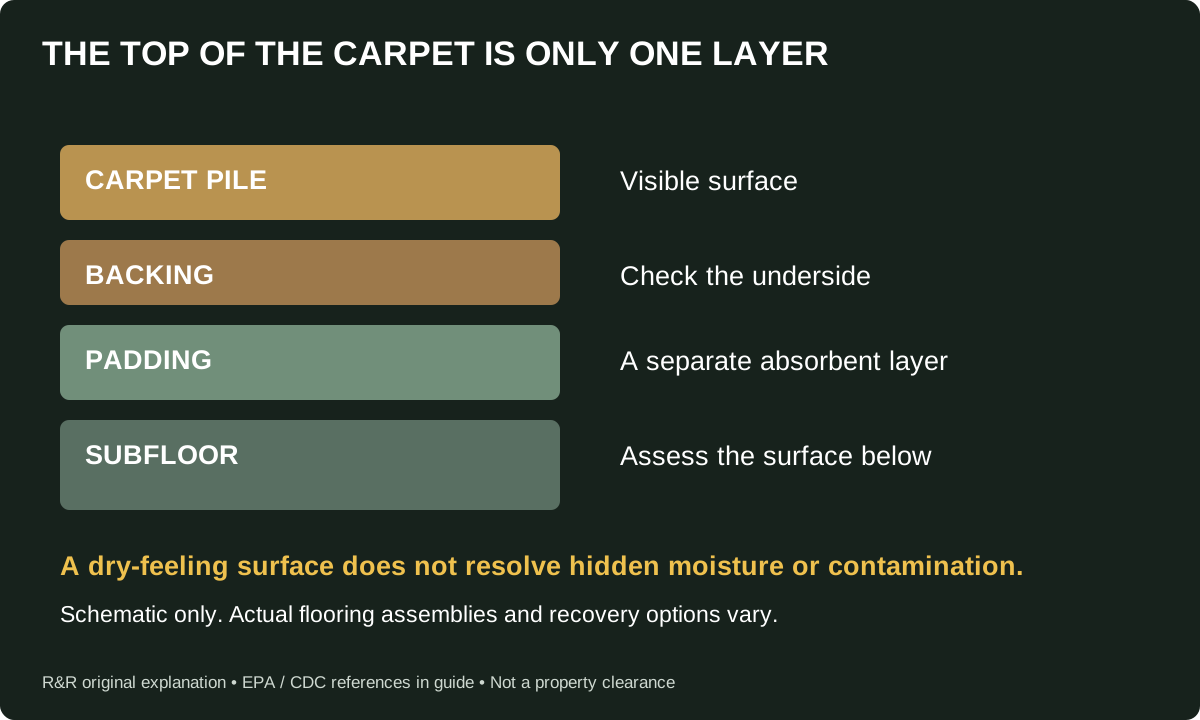
A carpet is not one layer. There is the visible pile, backing, padding and the floor below. “The carpet feels dry” describes one observation; it does not resolve the condition of the assembly underneath.
Carpet soaked with contaminated floodwater is not a good candidate for a casual shampoo-and-fan rescue. CDC’s disaster cleanup guidance says to discard items that cannot be cleaned or dried quickly and includes carpeting and padding among the examples. A wet vacuum does not disinfect a carpet or establish that its pad and subfloor are dry.
A prompt response to a verified clean-water incident can have different options. EPA’s mold course describes extraction and drying of carpet and backing, with attention to underlying materials. That is not a blanket instruction to salvage carpet from an outdoor flood. Where contamination, elapsed time or access to layers is unresolved, have a restoration professional assess it.
Before paying for carpet cleaning, ask three questions. What water contacted it? Will the backing, pad and subfloor be examined? What would make the contractor recommend disposal instead? A useful answer identifies the actual materials and limits of the proposed work. “We will spray something on top” does not answer those questions.
For valuable rugs, ask a specialist promptly about realistic recovery options. Keep the discussion separate from a promise that every household textile can be restored. Photograph labels, location and condition if safe, then follow appropriate handling and disposal instructions.
Mold behind drywall after water damage
A painted wall can hide damage on its back face or inside the cavity. A musty smell without an obvious source, a history of wetting or persistent moisture gives you a reason to investigate; none identifies a mold species or proves a particular health diagnosis.
EPA’s guide to household moisture and mold identifies concealed locations such as the back of drywall, under carpet and inside walls. It cautions that disturbing a suspected hidden problem can release contamination. Experienced help is appropriate where the extent or safe investigation method is uncertain.
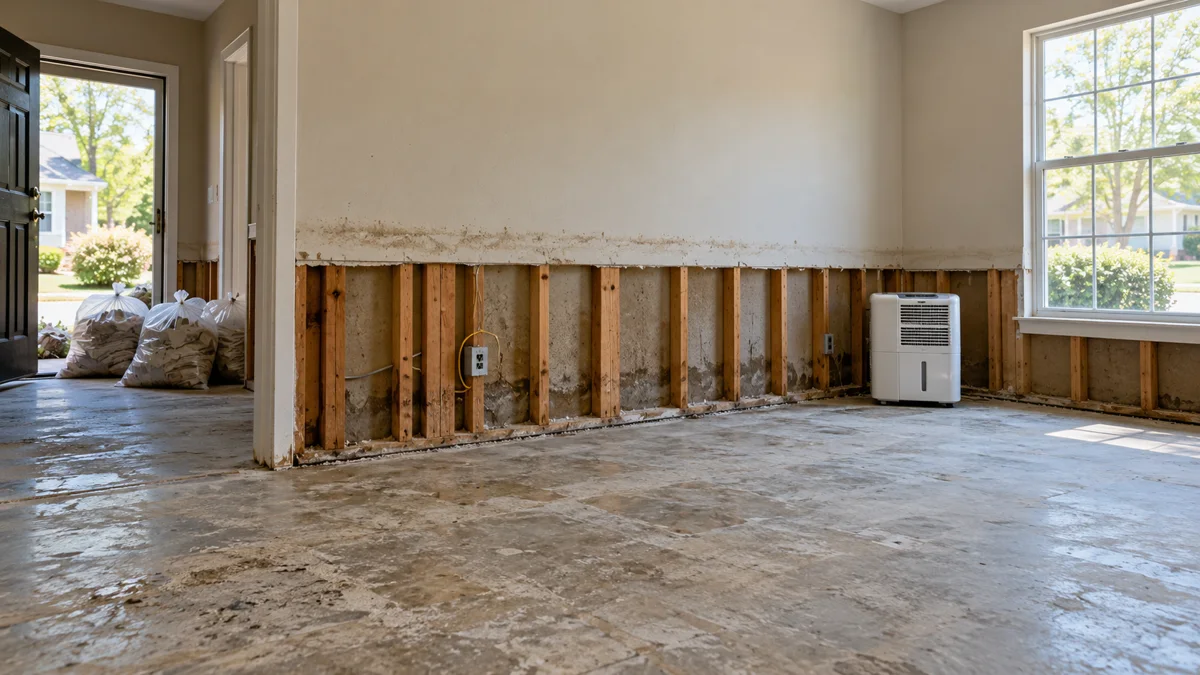
Do not prescribe one universal “flood cut” height from a photograph. The visible waterline is not a complete assessment of wet insulation, adjoining cavities, services or material condition. The removal plan should follow the actual exposure and building, including applicable safety requirements.
Ask for a simple marked-up room sketch showing what was opened, what was removed and which areas remain inaccessible. That sketch can be more useful at handover than a collection of close-up photographs with no locations. It lets the next person distinguish “not examined” from “examined and addressed.”
Before new drywall or baseboards go in, ask what evidence supports closing the assembly. Do not accept a fixed number of fan-days as the only explanation. Equally, do not interpret a stain alone as proof of active mold; staining, moisture and growth are different observations that may need different follow-up.
A room-by-room material decision table
Use this table to organize questions with your contractor. It summarizes decision points; it does not certify a room or replace property-specific assessment.
| Material | Decision to establish | What not to assume |
|---|---|---|
| Floodwater-soaked carpet / padding | Contamination and whether safe cleaning/drying is realistic; disposal often necessary | Shampooing the pile makes the whole assembly clean |
| Drywall / insulation exposed to sewage or floodwater | Removal and safe scope of work; follow CDC disaster guidance | A fresh coat of paint resolves the wall cavity |
| Intact drywall after a verified clean-water leak | Condition, access to cavity and documented drying assessment | A clean-water salvage option applies to outdoor floodwater |
| Hard, nonporous surfaces | Suitable cleaning and drying for the actual contamination | A dry surface needs no cleaning |
| Wood framing / subfloor | Condition and appropriate assessment of retained material | Every piece of wet wood must be discarded or can automatically remain |
| Mold-suspect HVAC | Professional assessment before operation | Central airflow is a safe shortcut for every wet room |
For each entry, write the water source and the reason for retaining, removing or investigating it. “Looks okay” is too vague to tell another person what was checked. “Retained after assessment; adjoining cavity still awaiting inspection” is a useful unresolved record.
Do not average a difficult room into an overall house score. One dry bedroom does not cancel a wet wall in the next room. A list with three completed rooms and one outstanding cavity is more informative than a green “90 percent recovered” badge.
Fans, dehumidifiers and humidity readings
Air movement and moisture removal can help dry suitable materials once the workspace has been assessed. Their roles are different: a fan moves air, while a dehumidifier removes moisture from air. Neither makes contaminated porous material clean.
If mold is present, do not point ordinary fans at it. EPA’s flooded-home instructions warn that fans can spread mold and say to address visible growth before using them. Suspected contaminated HVAC also needs professional evaluation before operation. Do not run a flood-affected central system simply because it is the largest fan available.
EPA’s household guide recommends keeping indoor relative humidity below 60 percent, ideally 30–50 percent. Treat that as room-air guidance, not a moisture-content threshold for drywall, wood or subflooring. A comfortable air reading cannot establish that the inside of a wall has dried.
For material readings, ask what material and instrument setting were used, where measurements were taken and what comparison supports the interpretation. Consumer meters have limitations and cannot detect mold or certify a building safe. Avoid copying a universal “safe percentage” from a different material or instrument.
The useful record pairs room conditions with material observations and unresolved areas. It need not become an elaborate spreadsheet. Consistent locations and clear explanations matter more than a dashboard full of numbers that nobody can interpret.
Does bleach prevent mold after a flood?
Bleach does not replace removing unsalvageable material, cleaning or fixing the moisture source. It also does not turn a damp wall cavity into a dry one.
EPA’s bleach guidance does not recommend biocides as a routine part of mold cleanup. CDC permits bleach or detergent in appropriate household cleanup contexts and provides product-use precautions. The useful takeaway is to follow the method appropriate to the surface and contamination, rather than treat one chemical as the entire recovery plan.
Never mix bleach with ammonia or other cleaners. Follow the product label, ventilation instructions and protective-equipment requirements. Do not use an N95 as protection against chemical vapors. If there is a chemical spill, strong unexplained fumes or suspected hazardous contamination, leave the area and seek the relevant emergency or professional advice.
For mold on appropriate hard surfaces, EPA describes detergent cleaning and thorough drying. Porous moldy materials may require disposal because growth can occupy spaces that surface wiping cannot reach. Painting or caulking over the problem conceals evidence without resolving the cause.
An original moisture handover record
Here is a practical contribution we can make beyond another list of cleaning products: a record that makes unresolved decisions visible. It is an R&R organizational framework, not a restoration standard or professional clearance form.
Give each affected area a name that another person can locate: “living room, exterior wall beneath front window,” rather than “wall one.” Record the first known wetting time, source assessment, material layers, decision, person responsible and next review. Keep the last column for what remains unknown.
| Fictional location | Exposure record | Observation and unresolved decision | Next owner / action |
|---|---|---|---|
| Living room / exterior wall | Wetting time unknown; floodwater | Floor addressed; cavity unresolved | Responsible contractor / next inspection |
| Bedroom / pipe-leak wall | Known supply leak; date recorded | Retention decision requires drying evidence | Assessor / record material checks |
| Hall / carpet assembly | Source assessment pending | Do not infer dry padding from surface touch | Contractor / backing and floor assessment |
Consider a fictional living room. Its carpet has been removed, and the exposed floor looks dry. The contractor’s record says the lower exterior wall cavity has not yet been assessed. Calling the room “finished” would erase the most important piece of information. A better status is “floor cleanup completed; wall assessment outstanding.”
In a second fictional room, a clean supply leak was discovered quickly. The assessor recommends retaining a particular intact wall section and documenting drying. That decision cannot be transferred to a sewage-affected room simply because both rooms have white drywall.
This is why the record separates observations from decisions. A photograph shows a moment; an instrument reading describes a measurement; a retention decision needs an explanation. Keeping those categories distinct makes it easier for an insurer, landlord, resident or incoming contractor to understand the work without inventing certainty.
Download the editable moisture decision record and adapt the labels to your property. Do not put personal medical details, account numbers or other sensitive information in a file you intend to share publicly.
When should you hire a mold remediation professional?
Contaminated water, extensive damage, suspected HVAC involvement, concealed growth and occupant health concerns are reasons to seek experienced help. EPA’s home cleanup guidance uses about 10 square feet as one consideration in simpler mold-cleanup situations; it is not a rule that makes a smaller sewage-affected area a safe DIY job.
Ask potential contractors how they assess source and extent, handle retained versus removed materials, protect unaffected areas, and document completion. Check relevant licensing requirements and references. Ask who is responsible for electrical, plumbing or building work outside the remediation scope.
A useful written proposal should let you understand what is included. Does it cover the wall cavity or only visible finishes? Will damaged insulation be addressed? What happens if further damage is uncovered? Who authorizes reconstruction? These are scope questions, not a request for a guarantee that no mold spore will ever enter the house again.
Be wary of an offer that jumps directly to fogging, painting or a testing package without explaining how wet materials and the source will be addressed. Do not delay an obvious moisture correction solely to identify the species of visible mold.
Before rebuilding or moving belongings back
The end point is more demanding than “the water is gone.” The source must be corrected; unsalvageable materials must be dealt with; retained materials and relevant concealed areas need appropriate cleaning, drying and assessment.
Review the room record with the person responsible for the work. Resolve outstanding areas before covering them. Ask what ongoing monitoring is appropriate and whom to contact if odor, moisture or visible growth returns. If symptoms worsen on returning, seek medical advice and reassess the environment rather than use this article to decide whether exposure is harmless.
For renters, report moisture problems to the owner or manager promptly and retain dated communications. Do not make unapproved structural alterations. Where the response is unresolved, consult applicable housing or health authorities about local procedures; responsibilities and remedies differ by jurisdiction.
For a wider recovery plan, connect these decisions with safe water after an advisory, emergency sanitation when normal plumbing is unavailable and El Niño household flood exposure. A recovered room does not by itself establish safe drinking water or a usable wastewater system.
Questions readers ask after floodwater recedes
Can I prevent mold if the house has already been wet for three days?
You can still address the source and begin appropriate recovery, but treat it as a possible mold problem rather than promise prevention alone. Do not wait for visible growth before getting the affected materials assessed.
Can wet carpet be saved after a flood?
The answer depends first on contamination and whether the entire assembly can be appropriately cleaned and dried. Advice for a quickly discovered clean-water leak does not justify keeping carpet soaked by contaminated outdoor floodwater.
Does a dehumidifier kill mold?
Its job is moisture removal, not remediation of contaminated materials. It can support an appropriate drying plan; it does not replace cleaning, removal or investigating hidden wet layers.
Should I open windows while running a dehumidifier?
Ventilation and drying must suit the actual conditions and cleanup plan. Follow equipment instructions and the responsible professional’s setup; do not assume every weather condition benefits from leaving a drying room open indefinitely.
Do I need a mold test before cleaning?
EPA says visible mold usually does not require sampling to establish that cleanup is needed. Testing is not a substitute for identifying moisture and extent. Where sampling has a defined purpose, use an experienced professional who can explain how results will affect decisions.
How do I know the mold will not come back?
No household checklist can promise that. Fix the water source, complete appropriate cleanup and drying, and follow up on returning odor, moisture or growth. The decision record is designed to keep unfinished work visible, not guarantee the building’s future condition.
Sources, method and reusable visuals
Ready & Resourceful prepared this research-based guide from linked EPA and CDC guidance, checked on October 17, 2026. We distinguish clean-water drying advice from contaminated floodwater cleanup and separate room humidity from material moisture. No property inspection, laboratory testing, field remediation experience or professional review of this article is claimed.
The decision diagrams and downloadable record are original R&R organizational explanations. They are not engineering details, a validated risk score or a clearance standard. Publishers may reuse the three SVG diagrams and CSV under CC BY 4.0 with credit to Ready & Resourceful and a link to this guide; that permission excludes the photographic scene, logos and third-party source material. No particular anchor wording or followed-link attribute is required.
Primary references include EPA’s flooded-home walkthrough, EPA’s mold course on remediation, EPA’s household moisture guide, EPA’s home cleanup guidance, CDC’s safe disaster cleanup guidance and CDC’s mold cleanup recommendations. Current local instructions and the assessed conditions at your property govern the work.