Buy a useful starting kit. Finish it for your trip.
For lightweight backpacking: start by comparing the Adventure Medical Kits Ultralight/Watertight .7. For easier organization: compare the Mountain Series Hiker. For a more equipped shared base: look at the Backpacker. For a UK alternative: compare the Lifesystems Trek.
The best hiking first aid kit is a kit you can carry, understand and adapt. A sealed pouch bought yesterday may still lack the personal supplies you need tomorrow. A very large kit can create a different problem: too much unfamiliar equipment, too little organization, and a temptation to leave the whole thing in the car.
This guide compares four identifiable products, then helps you review the gaps without turning a packing list into medical instructions. It is for ordinary recreational hiking and backpacking. Technical expeditions, organized youth groups and specialist trips may need a different plan, qualified advice and specific requirements.
The hiking first aid kits we would compare first
As an Amazon Associate I earn from qualifying purchases. Amazon buttons are paid links to model-name searches, not verified offers for a particular seller. Check the actual version, contents and expiry dates before ordering. Prices and stock change; we do not publish an unverified current price.
These recommendations are editorial judgments about published contents and packing arrangements. They are not a medical endorsement, a clinical performance ranking or a claim that we treated injuries with these kits.
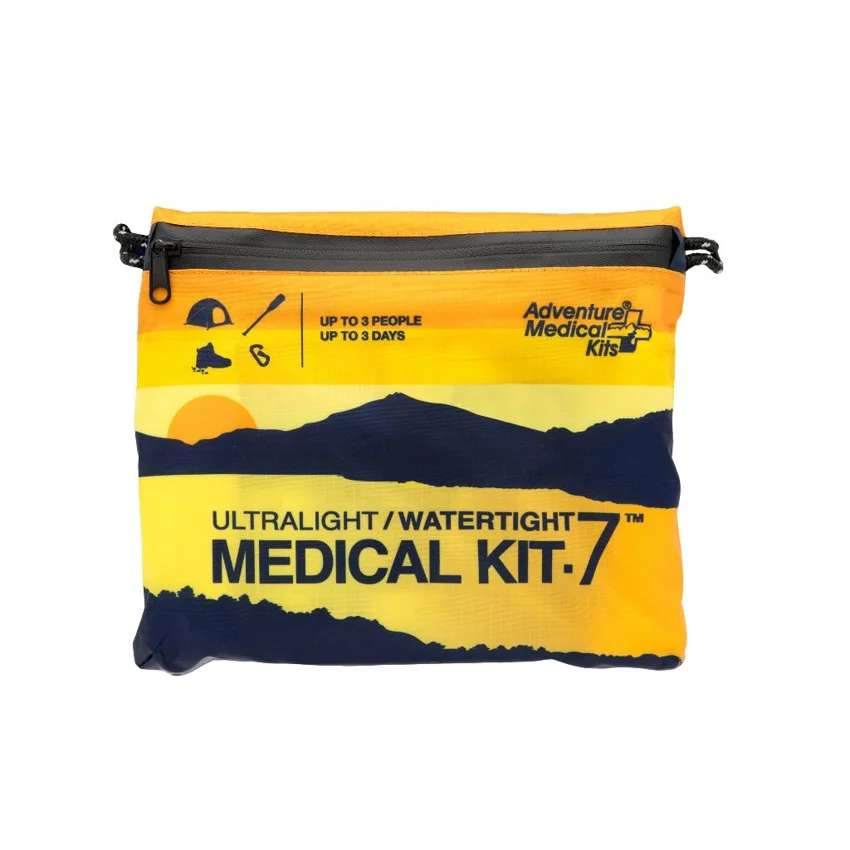
1. Adventure Medical Kits Ultralight/Watertight .7
The .7 is our starting comparison for a lightweight kit because its published 5.8-ounce configuration includes a DryFlex inner bag inside a water-resistant outer bag. It lists an elastic wrap, forceps and blister material. Shears and an irrigation tool are not listed. That makes it a compact base to audit rather than a miniature version of a larger organized kit. Choose it if low bulk and a protected inner pouch suit your packing approach. Compare the Hiker if you would rather have injury-organized pockets and shears. Check the actual supplied contents before counting an item as present.
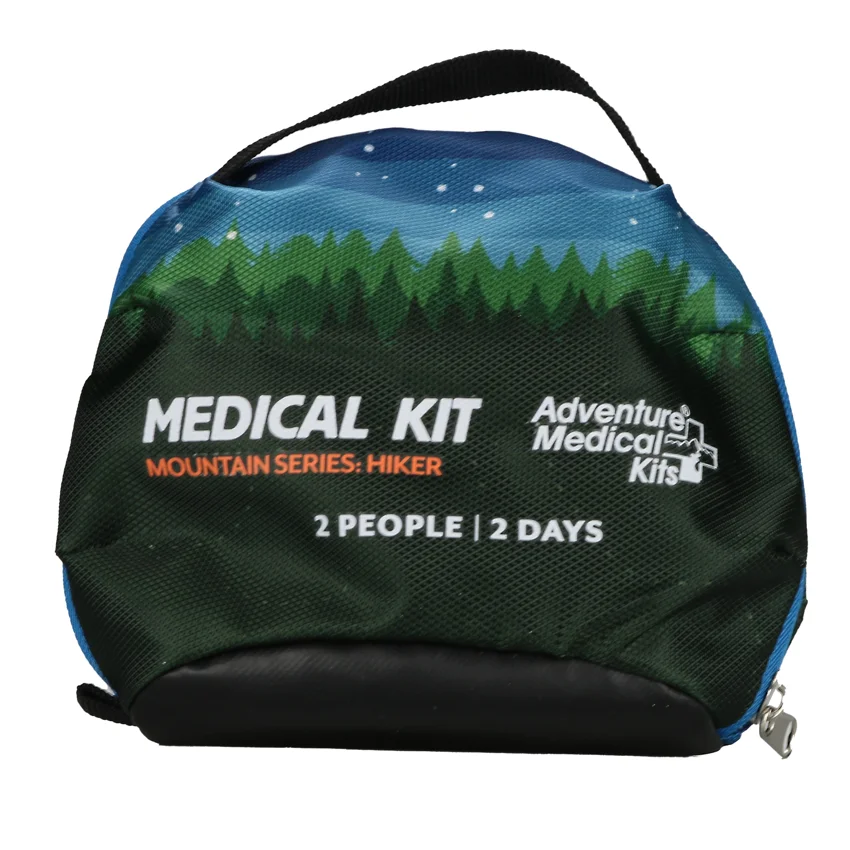
The Hiker is our organization-first option. Its published contents include shears, a trauma pad and a first-aid manual, with an injury-based pocket arrangement. The maker lists a weight below eight ounces and describes a water-resistant bag. Those details make it worth comparing when locating supplies matters more to you than choosing the smallest pouch. We have not timed access or tested treatment performance. Add moisture protection appropriate to the trip, and check how the kit fits in your pack. Do not assume its name or weekend positioning means it covers your personal needs.
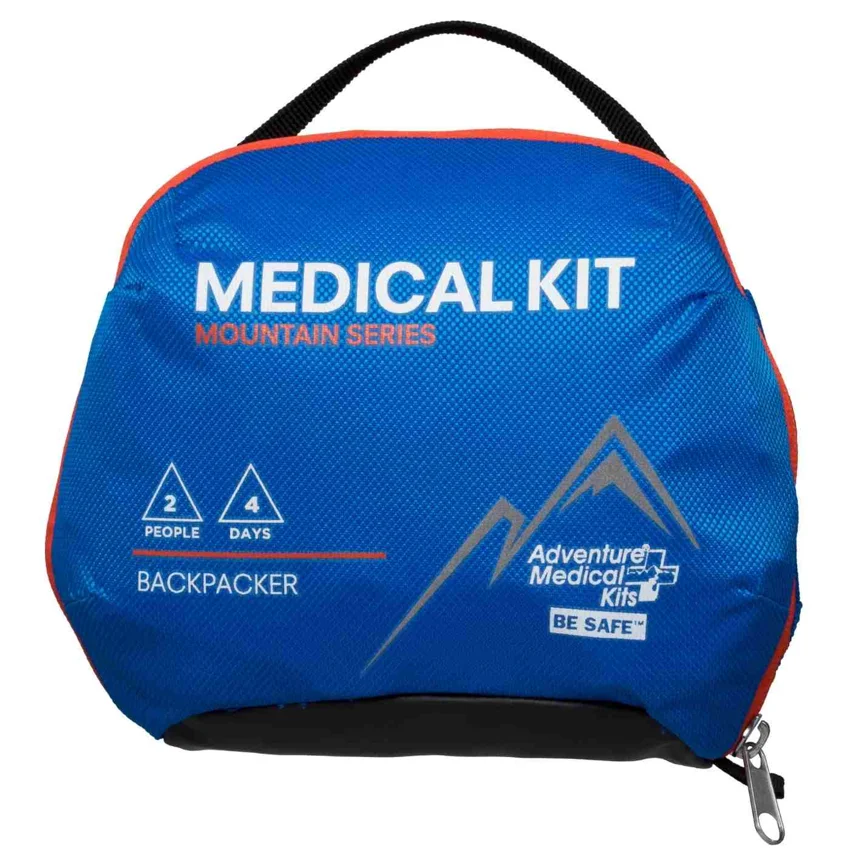
The Backpacker is the fuller organized base in this comparison. It lists a 10 cc irrigation tool, shears, a manual and a broader contents inventory. The published weight is below one pound, which is an upper bound rather than an exact weight for this table. Compare it when two hikers want to review a shared kit together and are willing to carry a larger starting assortment. The inclusion of equipment does not establish training to use it. We would choose between this and the Hiker by checking the exact contents and finished packed load, rather than interpreting “Backpacker” as a higher safety rating.
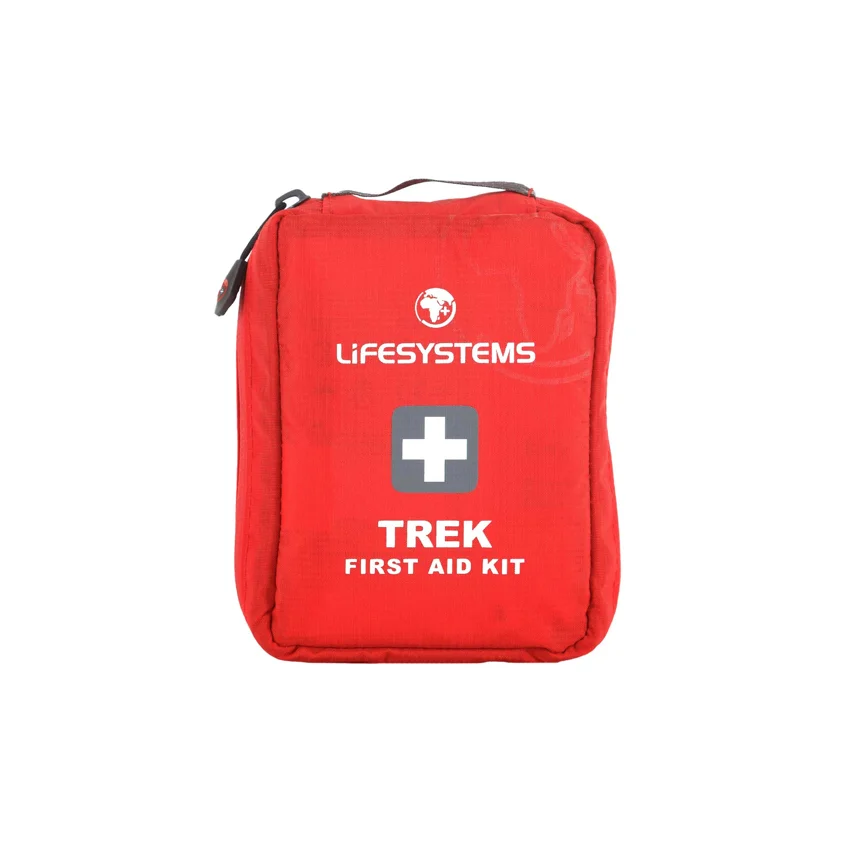
The Lifesystems Trek gives UK readers a useful alternative to the AMK range. Its published configuration weighs 240 grams and lists scissors, blister plasters and two pairs of nitrile gloves. It measures 140 by 110 by 50 millimeters. There is no personal medication plan built into that purchase: review your own needs separately. Choose it when its particular contents and compact format fit your outing, rather than because the label counts 31 items. Compare the list against the exact regional listing and delivered product; a similarly named travel kit need not have the same contents.
Clearly itemized UK product and two listed glove pairs.
Tradeoff to check
Verify regional configuration and moisture protection.
Hiking first aid kit comparison
Compare the listed configuration, not just a familiar red pouch. Weight scopes are retained as published: an upper bound is not an exact measured weight. An item marked “not listed” was absent from the retrieved contents list; inspect the supplied kit rather than assuming that every regional version is identical.
Published product details checked November 13, 2026
Kit
Published weight
Packing distinction
Useful listed items
Important check
AMK .7
5.8 oz, about 164 g
DryFlex inner bag; water-resistant outer bag
Elastic wrap, blister material, forceps
Shears and irrigation tool not listed
AMK Hiker
Less than 8 oz
Injury-organized pockets
Shears, trauma pad, reference manual
Water-resistant bag is not a waterproof enclosure
AMK Backpacker
Less than 1 lb
Larger organized base
10 cc irrigation tool, shears, manual
Verify the exact loaded weight
Lifesystems Trek
240 g, about 8.5 oz
Compact pouch; UK option
Two pairs of nitrile gloves, scissors, blister plasters
Personal medication is separate
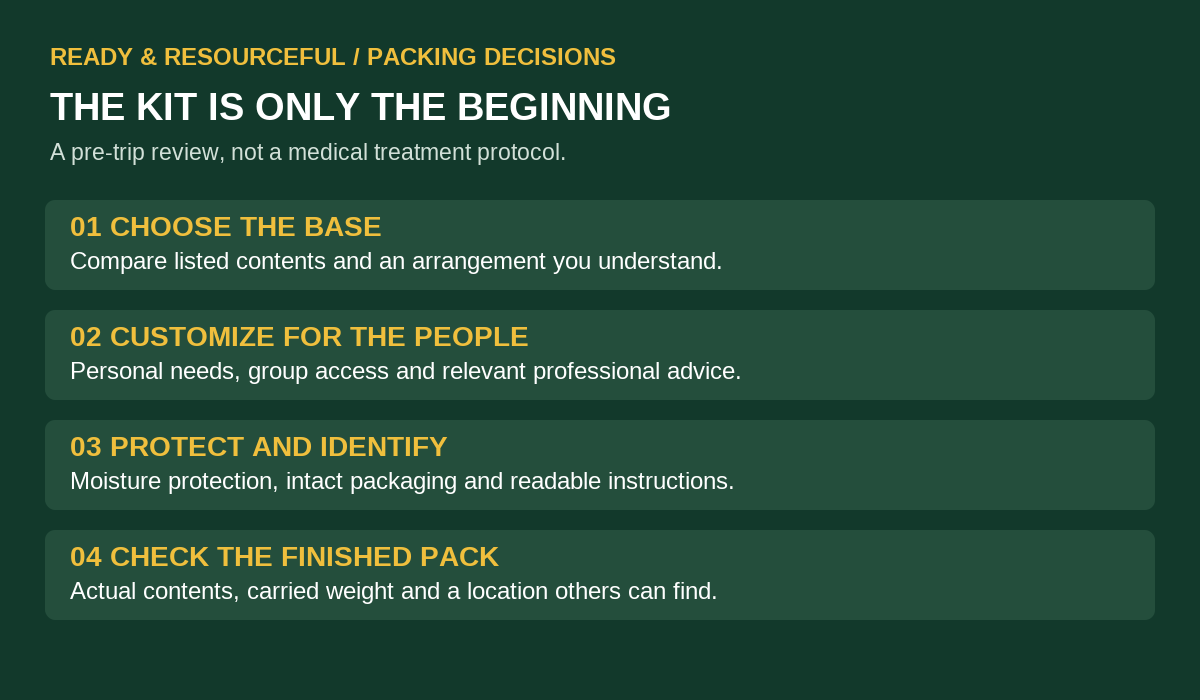
Our decision sequence keeps the shopping choice separate from the pre-trip review. It does not certify medical readiness.
What to customize before your trip
1. Write the trip brief before adding supplies
Write down who is going, the route, expected duration, likely conditions and how help would be contacted. Include the journey back, rather than describing only the outward walk. A local loop with frequent exits is a different planning problem from a remote overnight route, even when the distance looks similar.
Next, identify unanswered questions. Is a participant relying on a personal medical device? Does someone have an adhesive sensitivity? Is the kit going into a wet pack compartment? A concrete question produces a useful next action. “Get a bigger kit” often does not.
Use our day-hike checklist to connect the medical pouch with navigation, clothing, lighting and the trip plan. First aid should sit inside that wider preparation, rather than carry responsibility for every trail problem.
2. Make a personal medication plan
A prepacked kit is not tailored to your prescriptions, allergies, age or medical history. Discuss relevant needs with your clinician or pharmacist, including storage conditions, expiry dates and what you should carry. Follow your individual treatment plan and product directions. This guide does not select a drug, dose or substitute for you.
Keep medicine identifiable, with the instructions and labeling needed for safe use. Do not turn a mixed bag of loose tablets into a weight-saving project. Do not assume that a medicine included in a commercial kit is appropriate for every adult or child. Other hikers should not have to guess what an unmarked container holds.
3. Agree who carries shared supplies
“We have a kit” is incomplete until you know where it is. Assign a carrier, show the group the pouch and agree what happens if the group separates. Personal items needed promptly should not become inaccessible because the person carrying the shared bag has taken a different path.
For a pair, draw two columns: personal items and shared items. Check for both missing supplies and unnecessary duplication. Do not split essential components between bags merely to make each pack weigh the same. Organization should help the people using the equipment, not just the person who packed it.
4. Protect the contents, then preserve access
A water-resistant outer pouch and a waterproof inner enclosure are different constructions. Neither excuses ignoring the maker’s instructions, worn seals or damaged packaging. Check closure condition and protect supplies from moisture without making them impossible to locate.
Keep the kit in a consistent accessible location. A useful home check is to ask your hiking partner to find it in the packed bag. Do this without opening sterile supplies or practicing a medical procedure. If locating the kit requires emptying the entire pack, rearrange the load before leaving.
5. Check quantities against the actual group
Manufacturers’ person-and-day descriptions are starting labels, not guarantees. They do not account for your group’s needs, repeated use, an extended delay or a particular incident. Read the itemized list. A hundred-piece kit can contain many small adhesive bandages without addressing the questions that matter for your outing.
After choosing a base kit, record specific additions and their reasons. “Additional dressing supply discussed with our first-aid instructor” is a clearer decision than “more stuff.” If the decision requires knowledge you do not have, arrange instruction or advice rather than filling a pouch with unfamiliar equipment.
Hiking first aid kit contents to review by function
This is a review framework, not a universal treatment inventory. The American Red Cross hiking checklist provides a broader reference. Choose and use supplies within your training and the applicable instructions; specialist items do not become necessary simply because another list mentions them.
Check what the contents accomplish, not how many pieces the label counts
Function
What to inspect
Question before departure
Minor wound supplies
Identifiable dressings, tape and intact sterile packaging
Do we understand the contents and their instructions?
Blister-related supplies
The actual type, size and adhesive material
Is this compatible with our needs and known sensitivities?
Barrier protection
Glove material, sizes and pack condition
Can the intended users wear these?
Basic tools
Listed scissors or shears and forceps
Are they present, suitable and understood?
Personal needs
Individually planned medicine and necessary information
Has the person resolved their own storage and access plan?
Reference and communication
Instructions, local contact plan and an offline reference
Can someone else locate the kit and call for help?
After use
Waste containment and a replenishment note
Who replaces what was used?
Do not infer capability from appearance. A pouch printed with medical symbols says little about the current condition of its contents. Similarly, a clear list of limitations is more useful than an unsupported claim to cover every emergency.
Make your own pre-trip kit review
Select the planning issues that apply. This tool creates a review list; it does not prescribe quantities, recommend medication or certify that a trip is safe. Nothing is submitted or stored by this tool.
What needs an extra check?
Choose the issues above, then build your list. Always inspect the real contents and check your trip plan.
A lightweight first aid kit should be deliberate, not incomplete
Weight matters because equipment left behind does not help the person who needs it. But reducing kit weight should begin with understanding the contents. It should not begin with removing instructions, mixing medicines or discarding supplies solely because you have never used them.
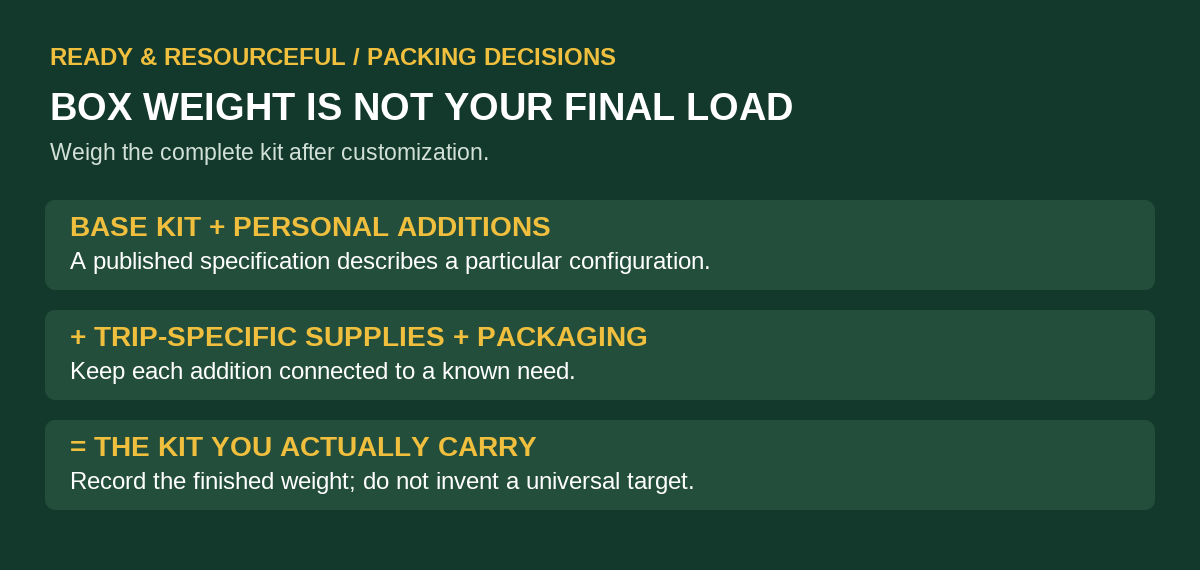
Weigh the finished kit after customization, including protective packaging. Write down what that measurement includes. The advertised weight of the purchased product will not describe your load after adding personal items or replacing the outer bag. If comparing two options, compare them in the condition you actually intend to carry.
Look for pointless duplication across the complete pack. A separate accessory may already serve a nonmedical task. That does not mean a multifunction tool is automatically an acceptable replacement for a medical item; resolve the actual use rather than relying on the phrase “multi-use.”
If you are new to hiking, a clearly organized commercial kit can be easier to audit than an assortment of bargain refills. If you already have a suitable pouch and understand the contents, replenishing it may be more sensible than buying another complete kit. There is no requirement to purchase one of our picks to use this guide.
A packing equation, not a medical formula. Measure the finished load instead of treating the box weight as your final carried weight.
Two worked decisions before a trip
A short local walk with a familiar partner
In this fictional example, Alex and Jo plan a well-defined local route. They already own a compact kit. Instead of ordering a larger one, they lay out the contents, read the labels and replace used supplies. Each person sorts out their personal items. Jo carries the shared pouch and Alex knows its location.
The useful result is a completed review, not a higher piece count. They still check access, conditions and their return plan. Nothing about this example establishes that a small kit is sufficient for every short trail; it shows how to avoid buying before identifying a gap.
A pair moving from day hikes to an overnight route
Sam and Riley are considering a more remote overnight outing. The first questions concern the route and their experience, not which kit looks most advanced. They review access to help and book appropriate first-aid instruction. They compare their existing supplies with the needs identified during that preparation.
An organized kit with a fuller contents list may be a useful base, but the extra equipment does not authorize them to perform unfamiliar procedures. If the outing exceeds their preparation, they change the plan. Their water treatment, sleep system and communication arrangements also need to fit the actual route.
Premade kit or build your own?
A premade kit gives you an itemized starting point and a container. A self-built kit gives you control over the exact contents, but also responsibility for omissions, expiry dates, instructions and packaging. Neither approach automatically delivers better value.
Compare the cost of the supplies you need, not the number of packets you can buy cheaply. Refill packs can make sense after you know the missing items. A second unopened kit is a poor substitute for checking the first one. Keep a simple inventory with the item, present quantity, expiry where applicable and replacement action.
Our suggestion for a beginner is to start with a comprehensible base and customize it. For an experienced hiker, a self-built arrangement may be practical if it remains identifiable, protected and easy for others to locate. Take any unresolved medical or technical selection question to an appropriate professional or instructor.
Restock after the walk, not at the next trailhead
Keep a replenishment note after use. Include packaging that became wet or damaged, items moved into another bag and personal supplies that need replacing. A pouch can remain physically full while no longer containing the things you think it does.
Before the next trip, check the actual contents rather than reusing an old tick mark. The Red Cross recommends checking kits and replacing used or expired supplies. Keep any required personal information private; a public packing photograph is not a sensible place to share prescriptions or medical details.
Watch the kit comparison and customization summary
Read the transcript
A hiking first aid kit is a starting point, not a finished trip plan. Compare the compact AMK point seven, the organized Hiker, the fuller Backpacker and the UK Lifesystems Trek. Published contents matter more than the piece count. Before leaving, check personal needs, shared responsibilities and moisture protection. Keep medicines identifiable and follow your own medical advice. Inspect expiry dates and damaged packaging. Weigh the customized kit, and make sure your hiking partner can find it. Use the full comparison and pre-trip review at Ready Resourceful dot com.
Moving hiking footage by Guilherme Luz, under the Pexels license. Original comparison graphics and script; synthetic narration. The hiker is not presented as a user or endorser of the reviewed kits.
Hiking first aid kit questions answered
What is the best hiking first aid kit?
For a light starting point, compare AMK’s .7; for organization, compare the Hiker. The Backpacker offers a fuller shared base, while Lifesystems Trek is a compact UK alternative. The final choice depends on the people, route and contents review, not a universal winner.
What should be in a backpacking first aid kit?
Review basic wound supplies, blister-related materials, gloves, appropriate tools, personal needs, instructions and a communication plan. Use a recognized checklist and suitable training to decide the actual contents. Do not treat the example products as a complete plan for your circumstances.
How much should a lightweight first aid kit weigh?
There is no single target that proves adequacy. Published weights here describe different configurations. Weigh your finished kit after personal additions and protective packaging, then assess whether each item serves a known need.
Is a waterproof first aid kit necessary?
The supplies need protection appropriate to your trip. Check the actual enclosure and its instructions. A water-resistant bag, a sealed inner pouch and undamaged sterile packaging each have different roles; do not assume the word “outdoor” establishes waterproofing.
Can I use my car first aid kit for hiking?
Possibly, if its actual contents and packed arrangement suit the outing and you carry it with you. Check age, condition, personal needs, weight and access. Supplies remaining in the vehicle cannot serve as the carried kit when you are away from it.
Does a large piece count mean a better kit?
No. Count relevant functions and inspect the itemized contents. Many small items can inflate a number without addressing your individual planning gaps. Quantity still matters, but it needs context.
Do I need a tourniquet or other specialist equipment?
This guide does not prescribe specialist equipment for every hiker. Discuss relevant training and trip needs with a qualified instructor. Buying equipment does not establish competence to use it, and a general shopping list should not replace that decision.
How we selected the kits and checked the advice
We prioritized identifiable models with published contents, a range of carrying arrangements and clear links to the manufacturer. This is a four-product shortlist, not a survey of every kit sold. We do not award injury-treatment scores, reproduce another reviewer’s test results or claim firsthand testing. No clinician has reviewed this article.
Product details were checked November 13, 2026. Manufacturer person-and-day claims are not adopted as guarantees. Our product assessments explain selection tradeoffs; the customization worksheet and fictional examples are original editorial planning aids, not validated medical protocols.
Product photographs identify the exact manufacturer models; separate reuse permissions remain unverified. The generic header image is licensed CC BY 4.0 and attributed above. Diagrams and comparison analysis are original. Editorial standards · Report a model or contents correction.
Use these exclusions alongside the model-specific evidence and selection method in this guide. They explain where our recommendations stop; they are buying judgments, not failures observed in R&R testing.
Product-specific reasons to reconsider before ordering
Named option
Choose another option or resolve this first
Adventure Medical Kits Ultralight/Watertight .7
You want a premade kit to establish sufficient supplies for a group without checking quantities and personal needs.
Adventure Medical Kits Mountain Series Hiker
Your trip is longer or more remote than the kit’s intended starting role and you have not customized it.
Adventure Medical Kits Mountain Series Backpacker
You are buying the larger name instead of checking the contents your group can use and carry.
Lifesystems Trek First Aid Kit
You have not checked the region-specific supplied contents and your personal medication plan; a familiar kit name is not a universal inventory.
Evidence boundary: This is a research-based buying guide. Published specifications and manufacturer claims are attributed evidence, not our own measurements. Calculated examples do not establish actual runtime, comfort, reliability or protective performance. Product photos identify the equipment; illustrations and illustrative video do not document hands-on testing. No firsthand test result is added by this comparison.