
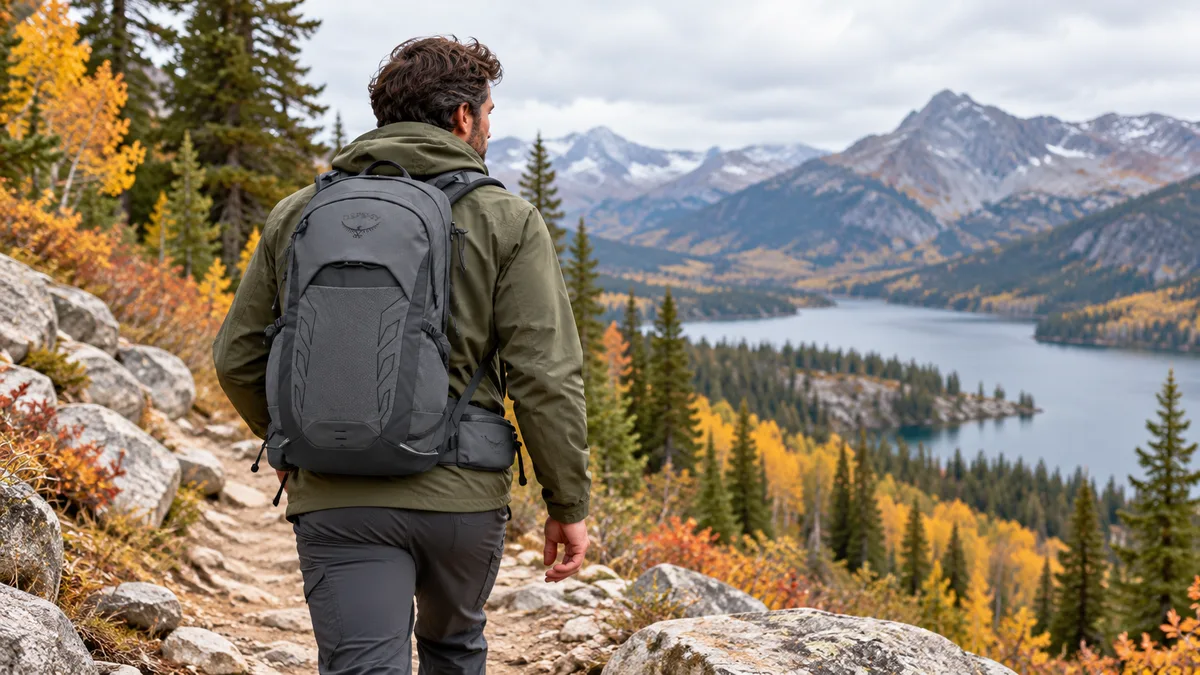
The Talon 22 makes more sense when your hiking pack needs to stay organized while you move than when you simply need somewhere to put a laptop. Its appeal is the combination of a compact trail-focused layout and a substantial harness-and-hipbelt system. But the model name hides an important buying trap: a specification from an older Talon can look perfectly convincing while describing a different backpack.
I would put the current Talon on a day-hiking shortlist, then settle the generation, loaded fit and complete packing list before choosing a color. This review works through those decisions in that order. It is a research-based assessment of manufacturer documentation, not a claim that we have carried the pack on a test hike.
Osprey Talon 22 specifications for the current standard model
The checked U.S. model is listed as O/S, with 22 liters of capacity, a 2.38-pound or 1.08-kilogram empty weight, and a published 10–30-pound load range. Osprey gives dimensions of 22 × 11.4 × 11.4 inches, or 56 × 29 × 29 centimeters. These are manufacturer figures rather than our measurements. The current standard Talon page is the source to match against a retailer's listing.
The UK S25 page agrees on the current capacity, weight and dimensions. That makes it a useful cross-check, not permission to assume every color, edition or older pack shares the same construction. Save the product code, size label and specification page for the actual item you intend to order. A marketplace title containing Talon 22 is not enough to establish those details.
| Current standard O/S model | Published figure / configuration |
|---|---|
| Capacity | 22 L |
| Empty weight | 2.38 lb / 1.08 kg |
| Dimensions (H × W × D) | 22 × 11.4 × 11.4 in / 56 × 29 × 29 cm |
| Manufacturer load range | 10–30 lb / 4.5–13.6 kg; not a comfort guarantee |
| Adjustment / carry design | Sliding yoke; AirScape backpanel; continuous-wrap hipbelt |
| Hydration | Internal reservoir sleeve; check separate accessory / bundle |
| Feature examples | Hipbelt and stretch pockets; pole, helmet and light attachment features |
| Specification basis | Checked current U.S. and UK manufacturer pages, October 15, 2026 |
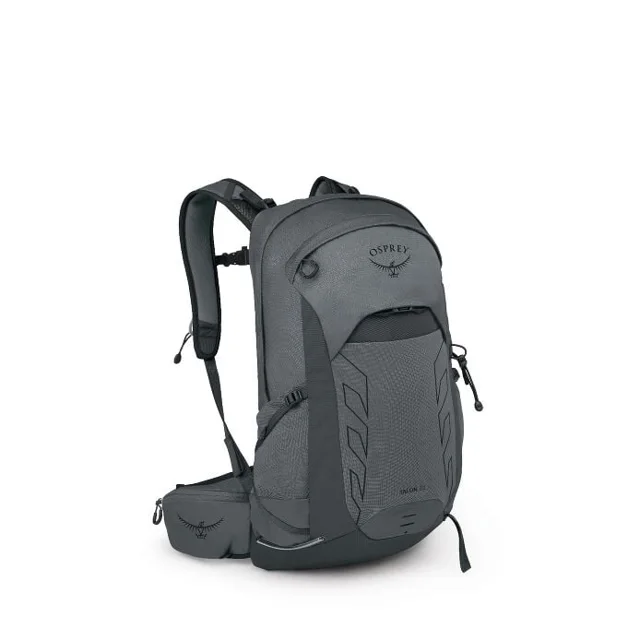
The load range should guide a comparison, not become a promise of comfortable carrying at its upper end. Likewise, capacity does not tell you whether your particular lunch container, rain layer or camera fits without making access awkward. I would separate the published facts from the practical questions that require your own packed fitting.
Current Talon 22 vs the older S/M and L/XL versions
If one review says the Talon comes in two sizes while a listing says one size, do not resolve the disagreement by guessing which writer is right. Osprey's official S21 manual, updated July 26, 2021, lists an older Talon 22 in S/M and L/XL. Those versions are respectively 20 and 22 liters, with published weights of 0.87 and 0.92 kilograms. The manual also describes an external hydration sleeve. See the dated S21 manual.
The checked current listing instead identifies one size and an internal hydration sleeve. This matters if you are replacing a familiar older pack, buying secondhand or comparing a discounted listing with the current product. The same family name does not mean identical capacity, weight, access or fit arrangements. Date the evidence before comparing it.
| Version | Capacity and published empty weight | Configuration to distinguish |
|---|---|---|
| Current standard O/S | 22 L / 1.08 kg | Internal hydration sleeve; sliding adjustable yoke |
| S21 S/M (2021 manual) | 20 L / 0.87 kg | Older size offering and external hydration sleeve |
| S21 L/XL (2021 manual) | 22 L / 0.92 kg | Older size offering and external hydration sleeve |
| Current Extended Fit | 22 L / 1.16 kg | Extended straps / hipbelt; different fit arrangement |
| Talon 22 VSN | Separate everyday model | Documented laptop sleeve; do not mix with hiking specifications |
For a secondhand purchase, ask for photographs of the size label, inside sleeve and harness adjustment. For a new purchase, ask whether the listing photos and specification table describe the item being dispatched. A genuinely useful bargain is the version you intended to buy, in appropriate condition, with a return arrangement you understand.
I would not describe the current pack as universally better because it is newer, or the older one as automatically preferable because its listed weight is lower. The useful comparison is narrower: which exact version fits your body and your intended contents? That question can remain unanswered even when the price and color look right.
What AirScape and the hipbelt mean for trail use
The current Talon uses Osprey's AirScape close-to-body backpanel and a micro-adjustable sliding yoke. It also has a continuous-wrap harness and hipbelt. Those are construction features intended for an active carry arrangement, not independent comfort scores. The UK product details describe the design; whether it suits you needs a loaded fitting.
My buying judgment is that this is the part of the Talon worth evaluating most carefully. If trail use drives the purchase, useful adjustment and body contact can matter more than the small difference between neighboring nominal capacities. If the pack mainly sits under a desk, that design may be less relevant to the problem you are trying to solve.
During a fitting, turn your upper body, reach toward the side pockets and take a few ordinary steps with permission from the retailer. Notice whether the belt and harness remain appropriately positioned rather than treating a snug initial impression as the final answer. Do not compensate for unresolved fit by tightening every strap as far as it goes.
Ventilation language also needs interpretation. AirScape does not establish that your back will remain dry or that the pack is suitable for every hot-weather outing. A design feature cannot replace the weather and route decision. Our El Niño heatwave guide and day-hike checklist cover the planning that happens before equipment choice.
Is 22 liters enough for a full day hike?
It can be, depending on what the outing requires and how your equipment packs. Twenty-two liters is a stated capacity, not a standard list of objects guaranteed to fit. A bulky insulating layer, rigid food container or personal medical equipment can change the decision more than the difference between two nearby capacity numbers.
Start by laying out the complete load: water arrangement, food, relevant clothing, navigation, lighting and the other systems needed for the route. Include the equipment you would otherwise remember only at the last minute. Then compare the packed arrangement with the real bag. Our beginner day-hike checklist helps organize that first step without inventing a universal packing load.
I would check access as well as closure. Can the rain layer be retrieved without removing everything? Does the water arrangement remain usable? Is the object you need most often buried under the lunch container? A bag that closes is not automatically a bag that works well for your outing.
Avoid solving every capacity problem with outside attachments. The front and side storage can serve specific functions, but they do not make loose or poorly secured equipment desirable. Follow the pack's instructions and account for the actual shape of the complete load. If your routine contents need an awkward arrangement, compare a larger or differently organized pack before buying.
What the pack weighs once water is added
The published empty weight is useful, but it is not what you carry. For a simple illustration, approximately two liters of water add two kilograms. Added to the standard model's stated 1.08-kilogram weight, that gives about 3.08 kilograms before a reservoir or bottles, food, clothing and other equipment. This is arithmetic, not a packed-weight test or a recommended water quantity.
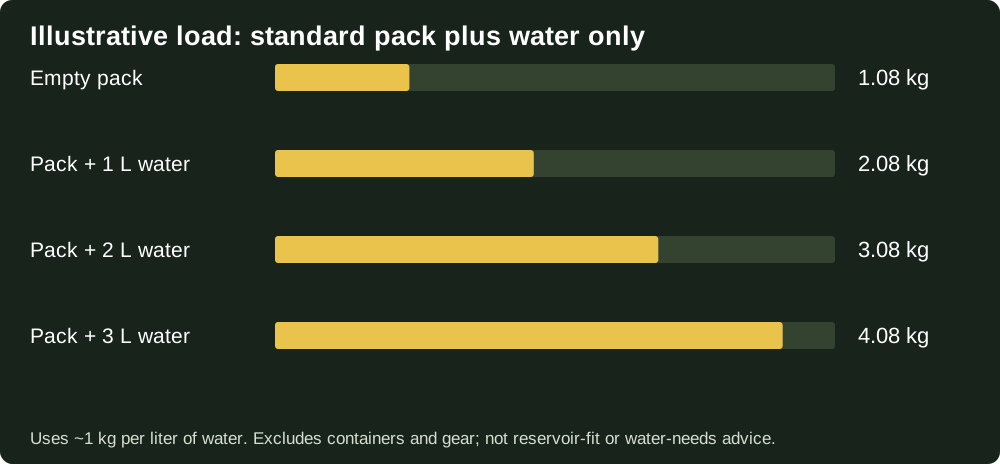
That example explains why I would compare complete loads instead of arguing only about the empty bag. Select water needs using the route, conditions and appropriate guidance, then weigh what you actually plan to carry. The illustration does not verify which reservoir size fits this pack, and it does not say how much water a particular hike requires.
Talon 22 sizing and a practical fitting sequence
Osprey sizes adult packs by torso length, not standing height alone. Its sizing page also says product-specific fit can vary and directs buyers to the Size & Fit information for the actual model. Use Osprey's current sizing guide. One size means the checked version has one adjustable size offering; it does not mean every person will fit it equally well.
Record the measurement and product-specific range before ordering. If the range is not visible in the listing, ask Osprey or the retailer rather than borrowing a chart from a different pack. Our Osprey backpack size guide explains why torso fit, hipbelt fit and capacity should remain separate decisions.
For the practical check, wear the clothing relevant to the intended use and load the actual equipment or a representative fitting load with the retailer's permission. Ask for help with the manufacturer's adjustment procedure. Then evaluate whether you can use the features that matter, not merely whether the backpack looks proportional in a mirror.
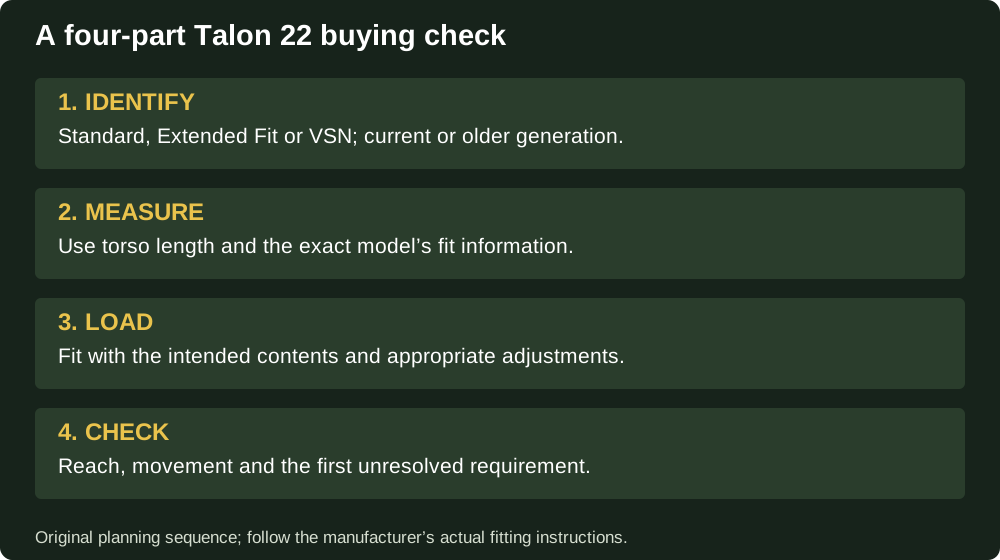
Write down the point that remains unresolved. It might be a pocket you cannot reach, an uncomfortable contact area or uncertainty about the adjustment range. That note makes an alternative fitting meaningful. Otherwise, you can try several bags and remember only that each felt different.
Keep the buying deadline separate from the fitting decision. A sale ending tonight does not change the shape of your torso. If the exact model cannot be tried and the return conditions are restrictive, that uncertainty should affect the purchase. A fit problem is not solved by a manufacturer's general reputation.
Standard fit vs Talon 22 Extended Fit
Extended Fit is a separately specified version designed around a broader fit range. Osprey describes longer shoulder and sternum straps, an extended hipbelt accommodating up to 70-inch hips, and repositioned pockets. Its checked published weight is 1.16 kilograms or 2.56 pounds, while capacity remains 22 liters. The Talon 22 EF page gives the model details.
That makes EF a fit-related comparison, not a larger-capacity upgrade. If a standard belt or strap arrangement is not suitable, adding liters would address a different problem. Compare the actual adjustment and pocket access rather than assuming the standard version must be preferred because it is slightly lighter on paper.
Osprey's Extended Fit explanation describes overlap with other fit offerings. In that overlap, the repositioned pockets and longer straps may be relevant to the decision. Try the applicable options where possible. The manufacturer's maximum hip measurement is a specification, not proof of comfort for everyone within it.
Hydration sleeve, bottles and reservoir compatibility
The current standard listing describes an internal hydration reservoir sleeve. The older S21 manual describes external sleeve access. Do not use a review of the older configuration to decide how convenient refilling will be in the current one. This is one of the clearest examples of why identifying the generation comes before accessory shopping.
Ask about the exact reservoir rather than just its advertised volume. Consider the filled shape, attachment, hose routing and remaining room for the other contents. A reservoir sold separately under the same brand is not automatically included with the backpack, and a marketplace bundle can differ from the standard pack-only listing.
My preferred buying sequence would be to identify the pack, confirm the intended hydration system with its instructions, then evaluate the complete packed arrangement. If bottles are your main arrangement, check the actual bottles with the side pockets. If reaching them without removing the pack matters to you, establish that during a fitting rather than relying on someone else's reach.
Use our water-filter versus purifier guide when water treatment is part of your trip planning. A sleeve and bottle pocket are carrying features. They do not establish that an available water source is safe, that a refill will be available or that the route requires a particular treatment method.
Does the Talon 22 come with a rain cover?
Do not assume one is included. The checked current standard feature list does not list an included rain cover, and the older S21 manual lists a cover as an add-on. Confirm the contents of the exact seller's bundle. A retailer including an accessory does not establish that every Talon 22 listing includes it.
Water resistance and waterproof protection are different claims. The current product lists a water-repellent fabric treatment, but that is not an assurance that everything inside will stay dry during prolonged rain. Choose protection for the contents that cannot tolerate wetting and follow the relevant equipment instructions.
When choosing a cover, confirm compatibility with the actual loaded pack and any attachments. A volume range printed on an accessory listing does not establish that it stays in place over your particular arrangement. Before the outing, check how it is fitted and whether you can retrieve it when needed.
I would also keep the wet-weather plan separate from the accessory purchase. If the route becomes unsuitable, owning a cover does not make continuing sensible. For vehicle-based trips, our camping checklist helps distinguish carried essentials from equipment that remains at camp.
CHECK THE EXACT TALON VERSION
Compare the seller’s listing before ordering
Match the generation, fit label and included accessories with your decision. This link opens an Amazon model search; listings may show different versions.
Find Osprey Talon 22 on Amazon →Can the Talon 22 carry a laptop or work as an everyday bag?
The standard hiking Talon lists a hydration sleeve; it does not provide the same dedicated laptop specification as the separately marketed Talon 22 VSN. Osprey's VSN page specifically lists a padded sleeve for laptops up to 16 inches and everyday organization. Do not transfer that feature claim to the standard hiking model because the names share Talon 22.
If laptop carrying is your main use, measure the device with its case and choose a pack whose documented arrangement meets that use. A hydration sleeve appearing large enough in a photograph does not establish padding, secure retention or protection. We have not performed a device-fit or drop test.
The standard pack can still be considered for a mixed routine, but I would make the trail-versus-desk priority explicit. For regular commuting with occasional light outings, our Daylite Plus review addresses laptop and daily-load questions. For trail-first carrying, the Talon's fit and hiking layout are more central to the decision.
Talon 22 as airline carry-on or personal item
Do not label it airline approved without checking a specific booking. The current manufacturer's dimensions are not a universal allowance, and the real packed dimensions can differ. Check the airline's current size and weight rules, including whether you are discussing a cabin bag or an under-seat personal item.
Measure the complete packed bag rather than counting on compression to solve every restriction. Body length and structured parts matter as well as the amount of clothing inside. I would not choose this hiking model mainly to solve a strict under-seat requirement unless the actual bag had been checked against that allowance.
Talon 22 vs Daylite Plus, Hikelite 26 and Tempest 22
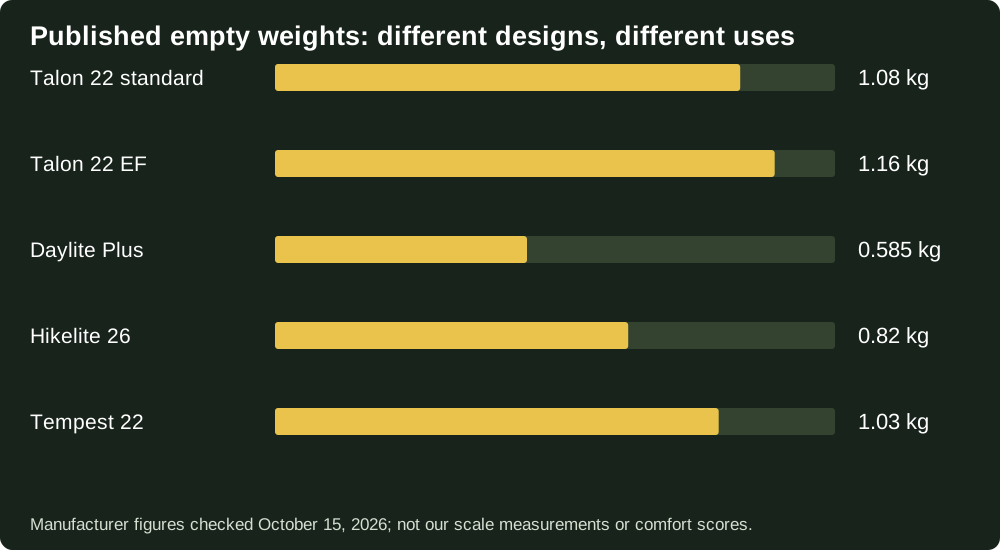
The most useful alternative is the one that addresses your unresolved requirement. A comparison becomes less useful when every design is described as comfortable, lightweight and versatile without saying why a buyer should choose differently. Here are the published numbers and design distinctions worth putting beside the Talon.
| Model | Capacity | Published empty weight | Why compare it |
|---|---|---|---|
| Talon 22 standard | 22 L | 1.08 kg | Trail-focused adjustment and close-to-body layout |
| Talon 22 EF | 22 L | 1.16 kg | Broader fit offering rather than extra capacity |
| Daylite Plus | 20 L | 0.585 kg | Simpler mixed everyday carry |
| Hikelite 26 | 26 L | 0.82 kg | Tensioned mesh and included rain cover |
| Tempest 22 | 22 L | 1.03 kg | Separately specified fit offering |
Talon 22 vs Daylite Plus
The Daylite Plus is the simpler everyday option in this comparison. Osprey lists 20 liters and approximately 0.585 kilograms on the checked U.S. page. Its webbing hipbelt and multifunction sleeve serve a different use emphasis from the Talon's more trail-focused arrangement. Check the official Daylite Plus listing and our model-specific review.
I would compare these by the day that matters most, rather than assume two additional liters justify the Talon. If a laptop, lunch and short walk dominate, the Plus deserves serious consideration. If loaded trail fit is the priority, try the Talon and assess whether its design actually helps you. Neither judgment is a measured comfort ranking.
Talon 22 vs Hikelite 26
The checked Hikelite 26 lists 26 liters, a 0.82-kilogram empty weight and a 5–20-pound load range. It uses a tensioned AirSpeed mesh backpanel and includes a rain cover. Those details make it a coherent alternative if you want to compare a suspended-mesh design or a different capacity. Osprey's Hikelite page supplies the specifications.
The lighter listed weight does not make it universally better, and the larger capacity does not prove that your contents will be easier to use. Bring the same load to the comparison. Ask whether the different layout addresses a real issue with the Talon rather than collecting reasons to own both.
Talon 22 vs Tempest 22
The current Tempest 22 is marketed as a women's-specific fit, with 22 liters, a listed 1.03-kilogram weight and different published dimensions. It also uses AirScape and an adjustable yoke. Check the current Tempest listing. It is not merely the older Tempest 20 with its name casually changed in a review.
Consider the documented fit arrangements and try the applicable models, rather than letting a product category label replace the fitting. The important outcome is appropriate contact, adjustment and access under your own load. Our eight-pack Osprey buying guide puts these choices into the wider day-hiking, travel and backpacking picture.
Buying guide before you order a Talon 22
Identify the exact listing first
Record standard, Extended Fit or VSN, along with the generation and size label. Match the photographs, specifications and included accessories. If the listing combines details from different versions, ask the seller to clarify them. An unclear description is a purchasing question to resolve, not a detail to ignore because the headline model name is familiar.
Price the usable setup, not just the bag
Compare the current seller price, shipping, return conditions and any accessories genuinely needed for your trip. We are not publishing a fixed best-price claim because listings change. Do not add a reservoir, cover or organizer automatically when suitable equipment you already own can serve the purpose.
Decide what would make you return it
Write down the unresolved requirements before ordering. Examples include whether your fitted harness position is appropriate, whether the water arrangement works with the complete contents and whether a key pocket is accessible. Follow the retailer's conditions for an indoor fitting. Having a clear decision criterion makes the return policy useful rather than merely reassuring.
Care, repairs and the used-pack decision
Use the instructions for the actual product and check Osprey's support resources for care or repairs. Different editions can use different fabrics and construction. Do not assume a cleaning method recommended for a waxed lifestyle edition applies to the standard hiking pack, or that a repaired part establishes the condition of the rest of a used bag.
For a secondhand pack, inspect the harness adjustment, belt, buckles, zippers, stretch pockets and attachment points. Ask what has been repaired or replaced, and distinguish normal cosmetic wear from a problem affecting the function you need. A lower price does not remove the generation and fit questions discussed earlier.
Record the return or remedy arrangements with the seller. Regional warranty policies and eligibility need to be checked through the relevant Osprey support service; do not treat a general guarantee slogan as a promise about every item and every transaction. Our camping gear storage guide explains how to keep ready equipment separate from items needing attention.
Frequently asked Talon 22 questions
Is the current Talon 22 really one size?
The checked current standard U.S. and UK pages list one size with an adjustable yoke. Older S21 versions used S/M and L/XL. One size does not establish a universal fit; confirm the product-specific range and a loaded fitting.
Is the Talon 22 good for overnight backpacking?
That depends on the actual sleeping equipment, conditions and complete load. Its name and stated capacity cannot answer the question by themselves. If your routine overnight contents are bulky, compare backpacking options in our Osprey shortlist rather than forcing a daypack arrangement.
Is the Talon 22 waterproof?
Do not assume waterproof contents protection. The checked standard product lists a water-repellent treatment, not a guarantee that the whole bag and every opening protect your equipment in prolonged rain. Confirm an appropriate cover and internal protection where needed.
Does a hydration reservoir come with the pack?
The current listing identifies a reservoir sleeve, which is not the same as an included reservoir. Check the seller's exact contents and any bundle. Confirm compatibility for the filled reservoir and the actual model rather than relying on a generic capacity claim.
Should I buy Talon 22 or Daylite Plus?
I would start with the Talon for a trail-first fitting and the Plus for a simpler mixed daily routine. Let the actual contents, device needs and loaded fit decide. Our Daylite Plus guide explores the other side of that choice.
My buying decision
The standard Talon 22 earns a place on a trail-focused shortlist because its specifications describe a coherent hiking arrangement, not merely a small bag with outdoor branding. I would buy only after identifying the current version and resolving the loaded fit. If the main task is laptop carrying, strict airline personal-item use or a larger overnight load, I would compare a model designed around that task instead.
Use the free backpack buying and fit worksheet to keep the model, load and unresolved questions together. The most useful outcome is a clear reason this pack fits your particular use—and an equally clear reason to choose something else if it does not.
How we researched this review
Checked October 15, 2026. We compared current U.S. and UK manufacturer specifications, the dated S21 manual, Extended Fit and VSN pages, sizing information and the relevant alternatives. Our contribution is the generation comparison, buying analysis, fit sequence and clearly labeled weight calculations. No hands-on carry, rain, laptop-fit or durability test was performed; no numerical review rating is invented.
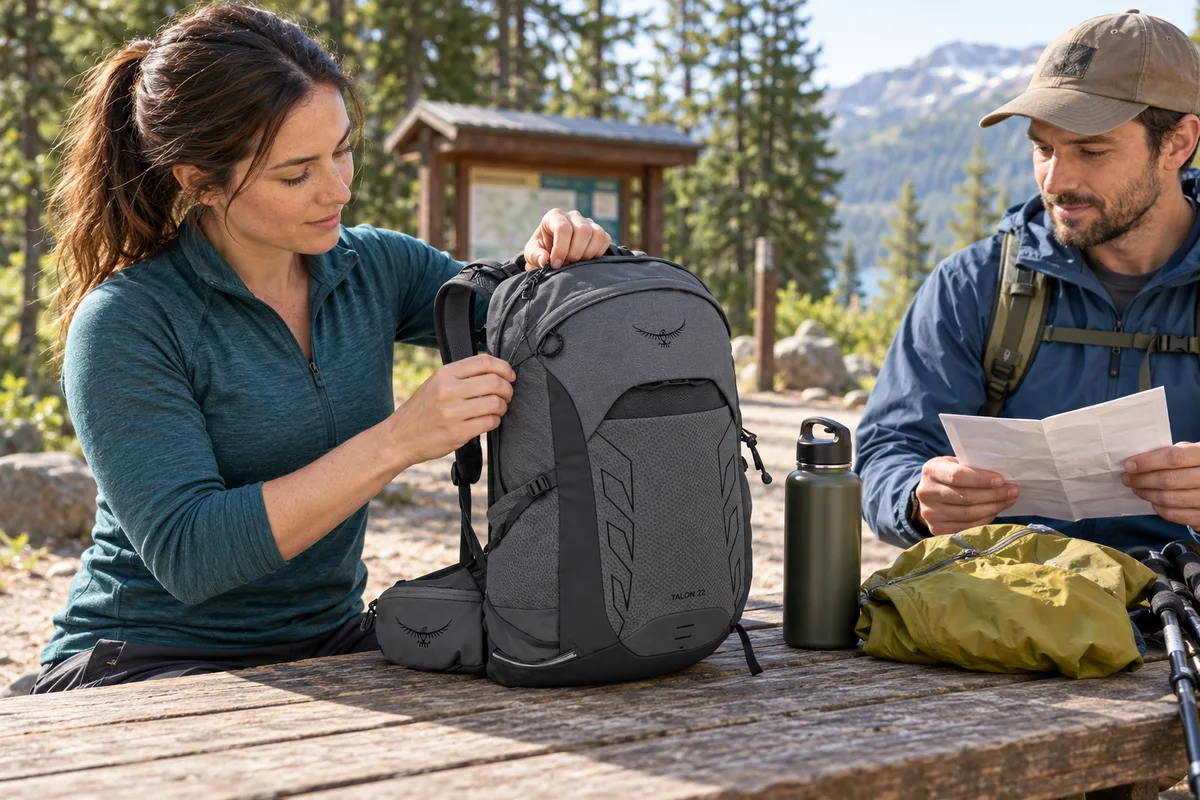
The product photograph comes from Osprey and was already used in our broader comparison. The two lifestyle scenes illustrate use and planning. Fine visual details can differ from the actual product; they are not evidence of product testing. Charts use published figures or explicit arithmetic rather than measured test results.