
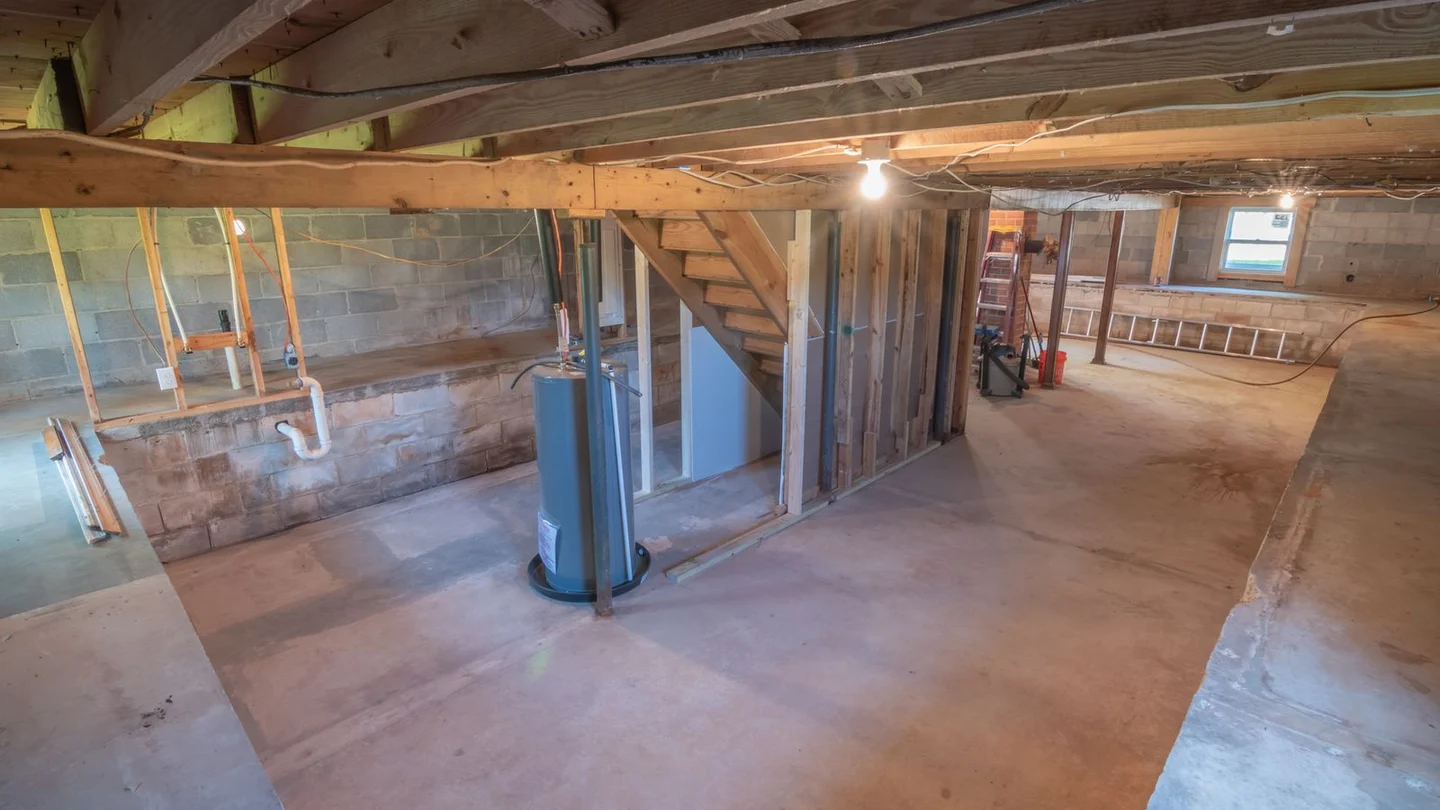
The best basement dehumidifier is the one that controls the defined humidity problem, drains reliably and fits the conditions where it will run. A machine that keeps stopping because its bucket is full can be the wrong purchase even when its advertised coverage looks generous. A larger machine is also the wrong answer when water is still entering through a wall, slab, pipe or drain.
Our shortlist separates portable dehumidifiers with pumps, gravity-drain models and professionally planned permanent systems. We compare published model-specific evidence and practical ownership requirements. We have not performed hands-on drying, noise, endurance or flood-restoration tests, and we do not invent scores to imply otherwise.
As an Amazon Associate, we earn from qualifying purchases. Amazon buttons open a search for the named model; confirm the exact suffix, included accessories, seller and current price. Editorial choices are based on fit and documented limitations. Manufacturer links are provided alongside shopping links.
Best basement dehumidifiers at a glance
Our portable pump starting point is the Midea Cube MAD50PS1QWT-A. Compare Frigidaire FHDP5033Y1 if you prefer a conventional cabinet. Where gravity drainage already works, investigate LG's Sonoran DT501BKR0; for a smaller moderate load, consider the 20-pint Cube. AprilAire E080 and Santa Fe Ultra70 belong in an installation discussion rather than a simple plug-in shopping comparison.
PORTABLE / BUILT-IN PUMP
Midea Cube 50-Pint with Pump
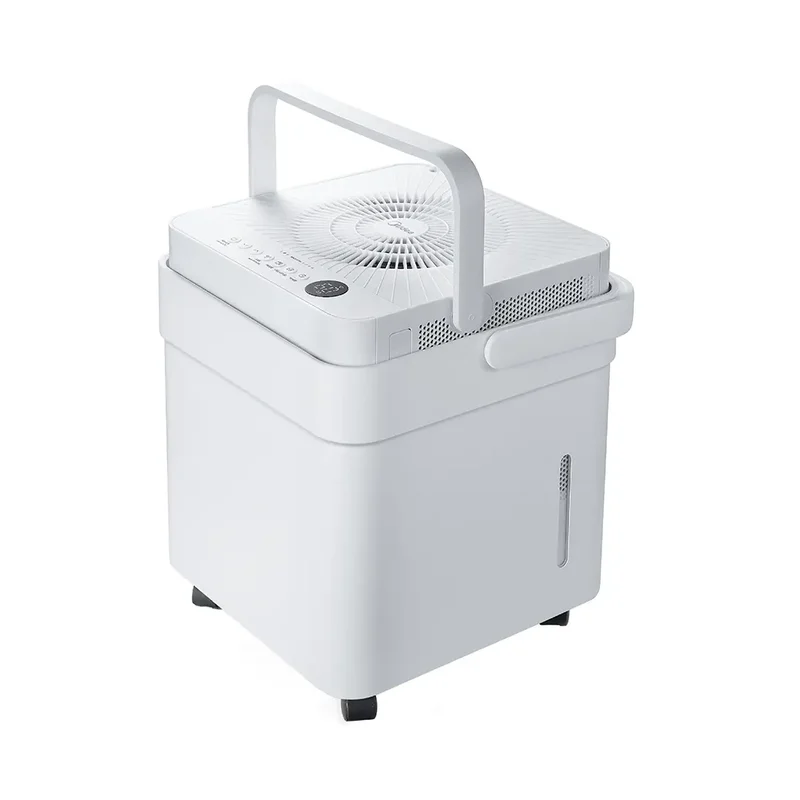
Our first shortlist for a portable unit with a built-in pump
CHECK AMAZON OPTIONSWho should choose something else?
Use these exclusions alongside the model-specific evidence and selection method in this guide. They explain where our recommendations stop; they are buying judgments, not failures observed in R&R testing.
| Named option | Choose another option or resolve this first |
|---|---|
| Midea Cube 50-Pint with Pump — MAD50PS1QWT-A | Active water entry remains unresolved or the pump’s permitted lift and discharge arrangement do not suit the location. |
| Frigidaire FHDP5033Y1 | The intended drain route has not been checked against the exact model’s pumping limits. |
| LG PuriCare Sonoran DT501BKR0 | You need uphill drainage but have not established a suitable pumping arrangement; a hose alone does not lift water. |
| Midea Cube 20-Pint — MAD20S1QWT | You have not established that the smaller unit matches the defined room and moisture load. |
| AprilAire E080 | You want a simple portable purchase without planning the permanent installation, drainage and service access. |
| Santa Fe Ultra70 | The installation and drainage requirements have not been assessed for your actual space. |
Evidence boundary: This is a research-based buying guide. Published specifications and manufacturer claims are attributed evidence, not our own measurements. Calculated examples do not establish actual runtime, comfort, reliability or protective performance. Product photos identify the equipment; illustrations and illustrative video do not document hands-on testing. No firsthand test result is added by this comparison.
PORTABLE / GRAVITY DRAIN
LG PuriCare Sonoran 50-Pint
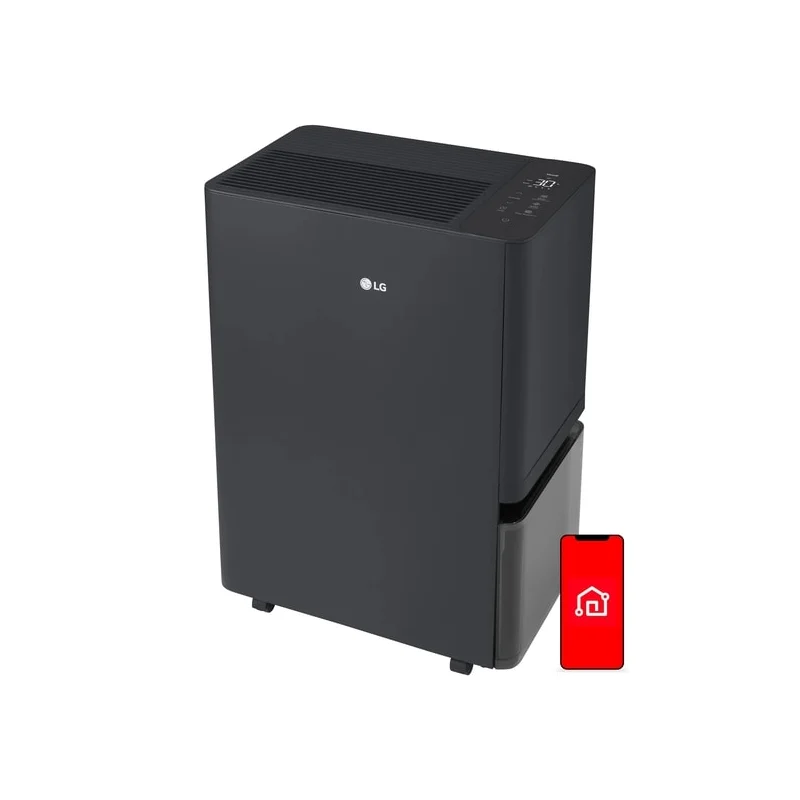
For a lower gravity drain and optional app control
CHECK AMAZON OPTIONSPERMANENT / PLANNED INSTALLATION
AprilAire E080
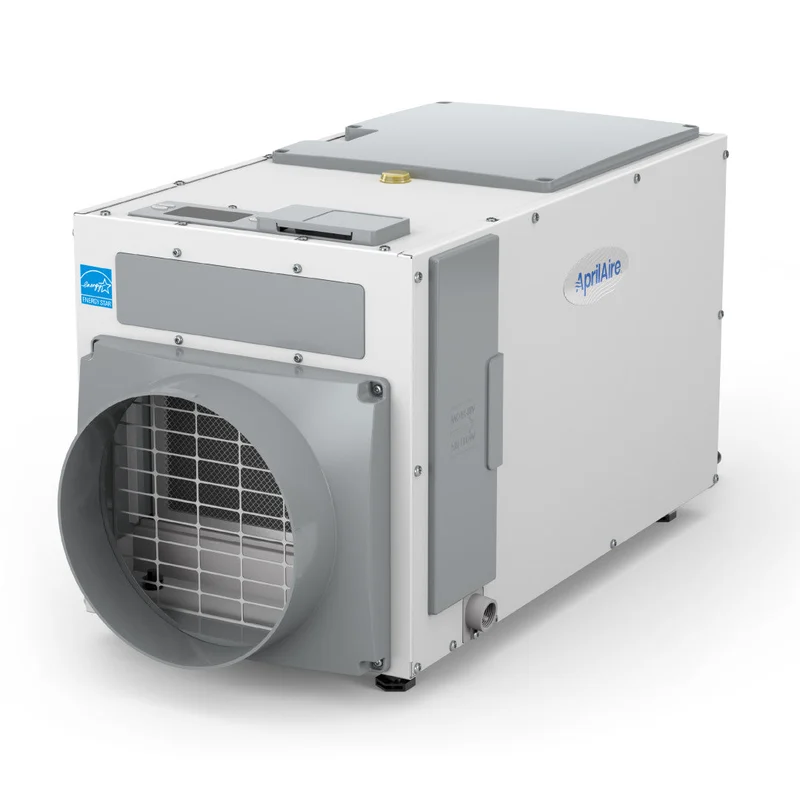
For a professionally planned permanent basement system
CHECK AMAZON OPTIONSRead all six model assessments · Compare drainage and capacity conditions · Check your drainage setup
When a dehumidifier won’t solve the water problem
A dehumidifier removes moisture from the air. It does not seal a foundation crack, repair a leaking supply line, clear a backed-up drain or stop groundwater entering the building. Seeing water collect in its bucket establishes that it removed some moisture; it does not establish that the source has been corrected.
Start with the observation, not the shopping category. Recurring puddles after rain belong with our basement water after heavy rain guide. Water that appears in dry weather belongs with our no-rain basement diagnostic guide. Suspected wastewater belongs with the sewage-backup response guide. Those situations may also need drying, but buying a dehumidifier does not settle their cause or safety.

If water may contact electrical equipment or wiring, keep out of the affected area and obtain appropriate emergency or professional help. Do not carry a powered appliance through standing water or run an extension lead across a wet floor. A purchasing guide cannot declare a flooded space safe to enter.
University of Minnesota Extension distinguishes humidity-symptom control from addressing basement moisture sources. That is the boundary we use here. For a proposed repair, our basement waterproofing cost guide helps compare scope and exclusions. For an actual flood, use our flooded-house drying guide and the relevant local instructions.
WATCH / THE BUYING DECISION
Humidity control, drainage and the six buying cases
Our narrated summary explains the shortlist and why a dehumidifier is not a water-entry repair.
Read the video transcript
A basement dehumidifier removes moisture from the air. It does not stop water entering through a wall, floor, pipe or drain. Investigate active water first.
For a portable unit with a built in pump, compare the Midea fifty pint pump Cube and Frigidaire F H D P fifty thirty three Y one. Verify the exact model and drainage limits.
With a suitable lower drain, compare L G Sonoran fifty pint or the smaller Midea twenty pint Cube. A gravity hose does not lift water uphill.
AprilAire E zero eighty and Santa Fe Ultra seventy are permanent installation options. Include air distribution, controls, maintenance access and condensate drainage in the plan.
Do not rank daily pint figures without their test conditions. A portable rating at sixty five degrees is not the same comparison as a system headline at eighty degrees.
Use the guide to compare all six models, check your drainage arrangement and estimate electricity cost. Choose humidity control for the right job, and keep unresolved water problems visible.
Video credits
Original edit and synthetic narration. Licensed moving inspection/planning footage by RDNE Stock project, Thirdman and Pavel Danilyuk from Pexels. These are general construction scenes, not R&R equipment testing or endorsements. Each shot appears once.
Six dehumidifiers compared by the job they do
These are conditional buying recommendations, not a claim that one machine wins every basement. Each choice includes the circumstance that makes it worth considering and the condition that would make us choose something else.
Midea Cube 50-Pint with Pump
Our first shortlist for a portable unit with a built-in pump
Reasons to choose it
- Built-in pump is explicitly listed for this suffix
- App control and a modular Cube design
- Portable alternative to a fixed installation
Trade-offs to understand
- Confirm pump lift and required bucket configuration in the supplied manual
- Extended operating space differs from nested storage space
- Not a repair for seepage or a flood-recovery system
The pump-equipped Cube is where we would begin when a portable dehumidifier must discharge to an approved outlet above its gravity-drain connection. The important part of the name is MAD50PS1QWT-A. A similar-looking Cube without the P is a different drainage purchase. Match the full model number on the seller's listing and carton before paying.
Our reason to shortlist it is the combination of a pump and a portable format. That can avoid making daily bucket handling the condition on which humidity control depends. It does not remove maintenance: the hose route, connection, pump operation and final discharge still need checking. Confirm the permitted lift in the exact supplied manual rather than borrowing a number from an older Cube variant.
The lift-and-twist arrangement also deserves a physical space check. Measure the operating configuration, hose exit and access needed to clean or remove parts; do not select a tight shelf from nested-storage dimensions. Choose this model for its water-handling arrangement, not because a large advertised coverage figure proves it can manage every room in a divided basement.
Frigidaire 50-Pint Built-In Pump with Wi-Fi
A conventional-cabinet pump alternative
Reasons to choose it
- February 2026 specification sheet explicitly lists pump and Wi-Fi
- Published 1.9-gallon bucket and 470-watt specification
- Conventional cabinet makes a useful contrast to the Cube
Trade-offs to understand
- Confirm regional listing, included hose and exact pump limits
- Published sound figures are not directly comparable with other brands' methods
- Retail stock and model suffixes vary
Compare the FHDP5033Y1 with the Midea when you want a built-in pump in a conventional cabinet. Its manufacturer specification sheet is unusually useful for purchase planning because the bucket, electrical specification and pump feature are described together. Our recommendation is based on that documented setup, not a claimed drainage or durability test.
Do not order simply because a marketplace result says Frigidaire 50 pint. The full suffix needs to match. Keep the pump hose and gravity-drain arrangement separate when checking the included accessories. Ask for the supplied installation instructions if your intended outlet is elevated; a pump being present does not establish that every proposed hose route is acceptable.
This is the alternative to consider when the Cube's operating arrangement does not suit your available space. Compare access to the filter, bucket and controls where the machine will actually stand. Its app can be convenient, but the buying decision should still work if you never connect the appliance to Wi-Fi. A working physical drain matters more than a remote status screen.
LG PuriCare Sonoran 50-Pint
For a lower gravity drain and optional app control
Reasons to choose it
- Manufacturer states its capacity test conditions and mode
- ThinQ control and multiple operating modes
- A useful non-pump alternative where gravity drainage works
Trade-offs to understand
- Do not buy it expecting an uphill drain pump
- Boost-mode capacity is not a promise for every operating mode
- Read the exact manual for drainage and temperature limits
The Sonoran is our shortlist choice when the drain arrangement already works without a pump. It offers a useful contrast with the two pump-equipped portables: the decision is whether you need the additional water-lifting system at all. Avoid paying for a pump because a buying guide treats it as universally superior; a permitted, continuously descending hose can be the simpler arrangement.
LG identifies the conditions and Boost mode associated with its approximately 50-pint daily claim. That qualification belongs beside the number. It is not an instruction to expect the same collection rate in a cooler room, at a lower humidity, or in another mode. We would compare the available drain and control features first, then assess actual humidity trends after installation.
ThinQ may be useful if the basement is inconvenient to visit, but it does not inspect a kinked hose or prove that the farthest room is dry. Follow the bucket and continuous-drain directions for the delivered model. This is not a substitute for a pump model when the only suitable outlet is above the unit and no separate, properly designed condensate arrangement is planned.
Midea Cube 20-Pint
For a smaller, moderately damp connected space
Reasons to choose it
- Smaller-capacity alternative to automatically buying a 50-pint unit
- Smart control and continuous-drain option
- Manufacturer explicitly says no built-in pump
Trade-offs to understand
- Not our default for a large, persistently very damp basement
- Cannot lift condensate uphill by itself
- Retail square-footage claims can differ; use conditions and capacity
A small basement room with a moderate humidity problem does not automatically need the largest portable on this page. The 20-pint Cube is the lower-capacity candidate to investigate when the space, moisture load and drainage fit. It is not a miniature version of the pump-equipped 50-pint model: Midea explicitly lists no built-in pump for MAD20S1QWT.
Use this choice to avoid buying more appliance than the defined task requires, not to save money by ignoring a larger task. If several closed rooms, persistent moisture entry or a wet building assembly are part of the situation, a smaller unit may spend long periods running without resolving the actual problem. More runtime alone does not tell you whether the capacity, airflow or diagnosis is wrong.
We would keep it on the shortlist for a manageable, connected space with a suitable lower drain or realistic bucket routine. Check the operating footprint and removal clearance before filling the bucket. If the only suitable outlet requires lifting water, compare a pump model rather than assuming the included continuous-drain hose can carry water uphill.
AprilAire E080
For a professionally planned permanent basement system
Reasons to choose it
- Fixed-system approach instead of routine bucket handling
- Manufacturer lists a washable MERV 8 filter
- Standalone or designed ducted applications
Trade-offs to understand
- 80-pint number must not be ranked directly against a 65°F portable rating
- Installation, controls and drainage add to the equipment purchase
- Exact revision and installation instructions must be confirmed
The E080 belongs on the shortlist when you want a permanent system, not another bucket appliance to move around the room. The useful question is whether a qualified installer can give the affected space an appropriate air path, control location and condensate route. A larger capacity label by itself does not make a permanent installation suitable.
Its headline rating uses 80°F and 60 percent relative humidity. That is a different comparison condition from the 65°F portable test discussed below. We therefore do not describe it as sixty percent stronger than a 50-pint portable. Your contractor should explain expected performance at the actual inlet conditions and with the proposed duct restrictions.
Compare the complete installation quote: equipment, any ductwork, controls, service access, drain or separate pump, electrical requirements and commissioning. Ask what remains excluded. Choose it when the permanent arrangement solves an ongoing humidity-control requirement after water-source issues have been addressed. Do not use it to justify finishing over an unresolved leak or to replace flood-damage assessment.
Santa Fe Ultra70
For a designed installation with limited cabinet height
Reasons to choose it
- Current sheet identifies a 12-inch-high cabinet and airflow options
- MERV 13 filter listed
- Two published temperature-condition ratings reveal why context matters
Trade-offs to understand
- Cabinet height is not total installation/service clearance
- Current A2L and older R410A documentation must not be mixed
- Ducting, controls and condensate handling require a designed arrangement
The Ultra70 is the installed-system alternative to discuss when cabinet height and airflow routing constrain the project. The manufacturer describes a low-profile format and configurable discharge. That makes it worth investigating for a defined installation problem; it does not make every tight gap an acceptable equipment location.
Its current A2L data sheet gives water-removal figures at two temperatures. The difference is a useful reminder that a single daily-pint headline hides operating conditions. Keep the current sheet separate from the older R410A documentation also available online. Have the installer identify the exact unit, refrigerant revision and corresponding instructions in the quote.
Plan the whole service envelope, including filter removal, drain access, duct connections and the requirements around the actual appliance. The listed MERV 13 filter is a maintenance specification, not proof of mold remediation or a health outcome. Choose this over a portable only when the permanent air and water routes, access and full installed cost make sense for the building.
Basement dehumidifier comparison
Read drainage and installation requirements before comparing the capacity column. The portable and permanent-system figures below are not one standardized performance ranking. An advertised square-footage figure is deliberately not the main sorting rule.
| Model | Best-fit decision | Published capacity / conditions | Drainage | Purchase-stage check |
|---|---|---|---|---|
| Midea Cube 50-Pint with Pump MAD50PS1QWT-A | Our first shortlist for a portable unit with a built-in pump | 50 pints/day portable class | Bucket, continuous drain and built-in pump | Confirm exact supplied revision, drainage limits and complete cost |
| Frigidaire 50-Pint Built-In Pump with Wi-Fi FHDP5033Y1 | A conventional-cabinet pump alternative | 50 pints/day; 2.01 L/kWh listed IEF | 1.9-gallon bucket, continuous drain and built-in pump | Confirm exact supplied revision, drainage limits and complete cost |
| LG PuriCare Sonoran 50-Pint DT501BKR0 | For a lower gravity drain and optional app control | About 50 pints/day in LG's stated 65°F / 60% RH Boost-mode test | Bucket or continuous gravity-drain hose; no built-in drain pump established | Confirm exact supplied revision, drainage limits and complete cost |
| Midea Cube 20-Pint MAD20S1QWT | For a smaller, moderately damp connected space | 20 pints/day portable class | Bucket or continuous gravity drainage; no built-in pump | Confirm exact supplied revision, drainage limits and complete cost |
| AprilAire E080 E080 | For a professionally planned permanent basement system | 80 pints/day at 80°F / 60% RH; different conditions from portable ratings | Permanent drain connection; no bucket; plan any required external pump | Confirm exact supplied revision, drainage limits and complete cost |
| Santa Fe Ultra70 4044100 / Ultra70; verify current refrigerant revision | For a designed installation with limited cabinet height | 70 pints/day at 80°F / 60% RH; 52.45 at 73°F / 60% RH in current A2L sheet | Drain connection; plan gravity drainage or an appropriate separate pump | Confirm exact supplied revision, drainage limits and complete cost |
Manufacturer specifications and availability can change. These are U.S.-market model references, with a North American manufacturer specification sheet used for the Frigidaire. Western readers outside North America should select their local voltage, model and warranty rather than ordering a similarly named U.S. appliance.
Choose a drainage setup before you choose a brand
A basement dehumidifier with a pump is useful when the suitable discharge point cannot be reached by gravity. It is not automatically the most reliable choice for every home. Decide where condensate is permitted to go, how it gets there and how you will notice a problem.

A bucket is a routine, not just a feature
Ask who will empty it and how often they can realistically visit the basement. Account for the weight of the collected water, the route to the disposal point and how the bucket is removed. Do not assume a handle makes a full bucket manageable for everyone. Automatic full-bucket shutoff protects against one kind of overflow; it also means the appliance stops dehumidifying until the condition is resolved.
Gravity drainage needs a suitable lower destination
Follow the unit's instructions for the hose, slope and connection. An upward loop or kink can defeat an otherwise sensible arrangement. The destination must be appropriate for the building and local requirements; do not assume any pipe, hole, window or outdoor discharge is acceptable. Keep the connection accessible instead of concealing it before operation has been checked.
A built-in pump adds a limit you must verify
Check the permitted vertical rise, total routing restrictions, supplied hose, setup sequence and whether the bucket must remain installed. Hose length is not the same measurement as permitted lift. Do not copy a lift number from another model in the same brand. Keep an appropriate way to detect a leak or failed discharge; our water leak detector guide distinguishes local alarms from remote notifications.
Permanent equipment needs a complete drainage design
A fixed dehumidifier's drain connection does not necessarily include a condensate pump. Ask the installer to identify any additional equipment, access for cleaning, overflow response and the approved termination. A quote that includes the machine but leaves the water route unresolved is incomplete for your decision.
Check the drainage decision
This filters buying cases, not room capacity or building safety. No information leaves your browser.
What size dehumidifier does a basement need?
Record the connected floor area and the humidity conditions before assuming that “bigger basement” means one particular pint rating. Note whether doors divide the space, whether laundry dries there, whether outside air regularly enters and whether the moisture source has been assessed. Air has to reach the appliance; a rating cannot pull it through an unsuitable layout.
ENERGY STAR's portable buying guidance uses both area and dampness. For spaces below 2,000 square feet, its starting ranges run from 20–30 pints per day for slight-to-moderate dampness to 30–50 for its wet category. Those are starting estimates, not permission to treat seepage with an appliance. Persistent wet surfaces or water entry still need investigation.
Daily capacity is not bucket capacity
A 50-pint-per-day rating describes removal under specified test conditions over 24 hours. It does not mean the bucket holds 50 pints. The difference changes how often someone must empty a bucket, and it explains why drainage can matter more to your routine than another feature on the control panel.
Keep the test temperature beside the number
ENERGY STAR explains the move to a 65°F portable test, rather than the older 80°F procedure. The AprilAire and Santa Fe headline capacities in this guide use their stated 80°F conditions. A 70- or 80-pint label from that category is not a direct percentage advantage over a 50-pint portable tested at 65°F.

For example, do not divide 80 by 50 and conclude that the E080 removes sixty percent more water in your basement. You have changed both the equipment and the comparison conditions. Ask for performance at the intended inlet conditions and installation rather than relying on that arithmetic.
Cold basements need a temperature check
Measure the room in the season when the appliance will be needed, then compare it with the operating range in the exact manual. A defrost feature is not a promise of full rated output at low temperatures. Do not infer operating limits from a retailer's general “basement” category or from another size in the same product family.
Very cold or unusually demanding spaces may need a different equipment category and professional assessment. We have not included a desiccant unit simply to make the list longer: any such recommendation should establish its electrical requirements, moisture-removal performance, heat output and suitability for the actual space.
What humidity should you set in a basement?
EPA's moisture and mold guidance recommends keeping indoor relative humidity below 60 percent, ideally between 30 and 50 percent if possible. Treat the setting as something to verify in the room, not proof supplied by the number on the machine.
Use a separate humidity reading away from the immediate discharge and compare conditions in the affected areas. Keep a simple dated record of humidity, temperature, weather, operating mode and visible water. Do not interpret a single reading beside the appliance as a measurement of every surface, closed room or wall cavity.
A fictional example: the display reaches the selected setting, but water still appears at one wall after rain. That does not call for confidently turning the setting lower. It calls for retaining the observation and investigating the entry route. A dry-air reading and a wet building material can coexist.
Also distinguish moisture management from remediation. A dehumidifier does not remove contaminated material, verify hidden cavities or certify that a mold problem has been resolved. Our mold-after-flooding guide explains why cleanup and drying decisions need their own evidence.
How much does a basement dehumidifier cost to run?
Compare purchase price with the cost of operating and maintaining the arrangement. A cheaper non-pump unit may be a poor fit if it requires a separate pump and installation. A permanently installed unit's price may omit ductwork, controls, drainage or electrical work. Request an itemized complete cost rather than comparing a portable box price with an unfinished installation quote.
For electricity, the transparent estimate is watts ÷ 1,000 × operating hours × electricity price. The example below starts with the Frigidaire sheet's 470-watt figure, eight assumed operating hours per day and an editable $0.20/kWh rate. That produces $22.56 over 30 days. It is an illustrative calculation, not measured consumption or a prediction for your home.
Estimate electricity cost with your assumptions
Runtime changes with conditions, settings and cycling. A nameplate or specification-sheet watt figure does not describe every moment of use. Fan-only operation, standby and compressor cycling can make a simple hours assumption inaccurate. Use measured energy over a representative period when available; never use this calculator to size an electrical circuit or a backup power source.
Efficiency is useful when the comparison is fair
Integrated Energy Factor, reported in liters per kilowatt-hour, is an efficiency measure rather than a bucket or daily-capacity measurement. Compare certified records for the exact model and relevant category. Do not rank products using one brand's annual assumption, another's instantaneous wattage and a third's older test procedure.
Maintenance also belongs in the budget. Price the specified replacement filter where applicable and find out whether it is washable or disposable. Check delivery, installation, return conditions and service access before a heavy unit arrives. Keep the invoice and exact model details with the manual so a future service or recall check does not rely on a marketplace title.
Placement, maintenance and checks after installation
Give air and people room to move
Follow the manual's clearances and placement requirements. Do not push a unit into a storage corner where boxes block its air path, or choose a position that makes filter access so awkward that maintenance gets skipped. Maintain safe access to building equipment, exits and electrical panels. An installed system needs its own service envelope, not merely enough space for the metal cabinet.
Keep the intended room boundary clear
If warm, moist outside air is continually admitted, the appliance may be working against a changing load. Conversely, a closed room without an appropriate air path may not be served by a unit elsewhere. Discuss the actual layout rather than assuming an open-door strategy is always suitable. Do not alter fire doors, ventilation or building systems to make the dehumidifier's coverage claim seem achievable.
Check the water route during ordinary operation
After correct setup, verify that condensate reaches the intended destination without leakage and that the unit behaves as its instructions describe. Check after moving or cleaning it and at suitable maintenance intervals. An automatic restart feature does not establish that a drain is clear after an outage. For overlapping water and electrical problems, read our sump-pump power-outage guide; the sump pump and a condensate pump do different jobs.
Clean the specified parts safely
Follow the exact cleaning, shutdown and filter instructions. Disconnect power as directed before maintenance. Do not bypass a float, interlock or warning because the appliance keeps stopping. Do not add disinfectants, fragrances or cleaning chemicals to a system that does not call for them. Condensate is not emergency drinking water.
Check the actual unit for recalls
Use CPSC's dehumidifier recall information and the manufacturer's notices, matching the model, serial number and date code where required. A brand name alone cannot identify a recalled unit. This matters particularly for secondhand equipment and old stock. Follow the specific notice if your unit is affected; this guide does not certify any model or individual appliance as recall-free.
When the basement is still damp
Do not jump straight to a second machine. Start with what can be observed safely, then decide whether the unresolved question is operation, distribution, moisture load or building condition.
| Observation | What to check | What not to conclude |
|---|---|---|
| Unit stops while the room remains damp | Bucket/full indicator, drainage and manual-defined warnings | The machine is necessarily undersized |
| Bucket collects little water | Room conditions, setting, mode, filter and operating range | Every wall cavity or material is dry |
| Water reappears after rain | Document location and investigate the entry route | A lower humidity setting fixes the foundation |
| One room improves, another does not | Air path and control/measurement location | Advertised coverage includes every closed room |
| Pump mode does not discharge | Safe shutdown and exact hose/pump instructions; service if unresolved | Bypassing a switch is an acceptable repair |
A good result is a documented improvement in the relevant room conditions, a reliable water route and no ignored source problem. It is not the largest amount of water collected, the lowest possible humidity setting or an app screen that looks reassuring. If the explanation remains uncertain, get the appropriate assessment before covering the evidence with finishes.
Basement dehumidifier questions
What is the best basement dehumidifier with a pump?
Our first portable pump shortlist is Midea MAD50PS1QWT-A, with Frigidaire FHDP5033Y1 as the conventional-cabinet alternative. The better purchase depends on the permitted discharge route, exact pump limits, operating space and maintenance access. Do not assume every 50-pint model from either brand has a pump.
Will a dehumidifier stop water coming through a basement floor?
No. It removes airborne moisture; it does not stop groundwater, repair plumbing or resolve a drain backup. Investigate the source and any immediate safety problem. Humidity control may be part of the final arrangement, but a full bucket is not evidence that the entry route has been repaired.
Is a 50-pint dehumidifier enough for my basement?
It depends on connected area, moisture load, temperature, airflow and drainage. Use an appropriate sizing starting point and the exact unit's conditions. A divided basement, persistent water source or unsuitable drain may require a different plan rather than simply a higher advertised coverage figure.
Can I run a dehumidifier continuously?
Use the modes and setup permitted by its manual. Continuous drainage still needs a reliable connection, suitable destination and maintenance. If operation is nearly constant without achieving the intended conditions, check the causes instead of assuming unlimited runtime is the solution.
Does a pump model still need its bucket?
Some arrangements require the bucket to remain installed. Confirm the exact instructions; do not remove or bypass parts because another model permits a different setup. A gravity-drain mode and pump mode on the same machine may use different connections and controls.
Is a whole-basement dehumidifier worth the installation cost?
It can be when a properly designed permanent system meets an ongoing need and includes suitable air distribution, control and drainage. Compare the complete installed scope and service requirements. The larger pint number alone is insufficient, especially when its test temperature differs from a portable unit's.
Should I buy a used basement dehumidifier?
Only after checking the actual model and date/serial details, recall status, condition and applicable instructions. Consider service, warranty and return limitations. Do not use an appliance that is damaged or affected by an unresolved recall simply because its upfront price is attractive.
How we selected and checked these models
Reviewed November 8, 2026. We selected distinct drainage and installation cases, checked manufacturer model pages and technical documents, and used public moisture-control guidance to set the limits of the buying advice. We did not borrow competitors' scores or describe manufacturer tests as our own. No ranking, durability, drying-speed, noise or health outcome is guaranteed.
Our original contributions are the drainage selector, editable operating-cost example, scenario-based comparison, troubleshooting table and explanatory diagrams. Product links are conveniences for checking the named model, not evidence of availability. For fixed installations, use the delivered revision's instructions and an appropriately qualified installer.
Primary specifications, guidance and image credits
- Midea Cube 50-Pint with Pump manufacturer information
- Frigidaire 50-Pint Built-In Pump with Wi-Fi manufacturer information
- LG PuriCare Sonoran 50-Pint manufacturer information
- Midea Cube 20-Pint manufacturer information
- AprilAire E080 manufacturer information
- Santa Fe Ultra70 manufacturer information
- Frigidaire February 2026 specification sheet
- AprilAire manufacturer-authored E080/E100 manual: 80°F rating conditions
- LG exact-model support and manual
- Santa Fe current A2L specification sheet
- ENERGY STAR portable buying and sizing guidance
- ENERGY STAR capacity testing explanation
- EPA moisture and mold guidance
- University of Minnesota Extension basement moisture guidance
- CPSC dehumidifier recall information
Header photograph: Curtis Adams / Pexels, resized under the Pexels license. Catalog images are credited to the corresponding manufacturer; they identify the model and do not depict R&R testing. No AI-generated photograph was created for this guide. Manufacturer image availability does not establish an open reuse license. The diagrams and comparison tools are original R&R work.