
PREPAREDNESS / WATERPROOFING COSTS
Basement Waterproofing Costs Explained—and Which Repairs You Actually Need
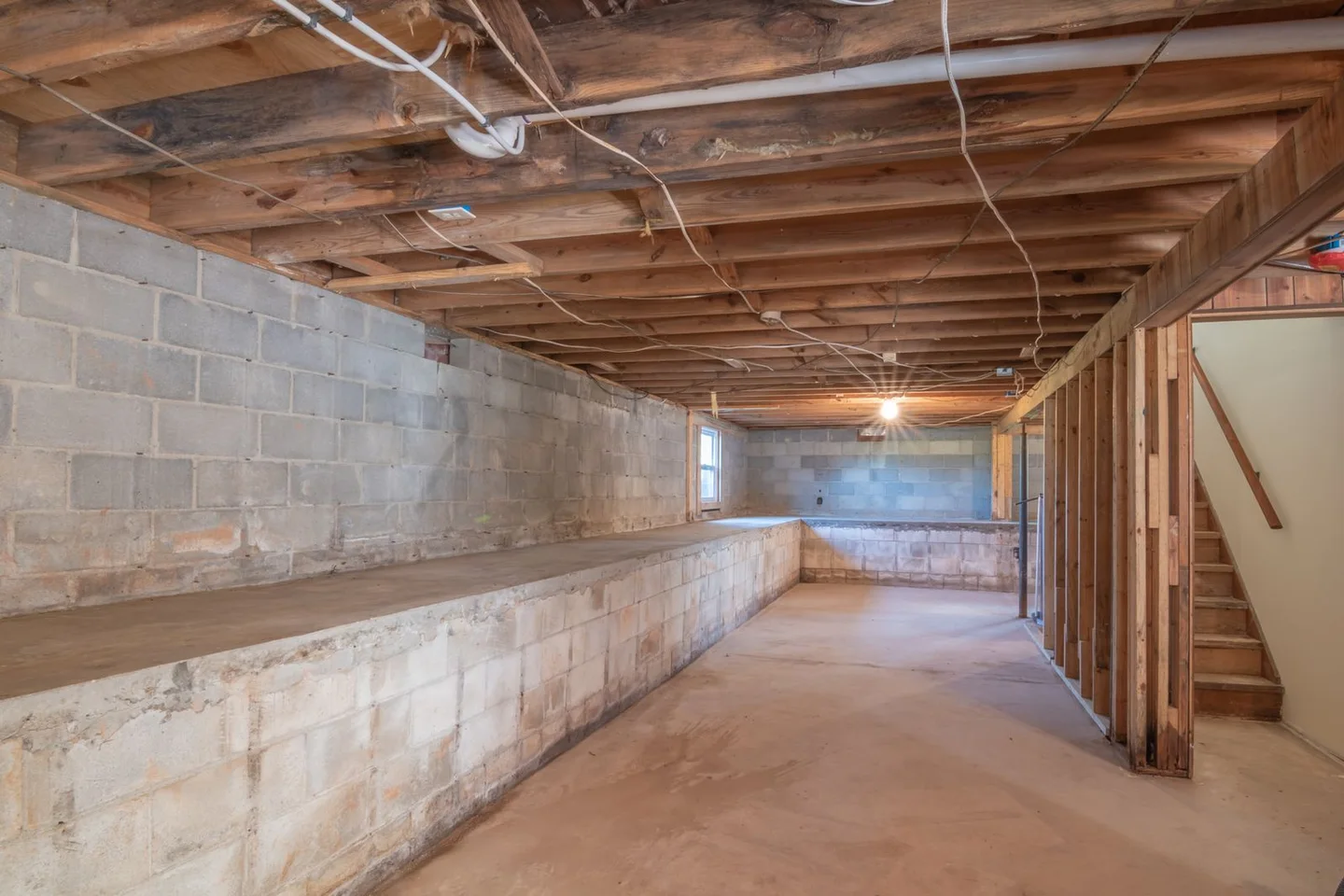
THE SHORT ANSWER
Price the repair your basement needs, not the word “waterproofing”
Basement waterproofing cost can mean a localized leak repair, an interior drain-and-sump system, or exterior excavation and wall protection. Those are different purchases. In published contractor examples reviewed November 8, 2026, Groundworks lists interior systems at $3,000–$7,000 and exterior work at $10,000 or more. These are that provider’s indicative figures—not a national survey, a local quote or a ceiling.
Start by identifying the water source. Then compare the same measured scope, discharge arrangement, restoration work and ongoing obligations. A lower headline price may simply leave more work for you to arrange.
COMPARE PUBLISHED COST EXAMPLESWATCH / BEFORE YOU SIGN
Two quotes. One missing scope.
A short narrated explainer shows why the lowest waterproofing bid is not necessarily the lowest completed-project cost.
Read the video transcript
Before you compare prices, compare the repairs. A localized leak repair, an interior collection system and exterior wall protection are different purchases.
Ask where the water comes from and what evidence supports the proposed repair. Plumbing, condensation and foundation entry do not call for the same response.
A twenty by thirty foot basement has six hundred square feet of floor area and a one hundred foot perimeter. The selected drain length is another quantity.
Quote A starts at sixty five hundred dollars. Add twenty six hundred for restoration and six hundred for electrical work. Its known comparable total is ninety seven hundred.
Quote B is ninety two hundred, including those same items. That is five hundred lower, assuming the remaining scope matches. An unresolved discharge cost would keep the comparison open.
Get measured scope, exclusions, discharge details, restoration, warranty and maintenance in writing. Use the full guide and quote comparison tool at Ready Resourceful dot com.
U.S. DOLLARS / SCOPE FIRST
How much does basement waterproofing cost?
Use the figures below to understand what a contractor is pricing. Do not combine a per-foot drainage allowance with a whole-system figure that already includes drainage. Ask what is inside each number before doing the arithmetic.
| Quoted category | Published price example | Important boundary |
|---|---|---|
| Interior waterproofing system | $3,000–$7,000 — Groundworks | Provider’s broad system range; get a project-specific component list. |
| Exterior waterproofing | $10,000 or more — Groundworks | Open-ended example, not a maximum or a comparable per-foot rate. |
| Acculevel Water Tunnel drainage | $67–$81 per linear foot | Named drainage approach, not every interior system; pump package is additional in its calculation. |
| Acculevel Fast Track drainage | $76–$92 per linear foot | Different construction conditions and drainage approach; not an automatic upgrade. |
| Acculevel sump package | $2,800–$3,500 | Its listed package covers pit, pump, drainage line and battery backup; not a bare-pump retail price. |
| Localized crack, grading or downspout work | Obtain a separate measured quote | Do not assign a whole-system average to an isolated repair or assume these items are included. |
Sources: Groundworks’ cost guide and Acculevel’s waterproofing guide. Both sell the services they describe. Their scope, geography, assumptions and pricing updates differ. We have not collected homeowner invoices or independently verified local transaction prices. No national average is calculated from these examples.
The difference between the examples is useful information. It tells you that “interior waterproofing” is not a standardized bundle. A price for a short drainage run using an existing suitable sump is not comparable to a complete perimeter installation with a new pit, backup, discharge work and finished-room restoration. Ask the contractor to name the bundle instead of arguing over an average that may describe another job.
Which basement leak repair do you actually need?
The first spending decision is whether waterproofing addresses the observed problem at all. A supply-pipe leak, appliance drain or condensation problem needs its own investigation. Use our dry-weather basement water guide when the puddle appears without rain, or our heavy-rain basement seepage guide when the timing follows storms. Neither the discovery date nor the puddle’s final location proves its source.
Do not enter water that may contact electricity. Rapidly increasing water, suspected sewage or apparent structural movement is not a routine quote-comparison exercise. Keep clear of an unsafe area and obtain the appropriate emergency, utility or qualified professional help. Our sewage-backup guide covers a different response route from groundwater seepage.
| What has been observed? | What to establish before buying a system |
|---|---|
| Dripping plumbing or water around equipment | Have the relevant plumbing or appliance problem assessed; foundation work may not address it. |
| Droplets on cool surfaces | Investigate air humidity and surface conditions; a drain does not automatically solve condensation. |
| Runoff collecting beside the house | Review gutters, downspouts, grading and a suitable discharge route. |
| One identified leaking wall crack | Establish crack condition, wall material and repair suitability; ask why a targeted repair is or is not appropriate. |
| Recurring water at the slab edge or wall-floor joint | Ask for evidence supporting the proposed collection, drainage and discharge design. |
| Bowing, displacement or changing cracks | Get qualified structural assessment before treating the work as a water-only repair. |
University of Minnesota Extension recommends identifying moisture sources and examining roof runoff and grading before moving to drainage measures where needed. That is a sequence of investigation, not a promise that one inexpensive adjustment fixes every basement.
Ask each bidder to put its explanation in writing: where water is believed to originate, where it enters, what observations support that explanation and which conditions remain unresolved. A drawing of the proposed work should follow that explanation. A sales package named after a product does not, by itself, explain why your house needs it.
Interior vs exterior basement waterproofing

Interior drainage manages collected water
An interior perimeter system typically creates a collection route near the inside edge of the basement and directs collected water to a discharge arrangement, often a sump. Ask exactly which walls and floor areas the design serves. A wall liner, channel, pit, primary pump, backup and discharge pipe are separate components even when they appear under one package name.
The room may need clearing and some finishes may need opening. Ask who protects belongings, controls dust, removes debris and restores the floor. A concrete patch is not the same deliverable as restoring flooring, trim and decorated walls. Also ask what happens during a power interruption; our sump pump outage guide explains why a primary electric pump and a backup arrangement are different decisions.
Exterior work addresses the outside face and surrounding water route
An exterior proposal can involve access to the foundation wall, surface preparation, a specified protective system, drainage and reinstatement of disturbed ground. “Exterior waterproofing” alone does not tell you whether the price covers a single wall, a limited crack location or the entire accessible perimeter.
For drainage work, the Building America Solution Center explains the importance of collecting water and carrying it to an appropriate destination. Ask where the proposed water goes and who verifies that destination is allowed. A pipe drawn to the property boundary is not an explanation of a lawful, workable discharge.
Neither method is automatically the winner
Compare access, foundation condition, water route and the result you need. A narrow side yard, attached structure, utilities or hardscape can complicate outside access. A finished basement can complicate inside access. Those are reasons to ask for a site-specific explanation, not reasons for an online guide to choose the system remotely.
Ask about combined scopes only when the assessment supports them. “Both” can be a justified design or an expensive bundle of overlapping work. The useful question is what each component contributes and which identified problem would remain if it were omitted.
Cost per square foot vs cost per linear foot
Floor area and drainage length measure different things. A 20-by-30-foot rectangular basement has 600 square feet of floor area and a 100-foot perimeter. A bid for 60 linear feet is pricing a selected run, not the whole perimeter. A wall coating may instead be measured by treated wall area. Require the drawing and the quantity to agree.

Using a published rate is only meaningful when the scope matches. At Acculevel’s listed Water Tunnel rate, 60 feet × $67–$81 = $4,020–$4,860 for that drainage component. Adding its listed $2,800–$3,500 sump package gives $6,820–$8,360. This is an arithmetic illustration using one provider’s figures, not a bid, a complete-project estimate or evidence that this design fits your home.
Minimum-job charges, access, preparation, local requirements and unpriced work can change the result. If your quote already includes a sump, do not add that package again. If it uses another system, do not treat this calculation as its price schedule.
Before comparing unit rates, ask whether they include labor, demolition, stone or other specified materials, concrete reinstatement, disposal and connections. The rate without those boundaries is a label, not an apples-to-apples comparison.
ORIGINAL R&R COMPARISON TOOL
Compare the known cost of two quotes
This tool adds figures you supply. It does not estimate local prices, decide which repair is needed or select a contractor. Enter each base bid and confirmed additional costs needed to reach the same agreed scope. Leave an amount empty when unknown; do not enter zero to hide an unresolved item. Nothing is sent to a server or saved by this tool.
Taxes, financing costs, change orders and ongoing maintenance are included only if you deliberately put them in your figures. Even a completed sum does not confirm technical suitability, contract protection or contractor quality.
A cheaper bid can become the more expensive project
In this fictional example, Quote A is $6,500 but excludes $2,600 of necessary finish restoration and $600 of electrical work. Its known comparable scope is $9,700. Quote B is $9,200 and includes both items. Assuming the remaining scope really matches, the initially higher bid is $500 lower for the described finished outcome.

If Quote B’s discharge work is unspecified, however, the comparison is unfinished. Do not assign a guessed amount and call it solved. Ask the bidder to price the omission or explain why the work is unnecessary. The biggest benefit of normalization can be finding the missing question, not producing a winning number.
What a basement waterproofing quote may leave out
Ask for each line to be marked included, excluded, allowance or unresolved. An allowance needs an amount, the assumption behind it and a rule for changes. An exclusion needs a responsible party and, where necessary, a separate price. “By others” is not a completed budget.
| Line item | Question that makes it comparable |
|---|---|
| Inspection and design | What has been established, and does a separate structural or other specialist assessment remain necessary? |
| Opening finished rooms | Who removes cabinets, floor finishes, trim and affected wall materials? |
| Water and damaged materials | Are extraction, drying, contaminated-material handling and mold-related work separately assessed and priced? |
| Pump and power | Which exact primary/backup arrangement is included? Who provides any required electrical work? |
| Discharge route | Where does collected water go, and who checks local permissions and the proposed route? |
| Permits and inspections | Who obtains any required approvals, pays the fees and provides final records? |
| Outside reinstatement | Are soil disposal, backfill, grading, planting, pavement and other disturbed features included? |
| Inside reinstatement | Does “restored” mean patched concrete or a finished room ready for normal use? |
| Unforeseen conditions | What stops work, who authorizes changes, and how are added labor and materials priced? |
| Warranty and maintenance | What is covered, who responds, what is excluded and which paid services are required? |
Drying and rebuilding are separate from installing a water-management system. If materials are already wet, use our flooded-house drying guide and post-flood mold-prevention guide to understand the decisions that need qualified assessment. A room that looks dry is not documentation that concealed layers are ready to close.
Existing radon equipment, foundation services and other building systems also deserve coordination. Ask who identifies affected components and checks that the proposed work does not interfere with them. Do not open a sump, drill a wall or alter a discharge line merely to make your own estimate easier.
When a smaller repair deserves consideration
“You may not need the whole system” is a question to investigate, not a diagnosis. If one entry route has been identified, ask why a targeted repair cannot meet the required outcome. Conversely, ask what evidence shows that treating only the visible spot would leave an important water route unresolved.
For basement crack repair cost, obtain the number of cracks, wall material, access requirements, proposed repair method and written limits. A localized water-sealing treatment is not automatically structural repair. Do not use a universal crack-width rule from an internet article to approve a moving or displaced wall.
For surface drainage, ask what water is being redirected and where it will go. A downspout extension, changed grading and foundation drain installation are different scopes. A proposal that transfers a problem to another part of your property—or a neighbor’s—needs clarification, not acceptance because it sounds inexpensive.
For dampness without identified liquid entry, ask what evidence supports humidity control rather than excavation. A dehumidifier can have a role, but it does not repair a leaking supply connection. Building America’s existing-floor water-management guidance likewise distinguishes surface treatments from resolving persistent water intrusion before finishing work.
Equipment should follow the design
Our sump pump buying guide can help explain component choices once a suitable pumping arrangement is established. Our water leak detector comparison explains warning options. A detector reports water at its sensing location; it does not establish where the water originated or make a defective installation acceptable. This article does not recommend purchasing a kit in place of diagnosis.

Questions to ask before committing
- What problem does this design address? Ask for the observations, affected locations and remaining uncertainty.
- Can you mark the exact scope on a drawing? Match measured lengths and areas to the estimate.
- What does the finished result include? Agree on restoration, cleanup, access and outstanding work.
- What would change the price? Require a clear authorization process for additional work.
- What is my responsibility after installation? Obtain the maintenance requirements, operating instructions and warranty exclusions.
- Who handles an unresolved leak? Know the service process and what the written promise actually covers.
The Federal Trade Commission’s contractor guidance recommends multiple written estimates, checking licensing and insurance, reading the agreement and resisting pressure to decide immediately. Verify requirements with the relevant local authority. Do not assume a brand name, a review score or an offered monthly payment answers those checks.
Review financing separately from the repair proposal. A manageable monthly amount does not explain the total amount paid, fees or what happens when a promotional period ends. Obtain the full terms and appropriate independent advice when needed. Likewise, ask your insurer about the actual cause and policy wording; this guide does not promise that waterproofing or resulting damage is covered.
Keep the signed scope, drawings, approved changes, invoices, warranty and completion records together. Before finishes are replaced, agree who decides that prerequisite repairs and drying are complete. The handover should identify anything still outstanding rather than turn the final invoice into an unsupported all-clear.
Basement waterproofing cost questions
How much does it cost to waterproof a 1,000-square-foot basement?
Floor area alone is insufficient. Ask how much perimeter or wall area is treated, which method is proposed, what access is available and what restoration is included. Two basements with equal floor area can have different perimeters and repair needs.
Is interior waterproofing cheaper than exterior waterproofing?
It can be, and published provider examples often show that pattern. But access, foundation condition and included work can change the comparison. Compare site-specific designs for the same required outcome.
Can waterproof paint replace a drainage system?
Do not treat a coating as an automatic substitute for managing persistent water intrusion. Ask which moisture mechanism the product addresses and what remains unresolved. A finish that hides a stain is not evidence that the source is controlled.
Does a sump pump price include waterproofing?
Not necessarily. A retail pump, a replacement installation and a package with pit, drainage, backup and discharge work are different purchases. Require the component list and exclusions.
Is a lifetime warranty enough to choose a contractor?
No. Read the covered event, exclusions, service process, maintenance requirements and any transfer conditions. Compare what the written agreement promises rather than relying on the word lifetime.
What is the cheapest way to fix a leaking basement?
The lowest-cost suitable repair depends on the identified source. Rule out interior leaks and evaluate relevant surface drainage before assuming major work is necessary. Do not delay an urgent safety or structural problem while shopping for the cheapest product.
How we researched this guide
Reviewed November 8, 2026 for U.S. homeowners. Published contractor price examples are attributed, not blended into a national average. Original quote examples, diagrams and the comparison tool explain scope; they do not diagnose a property or provide an engineered design. No homeowner invoices, onsite inspections, contractor endorsements or firsthand product tests are claimed.
Sources, pricing limitations and visual notes
- Groundworks: published cost examples; commercial provider
- Acculevel: published drainage and sump package examples; commercial provider
- University of Minnesota Extension: moisture causes and solutions
- Building America: footing drainage and discharge
- Building America: existing-floor water management
- Building America: pre-retrofit assessment
- FTC: written estimates and contractor checks
Provider pages may change after review. Building guidance must be applied to the actual structure and local requirements. Photographs: Curtis Adams and Thirdman. Video footage: Everett Bumstead, Thirdman, Pavel Danilyuk and RDNE Stock project, via Pexels. The footage shows general construction inspection and planning, not an R&R waterproofing project or contractor endorsement. The diagrams, worked examples and edit are original R&R explanatory material. Narration is synthetic; the quote comparison is fictional.
Choose humidity control for the right job
Once water-source and safety questions have been assessed, our basement dehumidifier buying guide compares six models, pump versus gravity drainage and operating costs. A dehumidifier manages airborne moisture; it does not replace repairs, cleanup or verification that affected materials are dry.
When the wetness is on a basement wall
Our basement wall seepage and condensation guide compares visible clues, explains possible water routes with cross-sections and includes a dew-point calculator. Use it to organize observations before choosing a repair; a photograph alone cannot establish the cause.