
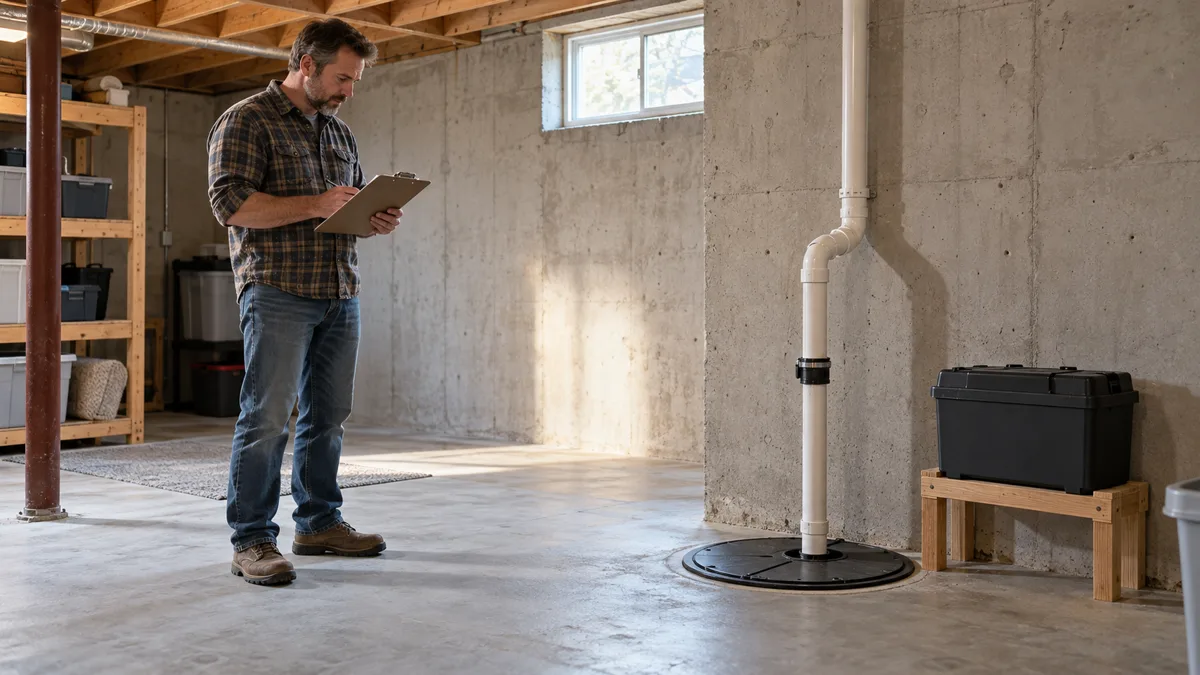
The best sump pump for your basement is the one that can remove incoming water at your actual discharge head, cycle correctly in your basin and keep a workable backup path when the power fails. A larger motor alone does not establish any of those things.
Our shortlist separates three purchases that often get mixed together: a replacement primary pump, a primary-and-backup combination, and an independent backup for a primary you already own. Start with the role you need; then compare capacity and fit. If water is already rising, use our sump pump power-outage troubleshooting guide first.
Best sump pumps at a glance
| Model | Best-fit role | Decision that comes first |
|---|---|---|
| Zoeller M53 | Primary-only replacement | Match the exact model and curve; add a separate outage plan. |
| Liberty Pumps 257 | Vertical-float primary | Verify full float travel and room for any backup. |
| WAYNE WSS30Vn | Primary + battery combination | Secondary capacity is lower; confirm battery and check-valve requirements. |
| Basement Watchdog Special CONNECT BWSP | Add-on battery backup | Compatible battery and optional Wi-Fi module are separate purchases. |
| Liberty SumpJet SJ10 | Municipal-water backup | Plumber must verify flowing supply, backflow protection and local rules. |
**Our buying rule:** choose the primary against the required flow and total dynamic head, and size the backup against the water it must handle when the primary contributes nothing. Two pumps in one pit do not automatically deliver two independent flood defenses.
As an Amazon Associate I earn from qualifying purchases. Shopping buttons open exact-model Amazon searches; confirm the model, seller and included components before ordering.
How we selected these sump pumps
We compared manufacturer product pages, performance information and installation documentation, with emphasis on decisions a homeowner can verify before paying an installer. This is a research-based buying guide, not a hands-on endurance test. We do not assign fabricated scores, claim years of personal use or treat customer star ratings as failure-rate measurements.
Our selection criteria are practical: a defined role, accessible specifications, a way to check the pump against the installation, and an understandable failure limitation. We favor a useful shortlist over a long list of nearly interchangeable pumps. Prices change, and the cheapest pump-only listing can become a more expensive installed system once the battery, valves, alarm and plumbing are included.
The models below are U.S.-market examples. Verify the exact voltage, frequency, model suffix and local installation requirements. A similarly named overseas variant is not necessarily interchangeable. Manufacturer specifications are claims under stated conditions, not measurements made in your basement.
Zoeller M53 for a straightforward primary replacement
The M53 belongs on the shortlist when you want an automatic primary pump and already have a suitable sump arrangement. Zoeller's technical sheet identifies the automatic M53 as a 115-volt, 3/10-horsepower model with a 1½-inch discharge. The standard automatic configuration in that sheet has a 9-foot cord; other cord variants exist. Check the exact listing rather than assuming every M53 package is identical. Zoeller technical sheet FM2778.
**What we like about the choice:** its role is clear. It is a primary groundwater pump, so you can evaluate it against your existing inlet, operating levels and discharge instead of buying a bundle whose extra parts you may not need.
**The tradeoff:** buying an AC primary does not solve an outage. If your current pump is healthy but electricity is the weak point, a separate backup may be the more useful purchase. If the old pump could not keep up even with power, first establish whether the limiting factor was the pump curve, a restricted outlet or water entering outside the collection system.
Before ordering, ask the installer to identify the actual part number, float clearance and working point on the curve. Do not replace a functioning setup purely because another pump advertises a larger zero-head number. For a finished basement, make the backup and high-water notification part of the same quote.
Liberty 257 for buyers comparing vertical-float primary pumps
Liberty's 257 is a 1/3-horsepower member of its cast-iron 250-Series. The manufacturer distinguishes it from other members by its vertical magnetic float. That distinction matters: the 250, 251, 253 and 257 are not simply different names for the same automatic configuration. The standard 257 is listed with a 10-foot cord; the 257-2 has a 25-foot cord. Liberty 250-Series model table.
**Who should compare it:** a homeowner replacing a primary pump in a basin where a wide-swing tethered float would be awkward. A vertical float is worth considering, but the entire installed assembly still has to clear the basin wall, pipework and backup switch.
**What should not decide the purchase:** the small difference between a 3/10- and 1/3-horsepower label. Those fractions do not tell you which pump will deliver the flow your home needs. Compare the curve at the same total dynamic head and check the intended operating range.
The useful question for your contractor is, “What happens to the water level through a complete cycle with this float and this basin?” That reveals more than asking whether one brand is stronger. Check access for future switch or cord service, too. A neat-looking installation that cannot be serviced without dismantling the whole backup arrangement can create avoidable expense later.
WAYNE WSS30Vn for replacing the primary and adding battery backup together
The WSS30Vn is a combination system containing a ½-horsepower AC primary and a separate 12-volt secondary pump. WAYNE lists a minimum 16-inch basin diameter and says a check valve is required but not included. That makes it a different purchase from a compact primary-only replacement. WAYNE WSS30Vn specifications.
**Why it earns a place:** it provides a defined primary-and-backup starting point when both parts need replacing. This can simplify the shopping list, although the installer still needs to verify battery requirements, layout, discharge and usable space beneath the lid.
**The important limit:** the published primary flow at 10 feet is 3,840 gallons per hour; the secondary figure is 1,500. The backup therefore cannot be assumed to reproduce the primary's capacity during a severe inflow event. Do not add those two numbers and call the result your outage performance.
Compare the secondary pump to your expected outage inflow, not to the marketing description of the entire package. If the primary already runs almost continuously during a storm, a lower-capacity backup deserves particular scrutiny. Ask for the exact battery compatibility and included-parts list in writing. A combination system can be the right purchase, but “combination” is not a promise that every component you need arrives in the box.
Basement Watchdog Special CONNECT BWSP for an independent battery backup
The BWSP is a separate battery-powered pumping system to add alongside an existing primary. Its published capacity is 1,850 gallons per hour at 10-foot lift, compared with 2,600 at zero feet. The manufacturer lists a dual-float arrangement and controller monitoring. A compatible battery is a separate purchasing decision, and the optional Wi-Fi module is sold separately. Basement Watchdog BWSP specifications.
**Best reason to consider it:** you want another pump capable of taking over if the AC supply fails or the primary pump stops working. That is a different kind of redundancy from a battery inverter that supplies electricity to the same primary motor.
**The limit to resolve:** the backup still has finite stored energy, a capacity curve, a float and a discharge route. It cannot overcome an outlet that is blocked or frozen. Remote notification also depends on the communications equipment remaining available.
Budget for the approved battery, its enclosure and the installation rather than comparing the controller-kit price to a complete system. Ask how to test the backup independently and which alarm means low battery, charging trouble or pump activation. A warning is useful only when someone knows what it means and can respond. For the difference between pump failure and loss of electricity, see our backup compatibility decision tree.
Liberty SumpJet SJ10 for a municipal-water backup alternative
The SJ10 uses a pressurized water supply instead of a battery to drive a separate backup. It is worth investigating where municipal water remains dependable during an electrical outage. It is a poor assumption for a home whose well pump also stops when the power goes out.
Liberty's current installation manual recommends at least 30 psi upstream of the backflow device with the valve open; its maximum is 100 psi with the valve closed. Flowing conditions matter. A favorable static-pressure reading alone does not establish a suitable installation. The manual also requires a discharge separate from the primary pump. The standard SJ10 has no alarm; do not confuse it with an alarm-equipped package. Liberty SumpJet manual.
**Why it is useful:** it avoids relying on a stored battery charge for the pumping mechanism. **Why it is not universal:** it introduces a different dependency—adequate water service—and requires compliant backflow protection and plumbing. Water use also belongs in the operating-cost discussion.
Have a plumber assess the supply, local backflow requirements and permitted discharge before buying. We would not choose it merely because a battery-free description sounds maintenance-free. The right comparison is between dependencies your particular property can support, including what happens when a storm affects both electricity and water infrastructure.
Compare the pumps before comparing the prices
| Model | Normal primary pump? | Works without utility electricity? | Covers primary motor failure? |
|---|---|---|---|
| Zoeller M53 | Yes | No, unless separately powered | No |
| Liberty 257 | Yes | No, unless separately powered | No |
| WAYNE WSS30Vn | Yes, AC primary | Yes, via charged secondary system | Potentially, through separate secondary |
| Basement Watchdog BWSP | No, independent backup | Yes, while adequate battery energy remains | Potentially, through separate pump |
| Liberty SJ10 | No, independent backup | Yes, with adequate municipal water | Potentially, with water and discharge available |
These products do different jobs. The primary-only models need their own outage plan. The combination system includes two pumping roles. The separate battery and water-powered backups are additions to a primary, not replacements for normal everyday pumping.
Keep that distinction visible when collecting quotes. A pump-only price, a backup-kit price and a completed installation should never occupy an unlabeled “cheapest to most expensive” ranking. Ask each installer to separate equipment, battery, electrical work, plumbing, alarms, permits and ongoing service. That produces a comparison you can actually use.
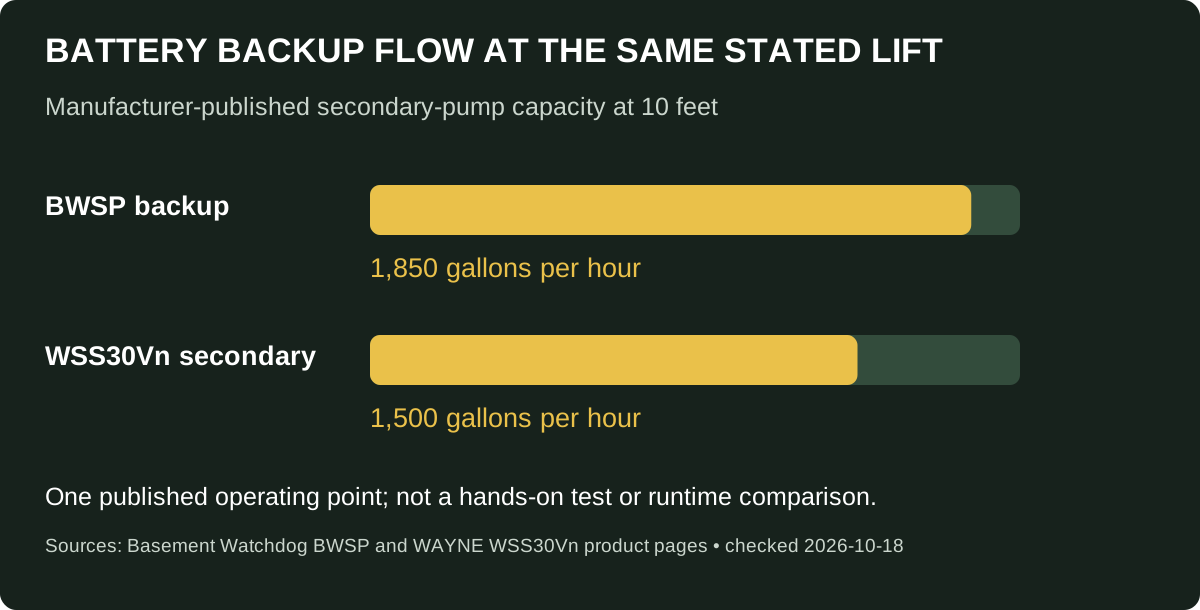
The flow graphic deliberately compares only two documented secondary-pump figures at the same stated 10-foot lift. It is not a full performance ranking. Your system's friction losses can make its total head greater than the vertical rise, and water-powered performance depends on a different input condition. Check the relevant curve rather than extrapolating from one point.
What size sump pump do I need?
Start with the water coming in, the route water must take out and the storage volume available between switch-on and switch-off. Floor area alone cannot answer the question. Two similarly sized houses can have very different groundwater conditions, drainage layouts and discharge heights.
**First, document the existing system.** Record the pump model, basin dimensions, discharge diameter, pipe route, fittings, check valve and outlet location. Note whether the pump runs in dry weather, only after rain or almost continuously during wet periods. Your installer can use that history to investigate demand; a quiet afternoon is not a reliable worst-case measurement.
**Second, establish the working head.** Vertical rise is part of the load. Pipe length, diameter, fittings and valves add friction. Total dynamic head is the combination that matters when using a performance curve. “Ten feet above the pump” and “ten feet of total dynamic head” are not automatically the same condition.
**Third, match capacity to demand with an appropriate margin.** Too little capacity lets the level rise despite continuous operation. An unnecessarily large pump in a small basin may empty its working volume rapidly and restart frequently. The goal is controlled water level and sensible cycling, not the biggest horsepower number your outlet can support.
Ask for the reasoning behind the selected working point. If a recommendation consists only of “everyone gets a half-horsepower pump,” the site-specific part of the decision is missing. High inflow, high head or an unusual basin can require a different solution from the products in this shortlist.
How to read a sump pump performance curve
A curve connects flow to head. As the head increases, the available flow generally decreases. The advertised maximum flow is usually associated with low or zero head; it should not be used as the capacity at your basement's discharge height. Maximum head is the opposite end of the curve, near zero delivered flow—not a productive working point.
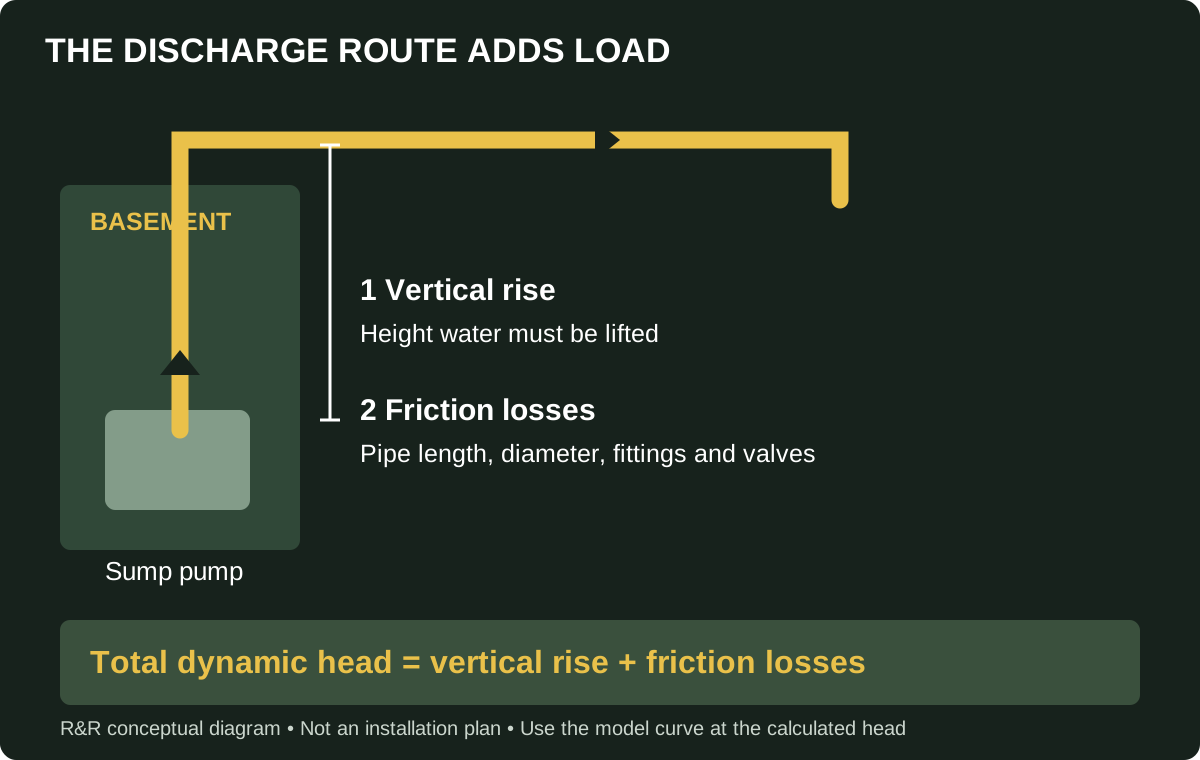
Use the same units across products. Gallons per minute multiplied by 60 gives gallons per hour. For example, 25 gallons per minute is 1,500 gallons per hour. That conversion is arithmetic; it does not make measurements at different heads comparable.
For a buying decision, write the condition beside every figure: “GPH at ___ feet of head.” If a retailer provides only the maximum, open the manufacturer's curve. If two official documents disagree, resolve the exact model and revision with the manufacturer before ordering. We left the WAYNE CDU980E out of this numerical shortlist because its current product page presents conflicting 10-foot figures; choosing a convenient number would create false precision.
Also distinguish pump performance from system performance. A curve cannot correct for a blocked check valve, a discharge that returns water to the foundation or a collection system that never intercepts the leak. If your basement remains wet while the pit is controlled, investigate that path instead of automatically upsizing the motor.
Basin fit and float clearance are buying specifications
The pump body fitting through the opening is only the beginning. The float needs room to move through its full operating range. A second pump, backup float, discharge branches, check valves and sealed lid can turn an apparently generous basin into a crowded assembly.
Measure internal diameter and depth, not just the visible lid. Note where inlet pipes enter and where the switch will operate. Ask the installer to show that neither float can catch on a pipe, wall or cable and that the backup activates at a suitable higher level. The backup's start level must still leave useful room before overflow.
A vertical float may help where a tethered float's swing would be restricted, but “vertical” does not mean clearance-free. Conversely, an adjustable tether is not automatically worse; it needs a basin and layout that permit its intended movement. Treat the float and basin as a matched arrangement.
Keep service access in the plan. A future technician should be able to identify and test each pump without guessing which cable or controller belongs to it. A secure lid should preserve required access and any applicable sealing requirements. This is especially important where a sump cover is part of a radon-control arrangement; involve the relevant installer before changing penetrations.
Submersible versus pedestal sump pumps
A submersible pump places its motor in a sealed assembly intended for the sump environment. A pedestal arrangement keeps its motor above the water with the pumping section below. This guide concentrates on submersible primary examples because they fit a common covered-basement setup, not because pedestal pumps are automatically unsuitable.
If you already have a pedestal system, evaluate why. Available basin space, access and the existing pipework may influence the replacement. Switching types can change more than the footprint. Check motor placement, switch operation, cover compatibility and the service clearances specified by the chosen model.
Neither style establishes flood protection by itself. A carefully matched modest pump can be more useful than an oversized replacement installed with poor float clearance. Compare actual fit and performance before deciding that changing construction style will cure the problem.
Battery backup versus water-powered backup
Choose the failure you want to survive, then choose the energy source. A separate battery pump can cover loss of AC power and potentially failure of the primary motor or switch. A battery inverter supplying the existing primary covers power loss, but leaves the same primary pump as a single point of failure.
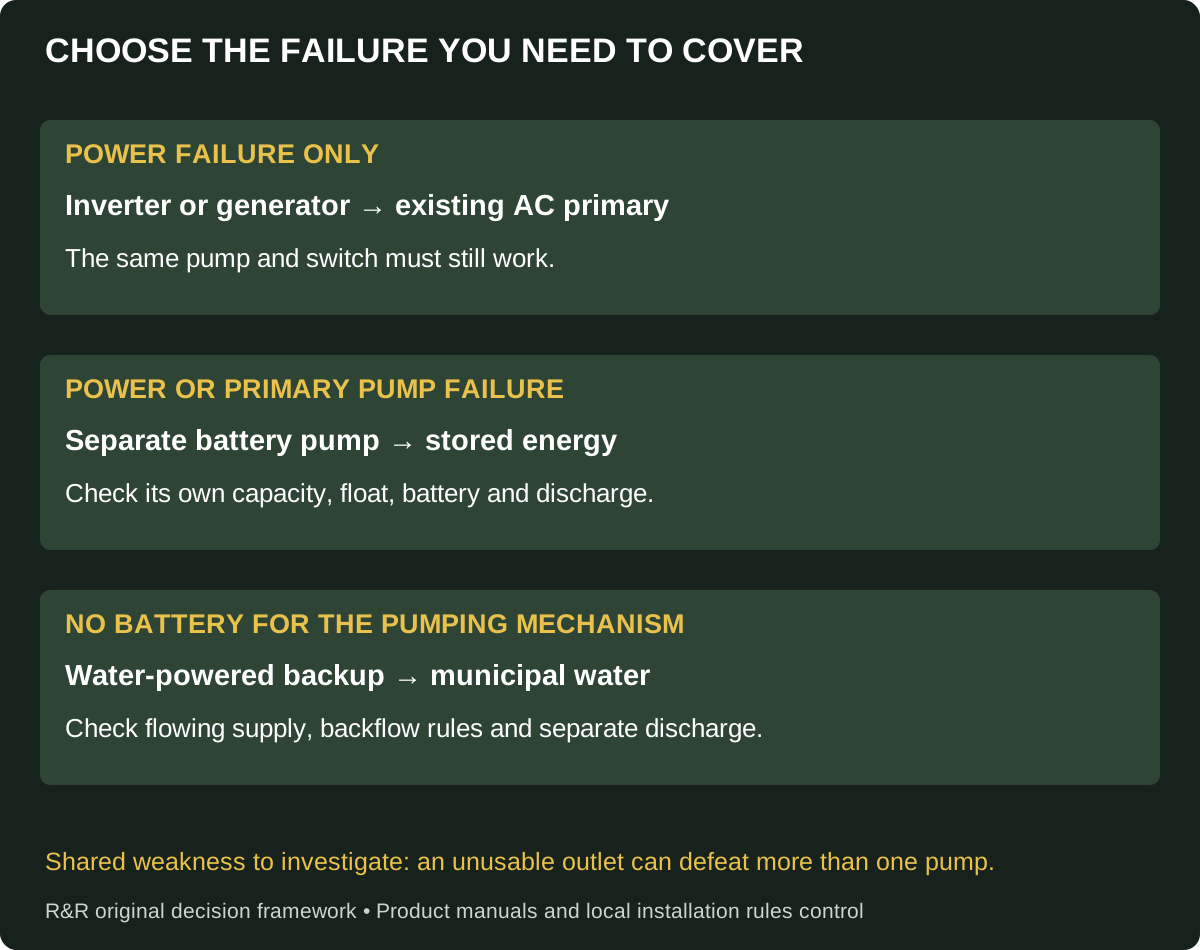
Battery systems require a charger, compatible battery chemistry, usable stored energy and a maintenance routine. The question is not simply how many amp-hours are on the label. You also need the expected motor-on time and the manufacturer's supported battery configuration. Do not substitute an arbitrary lithium battery for a specified AGM or flooded battery without explicit manufacturer approval.
A water-powered backup exchanges battery dependence for water-supply dependence. It can be attractive on reliable municipal service, subject to the plumber's checks. It is not a reasonable outage assumption for a conventional private well without another means of maintaining the required supply. Local water restrictions, backflow rules and the discharge route also affect feasibility.
Whichever you choose, check whether a common failure can stop both pumps. Two pumps connected to one blocked outlet are still vulnerable. A common controller or poorly positioned float can create another shared weakness. The value of redundancy comes from examining those paths, not counting motors in the pit.
How long will a battery backup sump pump run?
There is no universal hour figure. Runtime depends on the battery's usable capacity and condition, the pump's load at the working head, charging state and how much of each hour the motor runs. An intermittent-runtime claim should never become a promise of continuous pumping through a long storm.
Consider a simple schedule: 10% duty cycle means six running minutes per hour; 50% means 30. At the same running load, the second schedule demands five times as much motor-on energy per hour. That does not predict a particular battery's runtime, because real battery behavior and system controls also matter. It explains why the duty-cycle assumption belongs beside an advertised duration.
Ask for runtime guidance for the approved battery and your anticipated operating conditions. Include battery replacement in the ownership budget and make sure someone knows how to recognize a charging fault. An alarm reporting “AC lost” is different from confirmation that the backup has enough remaining energy for the next several hours.
If your home regularly faces prolonged outages with high inflow, discuss a layered plan rather than expecting a small backup battery to do everything. That might include professionally designed standby power or another suitable arrangement. Our sump pump outage guide compares generators, separate DC pumps and inverter approaches without treating them as interchangeable.
Can a generator or portable power station run a sump pump?
Possibly, if it supports both the motor's starting demand and continuous load through an appropriate connection. A watt-hour capacity figure describes stored energy, not whether an inverter can start your pump. A peak-watt marketing label also needs to be checked against the equipment's actual motor-start requirements and supported operating conditions.
An external power source does not repair a seized motor, a jammed float or a blocked outlet. It may therefore complement an independent backup pump rather than replace it. For power-station shopping, our BLUETTI Elite 100 V2 research-based review explains load compatibility; it is not a guarantee that the unit will operate your particular sump.
Portable combustion generators need a genuinely suitable outdoor location. CDC says never operate one in a basement, garage or other enclosed or partially enclosed space, or less than 20 feet from a door, window or vent. Building connections require approved equipment; never backfeed through an outlet. CDC flood electrical and generator guidance.
If you cannot establish safe placement, weather protection and a compliant connection, do not make a portable generator the assumed answer. Decide this before the basement floods, when an installer can assess the options without pressure to improvise.
What a complete sump pump quote should include
Ask for one written scope covering the operating system rather than a pump name alone. The quote should identify the exact primary and backup models, battery if applicable, electrical provision, check valves, discharge work, alarm arrangement and required permits or inspections. Specify who tests the finished system and explains the controls.
For a battery system, clarify whether the battery, enclosure, charger and remote module are included. For a water-powered system, identify backflow protection, water-supply work, a separate discharge and future testing obligations. For either, ask which tasks remain the homeowner's responsibility and what a service visit covers.
Compare installed totals on the same scope. A lower estimate may exclude the very backup or discharge work that makes another quote more resilient. We do not publish a national installed-price promise because local labor, access, existing wiring, basin work and permitted discharge can change the project substantially.
Before accepting the work, ask for a demonstration of primary operation, backup activation and alarm recognition using the manufacturer's procedures. Keep model numbers, manuals, installation date, battery details and the service contact together. Our free preparedness resources can help organize household records without replacing the installer-specific instructions.

Maintenance that protects the purchase
Use the inspection and testing schedule in each manual. Watch for debris, a displaced float, unusual cycling, damaged cords, a charging fault or a discharge outlet that no longer drains freely. Test each component by its prescribed method; hearing a motor briefly is not the same as verifying that water reaches the intended outlet.
Record what is normal. If the pump begins cycling in weather that previously left it idle, or needs much longer to lower the level, investigate the change. An inflow problem, check-valve issue or discharge restriction may masquerade as an aging pump. Replacing parts without identifying the changed condition can leave the original cause untouched.
Do not use a fixed lifespan claim as proof that your pump is safe for another season. Service conditions and operating history vary. Arrange a check before forecast heavy rain if the system has unexplained behavior, and review the backup whenever the primary or discharge layout changes.
Include the exterior in the inspection. Gutters, downspouts, grading and the outlet route affect how much water reaches the foundation. Our El Niño home-preparedness checklist and regional flooding guide provide broader planning context. A pump is one part of water management, not permission to ignore the water outside.
When a new sump pump is not the answer
Water from a burst supply line, sewer backup or a collection failure may require a different response. A clear-water sump should not be treated as a sewage ejector. If contamination is possible, follow the response appropriate to that source rather than shopping by horsepower. See sewage backup in a basement for the distinction.
If standing water may contact electricity, stay out and arrange safe isolation from a dry location or qualified help. A buying guide is not a reason to enter a flooded pit or handle live equipment. Deep floodwater and suspected structural damage also warrant specialist assessment rather than rapid improvised pumping.
After safe water removal, the next job is drying the building materials, not simply restarting normal basement use. Follow our guides to drying out a flooded house and preventing mold after a flood. Stopping active water entry and dealing with moisture damage are connected tasks with different equipment decisions.
Frequently asked sump pump buying questions
Is a 1/2-horsepower sump pump better than a 1/3-horsepower pump?
Only if its performance and operating arrangement better match the property. Compare flow at the actual head, expected inflow, basin volume and cycling. A bigger motor is not a substitute for those checks, and it does not create backup power.
Do I need a battery backup if I already have a generator?
Consider whether the generator starts automatically, whether someone must connect it and whether the primary pump itself can fail. A separate battery pump can address a different failure than a generator powering the original motor. Check capacity and discharge dependencies for both.
Can two sump pumps share the same discharge?
Some approved battery-backup arrangements use a shared route with the specified valves and layout; others have different requirements. Follow both manuals and local rules. The Liberty SJ10 manual requires a separate discharge. Never assume one arrangement is suitable for every backup technology.
What should I buy first if the primary pump still works?
Identify the largest uncovered failure. If loss of electricity is the concern, compare suitable independent backup or power arrangements. If the primary cannot keep up with power available, investigate demand, head and discharge before spending on a backup that may be smaller than the existing pump.
Can I use one of these to empty a flooded room?
These selections concern a permanent sump system and its backup. They are not a universal flood-cleanup kit. Electrical safety, contamination, structural conditions and the type of water determine which removal equipment and professional help are appropriate.
Our final buying recommendation
For a primary-only replacement, put the Zoeller M53 and Liberty 257 on the installer-led shortlist and compare their actual working points and fit. For a full primary-and-battery replacement, investigate the WAYNE WSS30Vn while sizing its secondary pump separately. For an existing healthy primary, compare the BWSP independent battery system with an SJ10 only where municipal-water and plumbing requirements can be satisfied.
The strongest purchase is a documented system: sufficient flow at the real head, unobstructed switching, a usable discharge, an appropriate backup and someone who understands the alarms. Take those requirements to the installer before taking a product name to the checkout.