
PREPAREDNESS / BASEMENT WATER
Water in Your Basement When It Hasn’t Rained? How to Narrow Down the Cause
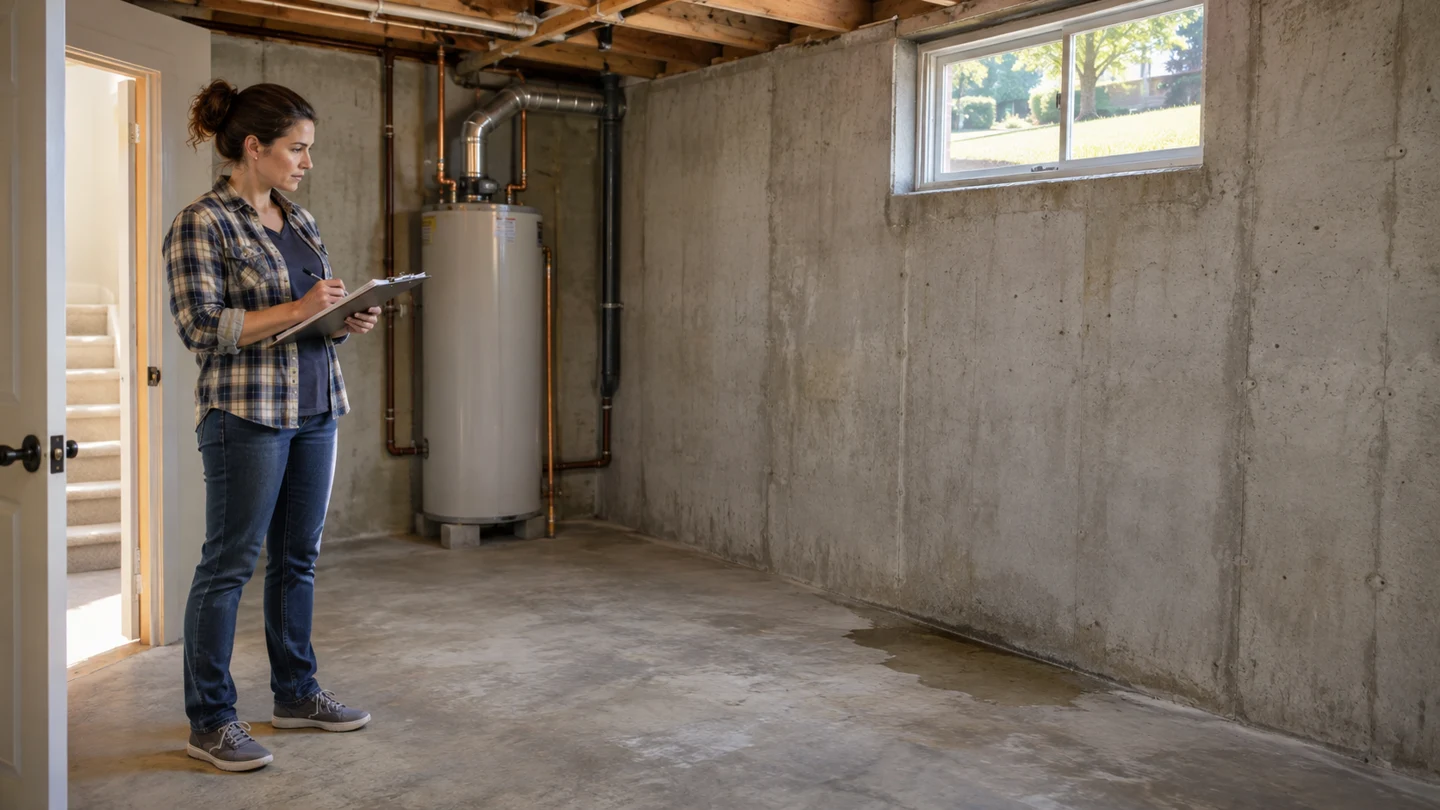
THE SHORT ANSWER
No rain today does not mean the water came from inside
Water in a basement with no rain can come from a plumbing leak, an appliance or HVAC drain, condensation, or water in the ground around the foundation. Start with where the wetness first appears and when it returns. A puddle’s final location can be misleading because water travels along pipes, walls and a sloping floor.
First rule out unsafe access. Then separate the four routes below. Do not buy waterproofing, a dehumidifier or a replacement sump pump until the proposed solution matches the source.
FOLLOW THE DIAGNOSTIC FLOWCHARTWATCH / FIND THE RIGHT ROUTE
Four possible sources. Different next steps.
Our narrated visual guide explains why an unexplained basement puddle needs a source check before a product or repair decision.
Read the video transcript
A sunny day does not identify the source of a basement puddle. Start with safe access, then compare plumbing, appliance drainage, condensation and possible ground entry.
Stay out of water that may contact electrical equipment. Water coming out of a waste drain needs a separate backup response. Clear-looking water does not establish that it is sanitary.
Look for the first accessible wet point, not just the lowest puddle. A water meter can help screen metered use, but it cannot locate the source or rule out every kind of leak.
Record whether water appears around equipment operation and its visible drain path. Do not bypass switches, open electrical compartments or run a suspected leak just to reproduce it.
Humid air can leave water on cool surfaces. A room humidity reading does not prove that hidden materials are dry. Dehumidification is not a repair for liquid water entering the home.
Dry weather does not measure the water level around the foundation. A wet joint or crack needs a source investigation before a sealing or waterproofing decision.
Record discovery time, the last known dry time, the first wet location and what remains uncertain. Read the full guide at Ready Resourceful dot com. These observations guide the next question; they do not replace an inspection.
Before you inspect the puddle, decide whether you can approach it safely
Do not walk into water that may contact wiring, outlets, appliances or an electrical panel. Do not operate a switch or unplug equipment while standing in water. CDC’s flooded-home guidance distinguishes switching power off from a dry location from entering water to reach it. If safe isolation is uncertain, stay out and get qualified help.
If water is rising quickly, the ceiling is sagging, structural movement is apparent, or an alarm or suspected gas release creates an immediate danger, leave the affected area and use the appropriate local emergency or utility service. Do not turn an investigation into a rescue attempt for stored belongings.
Water rising from a floor drain, toilet or other waste connection belongs on the sewage-backup response route. Appearance and a lack of odor do not establish that water is sanitary. Keep children and pets away from unexplained standing water. For renters, notify the owner or manager promptly and document the conditions from a safe location; our apartment flooding guide explains the documentation task.
START WITH THE FIRST WET POINT
A diagnostic flowchart for water in the basement with no rain
This is a way to organize observations, not a remote diagnosis. More than one source can exist. If the evidence does not fit a branch, keep it unresolved rather than choosing the most reassuring explanation.

| First observation | Possible route | Useful next question | What it does not prove |
|---|---|---|---|
| A visible drip or wet connection | Supply plumbing, fitting or fixture | Where is the highest accessible wet point? | That the nearest pipe is the only source |
| Water returns around equipment use | Washer, water heater, softener, HVAC or dehumidifier | Which cycle and drain path coincide with it? | That an appliance needs replacement |
| Droplets on cold surfaces, broader dampness | Condensation is plausible | What are the room-air and surface conditions? | That the foundation is dry |
| Water appears at a slab crack or wall-floor joint | Ground entry or another concealed route | What is happening outside and in the drainage system? | That sealing the visible opening fixes the cause |
| Water comes out of a waste drain | Drain or sewer backup | Who can assess the drainage connection safely? | That clear-looking water is safe to handle |
Find where the water begins, not just where it collects
From a safe, dry position, look for the earliest accessible wet mark. A drip above a pipe elbow may run along the pipe before falling. Water from a utility area may cross a low spot and collect against a different wall. A ceiling stain above the puddle changes the investigation even if the basement floor also has an old crack.
Record the discovery time separately from the last time someone knows the area was dry. “Found at 7 a.m.” is not the same as “started at 7 a.m.” Photograph the wider location and a closer view without disturbing equipment or entering unsafe water. Include a fixed reference such as a wall corner, not just an unidentifiable close-up of wet concrete.
Next, note ordinary events: a laundry load, hot-water use, cooling or heating operation, dehumidifier operation, irrigation, snowmelt, or earlier wet weather. These observations can help a professional narrow the search. Do not deliberately run equipment that may be leaking, flood a drain or leave an active leak unattended to reproduce the problem.
Route 1 — a plumbing leak that has nothing to do with rainfall
A dry forecast does not protect the basement from water already inside the supply and drainage systems. Accessible supply connections, fixtures and the equipment they serve deserve attention before assuming that the foundation needs major work. Building America’s fixture-leak guidance identifies supply fittings and connections to water-using appliances among the potential leak locations.
Look without dismantling. Is there an accessible drip, a wet fitting, staining above the wet floor, or water arriving from an upper level? A wet pipe can also collect condensation, so the useful observation is an actual starting point rather than “the pipe feels wet.” Photograph what is visible and describe where the observation becomes uncertain.
Can a water-meter check help?
For a home with an accessible individual meter, EPA WaterSense suggests comparing readings over two hours when no water is being used. A change can indicate a leak. That is a screening clue for metered water use—not a locator for the basement puddle.
Account for appliances or systems that normally draw water. In a building with a shared meter, someone else’s legitimate use can change the reading. A private well may not have a comparable utility meter. Ask your water utility or plumber about the appropriate check; do not enter a hazardous meter pit or interfere with equipment you are not authorized to operate.
An unchanged meter does not rule out a waste-pipe leak, condensate, intermittent use outside the observation period or groundwater. If a supply leak is active and you can safely use a known, accessible shutoff according to the household’s instructions, that may help limit the loss. Do not force an unfamiliar valve or touch wet electrical equipment. Use a plumber for an uncertain or concealed source.
Route 2 — an appliance or HVAC system is making or releasing water
Air-conditioning equipment and some heating equipment produce condensate during normal operation. That water needs an appropriate drainage path. Building America’s basement assessment guidance identifies condensate discharging into the space, rather than through its intended route, as a possible moisture source.
Keep the question specific: is water collecting under the equipment, along a visible drain line, beside a condensate pump, or farther away at the drain destination? An apparent puddle beside a furnace may originate from nearby plumbing. A drain or pump problem is not established solely by the equipment’s location.
| Location | Record from safe access | Do not improvise |
|---|---|---|
| Cooling or condensing-heating equipment | Operating mode, time, visible drain route, displayed fault | Opening electrical compartments, bypassing a float or pouring chemicals into an unidentified line |
| Water heater | Highest visible wet point; whether water appears at a connection, pan or discharge location | Capping a relief discharge or assuming every drip means tank failure |
| Washer or utility sink | Whether the event coincided with filling, draining or other use | Running another cycle through a suspected leak |
| Dehumidifier | Tank seating or visible hose route, where safely accessible | Handling a wet cord or electrical connection |
Tell the HVAC technician or plumber what you observed and when. Have the exact model and fault information available if it can be obtained safely. The manufacturer’s instructions govern shutdown, drainage and service. A universal internet instruction to flush a line or disconnect a pump can be the wrong procedure for the system in front of you.
The repair question is not simply “how do I dry the floor?” It is whether water can follow the intended route without recurring inside the room. Keep the affected equipment out of service as directed by its manufacturer or service professional; do not restart it just because the visible puddle has been wiped away.
Route 3 — humid air is meeting a cold surface
Condensation can create wet basement surfaces without a pipe leak or a rain event. The University of Minnesota Extension explains that warm, humid outside air can condense on cooler basement surfaces. Opening windows can therefore make a summer moisture problem worse instead of fixing it.

A pattern of droplets on cold pipes, cool walls or other surfaces makes condensation a useful question to investigate. A stream from one fitting suggests a different lead. Neither pattern is a complete inspection. Condensation can coexist with seepage, and a wet surface may conceal the starting point of another source.
A hygrometer measures relative humidity in the air; it does not measure the inside of a wall. EPA’s household moisture guidance recommends indoor humidity below 60 percent, ideally 30–50 percent where possible. These are room-air recommendations, not universal dryness criteria for concrete, framing or flooring.
Use dehumidification as part of an appropriate moisture-control plan, not as proof that liquid entry has stopped. If surfaces remain wet or the puddle recurs, revisit the source. Do not close walls, cover damp floors or assume that a comfortable room-air reading establishes that concealed materials are dry.
Route 4 — groundwater or another outside water source remains possible
“It hasn’t rained” usually describes the weather someone remembers at the house. It does not measure the water level beside or below the foundation. University of Minnesota Extension notes that the below-ground water table can rise with flooding or seasonal site conditions. A local dry day is therefore not a reliable exclusion test for ground entry.
Record earlier wet weather and visible snowmelt, and ask whether irrigation or an outside supply leak could be contributing water near the building. These are questions for a site-specific investigation, not a diagnosis from the puddle’s location. A plumber or utility may need to investigate a suspected service-line problem; a drainage specialist may be appropriate for confirmed exterior-water conditions.
Water emerging at a wall-floor joint or slab crack deserves attention, but the opening is not the whole explanation. The floor also has slopes, penetrations and routes that can carry water from elsewhere. Before accepting a coating or crack-sealing proposal, ask what evidence identifies the source, what the proposed work changes, and what happens if water remains behind the assembly.
Use our basement floor water-entry guide for the ground-pressure and drainage branches. If water is rising from a waste connection, use the sewer-backup guide instead. A sump-system assessment and a sewer assessment answer different questions.
If an existing sump pit is filling or overflowing, do not infer that purchasing a larger pump is automatically the answer. The power supply, pump operation, discharge arrangement and incoming water all matter. Our sump-pump outage troubleshooting guide addresses the power-loss scenario; the sump-pump buying guide belongs later, when the system’s requirements are known.
Two examples that keep the diagnosis honest
A puddle beside the furnace after a dry afternoon
In this fictional household, the puddle is discovered near HVAC equipment. A first observation is that it returns during cooling operation and a visible condensate route is wet. That is useful information for an HVAC technician. It does not establish which component failed or justify bypassing a switch.
The household records the time and displayed information, keeps away from wet electrical connections and follows service instructions. The practical improvement is a more precise service call—not a claim that the occupants diagnosed a blocked drain from a photograph.
A recurring wet joint with no obvious equipment link
In another fictional home, the first wet point seems to be a wall-floor joint. No accessible plumbing drip has been identified, and the event does not clearly follow appliance use. The household notes prior weather and site conditions and asks for a source investigation.
It does not call this “definitely hydrostatic pressure” or cover the joint before documenting it. A professional may identify ground entry or another concealed route. The absence of a visible drip is an unresolved finding, not proof that the plumbing has been ruled out.
Who should you call for unexplained basement water?
| Observed problem | Useful first contact | What to ask |
|---|---|---|
| Visible plumbing leak, fixture overflow or water-heater connection | Licensed plumber; building manager for renters | Can the source be isolated safely, and is concealed leakage possible? |
| Water associated with HVAC operation or its drain route | Qualified HVAC service provider | Which drainage components and operating conditions require inspection? |
| Water from a waste drain or several backing-up fixtures | Plumber and, where appropriate, sewer utility | Is the issue in the private connection, building or public system? |
| Recurring ground entry after interior sources have been assessed | Qualified drainage/foundation specialist; engineer where structural concerns exist | What evidence supports the proposed repair and its scope? |
| Unsafe electrical exposure, rapid rise or immediate hazard | Appropriate emergency/utility service and qualified electrician | How can access and isolation be established safely? |
| Wet materials after the source has been addressed | Appropriate restoration professional | What evidence supports retaining materials and closing the assembly? |
Several trades may be involved. A restoration contractor’s drying work does not by itself resolve a plumbing defect, and a repaired leak does not establish that every concealed material has dried. Ask who owns each part of the work so an unfinished task is not mistaken for somebody else’s responsibility.
A useful alarm can tell you water arrived—not why
An optional local alarm can help reveal a recurring leak at a chosen location. It cannot identify the water source, guarantee that someone hears it or stop the flow. Compare placement and notification needs in our water-leak detector buying guide before choosing equipment.
As an Amazon Associate I earn from qualifying purchases. The button opens an exact-model search, not a verified live offer. Confirm the model, included items and seller. No product testing or prevention guarantee is claimed.
After the source is controlled, check what stayed wet
Removing the puddle and addressing the affected materials are separate jobs. Water can reach carpet backing, wall cavities, insulation or stored contents that do not become dry when the concrete surface looks better. Follow appropriate cleanup guidance for the water’s source and contamination, not its apparent clarity.
Our drying and material-assessment guide explains why air humidity and material measurements serve different purposes. The mold-prevention guide addresses decisions involving wet carpet and concealed layers. Do not use a fixed number of fan-days as clearance to rebuild.
Take this observation record into the service call

Ask for the identified source, supporting observations, proposed corrective work, drying responsibility and conditions for the next stage. Keep photos and work records together. If insurance may be involved, contact the insurer promptly with the actual facts; do not relabel seepage as a burst pipe to fit an assumed coverage category.
Questions about a basement puddle with no rain
Can groundwater enter my basement when it is sunny?
Yes, it remains possible. Surface weather at discovery is not a measurement of the water level around the foundation. Investigate the entry route and site conditions rather than assuming a sunny day rules it out.
Does a puddle beside the water heater mean the tank failed?
No. Water can arrive from a connection, discharge location, nearby equipment or another route. Record the highest accessible wet point and get the appropriate professional assessment. Do not cap a relief discharge.
Will a dehumidifier fix water on the basement floor?
It may help control air humidity in an appropriate setup. It does not repair a supply leak, clear a waste backup or prevent liquid water entering the building. Identify the source before treating humidity control as the repair.
Does a stationary water meter rule out a leak?
No. It only describes metered use during that observation period. Intermittent leaks, waste-water leakage, HVAC condensate and outside water require other observations. Shared meters also need different interpretation.
Should I seal the crack where the water appears?
First establish what is feeding the water and whether the crack needs structural assessment. A visible opening is not a complete diagnosis. Ask how the proposed repair addresses the source and manages remaining water.
Is a small amount of unexplained basement water safe to ignore?
Record and investigate recurring wetness. Its size alone does not identify the source, electrical exposure or extent of concealed moisture. A small discovery can still need prompt professional attention.
Before you accept a waterproofing quote
Once the source has been assessed, use our basement waterproofing cost and quote-comparison guide to separate targeted repairs, drainage systems and restoration costs.
Research notes and primary references
Reviewed November 7, 2026. This is a source-linked household observation guide, not a building inspection. The flowchart, comparison drawings and worked examples are original R&R explanatory tools. Examples are fictional. No onsite investigation, product testing or independent professional review is claimed.
Primary sources and visual credits
- University of Minnesota Extension: moisture in basements
- Building America: basement assessment and interior moisture
- Building America: leaks in water-using fixtures
- EPA WaterSense: home maintenance and meter checks
- EPA: household mold and moisture guidance
- CDC: safe reentry and electrical precautions
- National Weather Service: flood electrical safety
- A. O. Smith: relief-valve warning in model instructions; follow your own unit manual
- Zircon Leak Alert: current specifications and instructions
The lead scene is an original illustrative household image, not documentation of an inspected property. Product photograph identifies the named Zircon model and is credited to its manufacturer; separate commercial photo-reuse permission has not been obtained. Diagrams and the narrated animation are original R&R productions. Narration is synthetic; no emergency incident or field test is depicted.
Choose humidity control for the right job
Once water-source and safety questions have been assessed, our basement dehumidifier buying guide compares six models, pump versus gravity drainage and operating costs. A dehumidifier manages airborne moisture; it does not replace repairs, cleanup or verification that affected materials are dry.
When the wetness is on a basement wall
Our basement wall seepage and condensation guide compares visible clues, explains possible water routes with cross-sections and includes a dew-point calculator. Use it to organize observations before choosing a repair; a photograph alone cannot establish the cause.