
WILDLIFE SAFETY / A BEAR FOLLOWS YOU
A Bear Is Following You on the Trail. What Should You Do Next?
By Ready & Resourceful · · Research-based safety guide
What changes when backing away does not end the encounter—and why following, charging and physical contact require different decisions.
THE SHORT ANSWER
What to do if a bear follows you
Stop retreating, face the bear without staring it down, bring your group together, and ready your bear spray if permitted and available. Do not run, climb a tree, throw it food, or drop your pack. Speak calmly at first. If the bear remains focused on you and keeps approaching without an obvious defensive trigger, become firm and assertive. Use bear spray against an aggressive or charging bear within your canister’s labeled deployment range.
Do not play dead just because a bear is following you. Physical contact requires a different decision: a defensive brown/grizzly attack differs from a black-bear attack or a predatory attack by either species. Read the contact-response table.
This guide covers American black bears and brown/grizzly bears in North America. Check the land manager’s current instructions before a trip; local rules and bear behavior differ. No response guarantees safety. If you are in immediate danger and can contact emergency services without delaying your response, call 911 or the local emergency number.
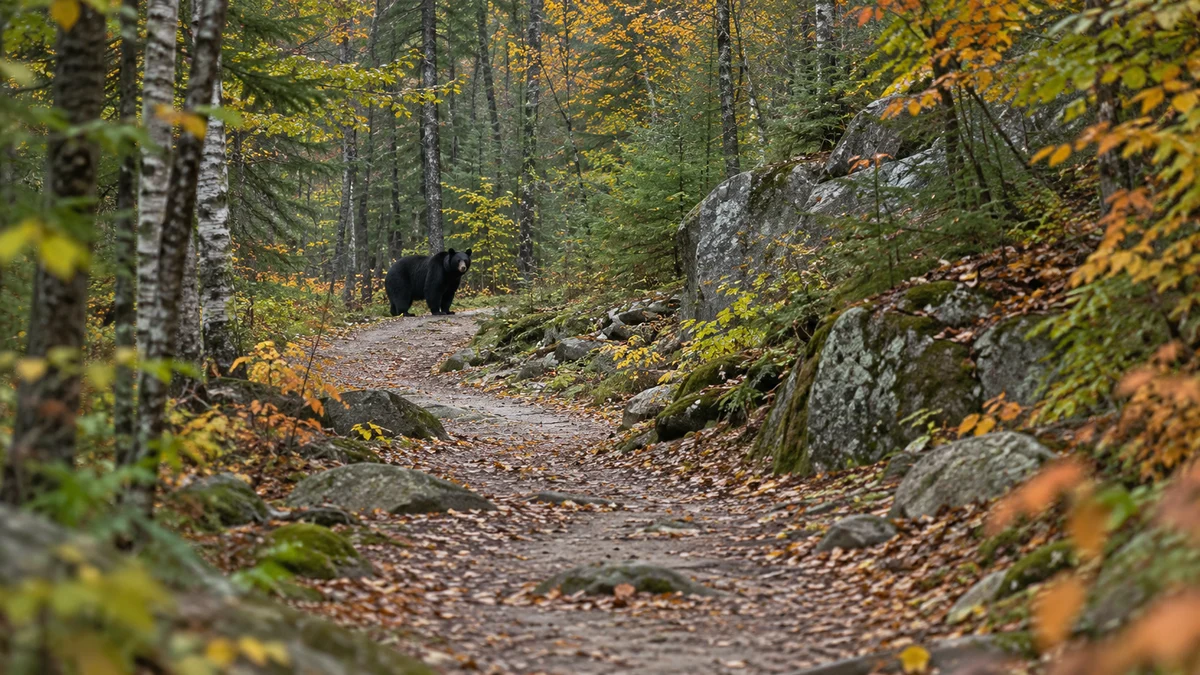
You turn around and see a bear on the trail behind you. You move away, and it moves too. The question is no longer which direction the trail goes. It is whether continuing to retreat is the right response.
This guide separates four situations that are often blurred together: a bear using the same route, a startled bear defending space, a bear persistently approaching, and a bear making physical contact. It also explains what your group should do, when equipment matters, and what to report afterward.
Watch the 58-second bear-response guide
Moving footage and narration explain six response distinctions. English captions and the complete transcript are available below.
Licensed illustrative footage: Diane Wilser, Rec Everywhere / Pexels, under the Pexels licence. R&R script, editing and captions; synthetic narration.
The footage shows brown bears foraging and hikers on a separate trail. It does not show an encounter between them, demonstrate spray deployment or provide a species-identification key. This is a North American black- and brown/grizzly-bear planning summary, not an R&R field test.
Read the complete video transcript
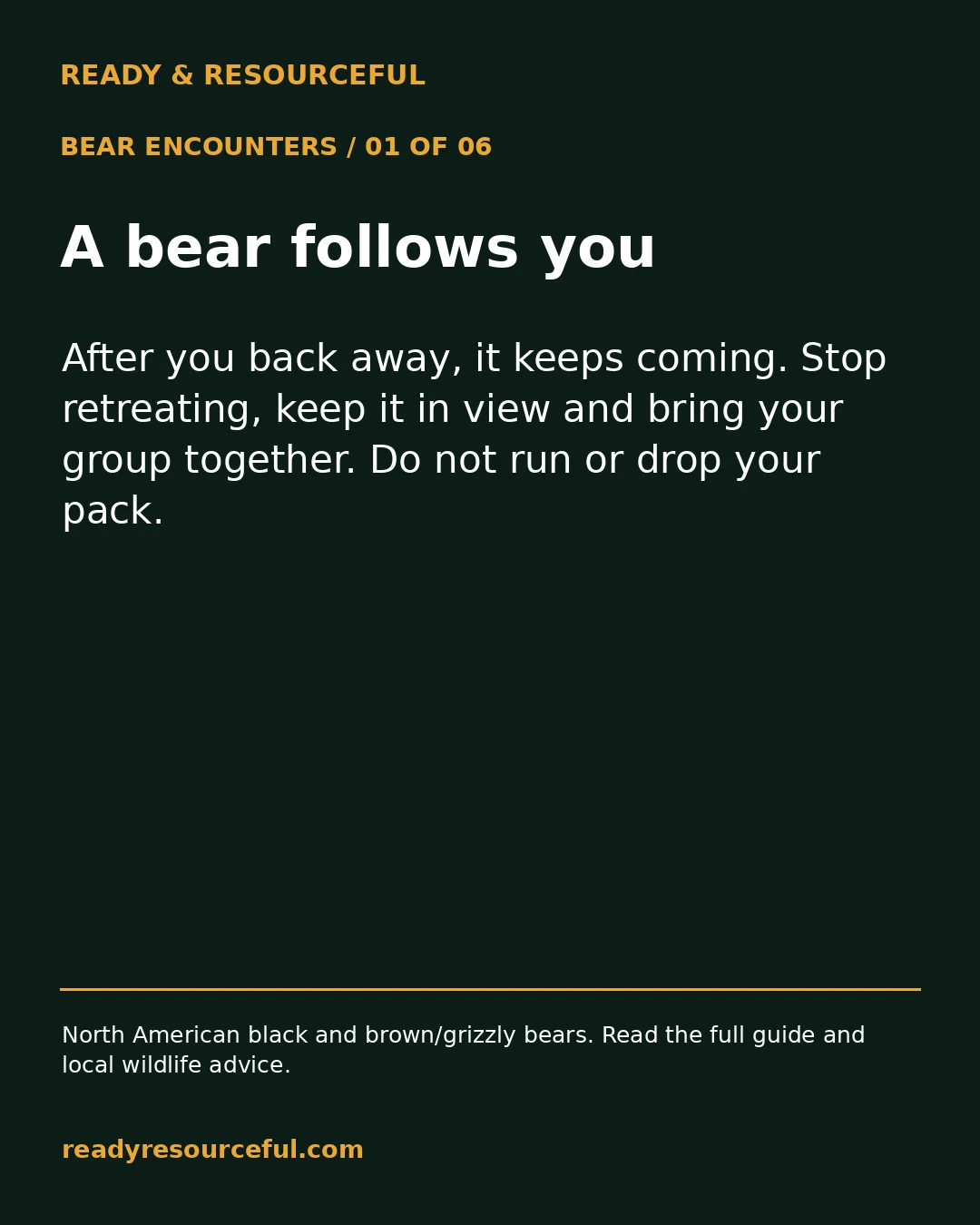
- Following: stop retreating. If a bear follows after you back away, stop retreating. Keep it in view, bring your group together, and do not run.
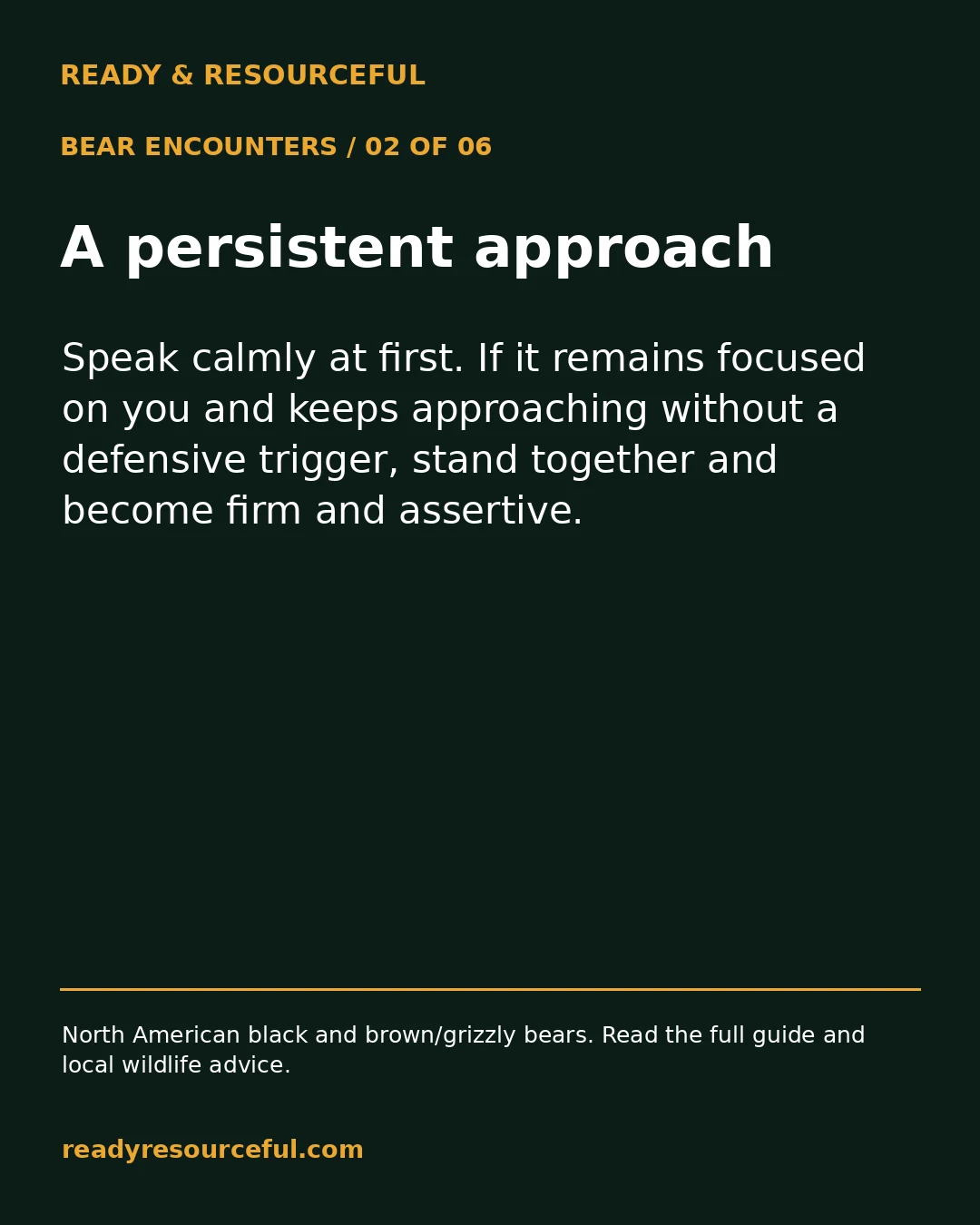
- Group up and keep your pack. Speak calmly at first. Keep your pack on and do not offer food. A persistent, non-defensive approach calls for a firm, assertive response.
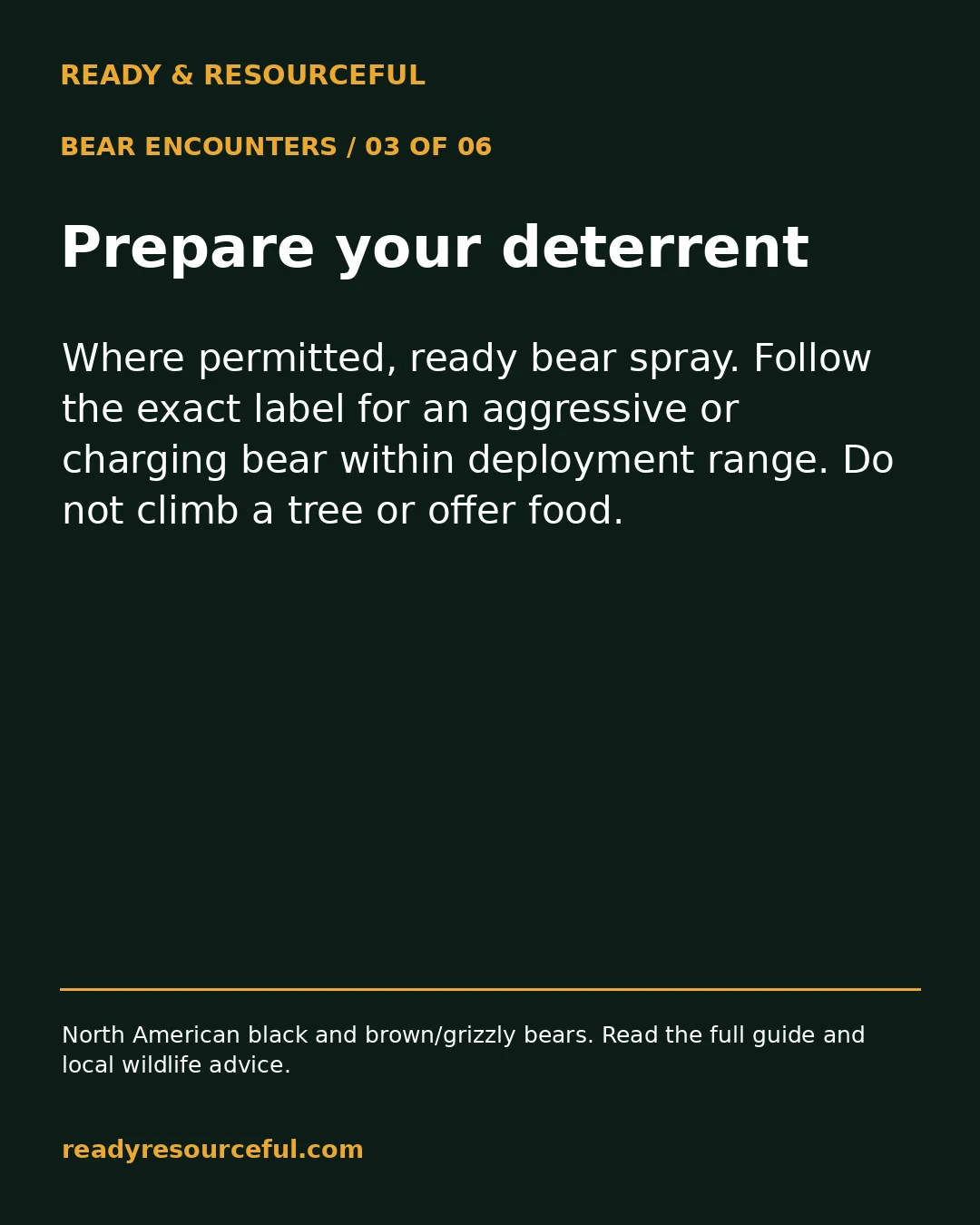
- Ready permitted bear spray. Ready bear spray where it is permitted. If an aggressive bear is within your canister's labelled deployment range, follow its instructions. Do not climb a tree.
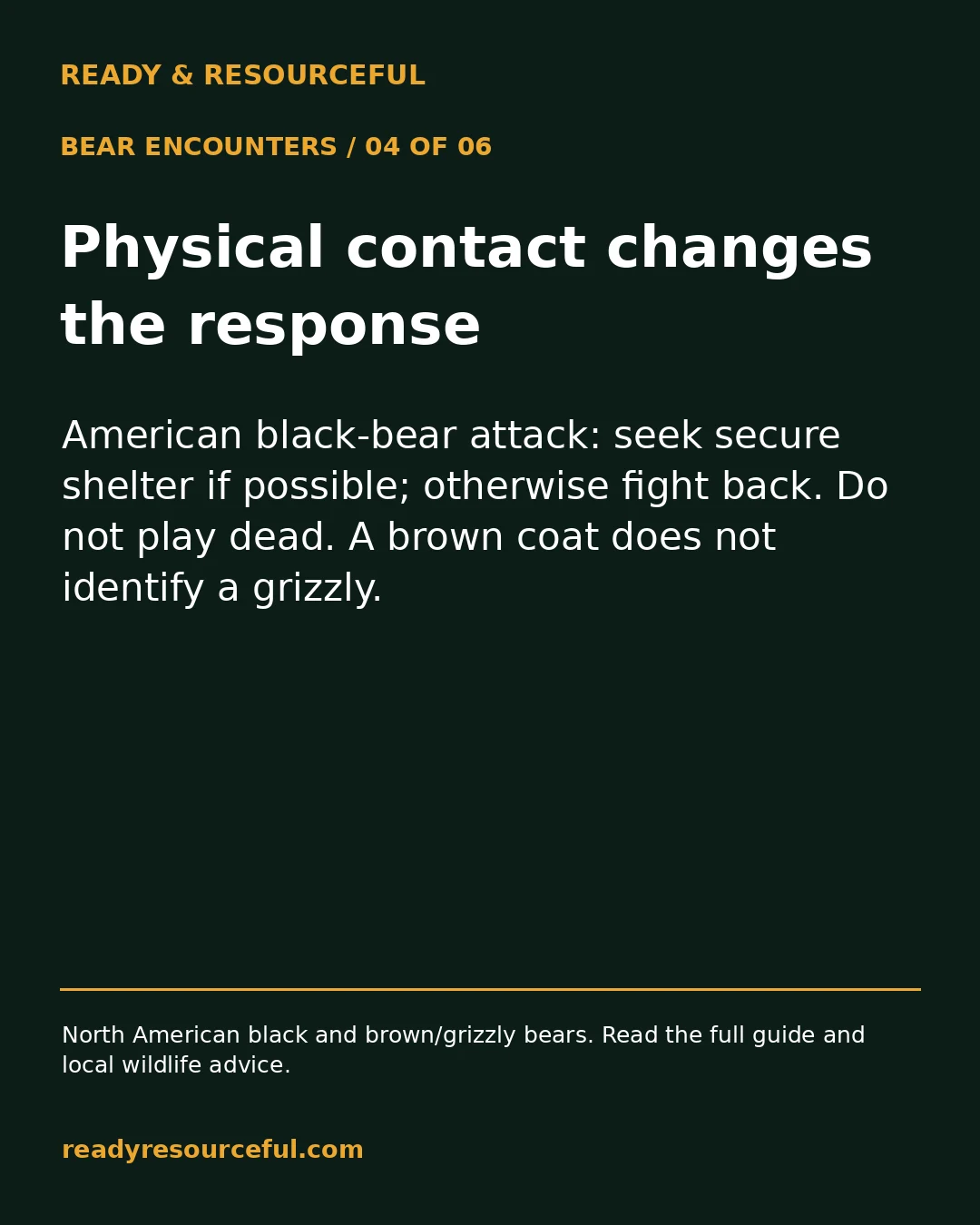
- Black-bear attack: fight back. Do not play dead just because a bear is following you. If an American black bear attacks, escape to secure shelter if possible; otherwise fight back.
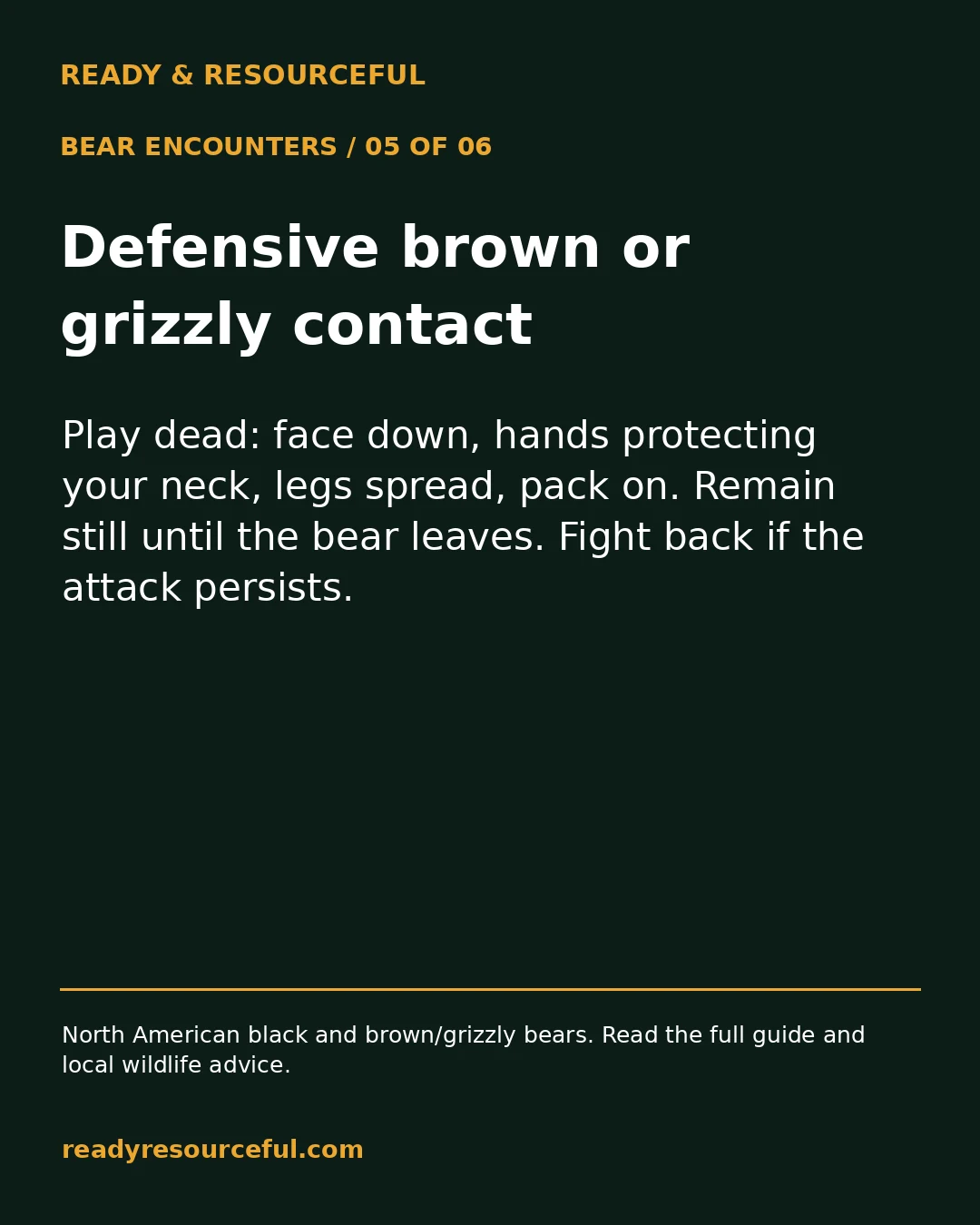
- Defensive grizzly contact. For physical contact in a defensive brown or grizzly bear attack, play dead. Lie face down, protect your neck, spread your legs, and keep your pack on. If the attack persists, fight back.
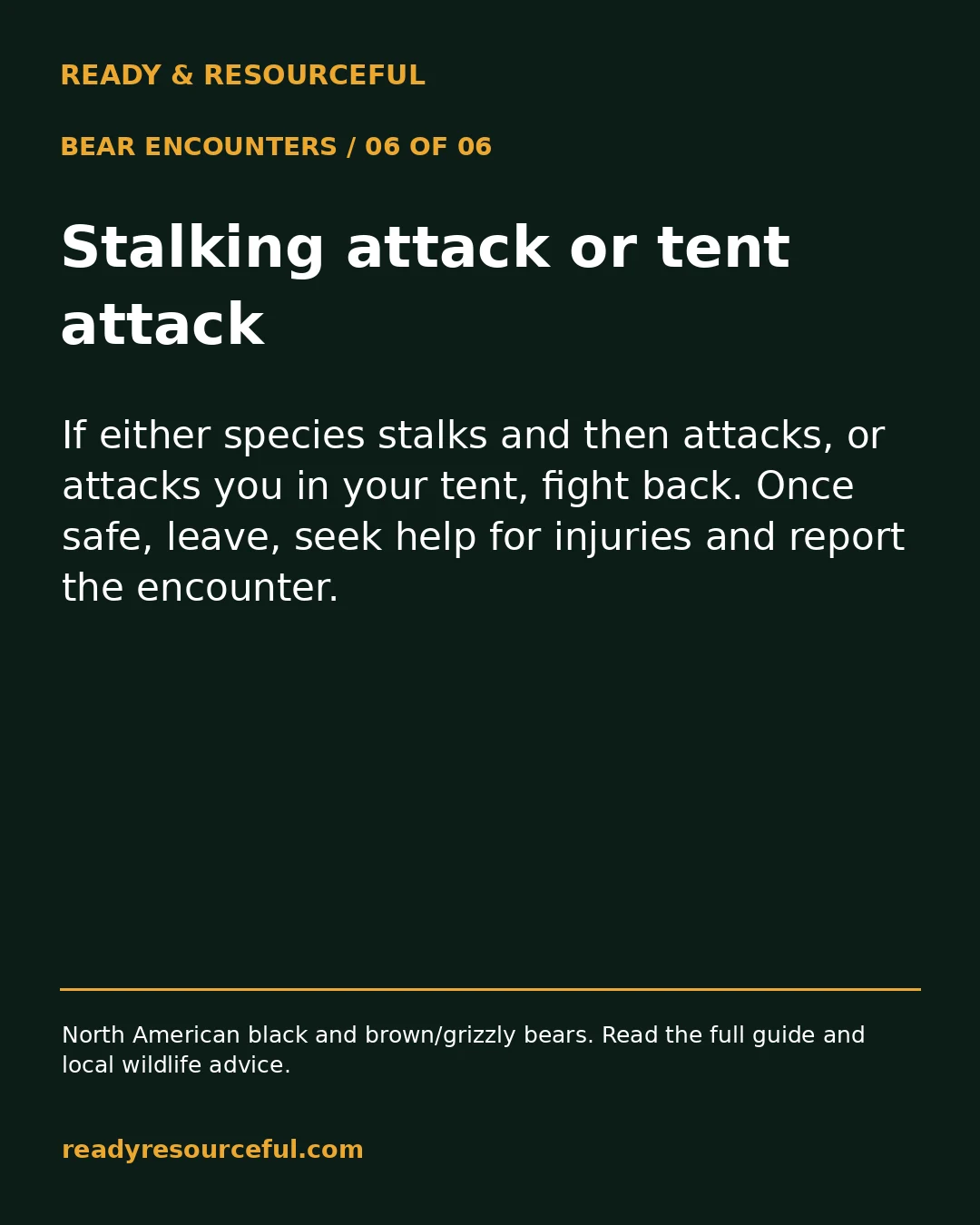
- Stalking attack: fight back. If either species stalks and then attacks, or attacks you in your tent, fight back. When safe, leave, seek help for injuries, and report the encounter.
Guidance checked against NPS bear safety, Alaska wildlife advice, Gates of the Arctic and Lake Clark on 23 October 2026. Follow current instructions for your destination.
A bear keeps coming after you back away: your first actions
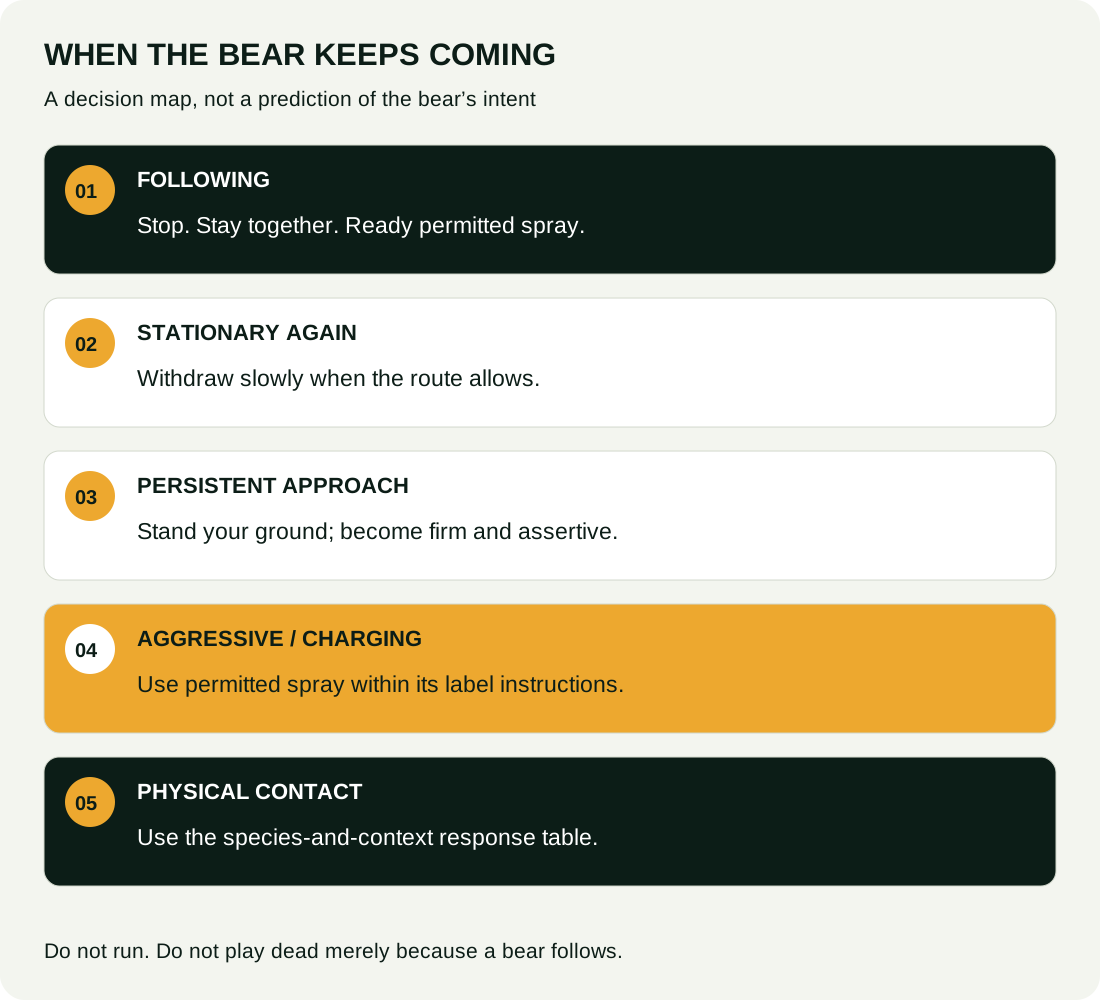
Alaska Department of Fish and Game’s encounter guidance makes a useful distinction: move away slowly from a stationary bear, but stop and hold your ground if it follows. That is a change in the situation, not an instruction to race it to the trailhead.
- Stop moving away if the bear follows. Keep it in view. Avoid turning your back, sudden movements, and a challenging stare.
- Close the gaps in your group. Stand together rather than scattering. Keep children beside the adults; pick up small children without a sudden rush.
- Identify yourself with a calm, normal voice. Make it clear that you are a person. An upright bear may be investigating; standing on its hind legs alone does not establish an impending attack.
- Get your permitted deterrent ready. A canister buried under spare clothes is not immediately accessible. Keep your backpack on.
- Watch what changes. If the bear stops advancing and there is a clear way to increase distance, withdraw slowly while monitoring it. If it follows again, stop again.
Do not turn this into a sequence of tests to see how close the bear will come. Your objective is to end the encounter without feeding, crowding, or provoking the animal. NPS’s general bear-safety guidance supports stopping when followed, retaining your pack, and avoiding running or tree climbing.
Is it following you, passing through, or defending something?
You cannot reliably diagnose a bear’s intentions from a short video or one body movement. Use the circumstances as well as behavior. In particular, a bear walking on a human trail is not automatically stalking a hiker.
| What you notice | What it could mean | Response distinction |
|---|---|---|
| A distant bear continues along its route without focusing on you. | It may simply be traveling or feeding. | Avoid approaching or blocking it. Make space; quietly leave if it has not noticed you. |
| A close surprise near cubs, a carcass, or a feeding area; huffing, jaw-popping, or an agitated posture. | A defensive response is possible. | Stay non-threatening, speak calmly, and increase distance when possible. Do not try to chase a defensive bear off with thrown objects. |
| It stays focused on you and continues approaching after you identify yourself and stop. | A persistent, non-defensive approach needs an assertive response; it is not proof of predation. | Group up, stand your ground, make yourself look large, and firmly tell it to back off. Prepare to use your deterrent. |
| It rushes toward you. | A charge can stop short or continue into contact. | Do not run or gamble on identifying a bluff. Ready and use permitted spray according to the label if within deployment range. |
The distinction between calming a defensive bear and discouraging a persistent non-defensive approach is explained in Lake Clark’s bear-safety guidance. Do not read “be assertive” as permission to approach, corner, or challenge a bear you could avoid.
When calm speech should become a firm response
Calm identification is the starting point. If the bear continues to focus on and approach you, Alaska wildlife officials advise escalating your response: stand together, look large, and use an assertive voice. This does not mean every newly visible bear should be met with screaming.
Compare two situations. A bear across a meadow has not noticed you: yelling would create an encounter you might avoid. A bear continues coming toward your clustered group after you have stopped: remaining passive while it closes the gap is a different problem. The useful question is “What is happening now?” rather than “Are bears always scared of noise?”
What if the bear charges?
Hold your ground. Some charges end with the bear stopping or veering away, but do not rely on a promised visual shortcut to tell you which charge will stop. Have your deterrent ready and respond to the approaching animal, rather than filming its ears or posture.
NPS’s bear-attack guidance distinguishes bluff charges, aggressive charges, and predatory attacks. Its practical message is that a charge can become contact: do not run, and know the contact response before entering bear country.
If the bear breaks off, continue watching it. Slowly leave when you can do so without closing distance or blocking its route. Do not advance to recover a better photograph, follow it into brush, or treat a stopped charge as an invitation to continue the hike past the animal.
When should you use bear spray?
Use bear spray for an aggressive or charging bear, not simply because you see one. Carry a product labeled for bears, check its EPA registration and expiration date, and know the exact canister’s instructions. Human-defense pepper spray is not an interchangeable substitute.
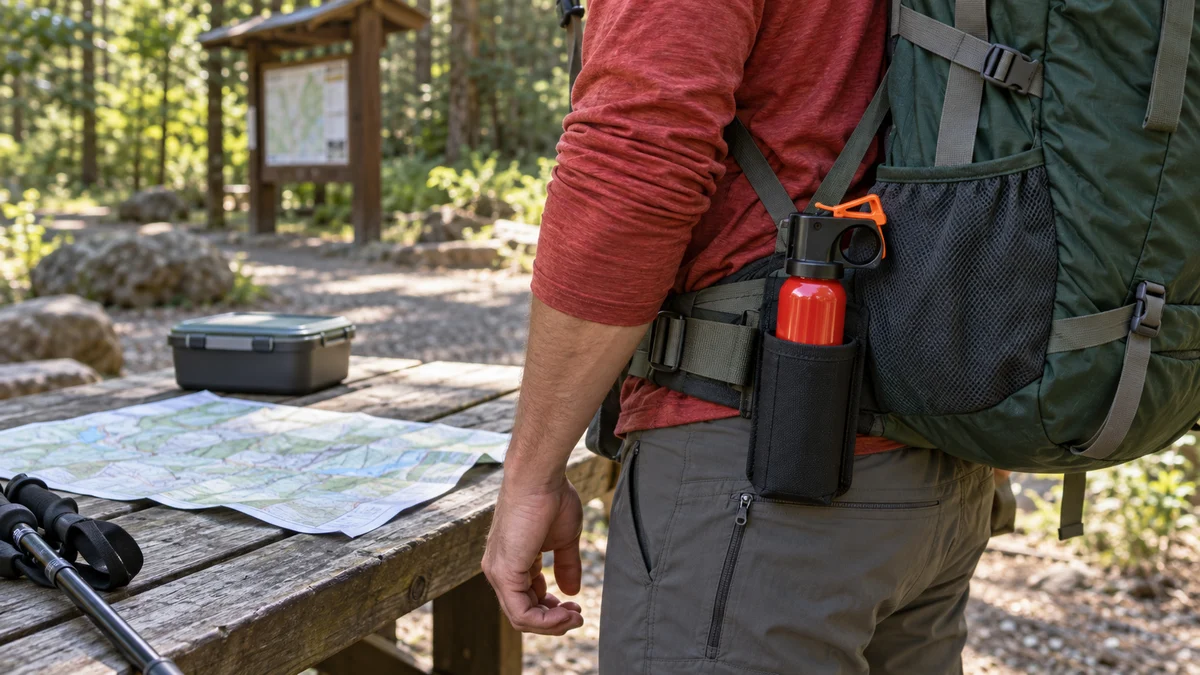
The Alaska bear-spray handout emphasizes immediate access, practice with an inert canister, wind awareness, and keeping the safety engaged until use. Do not spray clothing, a tent, or a backpack as a preventive coating.
- Before the hike: fit the holster to the belt or carry arrangement you will actually wear. Confirm that a backpack hipbelt or jacket does not block it.
- During an encounter: ready the canister; follow its label for deployment distance, aiming, and discharge. Maximum advertised reach is not a universal instruction to spray at that distance.
- After deployment: keep watching the bear and leave when safe. Account for wind and possible spray exposure. A used or expired canister needs the appropriate replacement and disposal process.
Grand Teton recommends accessible bear spray and warns against relying on it as a substitute for safe behavior. Practice and access matter more than owning an impressive-looking can.
If contact occurs: when to fight back and when to play dead
Following, a charge, and physical contact are different stages. Do not lie down in advance because a bear is watching or approaching you. The response below concerns an attack that makes contact.
| Attack situation | Response | Critical qualification |
|---|---|---|
| American black bear attacks. | Fight back. Do not play dead. Use available objects and direct defensive blows at the face and muzzle. | Do not substitute a defensive-grizzly response merely because the black bear has brown fur. |
| Brown/grizzly bear makes contact during a defensive attack, such as a close surprise. | Play dead: lie face down, hands protecting the back of your neck, legs spread for stability, pack retained. | Remain still until the bear has left. If the attack persists or becomes predatory, fight back. |
| Either species stalks and then attacks you, or attacks you in your tent. | Fight back. Do not play dead. | The predatory context changes the response even when the bear is a brown/grizzly. |
These distinctions follow NPS’s national guidance and the more detailed Gates of the Arctic bear-safety instructions. They are not a guarantee that an encounter will fit a neat category. Learn the species and the land manager’s advice before your trip.
Do not identify a bear by coat color alone
An American black bear can have black, cinnamon, or blonde fur. NPS’s black-bear guide documents this variation. Learn the distinguishing features for the bears present at your destination; “brown fur means grizzly” is not a sound decision rule.
The article’s main photograph illustrates an American black bear. It is not a reference image for identifying every bear, and the graphics below are decision aids, not wildlife-identification keys.
Six reactions to avoid when a bear follows you
- Sprinting or riding away. Fleeing can trigger pursuit. A bicycle does not turn this into a safe race.
- Climbing a tree. Trees are not a dependable escape from black bears or grizzlies.
- Dropping food or your pack as a distraction. You may reward an approach and lose equipment that protects your body.
- Lying down before contact. “Play dead” belongs to a particular attack response, not every sighting.
- Trying to scare off an obviously defensive bear with thrown objects. Persistent non-defensive approaches and frightened bears require different handling.
- Moving closer to identify, photograph, or film it. You do not need a social-media clip to justify leaving an unsafe situation.
For the bicycle-specific case, Alaska’s bear-safety advice for bikers warns against fleeing, recommends grouping up, and calls for a readily available deterrent.
What should your companions and children do?
Keep everyone together. Scattered hikers can give conflicting signals, lose track of the bear, or leave a child separated from the adults. One person can speak while the others stay alert and ready; nobody needs to become the designated camera operator.
NPS’s hiking-in-bear-country guidance recommends group travel, awareness near noisy water and blind corners, and avoiding a position between a mother and cubs. It also cautions against relying on bear bells to announce your presence.
Before departure, agree on one simple instruction: “Come together; do not run.” Explain it to children before an encounter. Rehearse calmly in an ordinary setting. A child should not be expected to identify a bear’s species or decide whether a charge is a bluff.
Three situations: what changes your next decision?
These are original planning examples, not accounts of actual rescues. They illustrate how the same opening observation can lead to different decisions.
1. The bear behind you is following the trail, not closing on you
You see a bear far behind at a bend. It stops to forage rather than tracking your movements. Your first task is to preserve distance and avoid blocking its route, not provoke a confrontation to prove dominance. A bear appearing on the same path is information; persistent movement toward you after you try to disengage is different information.
2. You back away, and the bear repeatedly closes the gap
Your group stops, comes together, identifies itself, and readies its permitted spray. A stationary animal would allow a slow withdrawal; repeated approach means you reassess rather than automatically continuing to backpedal. Keep the bear in view and use the encounter guidance above. Do not assume a quiet bear is harmless or declare it predatory merely because it has not vocalized.
3. The return route runs toward cubs or a carcass
Your planned way out may be the wrong direction. Do not squeeze past the animals because your car is that way. Leave room and move away from the immediate conflict when possible. A GPS line is a route suggestion, not permission to walk between a mother and cubs or crowd a feeding bear.
Alaska’s hunter-specific guidance explicitly distinguishes cubs and occupied kill sites from situations where standing your ground is appropriate. Hunters also need a separate plan for harvested meat and carcass areas; this hiking article does not cover those procedures.
Once the bear leaves: exit, get help, and report
Do not follow the bear to confirm where it went. Leave the encounter area when safe and contact the responsible ranger or wildlife agency. If anyone is injured, arrange emergency help and medical assessment; a shopping checklist or online guide cannot assess wounds.
Prepare a useful report rather than a dramatic interpretation:
- Trail name, nearest junction, map coordinates if available, and time.
- Number of bears; cubs or a carcass observed without approaching.
- What the bear did before, during, and after your response.
- Whether it obtained food, made contact, or was exposed to spray.
- Injuries and your group’s current location and communication options.
“It followed our group after we stopped twice” is more useful than confidently labeling it a man-eater. Lake Clark asks visitors to report encounters; use the contact for your own destination, not an unrelated park.
Before the next hike: practice access and prevent food rewards
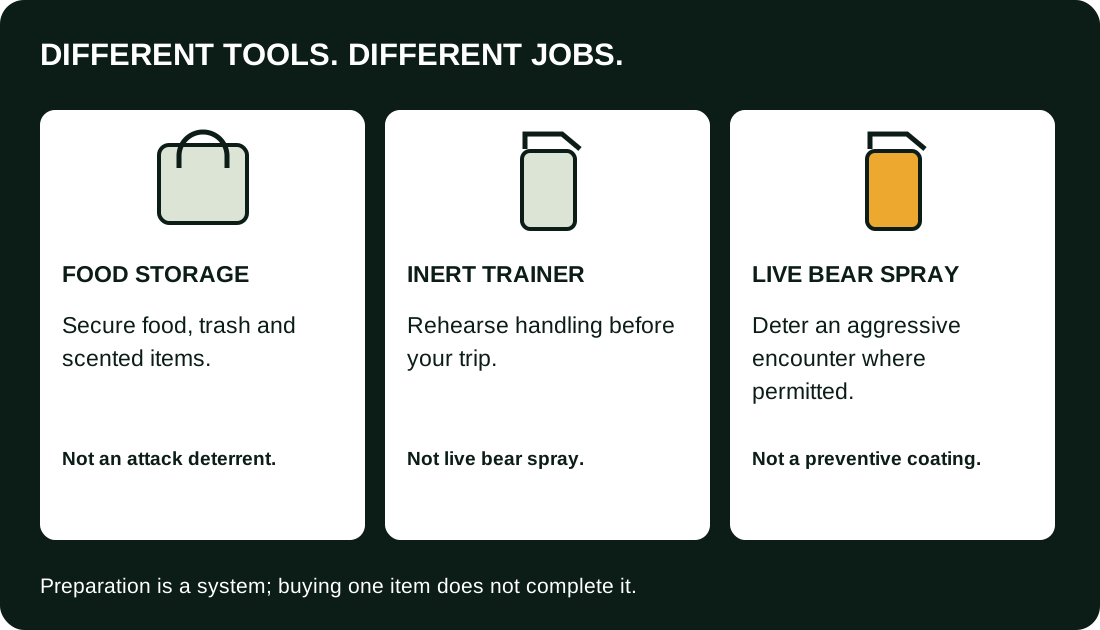
Equipment preparation and encounter response solve different problems. Food storage reduces the opportunity for bears to obtain food; spray is a deterrent for an aggressive encounter where carrying it is allowed. Neither replaces the other.
NPS’s food-storage guidance includes trash and scented toiletries as attractants, emphasizes properly closed containers, and explains why storage requirements differ between parks. A normal backpack or resealable snack bag is not a bear-resistant storage system.
A practical rehearsal you can do before leaving home
- Read the destination’s current bear advisory, species information, and food-storage rules.
- Put on your actual hiking layers and loaded pack. Identify anything obstructing the holster or snagging the draw.
- Use an inert trainer, following its safety directions, to rehearse the handling sequence. Do not discharge live spray indoors or toward people or animals.
- Explain the group instruction and assign who will assist children.
- Pack all required food, trash, and scented items into the chosen storage system before committing to its capacity.
- Save the ranger contact and route information offline; leave a trip plan with a trusted contact.
For the rest of the load, use our beginner day-hike checklist. For an overnight trip, pair this with the camping checklist and check which water-treatment method matches your route. These guides address preparation; they are not substitutes for the bear response above.
Between trips, use the camping gear storage guide to organize equipment and the kit maintenance checklist to schedule condition and expiration checks.
Save your pre-hike preparation checks
Use this at home before the trip. Marking boxes records what you reviewed; it does not calculate encounter risk or establish that a route is safe.
0 of 6 planning checks marked reviewed
Selections can be saved on this browser when storage is available. Do not rely on this web page being available offline.
The two-page PDF includes a preparation sheet and a blank encounter record to complete after reaching safety. It does not send a report to a wildlife agency.
Rehearse three decisions before the hike
These are fictional planning questions, not an emergency diagnostic tool. Open each answer and compare it with the full encounter guidance above.
A distant bear has not noticed you. Should you approach to identify it?
No. Preserve distance and quietly change course without approaching or disturbing it. A bear on the same trail is not automatically stalking you.
Review the situation tableYou back away, but it keeps closing the gap. Should you keep retreating?
Stop retreating and hold your ground. Bring the group together, keep your pack, speak calmly at first and ready permitted spray. A persistent non-defensive approach calls for a firm response.
Review your first actionsIt has brown fur. Is that enough to choose the contact response?
No. American black bears can have brown fur. Learn the species present before the trip. Defensive brown/grizzly contact, a black-bear attack and a stalking attack are different situations; do not play dead merely because a bear approaches.
Review the contact-response tableKeep the six-card visual summary
Save the complete set so the attack-response qualifications stay together. These original R&R layouts may be shared with credit and a link to this article. Always check current local wildlife advice.
Preview all six cards
Three equipment options for three different jobs
As an Amazon Associate I earn from qualifying purchases. These are research-based selections, not R&R field-tested endorsements. Manufacturer specifications were checked October 23, 2026. Amazon buttons open searches for the named models; listings, versions, sellers, shipping eligibility, and availability vary. No live price, rating, or stock claim is made.
Check your destination first. Where spray is prohibited, do not buy or carry it for that trip. A practice canister is not a working deterrent, and a food canister is not a defensive tool.
Live deterrent, where permitted
Counter Assault 10.2 oz. bear spray with holster
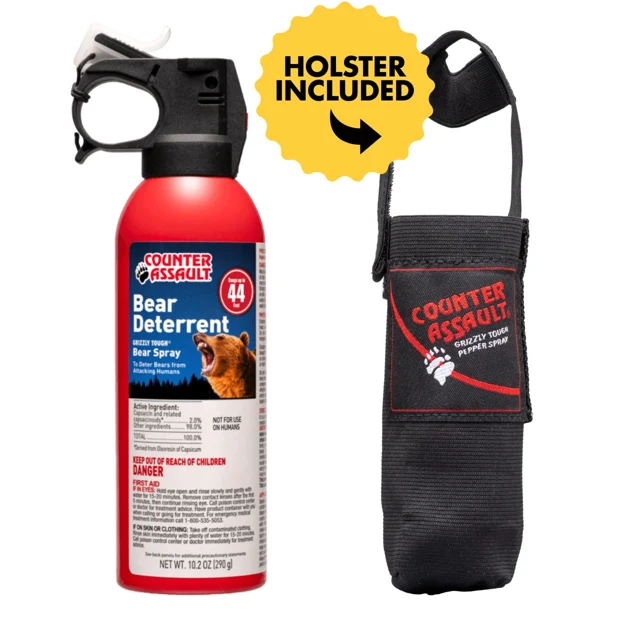
The current manufacturer page describes a 44-foot model with a holster, 10 seconds of discharge and 2% capsaicin and related capsaicinoids. Those are published specifications, not our field measurements.
Check before choosing: Check the exact version, EPA label, expiration date, seller and local rules. Older 10.2 oz. listings may show different specifications. The advertised maximum reach is not a universal deployment distance.
FIND ON AMAZONHandling practice before the trip
Counter Assault 8.1 oz. inert training canister
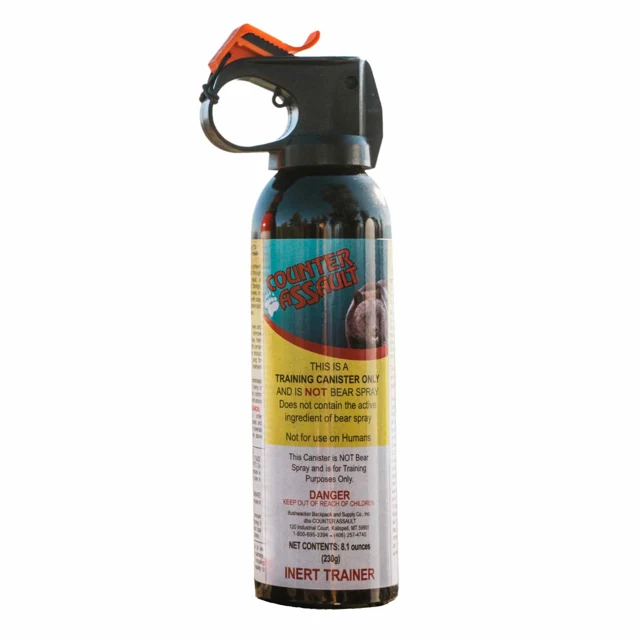
The manufacturer identifies this as a training canister without active pepper-spray ingredients. Use it to rehearse drawing, removing the safety and aiming under the product’s practice instructions.
Check before choosing: It is not bear deterrent spray. It is still a pressurized product; keep it away from faces, children, heat and ignition sources. Its 8.1 oz. format is not an exact size match for the 10.2 oz. live canister above.
FIND ON AMAZONFood storage and attractant management
BearVault BV450 Jaunt
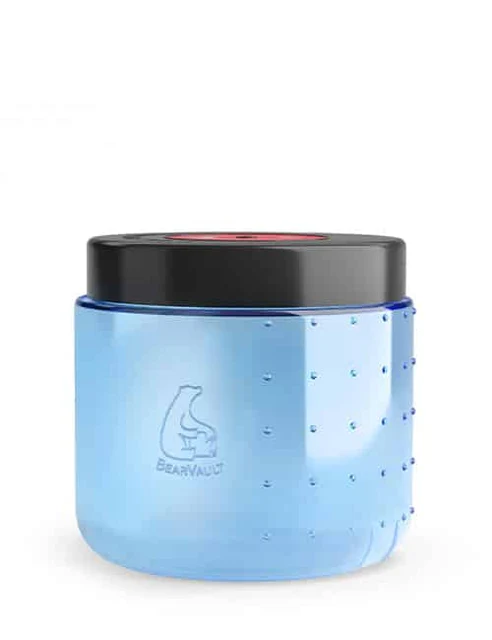
BearVault lists 7.2 liters of usable space, a weight of 940 grams, an 8.7-inch diameter and an 8.3-inch height. Its published IGBC certification is #5340. Yosemite’s allowed-container list includes model 450.
Check before choosing: Confirm the current allowed list for your destination and test-pack all required scented items. Published “days of food” estimates depend on your menu; usable volume does not guarantee your food will fit. This is storage equipment, not protection during a charge.
FIND ON AMAZONManufacturer references: live spray, inert trainer, BV450 specifications, and Yosemite’s allowed food containers.
Choose a backpack around the equipment you must carry, not the other way around. Our backpack size and torso-fit guide separates body fit from packing volume; the Osprey comparison helps compare pack categories. Neither a larger pack nor a premium brand changes a bear’s behavior.
Questions hikers ask about a bear following them
Does a bear following you mean it wants to eat you?
Not necessarily. Bears may be traveling, investigating, seeking food, or reacting defensively. Persistent approach needs a response even when its motivation is uncertain. Do not wait for certainty before grouping up, stopping retreat, and preparing your permitted deterrent.
Should you run downhill or zigzag?
No. Those are not reliable escape strategies. Running can trigger pursuit. Stop if the bear follows, keep it in view, and follow the appropriate encounter guidance.
Should you make eye contact?
Keep track of the bear without a challenging stare. Watching its position and movement is different from staring it down. You also need to avoid tripping as you withdraw.
What if you do not have bear spray?
Do not run or assume you should immediately play dead. Group up if possible, identify yourself, and respond to the bear’s behavior. A secure vehicle or building can provide refuge if safely reachable. If contact occurs, use the species-and-context distinctions above.
Can you throw a snack to distract it?
Do not intentionally feed it or throw your pack as a lure. Preventing food rewards is part of protecting both current hikers and the people who use the trail afterward.
Should you keep hiking after the encounter?
Do not continue simply because the bear momentarily disappears. Reassess the route, group condition, available deterrent, and local advice. Report the behavior and follow any closure or ranger instruction. There is no mileage goal worth forcing a second close encounter.
Sources, scope, and editorial method
Prepared by Ready & Resourceful using the public wildlife-agency and manufacturer references linked throughout this guide. We checked the references on October 23, 2026. This is a research-based guide, not a firsthand encounter report, professional wildlife consultation, or certification of a product’s performance. Our editorial standards explain how we distinguish guidance, examples, and buying information.
The primary scope is American black and brown/grizzly bear encounters during North American hiking. It does not cover polar bears, captive bears, hunting-carcass management, or every regional bear species. Local wildlife authorities and land managers may give more specific instructions.
Original R&R scene illustrations and decision graphics support the text; they do not document an actual incident or prove a bear’s intentions. Manufacturer product photographs identify the exact equipment discussed and are credited separately.